

The UK’s new Defence Investment Plan (DIP) has detailed four platform types to be introduced into Royal Navy (RN) service, as central elements of the RN’s new ‘hybrid’ force structure and the spine of its ‘Atlantic Fleet’ operational concept series.
In June 2025, the UK’s latest Strategic Defence Review (SDR) first detailed the evolution of the RN’s force structure into a ‘hybrid’ construct, integrating maritime uncrewed systems (MUS) in all domains to support current and future crewed platforms, to boost overall operational output.
In September 2025, General Sir Gwyn Jenkins, First Sea Lord and Chief of Naval Staff, defined the three stages of the ‘Atlantic Fleet series: ‘Atlantic Bastion’, to build underwater sensing presence; ‘Atlantic Shield’, to provide integrated air and missile defence against air- and surface-based drone and missile threats; and ‘Atlantic Strike’, to build long-range precision engagement capacity, using UK drones and missiles, to enhance deterrence through capability to strike back.
The DIP is designed to deliver the budgetary and programmatic details within SDR’s strategic framework.
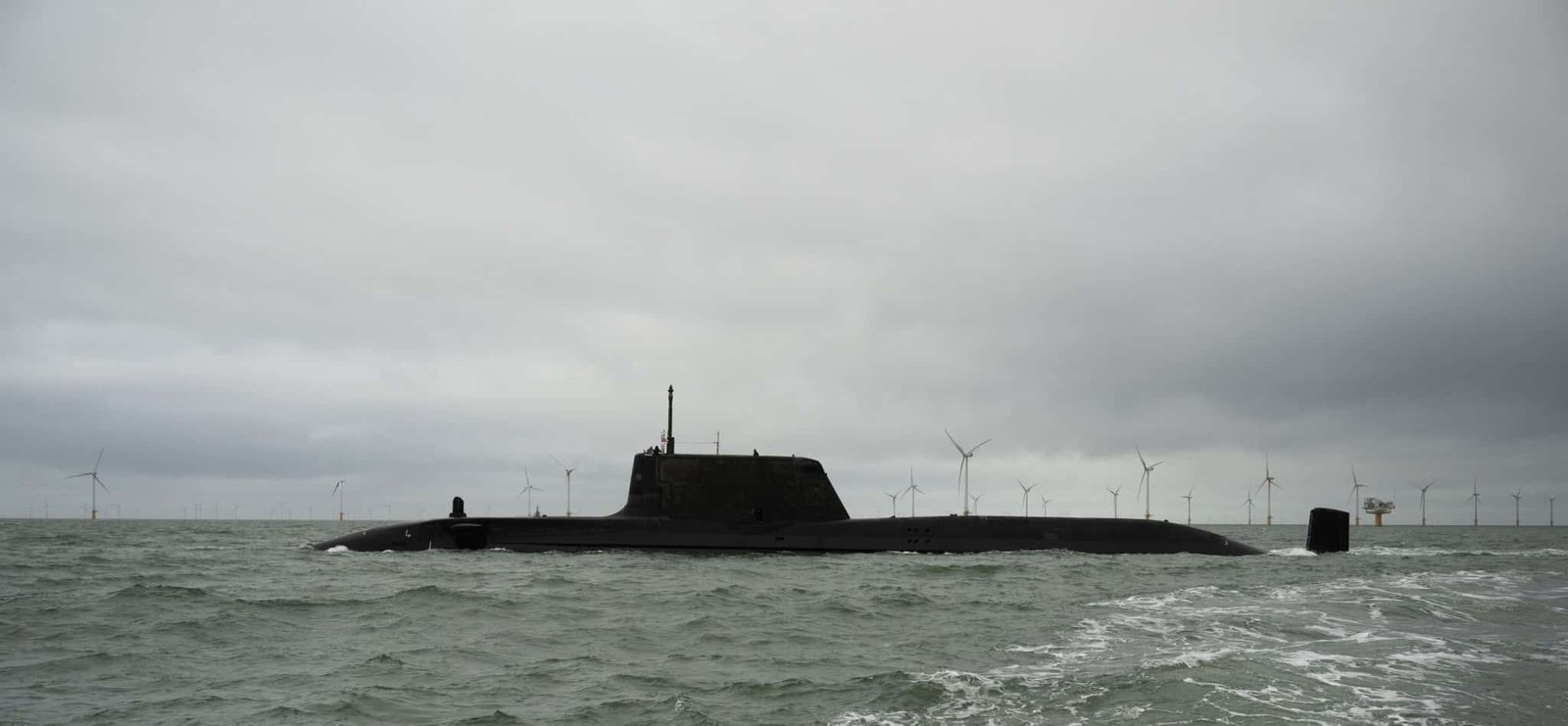
Under the DIP’s overall plan to drive what Prime Minister Sir Kier Starmer called a generational transformation in UK armed forces’ capability, especially through investing GBP5 billion in uncrewed and autonomous systems going forward, the RN’s ‘hybrid’ and ‘Atlantic Fleet’ requirements will be underpinned by four new platform types, the MoD detailed. Combining autonomy and artificial intelligence (AI) technologies to enhance outputs, these platforms will include: the Type 92 uncrewed underwater vehicle (UUV), designed to augment sensing capacity and to support the RN’s incoming Type 26 anti-submarine warfare (ASW) frigates; and the Type 93 extra-large UUV (XLUUV), again bolstering ASW output including through integrating with crewed nuclear-powered attack submarines (including the in-service Astute-class SSNs).
These two platforms and programmes will support the ‘Atlantic Bastion’ requirement.

‘Bastion’ was launched formally in December 2025, with a technology demonstrator programme getting underway at that time to identify sensing capabilities to deploy in 2026-27 on the programme’s first phase, ‘Atlantic Net’. The DIP committed to spending an additional GBP1.5 billion over the next four years to support ‘Atlantic Bastion’.
The ‘Atlantic Shield’ and ‘Strike’ requirements will be supported, in uncrewed platform terms, by the Type 94 uncrewed sensing platform and the Type 91 uncrewed missile platform.
The MoD statement said that, in the 2030s, the UK will expand the numbers of each of the four platform types. Also in the 2030s, it continued, it will “bring at least six Common Combat Vessels [CCVs] into service”: succeeding the six in-service Type 45 air-defence destroyers and superseding the Type 83 concept (the initial Type 45 replacement approach), the MoD said the CCVs will be “the brain of a networked maritime air-defence system”.
Thus, the Prime Minister contended, “When our frigates move to intercept a threat to British interests, like a Russian ship in our waters, they will do so with outriders – uncrewed ships, above and below the surface.”
DIP reiterated the navy’s existing plans to test and deploy jet-powered uncrewed aerial vehicles (UAVs) from the UK’s carrier force, with the RN having originally targeted such testing for late 2026 or early 2027. DIP reiterated too the navy’s plans to reinforce UK Royal Marines Commando operations with uncrewed systems (including UAVs and uncrewed surface vessels).
Again illustrating the enduring importance of the underwater domain for UK defence and security, continued development of the RN’s new Dreadnought-class deterrent submarines will be part of an enhanced focus on renewing the UK’s strategic nuclear deterrent.
A further GBP330 million will also be invested over the next four years in the capability to be deployed onboard the RN’s specialist seabed security platform, RFA Proteus.
Other maritime capability investments include upgrading Sea Viper air-defence capability for the Type 45s, and deploying directed energy weapons (which the RN is also already developing, under its DragonFire programme).
Alongside the kit itself, capability will be enhanced overall by infrastructure investment, with GBP26 billion planned to be spent over the next decade on upgrades at the Devonport, Faslane, and Portsmouth naval bases.
Naval News Comment
Senior UK officials underscored DIP’s role in supporting improvements to military readiness, including asset availability for operations.
The DIP discussions regarding readiness and availability underline the importance of augmenting RN capability in the underwater domain, given the threat that activities like ‘Atlantic Bastion’, for example, are setting out to deter. The DIP document itself noted planned commitment to delivering the last of the navy’s seven Astute-class submarines, Achilles; the boat’s build will complete the fleet, but its build process was delayed by a fire at the Barrow shipyard in 2024. Equally important in the Astute programme, however, is investing in the submarines’ infrastructure to enhance their availability, readiness, and sea time (all of which have been rather limited in recent years). The planned work at Faslane (where the boats are based) and at Devonport (where they are overhauled) will be integral to improving this availability. The DIP’s Faslane activity will include acquiring three floating dry docks.
