

For much of the past decade, the Vienna- based Organization for Security and Co-operation in Europe (OSCE) has just about survived, though less through any strategic clarity than through protracted institutional deadlock. Its continued survival may no longer be guaranteed though. This year’s consensus-based agreement among all 57 OSCE participating states on a 2026 budget — after five years of debilitating inertia — may have stabilised the Organisation, but probably only in the short term, and at a cost of a notable contraction in ambition, staffing, and operational scope.
With a reduced annual budget of roughly €120 million (cheap in comparison to other international organisations) — down more than 10% from 2021 levels — the OSCE now faces a defining question: can it adapt to a harsher geopolitical and constrained financial environment, or is it entering a phase of managed decline? Reforms publicly promised by the Organisation’s leadership for 2027 will go a long way to answering this question.
Smaller Budget, Narrower Mission?
The 2026 budget compromise represents both a breakthrough and a warning. It has ended years of paralysis driven by competing vetoes — from Russia over institutional bias (including election-related work), from Western states over human rights mandates, and from regional disputes such as Nagorno-Karabakh and Transdniestria. But the budget deal earlier this year, though widely welcomed, comes at a cost. Cuts were distributed across the Vienna Secretariat, the Organisation’s three semi-autonomous institutions, and its field missions (the so-called ‘jewels in the OSCE crown’), with staffing reductions affecting more than 100 personnel across the board.
More importantly, the political signal behind the budget is unmistakable. The United States under the second Trump administration in particular, pushed aggressively for a return to “core functions,” signalling frustration with what Washington increasingly sees as ‘mandate creep’ — especially in areas such as human rights reporting and gender policies. This mirrors a broader trend affecting other international organisations, from UN agencies to the International Criminal Court: a growing focus on value for money, political neutrality, and demonstrable impact. In this context, the OSCE’s traditional breadth, spanning three dimensions of security — politico-military, economic, and human — may increasingly be seen as a liability rather than a strength.
OSCE: Reform Without Consensus
Senior Turkish diplomat (and one-time Turkish foreign minister), today’s OSCE Secretary General Feridun Sinirlioğlu since December 2024, has pledged reform for 2027, but the scope for meaningful change is clearly constrained by the OSCE’s consensus-based decision-making. Every structural adjustment — whether reallocating resources, closing field missions, or redefining mandates — requires consensus agreement among all 57 participating States. This creates a paradox: while reform is widely acknowledged as necessary, it is politically difficult to implement. This year’s Swiss Chairpersonship has framed its 2026 agenda around “dialogue, trust, and security”, emphasising incremental adaptation rather than any move towards radical overhaul.
In practice, this really suggests a reform trajectory focused on efficiency gains rather than a strategic transformation: streamlining headquarters functions, reducing duplication, and prioritising activities with clear, measurable outputs and impact. The risk, however, is that such technocratic adjustments will fail to address the deeper question of relevance in today’s fragmented security environment.
Ukraine: A Missed Opportunity — or Future Role?
Russia’s war against Ukraine remains the defining security crisis in the OSCE area, yet the Organisation has been largely sidelined in Ukraine since early 2022. The collapse of the OSCE’s large Special Monitoring Mission (operational from 2014 until mid-2022) and the breakdown of consensus with Russia have sharply limited its operational role.
Looking ahead, however, Ukraine could also represent the OSCE’s most plausible path back to relevance. In this context, it should not be forgotten that the Organisation still has unique strengths: inclusive membership, vast experience in confidence-building measures, and a mandate rooted in the 1975 Helsinki Final Act. There are already indications that some OSCE participating States see a potential role for the OSCE in a future settlement — whether in monitoring ceasefire arrangements, supporting reconstruction governance, elections or referendum monitoring, or simply facilitating dialogue. In such scenarios, the OSCE could re-emerge as a technical implementing partner, rather than a political driver, focusing on verification mechanisms, localised confidence-building measures, and institutional support far below the level of high politics. However, this would play to the OSCE’s comparative advantages: low-cost deployments, field experience, and an ability to operate in politically sensitive environments where larger organisations would face greater resistance.
Yet any role will ultimately depend on political conditions that do not currently exist. Without at least minimal consensus between Russia and Western states, the OSCE cannot move from being a simple observer to a meaningful actor.
The Western Balkans: Gradual Exit?
In the Western Balkans, the OSCE faces a very different challenge: success in mandate implementation ultimately leads to redundancy. Longstanding OSCE field missions in the region — once central to post-conflict stabilisation and democratic transition — are increasingly seen today as legacy deployments. As some of these Balkan states move closer to EU membership (with Montenegro labelled the region’s front-runner), the rationale for a sustained OSCE presence weakens.
And of course, persistent budget pressures will only accelerate this trend. The 2026 cuts are already affecting the Organisation’s precious field missions, and further consolidation appears inevitable. However, any downsizing or closure also carries risks. The OSCE’s comparative advantage lies in longterm institution-building, particularly in areas such as rule of law, policing, and minority rights. Any premature disengagement from still fragile democracies could leave gaps that centrally run EU instruments are not designed to fill — especially in politically sensitive areas.
The broader question here is whether the OSCE can redefine its role in the Western Balkans (where most of its resources, staff and funding are to be found) from offering a traditional field presence to a strategic advisory capacity for example — meaning a far lighter footprint, but one still rooted in regional security dynamics and assisting states simultaneously meet their OSCE commitments and goals of EU accession.
Moldova and the Collapse of Formats
Few areas on the European continent illustrate the erosion of the OSCE’s traditional conflict-resolution role more clearly than Moldova. The so-called “5+2” format — once the central mechanism for addressing the decades-long Transdniestrian (frozen) conflict — has effectively stalled since Russia’s invasion of Ukraine. Historically, the OSCE played a key role in facilitating dialogue within this format, providing a structured framework that included Moldova, Transdniestria itself, Russia, Ukraine, the EU, and the United States. Today, the framework is deadlocked; the geopolitical assumptions that underpin it — above all, cooperation between Russia and Western actors — are no longer valid. This raises a broader issue: many of the OSCE’s signature formats were designed for a post-Cold War environment characterised by managed competition. In an era of open confrontation, their utility is sharply reduced.
Central Asia: Quiet Relevance, Limited Leverage
In stark contrast to much of Europe, the OSCE retains a certain degree of relevance in Central Asia. Here, its activities, ranging from border security to governance reform, are often welcomed as non-threatening, while being technically useful.
However, this relevance comes with limitations. The five Central Asian states increasingly pursue multi-vector foreign policies, carefully balancing relations with Russia, China, and Western actors. The OSCE is just one partner among many, and certainly not the most influential. Moreover, the Organisation’s human dimension, particularly its emphasis on democratic standards and human rights, is sensitive in this region. Engagement is therefore selective by necessity, focused on areas such as economic and environmental security (the OSCE’s second dimension) rather than political reform.
Institutional Competition: The UN and Beyond
The OSCE’s current predicament is not unique. Across the entire international system, numerous organisations are under increasing pressure to justify budgets and demonstrate tangible outcomes and impact. UN agencies in particular face scrutiny, while the Hague-based International Criminal Court (ICC) continues to confront political resistance and questions about its effectiveness.
What distinguishes the OSCE from the UN though is its comparatively small budget, combined with an unusually broad mandate. At approximately €120 million, it operates on a fraction of the resources available to comparable institutions, yet it is expected to deliver across several security dimensions. This creates a structural tension: On the one hand, the OSCE is praised for its cost-effectiveness, while on the other, limited resources constrain its ability for operations or capacity to respond to crises. In this sense, the Organisation risks becoming a temporary “gap-filler” — useful, yes, but not central.
OSCE Leadership and the Chairpersonship Problem
Leadership dynamics within the Organisation complicate the picture even further. The annually rotating Chairpersonship remains a core feature of the OSCE, but it also introduces discontinuity. Priorities and strategic focus shift annually, often reflecting national agendas rather than long-term strategies. The current Swiss Chairpersonship is focusing on stabilisation and, unsurprisingly, dialogue, achieving the notable success of already securing a budget.
But uncertainty looms: As of now, there is no confirmed OSCE Chair for 2027, with only informal discussions among participating States. This lack of forward planning underscores a broader issue: the absence of strategic direction at the political level. Without stronger leadership, any reform efforts risk remaining reactive rather than transformative.

Regional Hubs and a Leaner OSCE?
One idea gaining traction in policy discussions is a shift towards regional hubs — consolidating field presences into multi-country platforms. This would allow the OSCE to maintain its engagement while reducing costs and administrative overheads further. Such an approach could be particularly relevant in the Western Balkans and Central Asia, where regional dynamics often transcend national boundaries. It would also align with broader trends in other international organisations seeking to “do more with less”.
However, implementation would not be so straightforward. Some host countries (and certain participating States) may resist the downgrading of missions, viewing this as a loss of political attention. At the same time, participating States may disagree on which regions should be prioritised.
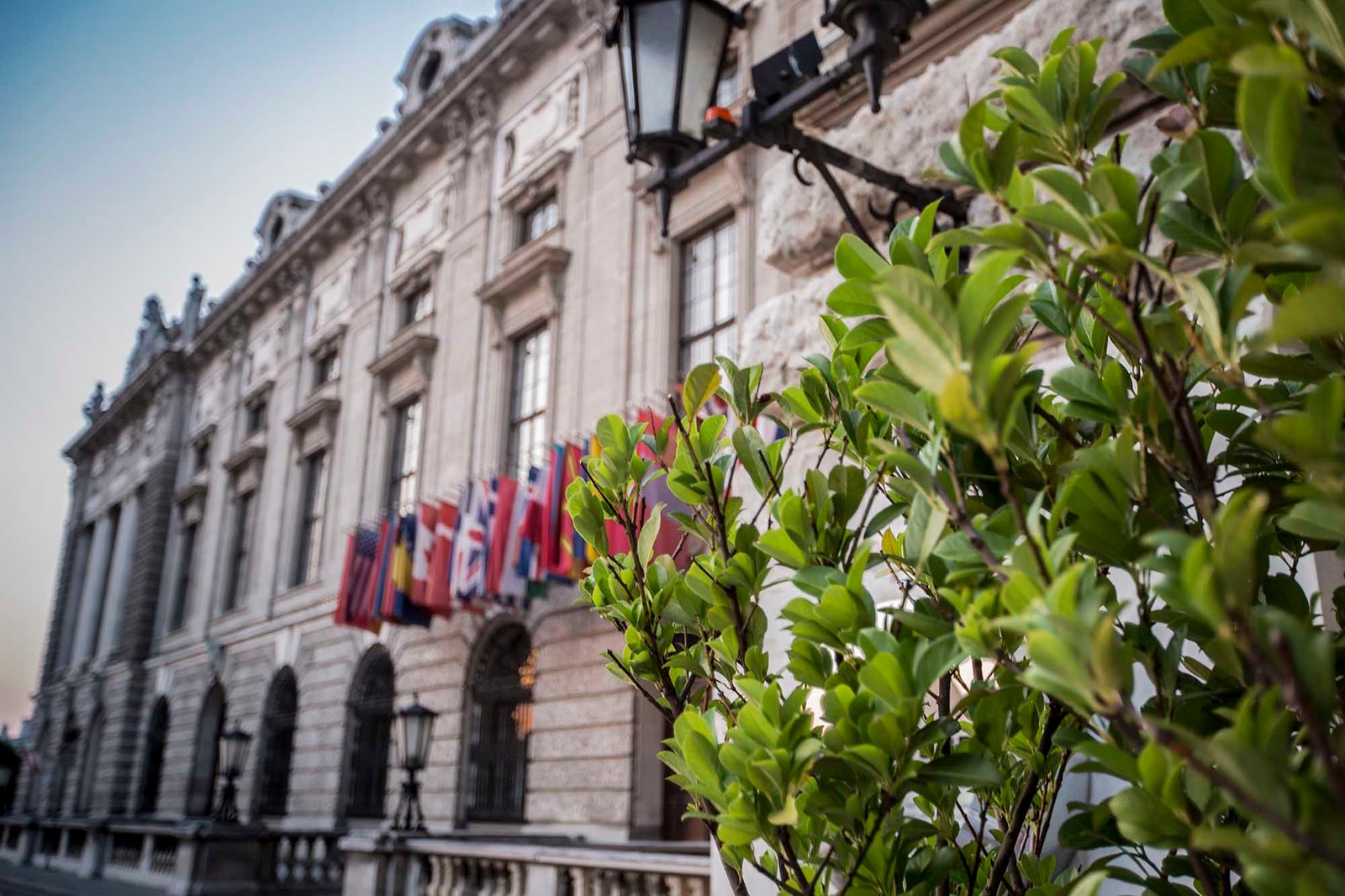
The OSCE has played an important role in encouraging normalisation in Kosovo and in conflict resolution in disputes across Europe. The crux of the matter for the OSCE is finding a real future role in a changing security situation in Europe and Central Asia. (Image: OSCE)
Conclusion: Reform or Irrelevance?
The true test of the OSCE’s relevance will be its ability to prioritise without fragmenting further. In an international environment of increasingly constrained resources, the Organisation may be forced to become even more specialised — focusing on niche areas such as confidence-building measures, election observation in contested environments, and technical security assistance where larger institutions are either politically constrained or overstretched. Whether participating States are willing to accept a more limited — but sharper — OSCE will ultimately determine if reform will translate into renewed relevance.
Of course, the OSCE’s future will not be decided by budgets alone. But the 2026 agreement has crystallised the pressures facing the Organisation: geopolitical division, financial constraint, and a shifting demand for multilateralism. The OSCE needs to decide where it can still make a difference — and where it cannot. Its core strength remains unchanged: the ability to bring adversaries into the same room. And in an increasingly polarised world, that function retains a certain value. While dialogue alone is not enough, without operational relevance, the OSCE risks becoming a ‘forum’ of weekly ambassadorial-level meetings, rather than an operational actor. The next year or so will determine whether the Organisation can translate its impressive legacy and experience across the OSCE area into a sustainable and meaningful future — or whether it gradually recedes into the background, becoming a footnote in the history of European security.
Author: Matthew Lang
Click here to read the latest issue of ESD.
