

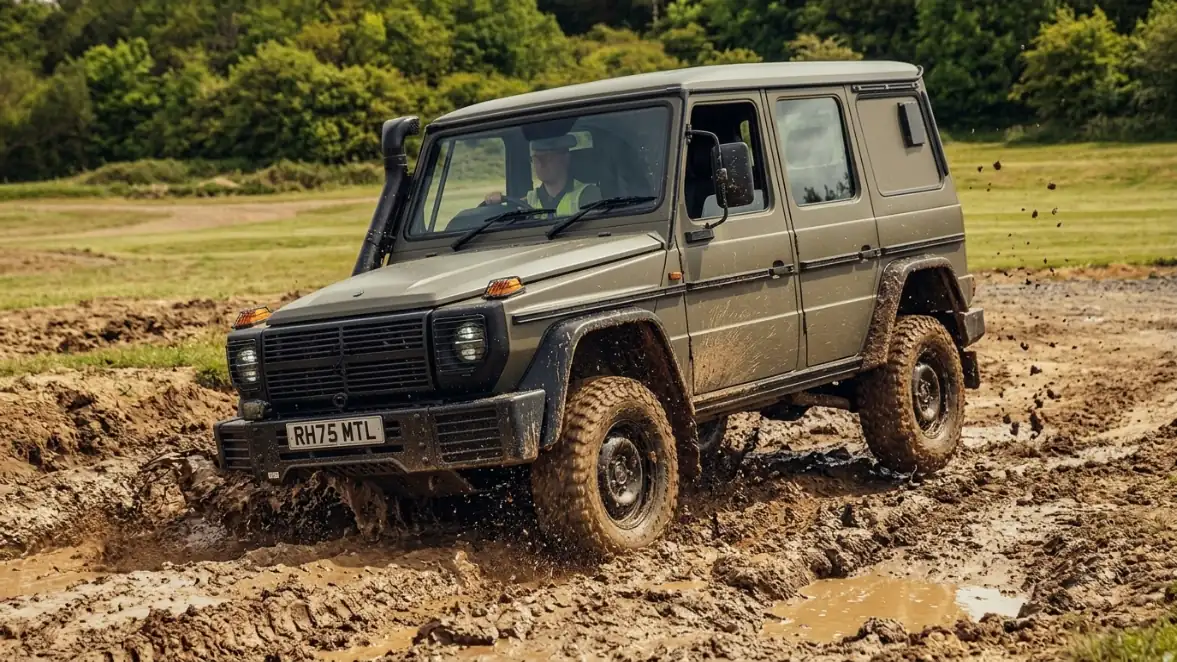
Defense Feeds – London. The UK Army Eyes Rheinmetall Shadow Wolf Tactical Vehicle program reflects Britain’s growing focus on battlefield mobility and rapid-response operations as NATO militaries continue adapting to the realities of modern warfare shaped by the conflict in Ukraine and rising tensions with Russia.
German defense manufacturer Rheinmetall recently introduced its new Shadow Wolf tactical platform, a vehicle designed to support military operations across demanding battlefield conditions where speed, flexibility and survivability are becoming increasingly important.
The unveiling has attracted attention as European armed forces accelerate procurement efforts aimed at improving combat readiness and operational mobility. The Shadow Wolf vehicle appears intended for a wide range of operational missions including reconnaissance, troop movement, logistics support and tactical deployment in contested environments.
Defense analysts believe platforms like this could become increasingly valuable as armies shift toward more mobile battlefield structures capable of operating under constant drone surveillance and long-range strike threats.
The British Army has spent the past several years reviewing how its ground forces should evolve in response to emerging threats across Europe. New tactical mobility vehicles are now viewed as essential for supporting dispersed operations, faster troop movements and flexible deployment concepts within NATO planning.

Shadow Wolf Built for Flexible Battlefield Operations
According to details released by Rheinmetall, the Shadow Wolf tactical vehicle was developed with modularity and adaptability as key priorities. The platform is designed to support multiple mission configurations depending on operational requirements, allowing armed forces to adjust vehicle roles without redesigning the entire system.
Modern military operations increasingly demand vehicles capable of performing across different combat scenarios ranging from reconnaissance missions to logistical support in contested terrain. The Shadow Wolf platform appears designed specifically around that operational philosophy.
The vehicle reportedly includes enhanced off-road mobility and operational flexibility intended for harsh battlefield environments where traditional support vehicles may struggle. Although complete technical specifications remain limited publicly, Rheinmetall emphasized the truck’s ability to support rapidly changing operational demands.
Defense planners across NATO are placing growing importance on mobility due to lessons learned from Ukraine. The war demonstrated how quickly static positions can become vulnerable to drones, precision artillery and satellite-guided targeting systems. As a result, military units now require greater speed and maneuverability to reduce battlefield exposure.
The British Army’s modernization strategy increasingly focuses on agile and highly mobile formations capable of responding rapidly to emerging threats. Tactical mobility vehicles like Shadow Wolf could support those objectives by improving operational flexibility for frontline units.

NATO Rearmament Fuels Demand for New Military Vehicles
The introduction of the Shadow Wolf comes during a major period of military expansion and modernization across Europe. Since Russia launched its full-scale invasion of Ukraine, NATO members have accelerated defense spending while prioritizing procurement of armored vehicles, artillery systems and battlefield mobility platforms.
Britain has been particularly active in reviewing future force requirements as concerns grow over long-term European security stability. Military officials continue emphasizing the importance of readiness, deployability and interoperability with allied NATO forces.
Vehicle survivability has become one of the most important issues shaping new military procurement decisions. Modern battlefields now feature widespread drone surveillance, loitering munitions and precision-guided strike systems capable of targeting troop concentrations and supply convoys with increasing accuracy.
This has forced military planners to rethink traditional operational concepts. Smaller and more mobile formations are increasingly favored over heavier static deployments that may become easier targets in high-intensity warfare environments.
Rheinmetall has emerged as one of Europe’s most influential defense companies during this broader military buildup. The firm is heavily involved in several NATO modernization initiatives including armored fighting vehicles, artillery systems and air defense technologies.
Analysts believe tactical mobility systems such as Shadow Wolf may also support Britain’s broader operational role within NATO’s eastern flank strategy. Rapidly deployable ground units remain a critical component of alliance deterrence planning across Europe.
Ukraine War Reshapes Future Battlefield Requirements
The Ukraine conflict continues reshaping military doctrine and vehicle development throughout NATO defense industries.
Combat operations have shown that mobility, concealment and rapid maneuvering are now just as important as armor protection in many battlefield scenarios. Military vehicles must increasingly operate under constant threat from drones, electronic surveillance and long-range artillery systems.
As a result, defense manufacturers are adapting designs to improve battlefield flexibility while maintaining operational endurance. Modular vehicle concepts capable of supporting multiple mission roles are becoming more attractive for armed forces attempting to maximize efficiency under tighter procurement timelines.
Military experts also note that future conflicts may involve more decentralized battlefield operations where smaller tactical units operate independently across wider operational zones. Vehicles like Shadow Wolf are designed to support those evolving doctrines by improving mobility and mission adaptability.
Britain’s continued military modernization also reflects broader geopolitical concerns involving Russia’s long-term military posture in Europe. NATO countries are steadily increasing investments in combat readiness, logistics infrastructure and rapid-reaction capabilities in response to growing regional uncertainty.
The unveiling of Shadow Wolf highlights how European defense industries are positioning themselves to meet rising demand for next-generation tactical vehicles suited for modern warfare conditions. For the British Army, platforms like this could play an important role in building more agile, survivable and operationally flexible land forces for future NATO missions.
