

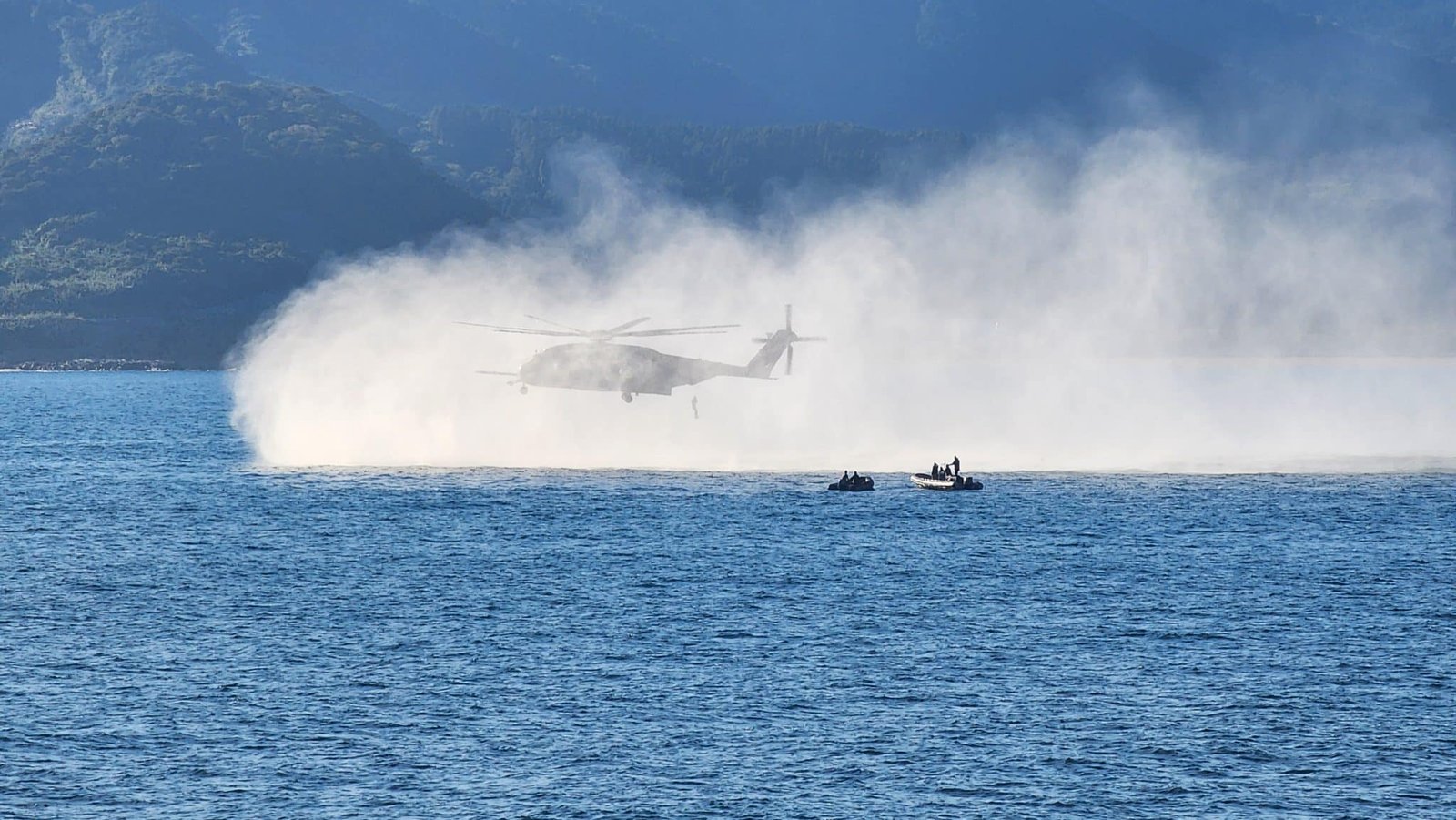
The U.S Navy’s Explosive Ordnance Disposal Training and Evaluation Unit One (EODTEU1) will evaluate a new form of mine-clearing capability after identifying a series of new requirements in the Indo-Pacific—particularly for the service’s doctrine of distributed maritime operations, according to new documents published by EODTEU1.
The mission change comes amid a series of challenges in the Middle East in the Strait of Hormuz, where Iranian military forces dropped mines to prevent commercial ship traffic from entering or exiting the Persian Gulf, but the U.S. Navy’s deployment of EOD personnel across U.S. Indo-Pacific Command (INDOPACOM) “has impacted all aspects of individual and detachment training requirements”.
“In preparation for the fight to come, in distributed maritime operations, EODTEU-1 has identified the requirement for Expeditionary Mine Countermeasure Companies (ExMCM Co) to be prepared to operate from sea on board any vessel of opportunity,” the documents read, outlining demands for various fleet requirements in 5th and 7th Fleet areas of responsibility. “The required maritime vessel support services are essential for Explosive Ordnance Disposal (EOD) operations at sea.”
EODTEU1 is looking to establish a series of new training regimens that can enable ExMCM companies to operate from a wide range of grey-hulled and commercial vessels in support of short-duration tasking and new requirements for U.S. Central Command and INDOPACOM, and will train on a chartered maritime vessel from June 7 to June 12 off the coast of San Diego in support of the service’s Explosive Ordnance Disposal Group objectives.
The requested ship is slated to operate three rigid-hull inflatable boats, combat rubber raiding craft, and two Mark 18 Mod 2 Kingfish unmanned undersea vehicles typically used with an onboard sonar to locate and map potential mines.

The effort reflects a broader transformation in how the U.S. Navy plans to conduct mine countermeasure operations. For decades, the mission relied heavily on specialized ships designed specifically to hunt and clear mines. But as the Navy retires its aging Avenger-class mine countermeasure vessels and increasingly emphasizes distributed maritime operations, explosive ordnance disposal teams are being asked to conduct the mission from a wider range of platforms, including vessels not originally designed for mine warfare.
The ability to deploy mine-hunting systems from “vessels of opportunity” could prove particularly valuable in the vast expanses of the Pacific, where dedicated mine countermeasure assets may not be available during the opening stages of a conflict. By pairing explosive ordnance disposal teams with unmanned underwater vehicles and small boats that can embark aboard commercial ships, logistics vessels, or other naval platforms, the service aims to create a more flexible capability that can rapidly clear critical sea lanes and support fleet operations across dispersed areas of the theater.
The requirement also underscores growing concerns that naval mines could play a significant role in a future conflict in the Western Pacific. Mines are relatively inexpensive, difficult to detect, and can be used to restrict access to key chokepoints, ports, and amphibious landing areas. For U.S. forces operating across a dispersed network of islands and expeditionary bases, the ability to quickly locate and neutralize mines may be critical to maintaining freedom of maneuver and sustaining logistics operations, which the U.S. Marine Corps tested during its Balikatan 2026 exercise in the Philippines.
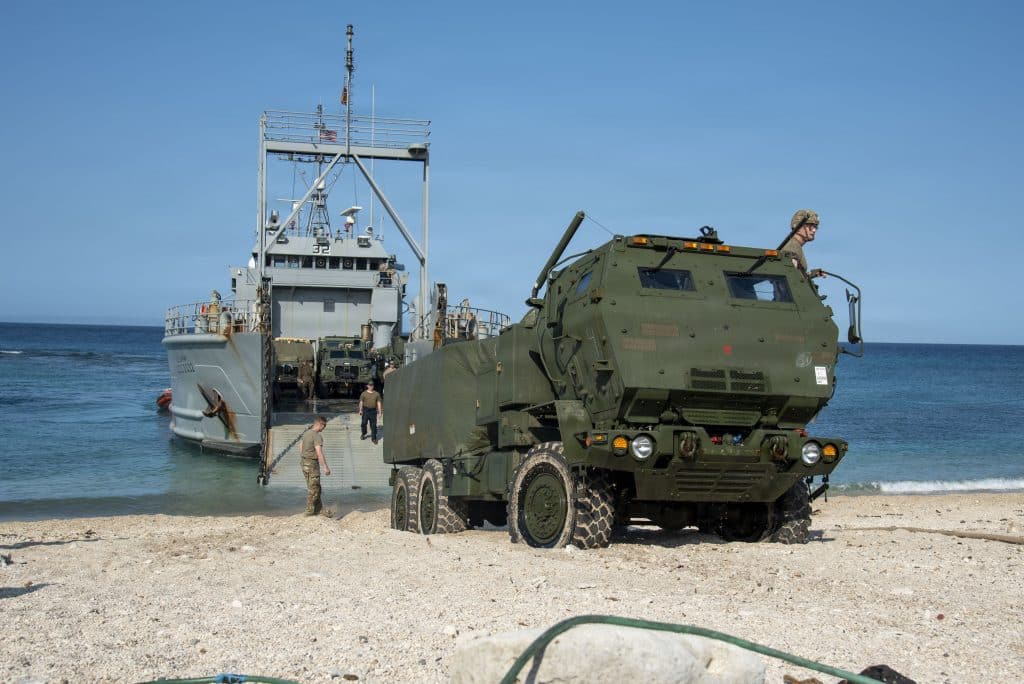
The service has trialed similar capabilities with its long-range strike and missile defense weapons, including the deployment of an SM-3 Block IA anti-ballistic missile system onto a contracted commercial ship during Resolute Dragon 2024. The effort was, and remains, part of a broader thrust to deploy containerized weapon systems onto U.S. Navy and allied partner ships to multiply the number of weapons available to the fleet during opening stages of a major regional conflict.
