

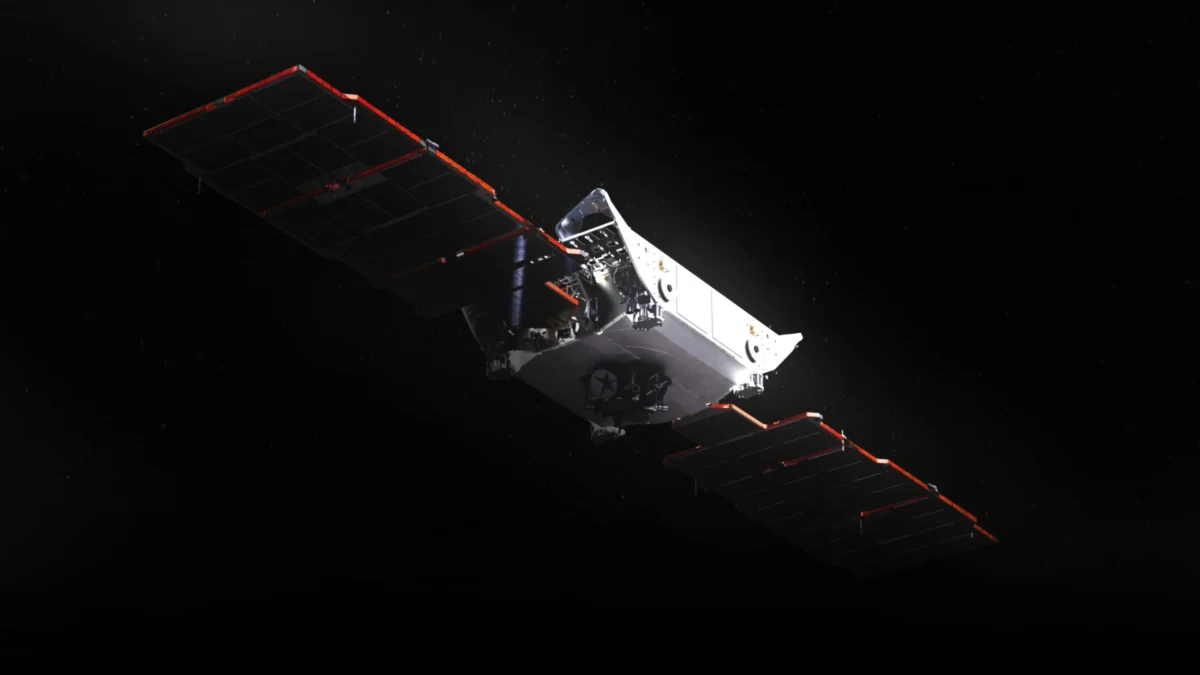
Defense Feeds, Washington, D.C. – The U.S. Air Force awards $27.8M for MIRA satellites, advancing efforts to strengthen military space surveillance and improve awareness of potential threats in Earth’s increasingly congested orbital environment.
The contract funds the development of two MIRA satellites that will contribute to enhanced space domain awareness by tracking objects and monitoring activity in orbit.
The investment highlights the growing importance of resilient space-based sensing capabilities as military and commercial operations become increasingly dependent on satellites for communications, navigation, intelligence and command-and-control.
U.S. Air Force Awards $27.8M for MIRA Satellites
The decision through which the U.S. Air Force awards $27.8M for MIRA satellites reflects continued investment in expanding the United States’ ability to observe and characterize activity in space. The two satellites are expected to support missions focused on detecting, tracking and monitoring objects in orbit, providing military planners with more comprehensive information about the operational space environment.
As the number of satellites and other orbital objects continues to grow, maintaining accurate and timely space situational awareness has become increasingly important. Additional sensing platforms can improve coverage, reduce observation gaps and provide more frequent updates on changes occurring across different orbital regimes.
The MIRA satellites are intended to complement existing surveillance architectures rather than replace current systems, contributing to a more resilient and distributed monitoring network.

Space Domain Awareness Becomes a Strategic Priority
Space domain awareness has become one of the cornerstones of modern military space operations. Governments increasingly rely on the ability to identify satellites, monitor orbital movements and detect unusual behavior that could affect national security or the operation of critical space infrastructure.
Improved tracking capabilities help military operators distinguish routine satellite activity from events that may require additional observation or operational planning. Accurate information also supports collision avoidance, orbital traffic management and the protection of high-value national security assets.
As more nations and commercial organizations launch spacecraft, the complexity of managing the orbital environment continues to increase, driving demand for advanced sensing technologies.
Distributed Satellite Networks Improve Resilience
Rather than depending solely on a limited number of large spacecraft, defense organizations are increasingly investing in distributed constellations made up of smaller satellites. This architecture improves resilience by reducing reliance on individual platforms while expanding observation opportunities across multiple orbital locations.
Adding two MIRA satellites contributes to this broader trend by increasing sensor availability and improving the ability to maintain continuous awareness of activity in space. Distributed systems can also be upgraded incrementally, allowing new technologies to be incorporated without replacing an entire constellation.
This approach supports long-term modernization efforts aimed at creating more adaptable and survivable space capabilities capable of responding to evolving operational requirements.
Strengthening Future Space Security
The MIRA satellite program reflects the growing recognition that space has become an operational domain requiring continuous monitoring and rapid access to reliable information.
As military operations become more dependent on space-based assets, the ability to detect changes in the orbital environment and maintain persistent surveillance is increasingly important for mission planning and strategic decision-making.
Investments in advanced sensing satellites also support broader efforts to improve coordination between air, space and cyber operations, where shared situational awareness is essential for maintaining operational effectiveness. By expanding observation capabilities, the United States aims to reinforce the resilience of its space architecture while supporting allied and joint operations.
The fact that the U.S. Air Force awards $27.8M for MIRA satellites demonstrates the continuing emphasis on strengthening space domain awareness as orbital activity grows more complex.
Through additional surveillance capacity and a more distributed sensing architecture, the MIRA program is expected to enhance the United States’ ability to monitor the space environment and protect critical national security assets in the years ahead.
