

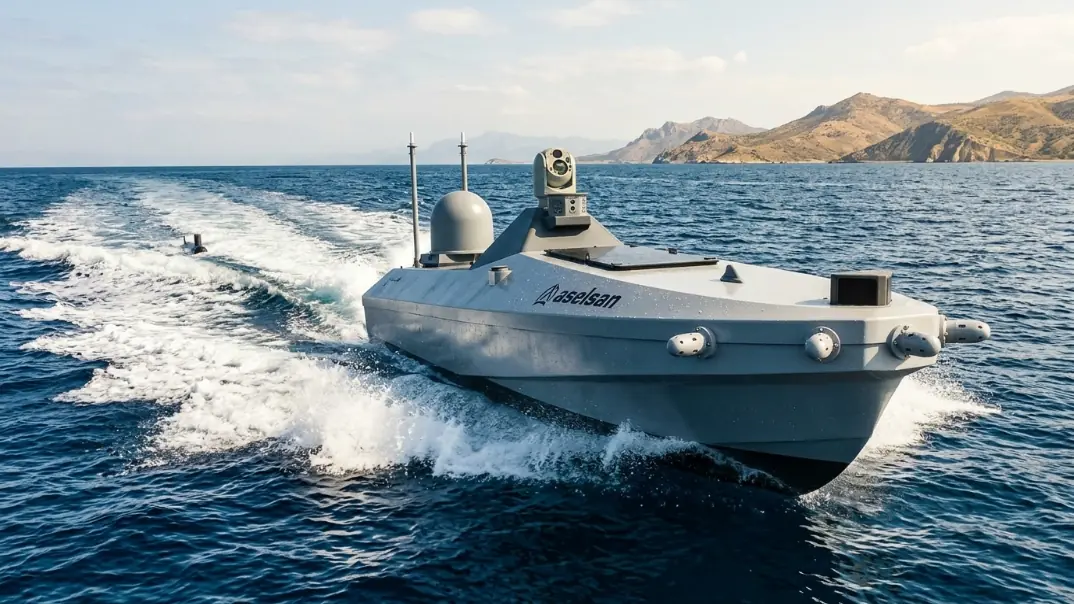
Defense Feeds, Ankara — Türkiye is advancing autonomous naval warfare as the Türkiye TUFAN naval drone expands swarm warfare capability with the unveiling of a new unmanned surface vessel designed for coordinated maritime operations.
Developed by ASELSAN, the TUFAN naval drone reflects the growing importance of autonomous systems in modern naval strategy. As navies adapt to emerging threats, swarm warfare concepts are increasingly reshaping maritime operations.
The TUFAN unmanned surface vessel is designed to operate as part of a larger network of autonomous platforms. Rather than functioning alone, the system is intended to work in coordination with other drones to overwhelm defenses, gather intelligence and conduct maritime strike missions. This reflects a major shift in how future naval engagements may be conducted.
The unveiling also highlights Türkiye’s continued investment in indigenous defense technology. In recent years, Ankara has expanded development across naval drones, missile systems and autonomous platforms. The TUFAN program further strengthens Türkiye’s position in the growing unmanned warfare sector.
Designed for Swarm Warfare Operations
The TUFAN naval drone is specifically built around the concept of swarm warfare. Instead of relying on a single high-value platform, multiple autonomous systems operate together in coordinated formations. This approach increases operational flexibility and complicates enemy defensive responses.
Swarm tactics are becoming increasingly important in naval warfare. Large numbers of unmanned systems can saturate traditional defenses, forcing adversaries to divide attention and resources. This creates opportunities for reconnaissance, disruption or direct attack missions.
The TUFAN USV is expected to support both surveillance and combat operations. Equipped with sensors and potentially armed configurations, the vessel can gather intelligence while also engaging threats if required. Such multi-role capability increases its operational value.
Autonomous coordination is another critical aspect of the system. Effective swarm operations require rapid communication and synchronized maneuvering between multiple drones. Advanced software and networked systems are essential for achieving this level of coordination.

Türkiye Expands Indigenous Naval Drone Development
The development of the TUFAN system reflects Türkiye’s broader push toward domestically produced defense technologies. ASELSAN has emerged as one of the country’s leading defense firms, contributing to projects across land, air and naval domains. Autonomous naval systems have become a growing area of focus.
Türkiye has already demonstrated success in unmanned aerial systems, and naval drones represent the next phase of this strategy. Developing indigenous platforms reduces reliance on foreign suppliers while strengthening technological independence. It also allows for faster adaptation to operational requirements.
Naval drones are particularly attractive because they offer lower operational costs compared to traditional warships. Smaller autonomous systems can perform reconnaissance, patrol and even strike missions without exposing crews to danger. This provides both tactical and economic advantages.
The TUFAN program may also enhance Türkiye’s export potential. Many countries are seeking affordable and adaptable autonomous systems for maritime security operations. A domestically developed swarm-capable platform could attract international interest.
Swarm Warfare Reshapes Future Naval Strategy
The unveiling of the TUFAN naval drone reflects a broader transformation taking place in naval warfare. Autonomous systems are increasingly influencing how navies approach both offense and defense. Swarm warfare, in particular, is becoming a major focus for future maritime operations.
Traditional naval defenses are often designed to counter limited numbers of high-value threats. Swarm attacks challenge this model by introducing large numbers of smaller and harder-to-target systems. This forces navies to rethink defensive strategies and resource allocation.
Unmanned surface vessels also support distributed operations. Instead of concentrating capability in a few major ships, navies can deploy multiple autonomous platforms across wider areas. This improves flexibility and reduces vulnerability to concentrated attacks.
The growing use of naval drones is likely to accelerate advances in artificial intelligence, communication systems and autonomous navigation. Future maritime operations may rely heavily on coordination between manned and unmanned assets operating together in networked formations.
Türkiye’s introduction of the TUFAN USV demonstrates how rapidly naval warfare concepts are evolving. As autonomous systems become more capable, swarm tactics are expected to play a larger role in maritime security and combat operations. The program underscores the increasing importance of innovation and adaptability in shaping the future naval battlefield.
