

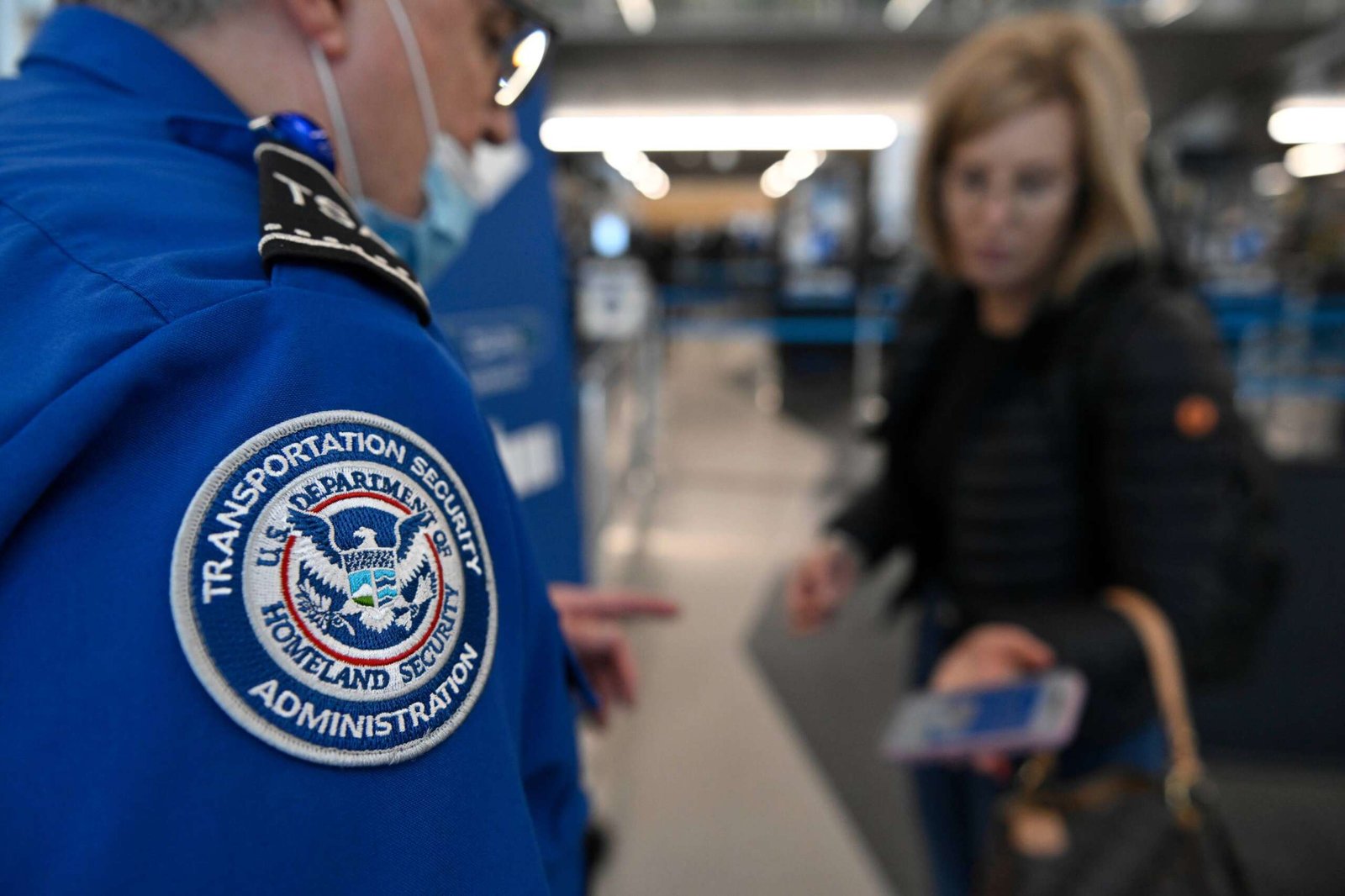
The Transportation Security Administration is replacing its short-lived “Gold+” privatized screening concept, with TSA’s new leader planning instead to build on the agency’s existing private screening program.
TSA announced plans to replace Gold+ with an “evolved” Screening Partnership Program as part of the roll out of Administrator David Cummins’ “Horizon 25 Strategy.”
The goal of the strategy is to “modernize TSA’s checkpoints, elevate the traveler experience, and harden multi-modal transportation security,” the agency announced in a press release today. The strategy comes as TSA approaches its 25th anniversary.
“In its first 25 years, this agency has performed its critical homeland security mission with dedication and excellence,” Cummins said in the release. “As we look forward to the next 25 years, we must constantly work to stay ahead of evolving threats and deliver a Golden Age of Travel. Through the Horizon 25 Strategy, we will build a TSA that is agile, resilient and ready for tomorrow’s challenges.”
The strategy will include expanding public-private partnerships. But instead of moving forward with “Gold+,” TSA says the concept will be replaced by an “evolved” Screening Partnership Program (SPP) to “to better harness the role of the private sector in delivering a safer, more secure, and more efficient aviation system.”
Under SPP, private companies run security screening services at commercial airports under TSA oversight. Currently, 20 commercial airports across the United States use private screeners under SPP.
The Horizon 25 Strategy also involves “enhancing TSA PreCheck®, improving the passenger experience, streamlining the acquisition of new technology, expanding TSA’s capabilities to counter the threat of unmanned aircraft systems and advancing other key priorities,” TSA said in the release.
Cummins plans on convening a meeting of “innovators and groundbreakers from across the agency” in September to discuss the strategy.
Tampa drops Gold+
Meanwhile, the largest of three airports that announced plans to adopt Gold+ earlier this summer is now reversing course.
Tampa International Airport announced today that it will continue checkpoint screening operations with its existing TSA officers. Airport authorities said they made the decision after learning more about the Gold+ program.
“Opting in allowed TPA officials to learn about program details and provisions, including security, workforce, technology, financial, and legal considerations, before moving forward,” the airport said in a statement. “The airport conducted an extensive review and evaluation over several months, which resulted in its decision to keep screening operations exclusively with the TSA, and not adopt the Gold+ model.”
TSA airport screeners at Tampa International Airport learned of the decision in an early Monday morning message from agency management.
“The past 30+ days has been an uncertain time for the TPA workforce,” the message, shared with Federal News Network, states. “The TSA leadership team is committed to fully supporting each of you while addressing questions and concerns you may have. There will be additional workforce communication as information becomes available.”
Charleston International Airport and Des Moines International Airport had also announced plans to pursue the Gold+ initiative last month. Neither airport had updates on their respective decision as of Monday afternoon.
The American Federation of Government Employees applauded Tampa’s decision to drop Gold+. AFGE has sued TSA to release records about Gold+.
“TSA Gold+ is a major departure [in our] our country’s current aviation screening security system, which has kept the flying public safe for nearly 25 years and should be applauded instead of abandoned,” AFGE National President Everett Kelley said in a statement. “Tampa airport officials made the right call, and I hope other airports thinking of privatizing their security functions will follow suit and stay with TSA.”
The Trump administration’s privatization push has been deeply unpopular among TSA airport screeners, who fear the transition to a private contractor will make the job worse.
“We’re all concerned about our pay, our benefits, our health insurance, our seniority, our leave balances,” one TSA officer in Des Moines, who requested anonymity to avoid retaliation, told Federal News Network.
A second officer in Des Moines said a major reason they decided to pursue a career with TSA was the stability of a federal job. Since the airport announced plans to transition to Gold+, the officer said some more experienced employees have made plans to retire or seek a job elsewhere.
“It’s a tough job, and it takes a long time to get good at it. So you can hire a bunch of new people, but they might not be as proficient until they’ve been there a few years,” the officer said. “A lot of them are retiring, a lot of them are leaving, and I don’t necessarily want to be in an environment where it’s mostly trainees.
What happens next with TSA privatization
The shift away from Gold+ to an “evolved” SPP now raises more questions about the Trump administration’s push to privatize airport screening operations. In addition to Gold+, the administration earlier this year proposed requiring smaller airports to use private screeners under SPP.
One former Department of Homeland Security official, who requested anonymity to speak candidly, said the goals of the Horizon 25 Strategy, such as improving TSA PreCheck and customer satisfaction, have been longstanding objectives for agency management across multiple administrations.
“They put so much energy and messaging behind [Gold+], and then all of a sudden it’s like, ‘Yeah, never mind. We’re going to do the same stuff that we’ve been doing,’” the official said.
The Gold+ concept would involve contractors managing both the screening workforce and technology. It has been pitched as a way to more quickly upgrade older screening equipment with no cost to airports. Participating airports have also touted how private airport screeners under the program would continue to be paid through government shutdowns.
But TSA officials did little to describe specific details behind the Gold+ program’s broad promise to “accelerate innovation” in airport security screening.
Keith Jeffries, vice president with K2 Security Screening Group and former TSA federal security director for Los Angeles International Airport, said in industry meetings about Gold+, “for every answer to a question, there must have been 20 more questions associated with it.”
“Their intent behind Gold+, I believe was true and legitimate, but they didn’t know the answers either,” Jeffries said. “I think it was too vague, and I think this evolved Screening Partnership Program will be more specific.”
Cummins’ decision to replace the Gold+ program comes as TSA had been moving forward to award a contract under the initiative. The Gold+ solicitation closed for bids on July 31. TSA had planned to award contracts by September.
TSA did not immediately say what will become of the Gold+ procurement.
The shift in strategy comes weeks after Cummins was confirmed by the Senate and sworn in as administrator. The former acting head of TSA who pushed Gold+, Ha Nguyen McNeill, is stepping down from the agency next month.
Cummins is a longtime industry executive who most recently was senior vice president of citizen services at the North American division of British public services contractor Serco Group.
During his June confirmation hearing before the Senate Commerce, Science and Transportation Committee, Cummins didn’t comment on the Gold+ program, but did call for expanding SPP.
Jeffries said he believes Cummins is likely rebranding some of the ideas behind Gold+, such as pairing technology upgrades with a private screening model, under the banner of SPP.
“Bottom line is, they’ve got to figure out a way to modernize these checkpoints,” Jeffries said. “TSA has a limited financial resources. Cummins brings with him a tremendous amount of experience in getting the private sector to do that”
Copyright
© 2026 Federal News Network. All rights reserved. This website is not intended for users located within the European Economic Area.
