

The bench press is a useful exercise, but it is not a requirement for building a bigger chest. Your pectoralis major grows when it is exposed to enough challenging resistance training over time, with sound technique, progressive overload, and adequate recovery. There are several effective ways to create that stimulus without lying under a barbell.
This matters if the bench press irritates your shoulders, does not suit your training space, or simply is not an exercise you enjoy. Exercise selection should help you train hard, consistently, and with a range of motion you can control. The best chest exercise is not automatically the one with the strongest reputation. It is the one that lets you apply meaningful effort to the pecs week after week.
Research supports the idea that hypertrophy is possible with a range of loads, provided sets are sufficiently challenging. Research also shows that weekly training volume has a meaningful relationship with muscle growth. In practical terms, you do not need one specific movement to build your chest, but you do need enough quality work across the week.
The three exercises below give you a balanced no bench press chest plan. Weighted push ups provide a strong compound pressing pattern. Cable chest flyes let you train horizontal adduction with constant resistance. Dumbbell floor presses offer a stable free weight press with a naturally limited bottom range. Together, they can help you build stronger, fuller pecs without making the barbell bench press part of your program.
What Actually Makes the Pecs Grow
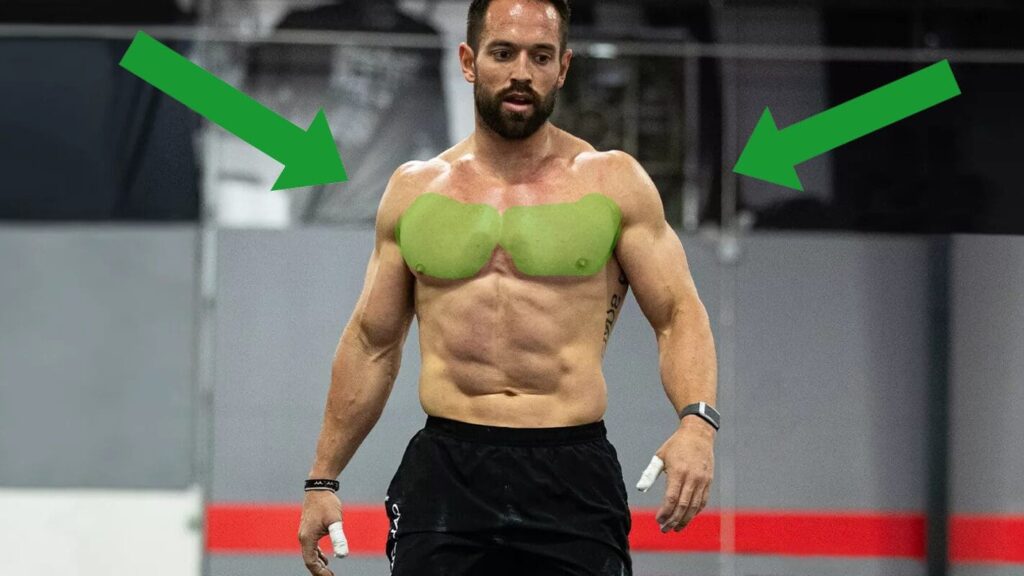
The pectoralis major is the large chest muscle that creates most of the visible mass across the front of the torso. Its fibers contribute strongly to bringing the upper arm toward the midline of the body and moving the arm across the chest. This is why presses, push ups, and fly variations can all train the pecs effectively.
Muscle growth is driven by repeated exposure to hard resistance training. The exact equipment matters less than whether the exercise can be progressed and performed with control. A large review of resistance training research found a dose response relationship between weekly sets and muscle growth, meaning more productive weekly work generally led to greater gains within the studied range. That does not mean every set should be exhausting or that more is always better. It means a chest workout needs enough challenging work to create a reason for the muscle to adapt.
You also do not need to use very heavy loads exclusively. A review and meta analysis found that low load and high load resistance training can produce similar hypertrophy when sets are performed with sufficient effort. Lighter exercises such as push ups can therefore be highly productive when you make them difficult enough through added load, more demanding variations, or sets performed close to your technical limit.
Technique still matters. A difficult set should challenge the target muscles, not turn into a rushed series of partial repetitions. Use a controlled lowering phase, maintain a comfortable shoulder position, and stop a set when you can no longer complete another repetition with good form. Research on proximity to failure suggests that training close to failure can support hypertrophy, although taking every set to absolute failure is not necessary.
Exercise One: Weighted Push Ups
Why Weighted Push Ups Build the Chest
The push up is often dismissed as a beginner exercise, but it can be an excellent chest builder when it is progressively overloaded. It trains a movement pattern similar to a horizontal press while allowing the shoulder blades to move naturally on the rib cage. For many lifters, that makes the movement feel more comfortable than pressing a fixed barbell.
Research comparing push up training with bench press training has found that progressive push up training can increase chest muscle thickness and upper body strength. Another study found similar hypertrophy outcomes from low load bench pressing and push ups when the loading conditions were comparable. These findings support an important point: bodyweight training is not automatically inferior for chest development. It simply needs a progression strategy.
A basic push up becomes less effective once you can perform many comfortable repetitions. At that stage, wearing a weighted vest, placing a plate securely across the upper back with a training partner’s help, or elevating the feet can increase the resistance. The goal is to select a version that lets you perform challenging, controlled sets in a moderate to high repetition range.
How to Perform Them
Start in a strong plank position with your hands placed slightly wider than shoulder width. Your body should form a straight line from your head through your hips to your heels. Lower yourself by bending the elbows and allowing the chest to travel toward the floor. Keep your elbows at an angle that feels comfortable rather than forcing them directly outward.
Lower until your chest is close to the floor or until you reach the deepest range you can control without shoulder discomfort. Press the floor away and finish with the chest, shoulders, and hips rising together. Avoid sagging through the lower back or leading the movement with the hips.
If regular push ups are currently too difficult, begin with hands elevated on a sturdy surface. If they are too easy, add load before simply chasing endless repetitions. Once you can perform your target repetitions with excellent technique, increase the challenge slightly.
How to Program Them
Perform weighted push ups early in your workout, when you have the energy to create high quality repetitions. Start with three hard sets of six to 15 repetitions. Keep one to three repetitions in reserve on most sets, meaning you should feel capable of performing only a small number of additional clean repetitions.
Train them one or two times per week. If you also use the other exercises in this article, begin with six to 10 challenging chest sets per week and adjust according to progress, recovery, and experience level.
Exercise Two: Cable Chest Flyes
Why Cable Chest Flyes Build the Chest
Cable chest flyes train the pecs through horizontal adduction, which is the action of bringing the upper arm across the body. Unlike a press, the elbows remain only slightly bent, so the chest takes on a larger share of the movement while the triceps contribute less.
The cables provide resistance throughout the movement and allow you to choose an arm path that feels comfortable. This is especially useful for lifters who feel their shoulders more than their chest during pressing exercises. You can position the pulleys at different heights and adjust your torso angle slightly, but the central goal stays the same: bring the upper arms toward the midline using the chest rather than merely swinging the hands together.
Research comparing dumbbell flyes and barbell bench pressing found meaningful pec activation during both movements. It is important not to treat muscle activation findings as a direct guarantee of muscle growth, since activation is only one piece of the training picture. However, newer training research comparing dumbbell chest press and dumbbell fly training found similar increases in pectoralis major muscle size in recreationally trained individuals. This suggests that a well programmed fly variation can be more than a finishing exercise.
How to Perform Them
Set the pulleys slightly above shoulder height and take one handle in each hand. Step forward until you feel tension in the cables, then take a staggered stance for balance. Begin with your arms opened comfortably to each side and maintain a slight bend in the elbows.
Bring your upper arms forward and toward each other in a smooth arc. Think about moving your elbows together rather than trying to touch the handles as quickly as possible. Pause briefly when your hands meet in front of your chest, then return slowly until you feel a comfortable chest stretch.
Do not let the shoulders roll far forward at the end of the repetition. Also avoid chasing the deepest possible stretch if it causes pain or loss of control. The best range of motion is one you can load consistently while keeping tension where you want it.
How to Program Them
Cable chest flyes work well after a more demanding compound movement, although they can also be your main chest exercise if pressing is uncomfortable. Perform two to four sets of 10 to 20 repetitions. Choose a load that allows a controlled stretch and a deliberate squeeze without using momentum.
Progress can be simple. Add a small amount of weight when you reach the top of your repetition range on every set with good form. You can also make the exercise harder by slowing the return phase, but do this gradually so soreness does not interfere with your next session.
Exercise Three: Dumbbell Floor Press
Why Dumbbell Floor Presses Build the Chest
The dumbbell floor press is a practical pressing exercise for lifters who want to train the chest without a bench. The floor provides a stable base, while dumbbells let each arm work independently. You can use a neutral grip, a palms forward grip, or a position between the two, depending on what feels best at the shoulders and wrists.
The floor stops the upper arms before they travel far behind the torso. This shortens the bottom range compared with a traditional bench press, which may be useful if deep pressing positions aggravate your shoulders. The reduced range does not make the exercise useless for chest growth. Hypertrophy depends on accumulating challenging, progressively overloaded work, and the floor press can provide that when it is performed with effort and appropriate loading.
Dumbbell pressing also requires each side to control its own load. Research comparing different bench press modes has shown differences in muscle activity, strength performance, and total repetitions between barbell, dumbbell, and Smith machine pressing. The practical takeaway is not that one tool is universally superior. It is that different pressing options can provide a meaningful training stimulus, and dumbbells are a viable option when a barbell bench press is not part of your plan.
How to Perform Them
Sit on the floor with a dumbbell in each hand resting securely on your thighs. Lean back under control and use your knees to guide the dumbbells into the starting position above your chest. Keep your feet planted and your knees bent, which can help you feel stable.
Lower the dumbbells slowly until the backs of your upper arms gently touch the floor. Pause briefly without relaxing completely, then press the dumbbells upward and slightly inward. Your wrists should remain stacked over your elbows, and the dumbbells should finish above the chest rather than drifting toward the face.
A neutral grip often feels comfortable, especially if you have a history of shoulder irritation. Keep the elbows angled moderately from the torso and avoid crashing them into the floor. The contact should be quiet and controlled.
How to Program Them
Use the dumbbell floor press as your main loaded press if weighted push ups are not practical, or pair it with push ups if you want more chest volume. Perform three to four sets of eight to 15 repetitions. Rest long enough to maintain performance, usually around two minutes or more for hard working sets.
When both dumbbells become easy at the top of the repetition range, increase the load if possible. If your dumbbells are limited, add repetitions, slow the lowering phase, or use a brief pause with your upper arms on the floor before pressing again. These methods should supplement gradual load progression, not replace it forever.
Building a No Bench Press Chest Routine
A simple chest session can begin with weighted push ups, continue with dumbbell floor presses, and finish with cable chest flyes. This sequence starts with the movement that demands the most whole body coordination, then moves toward more isolated chest work. If you prefer dumbbell floor presses, place them first instead.
Start conservatively. For example, three sets of weighted push ups, three sets of dumbbell floor presses, and two sets of cable chest flyes is enough work for many people. Train this session once or twice each week, leaving enough time between sessions for recovery and performance to return.
The most useful signal is progress over time. Keep track of the load, variation, repetitions, and quality of each set. If you are completing more repetitions with the same resistance, using a harder variation, or controlling the movement better at a heavier load, you are creating progressive overload.
Nutrition and recovery also influence results. Resistance training provides the stimulus, but the body needs sufficient energy, protein, and sleep to adapt well. You do not need a perfect routine, but you do need a repeatable one. The three exercises in this article are effective because they can be trained hard, progressed clearly, and adjusted to suit your equipment and comfort.
The Bottom Line
You can build bigger pecs without the bench press. Weighted push ups provide an effective compound press that can be loaded over time. Cable chest flyes let you train the chest directly through a smooth adjustable path. Dumbbell floor presses offer a stable free weight option that may feel more manageable for lifters who dislike deep pressing ranges.
Use controlled repetitions, train close enough to your limit that the sets are genuinely challenging, and build your weekly volume gradually. The bench press can be useful, but consistent effort and measurable progression are what make the pecs grow.
References
- Enes, A., et al. (2025) ‘Dumbbell bench press and dumbbell fly elicit similar pectoralis major muscle hypertrophy in recreationally trained individuals’, Journal of Strength and Conditioning Research.
- Kotarsky, C.J., Christensen, B.K., Miller, J.S. and Hackney, K.J. (2018) ‘Effect of progressive calisthenic push up training on muscle strength and thickness’, Journal of Strength and Conditioning Research, 32(3), pp. 651 to 659.
- López Vivancos, A., González Gálvez, N., Orquín Castrillón, F.J., Vale, R.G. de S. and Marcos Pardo, P.J. (2023) ‘Electromyographic activity of the pectoralis major muscle during traditional bench press and other variants of pectoral exercises: A systematic review and meta analysis’, Applied Sciences, 13(8), 5203.
- Lasevicius, T., Ugrinowitsch, C., Schoenfeld, B.J., Roschel, H., Tavares, L.D., De Souza, E.O., Tricoli, V. and Teixeira, E.L. (2018) ‘Effects of different intensities of resistance training with equated volume load on muscle strength and hypertrophy’, European Journal of Sport Science, 18(6), pp. 772 to 780.
- Refalo, M.C., Helms, E.R., Trexler, E.T., Hamilton, D.L. and Fyfe, J.J. (2023) ‘Influence of resistance training proximity to failure on skeletal muscle hypertrophy: A systematic review with meta analysis’, Sports Medicine, 53(3), pp. 649 to 665.
- Saeterbakken, A.H., Andersen, V., Shaw, M., Mogstad, E.H., Vonheim, A. and Solstad, T.E. (2020) ‘A comparison of muscle activation between barbell bench press and dumbbell flies in resistance trained males’, Journal of Sports Science and Medicine, 19(4), pp. 645 to 651.
Key Takeaways
| Exercise | Main benefit | Productive starting approach |
|---|---|---|
| Weighted push up | Compound chest training that can be progressively overloaded | Three sets of six to 15 controlled repetitions |
| Cable chest fly | Direct chest training with an adjustable arm path and steady resistance | Two to four sets of 10 to 20 controlled repetitions |
| Dumbbell floor press | Stable free weight pressing without a bench | Three to four sets of eight to 15 controlled repetitions |
| Weekly plan | Consistent challenging volume supports muscle growth | Start with six to 10 hard chest sets per week and progress gradually |
