

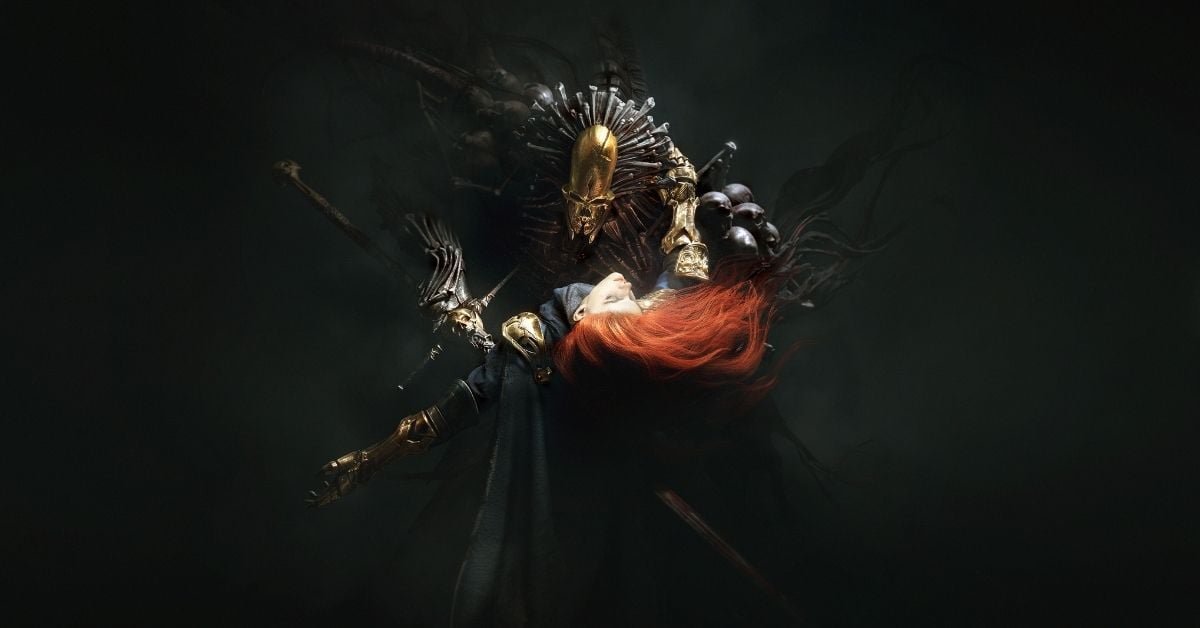
Annulus is an upcoming free-to-play dark-fantasy turn-based tactical RPG by a Hong Kong game studio called NIRVANA.
The game casts the player as a mercenary captain on the war-torn continent of Noviseth, a setting inspired by gritty, hard-edged medieval warfare infused with classic Lovecraftian visual elements. In Annulus, you’ll recruit and develop a diverse roster of warriors, craft weapons and inscriptions, and make difficult moral and strategic decisions that ripple across both the narrative and the battlefield.
To quickly set your expectations on what this game is, it’s an experience similar to other free-to-play turn-based tactical RPGs like Mecharashi and Sword of Convallaria, where you’ll recruit a roster of unique characters, make teams out of them, and engage in tactical turn-based combat, complete with all the other aspects that come with free-to-play online RPGs. Daily and weekly activities, limited-time events, microtransactions, and all that jazz.
Story and Setting
Annulus is set in the fictional continent of Noviseth, and we don’t really know much about this place, except that it’s a gritty, grim-dark war-torn land filled with different races, particularly humans and orcs, which made up the bulk of my roster, but there are probably other races too, and I haven’t gotten around to seeing them yet.
And based on what I’ve played so far, these factions aren’t necessarily based on race either; they’re more like different groups made up of different races pursuing each of their own agendas. That with a generous sprinkle of Lovecraftian themes.

You’ll mainly follow the story of the mercenary Wade as he navigates his war-torn world, told through both handcrafted cinematics made with Unreal Engine 4 and visual novel-style dialogues that you’ll encounter as you normally progress through the game.
Later down the line, the map opens up to additional side quests that tell different stories, which are focused on other aspects of the game’s lore outside of the main storyline. And I’m pretty sure with how these games usually go, there’s either gonna be main story content or side story content about the latest characters, so running out of content may prove to be a bit of a challenge.
Gameplay and Mechanics
Right out of the cinematic, the game instantly throws you into battle. This part is more of a little taste of power rather than a reflection of the actual gameplay. So while you’ll be one-shotting everything in this part of the game, it’ll take quite a while before you reach this level of power in the actual game.
The camp is where you’ll do most of the character-building activities, like leveling up your characters and recruiting more mercenaries for your roster. It starts off empty, but it’ll slowly reveal more options as you progress.
The map is the game’s main method of navigating the levels, if you’ve played games like these before then you’re pretty much familiar with how this works. You clear story levels, enjoy the story, get rewards, and you go on and level up your characters, except Annulus doesn’t really let you do half of that until you play through the early levels of chapter one.

Navigating through the map, you’ll be doing one of many different things, most of the time, you’ll probably be fighting battles, but there’s a lot of other activities scattered throughout the map that offer a bunch of different stuff.
One such activity that caught my attention was these camps and towns where you can interact with NPCs that expand the game’s lore through dialogue and, more importantly, may give you quests that give out rewards. Ignoring these sections is probably inconsequential in the grand scheme of things, but they’re there; you can miss out on them, so it’s probably a good idea to do them anyway.
There’s also a bunch of other stuff, like daily combat activities to earn character development materials, and just a whole slew of activities that’ll need your attention at some point. You’ll eventually discover them as you play through more of the game.
Combat
I’m not even gonna sugarcoat it. We’ve been here, we’ve seen this before. Grid-based, turn-based tactics, rock-paper-scissor mechanics, synergies, nothing new, but I’d dare say, at least it’s done right. The controls in this build aren’t as intuitive as I want them to be, but it’s good enough to be able to play the game smoothly.
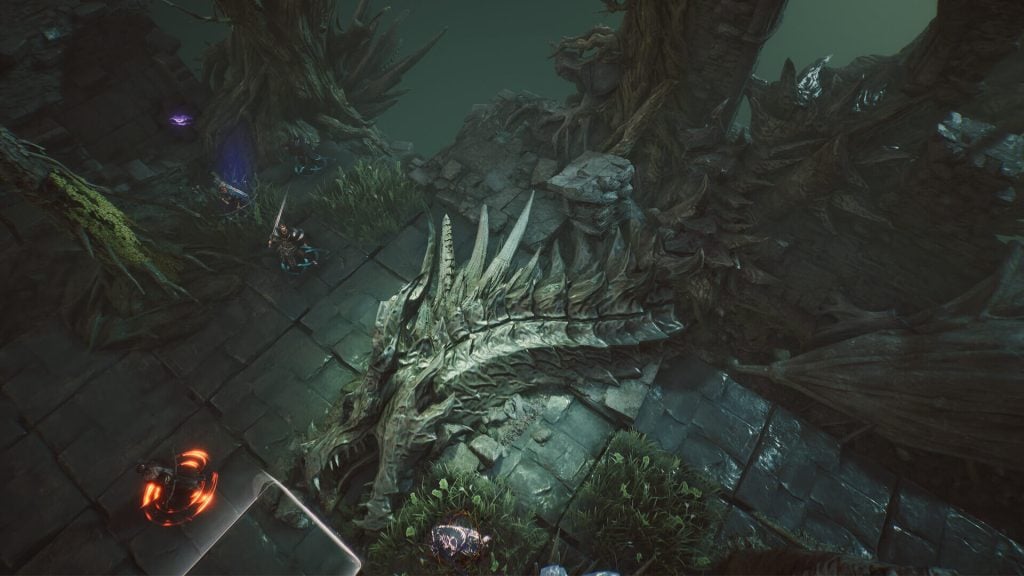
What I really liked about Annulus’ combat and level design is that it actually makes you think. Every level starts off differently, and every chapter showcases some kind of unique gimmick.
Chapter 1 was pretty basic; there really wasn’t anything worth noting, but then Chapter 2 introduced these tiles that give certain effects when a unit is stationed on top of them. Some tiles heal units, some give them damage resistance, and others have these fruits that give a limited-time buff after picking them up.
And then Chapter 3 rolled in, and it completely reverses the dynamic, where instead of tiles that give buffs, it has tiles that are traps that deal damage, prompting me to change my playstyle once again from quickly rushing into flanks and vantage points to hunkering down and creating choke points and kill zones. So I have to admit, this game has its moments.

You can also really feel the different unit types. As opposed to just being different reskinned damage dealers, every archetype in Annulus actually feels like it has one unique purpose. On my playthrough, my core team consisted of an archer, a tank, and two mounted cavalry.
The archer whittles down enemies from afar, the defender keeps the archer from dying, and the two mounted cavalry get up close and personal to clean up the battlefield. While the cavalry can easily go up in the enemy’s face and give them a good spanking, the defender, on the other hand, moves with a speed of one tile per turn.
Making it a character more focused on defense and easily countered by ranged and mobile units, but easily counters mobile units like cavalry that are going after the unit it’s protecting. So while the game has a pre-established rock-paper-scissors-like mechanic for damage bonuses, the real strategy comes from the unit composition you come up with. Because while my setup gets me through most of my battles, it easily gets obliterated by a single mage.
Key Features
The game isn’t really out yet, so I won’t be going over the game’s economy and microtransactions, especially considering that they don’t really exist yet as of writing. So lastly, I want to take a look at all the other features that Annulus has, starting with the characters,
And I must say, the devs did a pretty good job at designing each and every single one of the units. Legendary and story characters do stand out and feel unique, but at the same time, still retain that core medieval mercenary aesthetic that the game grounds itself in.
One of the main selling points of this game is the multiple “evolution paths” for common units where you can choose to evolve them into different archetypes.

A sorcerer can evolve and specialize in fire, water, ice, lightning, or even poison to suit your needs. There are also evolution paths like the guards’, where you can choose to either turn them into damage-dealing vanguard units or backline protectors. But for unique characters like Wade, evolution is much more linear. And upon reaching legendary rank, you can further enhance your characters’ stats by feeding them duplicates.
The game also features some very atmospheric graphics with dynamic weather and detailed lighting powered by Unreal Engine, making each battlefield come to life. There’s also a system for player-driven narrative and exploration.
Depending on the choices that you make, you’ll find yourself an ally or the enemy of certain factions in the game. And depending on your reputation, you’ll encounter different stories and opportunities throughout your playthrough, so no two lobbies will ever be the same.
Lastly, the feature that I really appreciate the most is its interactive battlefields, wherein the terrain, weather, environmental effects, and even day/night cycles may dynamically impact combat, especially when coupled with unique character archetypes, making each battle feel different every single time.
If you want to check the game out for yourself, there’s also a playtest from February 22 up until March 3rd, easily accessible on Steam, during this Steam Next Fest.
