

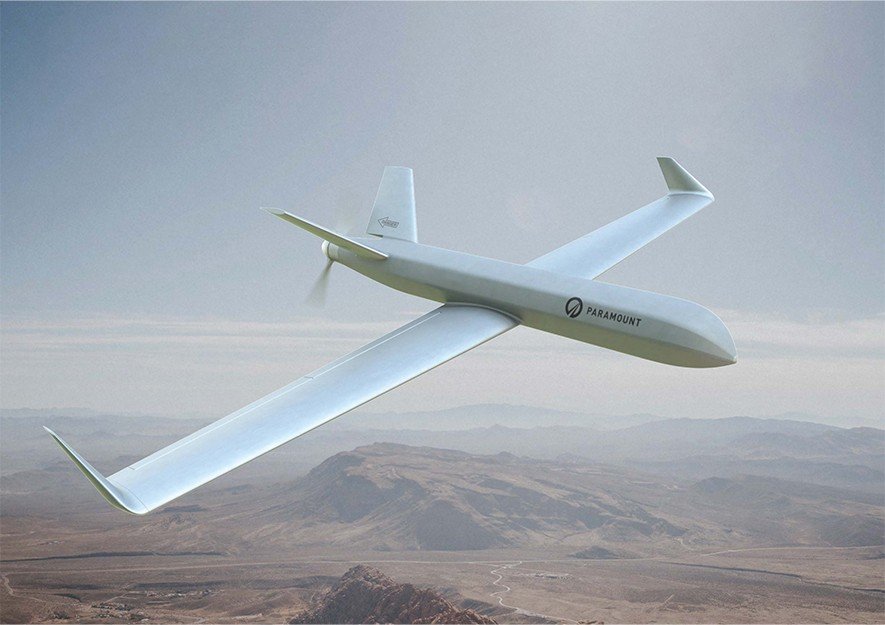

Previously developed under the N-Raven programme name, the V-Raven has moved from the original catapult-launched drone towards a vertical take-off and landing (VTOL) aircraft family capable of operating from dispersed locations without a runway, catapult or fixed launch infrastructure.
Development of the original N-Raven loitering munition began in 2021. It had a wingspan of 3.6 m. weighed 55 kg, carried a 13.5 kg payload, and reached a speed of 180 km/h. The electric version had an endurance of two hours, while the petrol version had 4.5 hours, with a range of up to 100 km.
V-Raven is designed as a returnable, reusable intelligence, surveillance, and reconnaissance (ISR) and light attack platform. Unlike expendable loitering munitions, the aircraft takes off vertically, conducts its assigned mission and returns to land for subsequent use. This enables the platform to provide persistent surveillance while offering a different operational model and through-life economics from single-use unmanned systems.
The ISR configuration is equipped with an electro-optical sensor system that provides day-and-night surveillance capability, allowing operators to assess points and areas of interest, monitor movements, and identify potential targets. The light-attack configuration would include the planned integration of precision-guided weapons within the V-Raven architecture. This was illustrated at AAD 2026, where the VTOL drone was shown carrying Rheinmetall’s new LongClaw glide bomb. Designed specifically for drone deployment, the 7.5 kg LongClaw delivers a 3 kg pre-fragmented warhead to the target and provides a measured lethality radius of 30 m. LongClaw illustrates the planned integration of precision-guided weapons within the V-Raven architecture.

The petrol-powered V-Raven offers up to eight hours of endurance, a range of up to 1,200 km and a cruise speed of approximately 140 km/h. Its communications range with the ground station is up to 150 km. An electric configuration provides up to two hours of endurance and a range of up to 250 km. The aircraft has a 3.6 m wingspan, a 2.1 m fuselage length, and a maximum take-off weight of 65 kg.
by David Oliver
