

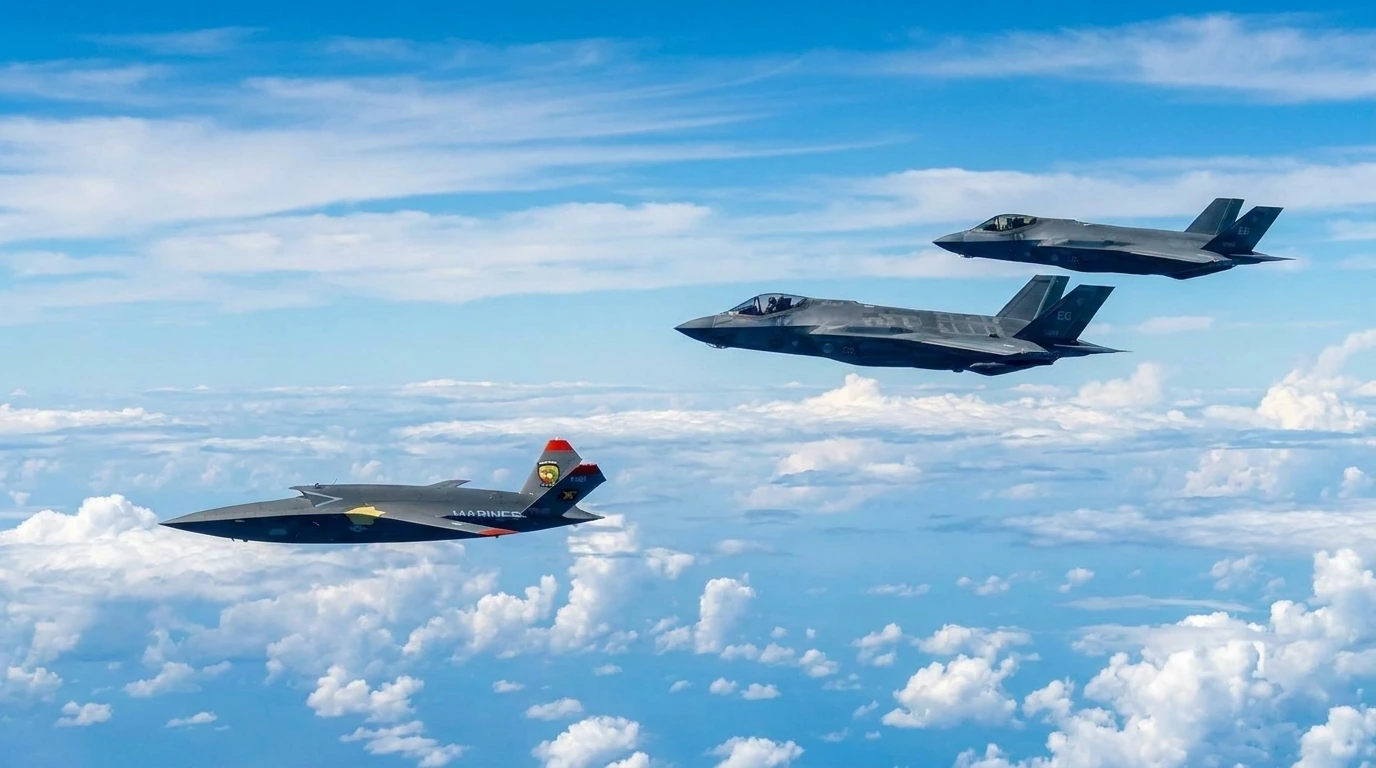
Imagine a fighter pilot entering hostile airspace with several unmanned aircraft flying alongside. One drone scans enemy radar positions, another monitors incoming threats, while a third carries weapons for a potential strike.
The pilot coordinates the mission without putting additional human lives at risk. This isn’t science fiction. It’s the idea behind the loyal wingman drone, a technology that could fundamentally change modern air combat.
Military aviation is entering a new phase. Advanced fighter jets remain essential, but increasingly sophisticated air defense systems, electronic warfare, and expensive aircraft are creating new challenges for air forces. Sending another $100 million fighter into a dangerous engagement isn’t always the smartest option. Sometimes, an autonomous aircraft can perform the supporting mission instead.
That’s where loyal wingman technology comes in.
Unlike conventional military drones designed primarily for surveillance or remote-controlled operations, loyal wingman aircraft are developed to cooperate with crewed fighters. They can perform reconnaissance, carry weapons, disrupt enemy radar, and provide additional battlefield information. Artificial intelligence helps coordinate these tasks, although human oversight remains important.
Several countries are already investing heavily in this concept. Australia’s MQ-28 Ghost Bat, America’s XQ-58A Valkyrie, and emerging Collaborative Combat Aircraft (CCA) programs demonstrate how quickly this field is developing.
But there’s a bigger question worth exploring.
Will these autonomous aircraft simply give fighter pilots extra support, or could they completely reshape how air forces plan and fight battles? The answer involves more than artificial intelligence and impressive aircraft designs. It could change fighter formations, combat strategies, aircraft survivability, and even the economics of military aviation.
Understanding this shift means looking beyond the drones themselves. It’s about the future relationship between human pilots and machines in the world’s most contested skies.
What Is a Loyal Wingman Drone and How Does It Work?
A loyal wingman drone is an unmanned military aircraft designed to fly alongside crewed fighter jets and support their missions. Think of it as an additional member of a fighter squadron, except it doesn’t need a pilot sitting inside. Instead, it uses advanced software, sensors, and communication systems to work with human-controlled aircraft.
The concept revolves around manned-unmanned teaming (MUM-T), where pilots coordinate with autonomous or remotely supervised aircraft during military operations. Rather than operating independently, these drones receive mission instructions and cooperate with their assigned fighter aircraft.
But how does this arrangement actually work?
Imagine an F-35 Lightning II approaching a heavily defended area. Instead of flying alone, the pilot coordinates with several loyal wingman drones. One moves ahead to detect enemy radar signals, while another monitors potential threats from a different direction. A third might carry weapons for a coordinated engagement.
The pilot remains responsible for important mission decisions. Meanwhile, onboard autonomy helps the drones navigate, maintain formations, process sensor information, and execute assigned tasks.
Artificial intelligence plays an important role here. It allows aircraft to respond to changing conditions without requiring continuous instructions for every movement. However, autonomy doesn’t necessarily mean unrestricted decision-making, particularly when weapons are involved.
How Are Loyal Wingman Drones Different From Conventional Military Drones?
Traditional military UAVs often focus on surveillance, reconnaissance, or remotely controlled strike missions. Loyal wingman aircraft are designed specifically around cooperation with crewed combat aircraft.
| Feature | Conventional Military UAV | Loyal Wingman Drone |
| Primary purpose | Surveillance and strike missions | Supporting crewed fighters |
| Operations | Remote-controlled or autonomous | Autonomous and collaborative |
| Human involvement | Ground-based operators | Fighter pilots and mission controllers |
| Combat integration | Mission-dependent | Designed for fighter teaming |
| Typical roles | Reconnaissance and attacks | ISR, electronic warfare, and weapons delivery |
One important distinction: not every unmanned combat aircraft qualifies as a loyal wingman. Its defining characteristic is the ability to operate as part of a coordinated crewed-uncrewed combat team.
Ultimately, the concept changes the traditional idea of a fighter formation. Instead of relying entirely on expensive piloted aircraft, air forces could deploy a combination of human expertise and autonomous machines.
How Do Loyal Wingman Drones Support Fighter Jets in Combat?
A fighter pilot can only see and respond to so much at once. Enemy radar, incoming missiles, hostile aircraft, and changing battlefield conditions demand constant attention.
Now imagine having several autonomous aircraft helping manage those threats. That’s the tactical advantage loyal wingman drones could bring to modern air combat.
Rather than simply following a fighter jet, these aircraft can perform different supporting missions. Each drone could carry specialized equipment, allowing a single formation to cover several combat requirements simultaneously.

Here are six important ways they could support fighter aircraft.
Intelligence, Surveillance, and Reconnaissance
Loyal wingman drones can fly ahead of crewed fighters to investigate potentially dangerous areas. Their onboard sensors could identify enemy aircraft, monitor ground installations, and collect battlefield intelligence.
This gives pilots additional information before entering contested airspace. It also reduces the need to expose expensive crewed aircraft to unnecessary risks.
Electronic Warfare and Radar Jamming
Modern air defenses depend heavily on radar and communication networks. Specially equipped drones could carry electronic warfare systems to interfere with these capabilities.
For example, one aircraft might attempt to disrupt enemy radar while its accompanying fighter approaches from another direction. Such coordination could complicate an opponent’s defensive response.
Weapons Delivery and Coordinated Attacks
Some loyal wingman platforms are designed to carry weapons. This creates opportunities for fighters to coordinate attacks without placing every weapon aboard a crewed aircraft.
A drone could potentially engage an assigned target while the pilot manages the wider mission. Actual weapon employment would depend on platform capabilities, authorization rules, and operational procedures.
Decoy Operations
An unmanned aircraft could act as a decoy, attracting enemy attention or forcing air defenses to reveal their positions. This may help protect valuable fighter aircraft and complicate an opponent’s targeting decisions.
Extended Sensor Coverage
Multiple drones operating in different positions can collect information from several directions. Sharing that information could improve a fighter formation’s understanding of the battlefield.
Forward Operations in Dangerous Airspace
Perhaps the biggest advantage is risk distribution. Loyal wingman drones could undertake particularly hazardous supporting missions where losing a crewed aircraft would be unacceptable.
The important distinction is that these aircraft aren’t simply extra weapons platforms. They’re additional sensors, electronic warfare assets, and potential combat partners.
For fighter pilots, that could mean better information, more tactical options, and fewer missions requiring them to face every threat alone.
The Most Advanced Loyal Wingman Drones Changing Military Aviation
The race to develop loyal wingman drones is no longer theoretical. Several countries are building unmanned aircraft designed to operate alongside modern fighters, bringing different approaches to future air combat.
Some prioritize affordability, while others emphasize stealth, weapons capacity, and autonomous operations.

Here are five programs worth watching.
MQ-28 Ghost Bat – Australia
Developed by Boeing Australia in partnership with the Royal Australian Air Force, the MQ-28 Ghost Bat is among the most prominent collaborative combat aircraft programs.
It is designed for reconnaissance, electronic warfare, and combat support. Boeing reports a range exceeding 2,000 nautical miles and a maximum speed approaching Mach 0.9.
The program reached an important milestone in December 2025, when an MQ-28 teamed with an E-7A Wedgetail and F/A-18F Super Hornet during an autonomous air-to-air missile engagement demonstration.
XQ-58A Valkyrie – United States
Developed by Kratos and the US Air Force Research Laboratory, the XQ-58A Valkyrie emphasizes affordable, attritable combat aviation.
Its design allows air forces to experiment with autonomous operations without relying entirely on expensive crewed fighters. In July 2025, US Air Force testing demonstrated pilots managing Valkyrie aircraft during simulated combat scenarios.
YFQ-42A and YFQ-44A – United States
These aircraft represent the US Air Force’s Collaborative Combat Aircraft initiative. Developed by General Atomics and Anduril, respectively, they are intended to complement advanced crewed fighters.
Their development reflects Washington’s interest in deploying larger formations of autonomous combat aircraft.
Bayraktar Kızılelma – Türkiye
Türkiye’s Kızılelma takes a broader approach. Developed by Baykar, this unmanned fighter aircraft is designed for air-to-air and air-to-ground missions, with advanced radar and autonomous flight capabilities.
Unlike some supporting drone concepts, Kızılelma is intended to perform substantial combat missions independently.
How Do These Aircraft Compare?
| Aircraft | Country | Main focus |
| MQ-28 Ghost Bat | Australia | Collaborative combat |
| XQ-58A Valkyrie | US | Affordable autonomy |
| YFQ-42A | US | Collaborative combat |
| YFQ-44A | US | Collaborative combat |
| Kızılelma | Türkiye | Unmanned fighter operations |
These programs aren’t interchangeable. Some are designed specifically as fighter companions, while others pursue broader unmanned combat roles. Together, however, they reveal where military aviation is heading: more autonomous aircraft working alongside human pilots.
How Will Loyal Wingman Drones Change Future Air Combat Tactics?
The biggest change loyal wingman drones could bring isn’t necessarily greater firepower. It’s the ability to distribute combat responsibilities across several aircraft instead of relying on one fighter to do everything.
Traditional air combat formations depend heavily on the capabilities of individual aircraft and their pilots. A fighter must detect threats, process information, coordinate with other aircraft, and engage targets. Even advanced fighters have practical limitations.
Autonomous wingmen could change that equation.

From Traditional Formations to Distributed Combat Teams
Imagine an F-35 flying alongside four loyal wingman drones during an air-superiority mission. Instead of keeping every aircraft in a conventional formation, the pilot assigns different tasks.
One drone moves forward to collect intelligence. Another monitors enemy radar activity, while two others provide additional weapons capacity.
The F-35 remains the central decision-making platform, but its supporting aircraft extend the formation’s reach. This creates a more distributed approach to aerial warfare.
More Aircraft, More Combat Options
One promising advantage is increased combat mass. Air forces could deploy additional unmanned aircraft without requiring a corresponding increase in fighter pilots.
The US Air Force demonstrated this approach in July 2025. During testing at Eglin Air Force Base, pilots flying an F-16C and an F-15E each managed two XQ-58A Valkyrie aircraft in simulated combat scenarios.
This was significant because it demonstrated real-time integration between crewed fighters and semi-autonomous platforms.
Better Situational Awareness
Multiple aircraft can observe different parts of a battlefield. When their sensors share information, pilots potentially gain a clearer picture of enemy movements and threats.
This matters particularly against modern air defenses, where detecting an opponent first can determine the outcome of an engagement.
Reduced Risk to Human Pilots
Loyal wingman drones could undertake dangerous supporting missions ahead of crewed aircraft. If an unmanned platform is lost, the military avoids losing an onboard pilot.
However, aircraft losses still carry financial and operational consequences.
A New Role for Fighter Pilots
Perhaps the most interesting transformation involves the pilot’s responsibilities.
Instead of concentrating entirely on flying and fighting one aircraft, pilots could become mission commanders coordinating several autonomous teammates.
DARPA’s Air Combat Evolution program explored this principle through human-machine collaborative dogfighting experiments.
The future fighter pilot may therefore command an entire airborne team. That’s a substantial shift in how air forces could organize combat operations.
Why Loyal Wingman Drones Could Give Air Forces a Major Advantage
Modern fighter jets are extraordinarily capable, but they come with an expensive problem: every aircraft requires substantial investment, maintenance, and trained personnel. Building a larger fighter fleet isn’t always financially practical.
Loyal wingman drones offer another approach. Instead of purchasing additional crewed fighters, air forces could expand their combat capabilities using more affordable autonomous aircraft.
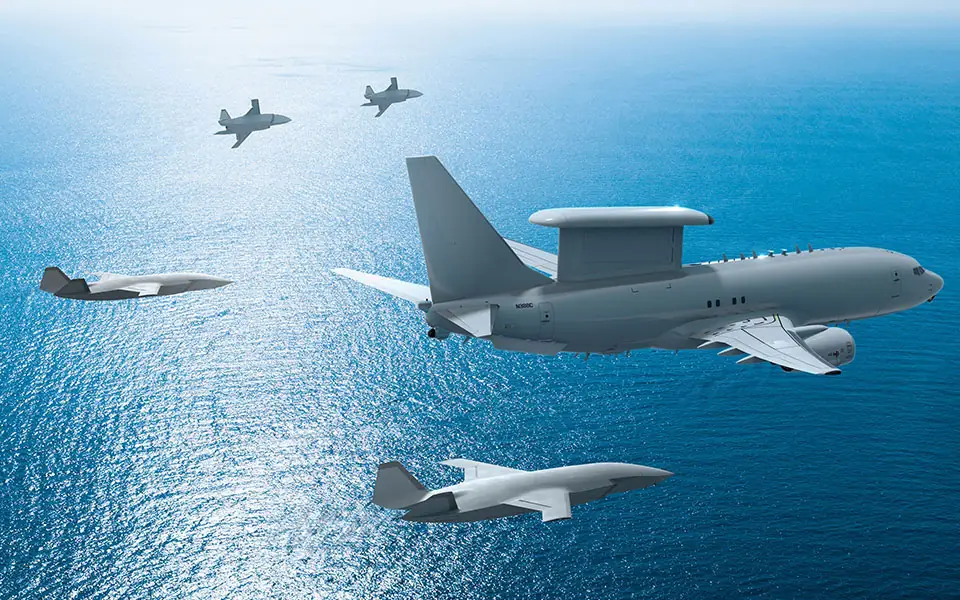
Here are six advantages that make this technology particularly attractive.
Lower Acquisition Costs
One major attraction is affordability. US Air Force officials have previously estimated that Collaborative Combat Aircraft could cost roughly one-third as much as a crewed fighter.
That difference matters. The money saved could support additional aircraft, weapons, maintenance, and training.
Greater Combat Mass
More aircraft mean more tactical options. A formation containing several drones and a crewed fighter could distribute reconnaissance, electronic warfare, and weapons responsibilities across multiple platforms.
This makes it harder for an opponent to concentrate defensive resources against a single target.
Improved Pilot Survivability
Losing an aircraft is always costly. Losing a trained fighter pilot is even more serious.
Because loyal wingman drones operate without onboard crews, they can undertake dangerous supporting missions without exposing additional pilots to direct combat risks.
Greater Mission Flexibility
Modular designs could allow different drones to carry specialized equipment. One configuration might prioritize electronic warfare, while another focuses on reconnaissance or weapons delivery.
Air forces could therefore assemble mission-specific formations rather than relying exclusively on multirole fighters.
Attritable Aircraft and Operational Freedom
The concept of attritable aircraft is particularly interesting. These platforms are designed to be affordable enough that commanders can accept greater operational risks than they would with expensive crewed fighters.
However, attritable doesn’t necessarily mean disposable. The US Air Force increasingly describes its CCA approach as optionally attritable, depending on mission requirements.
Extended Operational Reach
Drones operating ahead of crewed fighters could extend sensor coverage and help formations gather information across larger areas.
The US Congressional Research Service has highlighted affordability and increased fighter capacity as important motivations behind the CCA program.
Ultimately, loyal wingman drones could give air forces something valuable: more combat options without requiring every additional aircraft to carry a human pilot.
