

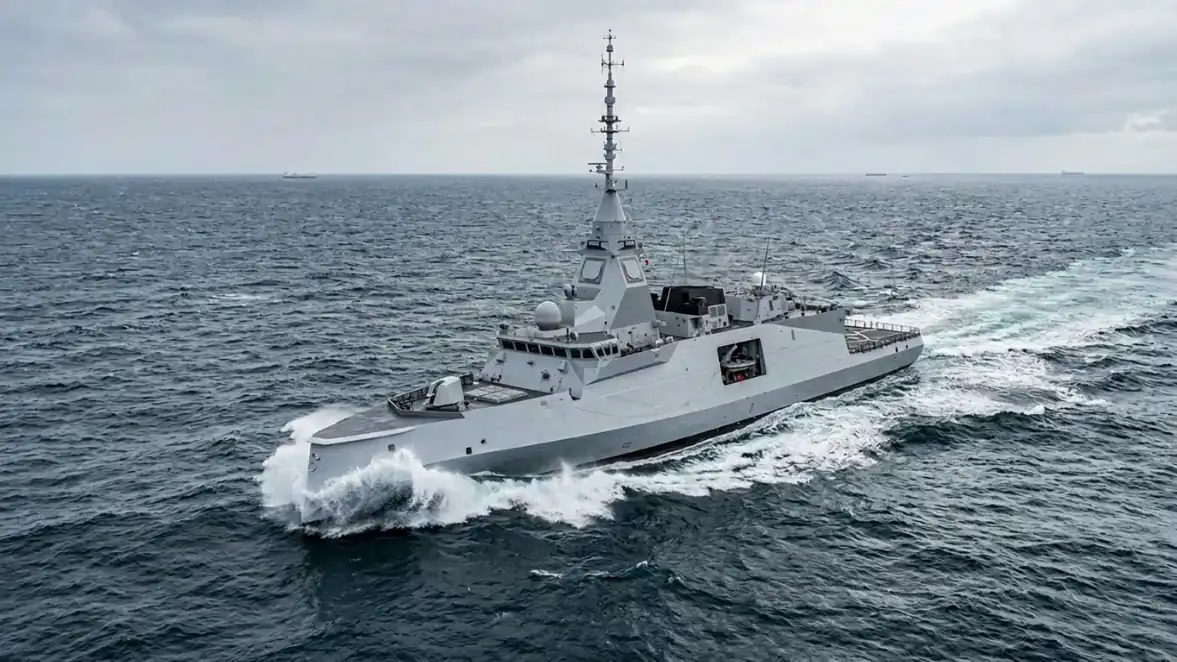
Defense Feeds – Stockholm: The Sweden Selects French FDI Frigate for $5B Luleå Program decision marks one of the country’s biggest naval modernization moves in decades as Stockholm moves to strengthen Baltic Sea defenses against rising Russian military activity.
The Swedish government has confirmed that the French-built FDI frigate design developed by Naval Group has been chosen for the Royal Swedish Navy’s future Luleå-class frigate program. The multibillion-dollar initiative is expected to significantly enhance Sweden’s anti-air, anti-submarine and surface warfare capabilities at a time of growing regional instability following Russia’s continued military pressure across Northern Europe.
The procurement decision comes shortly after Sweden officially joined NATO, a strategic shift that has accelerated Stockholm’s efforts to modernize its armed forces and align more closely with allied defense planning in the Baltic region.
The future Luleå-class frigates are expected to replace older surface combatants while giving Sweden a far more capable naval force able to operate alongside NATO fleets during high-intensity operations.
Sweden Strengthens Baltic Defenses Against Russia
The selection of the French FDI frigate platform reflects Sweden’s increasing concern over Russian naval and military activity in the Baltic Sea. Since the start of the war in Ukraine, Nordic and Baltic nations have sharply increased defense spending while reassessing regional security vulnerabilities.
Swedish military planners view advanced frigates as essential for protecting sea lanes, undersea infrastructure and NATO reinforcement routes in Northern Europe. The Baltic Sea has become an increasingly contested environment where submarines, missile systems and electronic warfare capabilities play a growing role in regional deterrence.
The FDI frigate, also known as the Belharra-class, was originally developed for the French Navy and has already secured export success with Greece. The platform is designed as a next-generation multi-role frigate capable of conducting anti-air warfare, anti-submarine missions and long-range maritime operations.
Analysts believe Sweden’s decision was influenced by the ship’s advanced sensor suite, modern combat management systems and strong interoperability with NATO naval forces. The frigates are also expected to improve Sweden’s ability to detect and track submarine activity in the Baltic, an area where Russian underwater operations remain a serious concern.
The Luleå-class program reportedly carries an estimated value of around $5 billion and is expected to become one of Sweden’s most important defense procurement projects over the coming decade.

FDI Frigate Offers Advanced Air and Naval Warfare Capability
The French FDI frigate has attracted growing international interest due to its advanced combat systems and modular design. The vessel was specifically developed for modern naval warfare environments where threats can emerge simultaneously from aircraft, missiles, submarines and electronic attack systems.
One of the warship’s most notable features is its advanced radar and air defense capability. The frigate is designed to track and engage multiple aerial threats at long range while supporting fleet-wide air defense operations.
The platform also integrates anti-submarine warfare systems including sonar technologies and helicopter support capabilities. This is particularly important for Sweden given the strategic importance of underwater warfare in the Baltic Sea.
Defense experts note that the compact but heavily armed frigate fits well with Sweden’s operational needs. Unlike larger blue-water naval powers, Sweden requires highly capable regional warships optimized for operations in confined maritime zones where survivability and sensor performance are critical.
The growing use of long-range missiles and drone systems has also pushed European navies toward more technologically advanced ships capable of operating within heavily contested environments. The FDI frigate was designed with those threats in mind, incorporating modern electronic warfare and digital combat architecture systems.
Sweden’s selection further strengthens France’s position as a major supplier of advanced naval technology within Europe. It also reflects broader efforts among European NATO members to deepen defense-industrial cooperation amid rising geopolitical uncertainty.
Nordic Rearmament Accelerates Across Europe
Sweden’s frigate decision is part of a much wider military buildup taking place across Northern and Eastern Europe following Russia’s invasion of Ukraine. Countries throughout the region are increasing defense budgets, expanding ammunition stockpiles and modernizing naval and air forces at a pace not seen since the Cold War.
The Baltic Sea has emerged as a critical strategic theater where NATO and Russia now operate in much closer proximity. Naval competition in the region is intensifying as both sides improve missile coverage, maritime surveillance and anti-submarine warfare capabilities.
For Sweden, the Luleå-class frigates will likely become a cornerstone of future naval operations alongside submarines, coastal defense systems and NATO partner forces. The vessels are expected to provide greater operational flexibility while improving deterrence against potential regional threats.
The program also highlights how European nations are increasingly prioritizing domestic and allied defense procurement rather than relying heavily on external suppliers outside the continent.
As tensions with Russia continue shaping European security policy, Sweden’s decision to adopt the French FDI frigate signals that advanced naval modernization is now viewed as essential for maintaining strategic stability in the Baltic region.
