

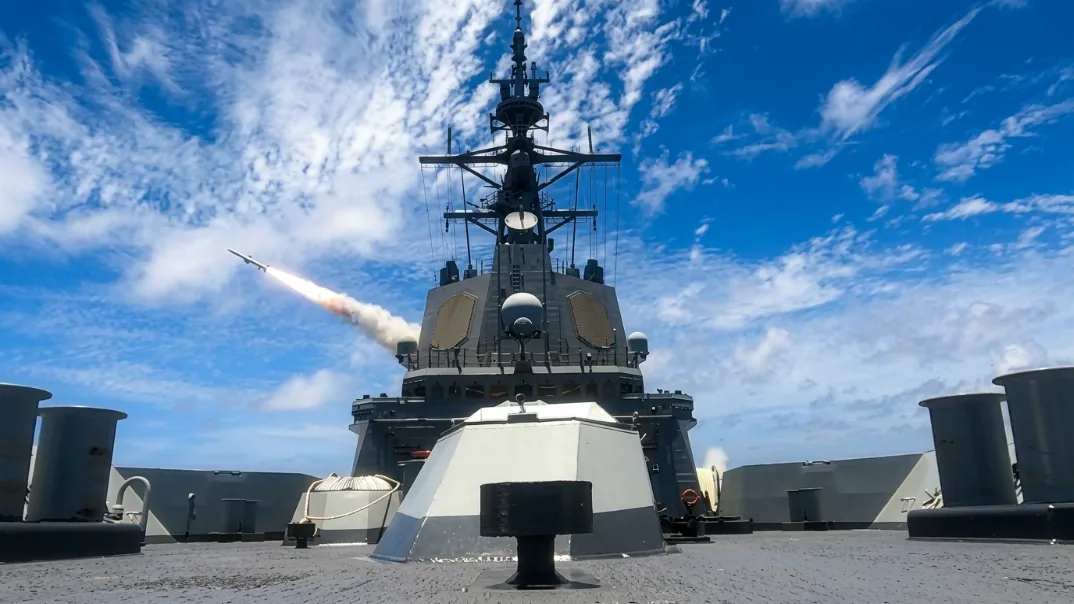
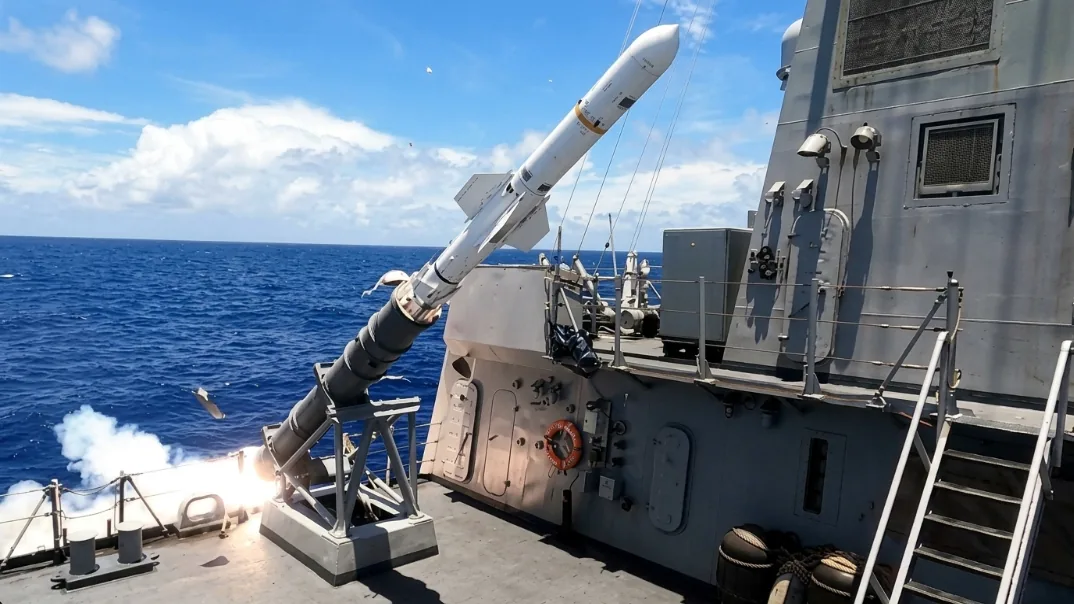
Defense Feeds, Pearl Harbor – Spanish F-101 frigate launches Harpoon missile at RIMPAC 2026, marking a significant live-fire event during the world’s largest multinational maritime exercise.
The missile launch demonstrated the Spanish Navy’s anti-surface warfare capability while highlighting the interoperability of allied naval forces participating in the U.S.-led Rim of the Pacific (RIMPAC) exercise.
The event underscores how live-fire drills remain an essential part of multinational naval training, allowing participating fleets to validate combat systems, weapon integration and tactical coordination in realistic operational scenarios.
Spanish F-101 Frigate Launches Harpoon Missile at RIMPAC 2026
The exercise in which the Spanish F-101 frigate launches Harpoon missile at RIMPAC 2026 showcased the capabilities of the F-101 Álvaro de Bazán, the lead ship of Spain’s Álvaro de Bazán-class Aegis-equipped frigates.
Designed for air defense, surface warfare and escort operations, the F-101 combines the U.S.-developed Aegis Combat System with a range of missile and sensor technologies that enable it to operate effectively in multinational naval task groups.
During the exercise, the ship successfully employed the Harpoon anti-ship missile, a long-established weapon used by numerous NATO and allied navies for engaging surface targets at stand-off ranges.
Conducting a live missile launch during a major multinational exercise provides crews with valuable operational experience while confirming the readiness of both the ship’s combat systems and its personnel under realistic conditions.
The event also demonstrated Spain’s ability to integrate seamlessly into allied maritime operations alongside naval forces from across the Indo-Pacific and Europe.
RIMPAC Continues to Strengthen Allied Naval Interoperability
Held biennially under U.S. Navy leadership, RIMPAC brings together dozens of nations for advanced maritime training across a broad range of operational disciplines, including anti-submarine warfare, amphibious operations, missile defense and surface combat.
One of the exercise’s primary objectives is improving interoperability between participating navies. Live-fire events such as Harpoon missile launches allow allied forces to validate command-and-control procedures, communications and weapons employment while operating as part of combined task forces.
For European participants such as Spain, RIMPAC also provides an opportunity to demonstrate the global reach of NATO partners and strengthen defense cooperation with Indo-Pacific allies facing increasingly complex maritime security challenges.
Exercises of this scale help participating navies refine operational procedures before they are needed during real-world contingency operations.
Live-Fire Training Supports Maritime Readiness
The moment that Spanish F-101 frigate launches Harpoon missile at RIMPAC 2026 reflects the continued importance of realistic combat training as naval forces modernize to address evolving maritime threats.
Although many navies are introducing newer generations of anti-ship missiles, the Harpoon remains a widely fielded and combat-proven weapon that continues to play an important role in allied surface warfare capabilities. Training with operational missile systems allows crews to maintain proficiency while ensuring combat systems remain fully integrated and mission ready.
From a broader strategic perspective, multinational exercises such as RIMPAC reinforce collective maritime security by enabling allied fleets to operate together across diverse operational environments. Shared procedures, standardized communications and coordinated tactical planning increase the effectiveness of coalition naval operations while improving readiness for future contingencies.
The fact that the Spanish F-101 frigate launches Harpoon missile at RIMPAC 2026 illustrates more than a successful weapons test. It demonstrates the value of multinational training in strengthening allied naval interoperability, validating combat capabilities and sustaining the operational readiness needed to support maritime security across increasingly contested regions.
