

From audience choices to knight assignments and faction influence, the new game from WILD WITS GAMES already shows a lot of personality.
I recently had the chance to try Sovereign Tower, a very intriguing management RPG that puts players in control of a tower that could be described as not only magical but also highly respected throughout the kingdom.
The game is currently in development at French studio WILD WITS GAMES, the team many of you may remember for an equally compelling tactical roguelite released a few years ago under the name AETHERIS.
I was given the opportunity to preview the demo, which will be available to everyone later this month, and here’s some information on what the game has to offer, while keeping spoilers to a minimum.
Let’s start with the basic premise and setting. The demo introduces players quite directly to an undefined character whom they will control. To everyone’s surprise, this character manages to open a tower that had remained sealed for many years, proving to be the chosen one the tower itself had apparently been waiting for all this time.
Once seated on the throne, players will need to begin managing the various aspects of the tower, which in turn make up the game’s core systems. The first of these is the audience phase, during which a range of characters will appear before the player, each with their own requests and needs. It will then be up to the player to decide whether to grant assistance or refuse certain appeals.
A farmer with a specific problem may come seeking help, and taking on that request can earn favor with a particular faction, which I’ll get to in a moment.
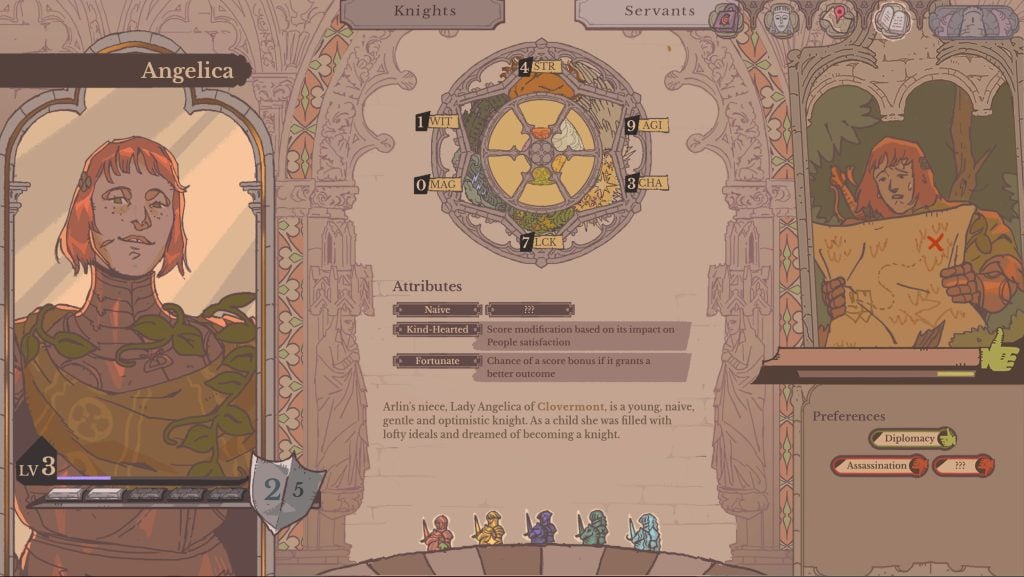
A new knight may also arrive, eager to join the tower’s elite order, and can later be assigned to quests, which I’ll also touch on shortly. On top of that, players will be asked to make immediate decisions regarding resolved quests or new issues that can have an impact on the game world, and I’ll come back to that as well.
After spending the first part of the morning handling audiences, the second half of the day opens up the possibility of moving through the tower’s various facilities.
These include the blacksmith, where players can buy weapons and repair their knights’ worn armor, as well as an area occupied by a talking statue, who is also responsible for unlocking new sections of the tower once the right specialists have been found. And since I promised not to give away too much, I won’t go into the details of what becomes available during the demo. I’ll leave that for you to discover once you get your hands on it yourselves.
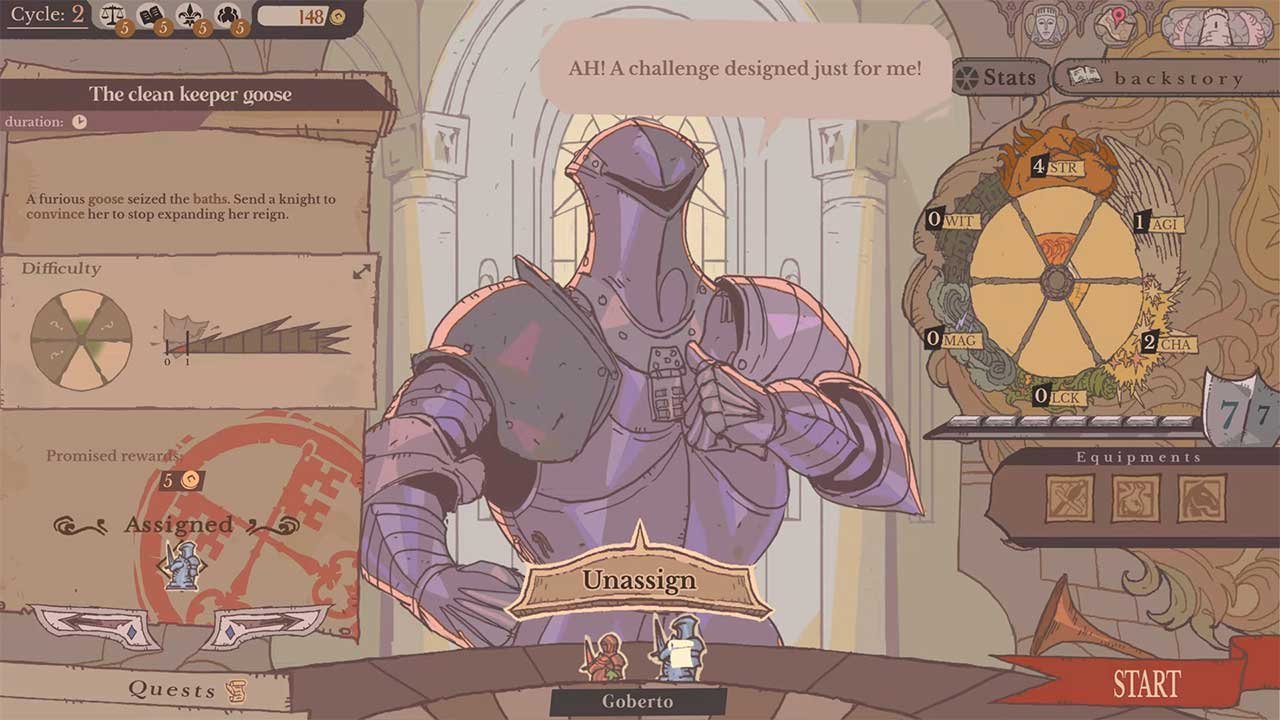
After freely exploring the tower, the other phase that advances the in-game clock and brings the day to a close is the one centered around the Round Table, where players gather with all of their knights to decide which ones to assign to each quest.
This is not a simple choice. In fact, this is where another key aspect of Sovereign Tower comes into play, namely the knights’ stats and personalities, both of which directly affect the chances of a quest succeeding.
To give a quick overview, each knight has a set of attributes distributed across wits, strength, magic, agility, charisma, and luck, along with a number of traits that help define their personality. These characteristics will be more or less suited to the list of quests waiting to be completed.
Each quest comes with a description of the issue at hand, clues about what kind of profile would be best suited to solve it, and difficulty indicators tied to the attributes mentioned earlier. By combining all of that information, players need to choose the knight who is best fit for the assignment.
The challenge lies in the fact that once a knight is recruited, it is not enough for them to simply level up and improve their stats in order to handle quests more effectively. Players also need to learn more about them, uncover their traits, and build stronger bonds so they can assign them to roles that better suit them and offer a higher chance of success during quests.
To give a simple example, a knight with a trait tied to searching for relics will naturally have an advantage in a quest focused on recovering a valuable object. Likewise, a knight with an aristocratic trait will be better suited to dealing with court intrigue or matters involving the upper class, and so on.
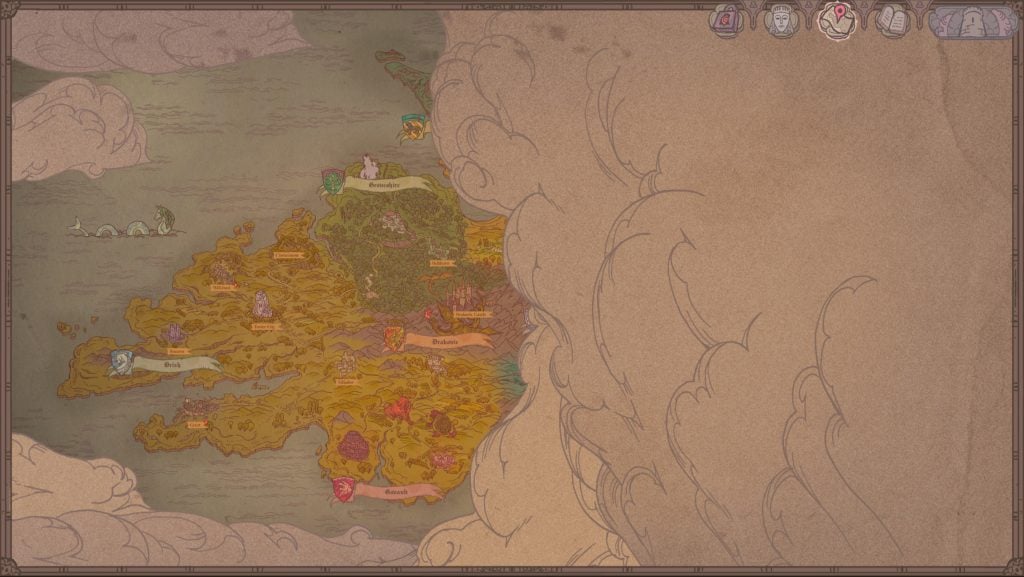
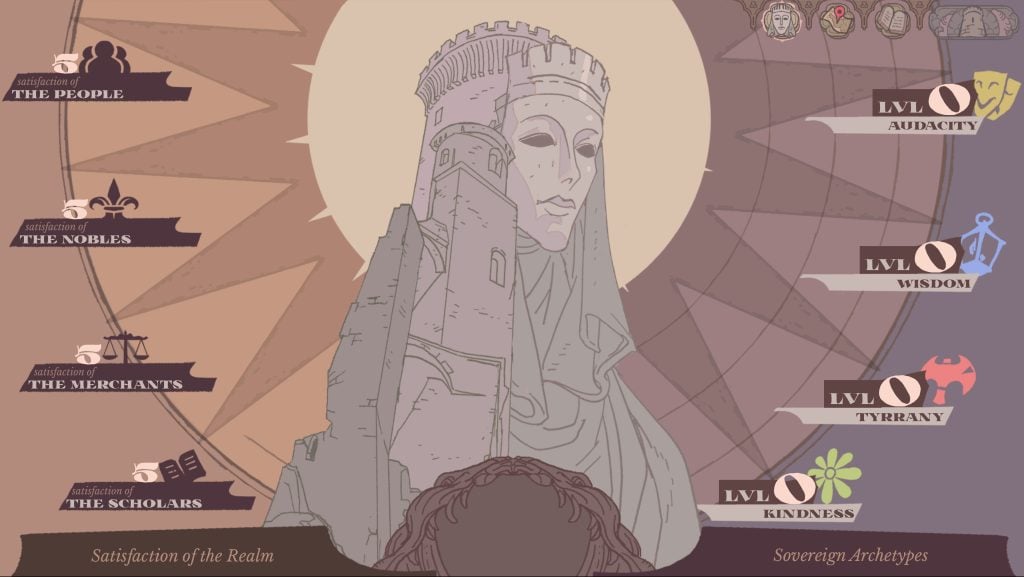
Completed quests reward players with coins, influence points with the game’s factions, represented by people, nobility, scholars, and merchants, as well as items and even changes to the taxes that representatives from the various regions on the map will contribute to the tower’s cause at the end of each cycle.

WILD WITS GAMES’ previous title already stood out for its distinctive visual style, but with Sovereign Tower, I think the team has gone even further. The UI is delightful, and the same can be said for the game world and, above all, the characterization of every individual who populates the tower.
Even if the overall structure may sound fairly simple on paper, I can say that it completely pulled me in.
Turn after turn, I kept going with growing curiosity about what would happen at each audience, how I could better optimize the roles of my knights, and when the screen appeared telling me the demo was over, all I wanted was to keep playing.
I have left out lots of details that I would rather let you discover for yourself once you get your hands on the demo. It already offers a strong overview of the many systems that will shape the full game when it launches in August 2026 on PC via Steam. One thing you should know is that it has already become one of my most anticipated RPGs of 2026.
