

On 15 September 2026, South Korea’s 178th Defense Acquisition Program Promotion Committee approved two new projects, one of which was a new-generation unmanned aerial vehicle (UAV).
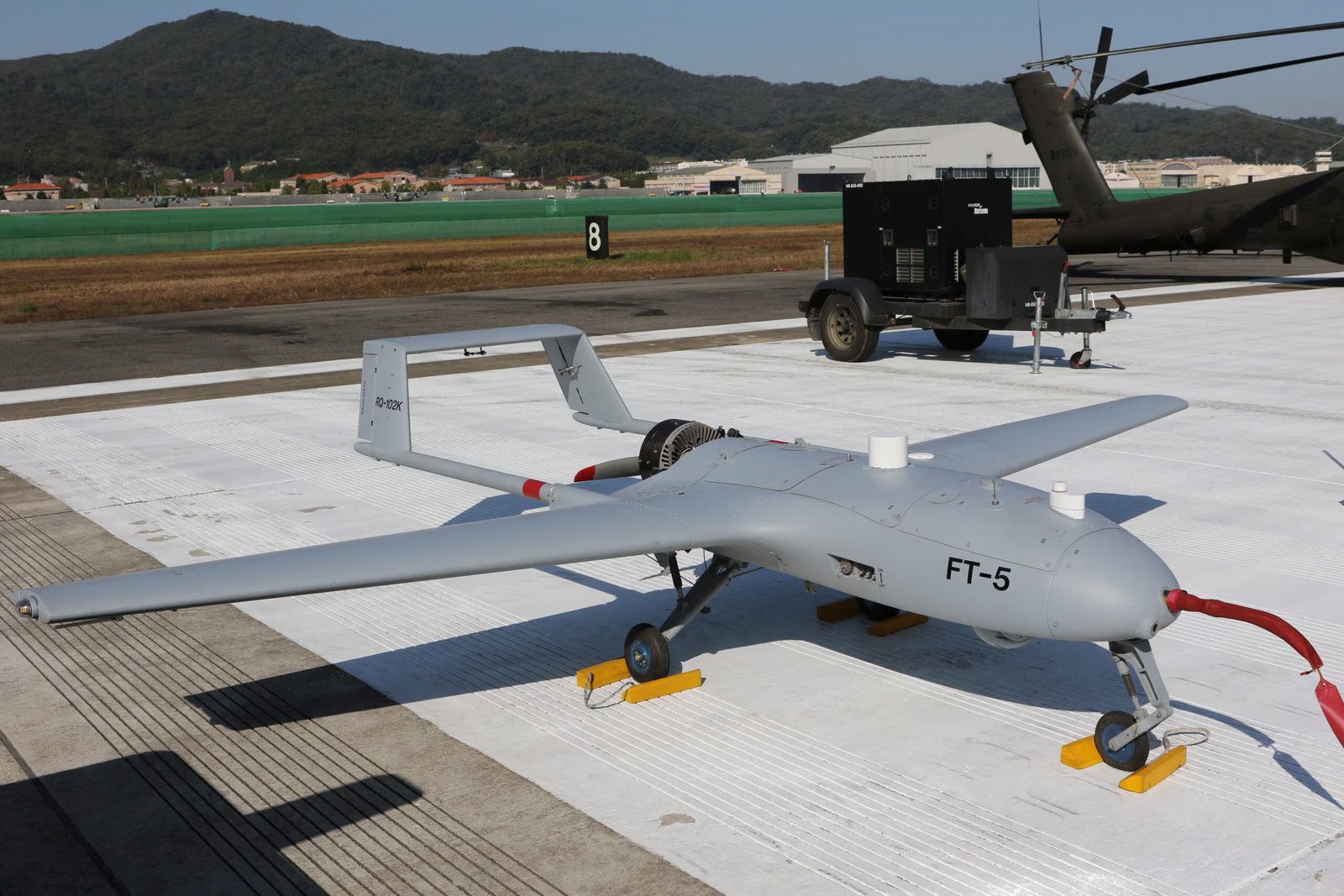
The new reconnaissance UAV for Republic of Korea Army (ROKA) divisions will be a vertical take-off and landing (VTOL) type. This will enable it to better operate from the rough and mountainous terrain that characterises much of the Korean Peninsula.
The Defense Acquisition Programme Administration (DAPA) committee stated the new VTOL UAV project will “overcome the limitations of the existing fixed-wing-type divisional reconnaissance drone, and secure UAVs with an improved operational response capability as a domestic research and development project”.
Their statement added, “In this case, we reviewed some required performance through re-implementation of prior research, and reaffirmed the feasibility of domestic development.”
South Korea has a vibrant drone industry sector, and its armed forces procure UAVs from the likes of Korean Air, Korea Aerospace Industries (KAI) and Foosung. A development contract will be duly awarded to a local company.
The current divisional-level UAV used by the ROKA is the fixed-wing RQ-102K, which its maker Korean Air calls the KUS-FT. The RQ-102K has a 4.2m wingspan, a cruising speed of 120-130km/h, a typical mission altitude of 2-3km, and it weighs 125.6kg.
The committee remarked that a VTOL type will improve aerial surveillance capability by more than four times compared to its predecessor, and also extend its operational radius by 30%.

Options for the new UAV’s configuration include rotary-winged, hybrid and tiltrotor designs, all of which have been researched previously.
This project has been allocated a budget of KRW2.16 trillion (US$1.51 billion), and its development will take place between 2027 and 2036.
DAPA approved one other project too, the procurement of additional Sikorsky MH-60R helicopters for the ROK Navy (ROKN). Called the Maritime Operations Helicopter-II project, the new helicopters will be acquired through the Foreign Military Sales (FMS) channel.
The committee did not reveal how many MH-60Rs are being sought, but the approval follows an announcement by the US Defense Security Cooperation Agency on 18 May 2026 that approved an FMS deal for up to 24 MH-60Rs.

The ROKN had already ordered twelve MH-60Rs in December 2020, of which ten are now believed to be operational.
A new batch of MH-60Rs will allow full retirement of the ROKN’s Lynx Mk.99/99A helicopter fleet for shipborne use. Some 24 of these Westland-built aircraft remain in service, after being inducted from 1999.
The DAPA authority highlighted greater flight endurance, and improved anti-submarine warfare capabilities through dipping sonars and sonar buoys for the MH-60R.
This acquisition period spans 2025-32, and it has attracted a total budget of KRW3.24 trillion (US$2.27 billion).
South Korea is earnest about improving its anti-submarine warfare capabilities, as belligerent North Korea develops submarines capable of firing nuclear-tipped ballistic missiles.
by Gordon Arthur
