

Terry Gerton David, let me start with you, because for years, we’ve heard that federal laboratories generate remarkable technologies, but they often struggle to get them into operational use. Where are you seeing real progress today?
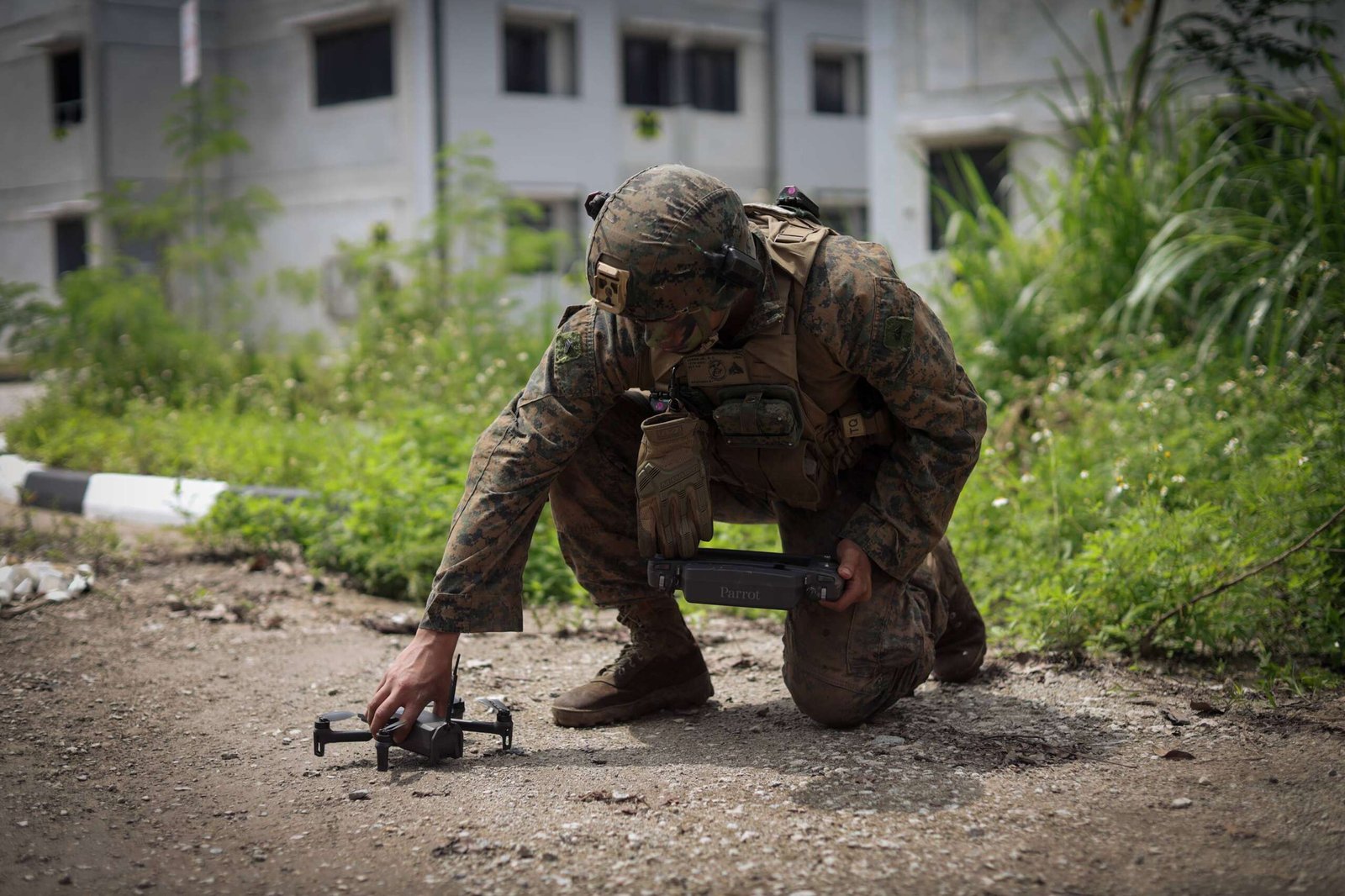
David Lee I think we’re seeing real progress in a lot of the technologies that are of interest to the Department of Defense currently, such as drones, munitions, things like that. The department wants to know how to do things faster and how to work with partners a little more directly. So we’re working with partners that are maybe new to the field that want to learn more, may want to get their technologies up to a higher level, or other big contractors who want to test different concepts with us and run them by us. So we’re seeing a lot of interaction, a lot more of an acceleration towards working with industry to bring things to the soldier, to the warfighter faster.
Paige George I definitely agree with what David’s saying. And it’s a really interesting discussion that we’ve been having, especially within the Department of War, which kind of brought us to where we are with the Innovation for Impact meeting: It’s that there is an impetus from the Department of War to really focus on commercially developed technologies. And so when we’re talking about where the technology transfer mission fits in with that focus on commercial technologies, we’re not necessarily focusing on licensing out of the laboratories. But like David said, we’re really focusing on partnerships with the industry partners that are creating the most advanced technologies that we can then spin into the Department of War.
Terry Gerton That’s a really different take on the technology transfer mission, which used to be the labs created something from scratch and then tried to find a commercial market for it. Here, you’re thinking about commercial technology and finding a government market for it. It’s almost the reverse. Paige, what’s helping companies and technologies move in that direction?
Paige George So while tech transfer is still very much focused on technology spin-out and focusing on the incredible technologies that are coming out of the labs, just specifically in national security, the focus now is providing industry with problems that the military has and telling industry, you guys are the experts, help us solve these problems. And where the labs come in is where the really exciting part happens and where we really find out how unique our laboratories are in the national security space. The unique facilities, resources that we have available, world-class engineers, scientists, researchers — and so really where the labs come in is we have the ability to really work hand-in-hand with industry to ensure that the technologies that they’re developing meet warfighter requirements. And that is still within the technology transfer space, because technology transfer is the bi-directional sharing of resources, facilities, expertise and intellectual property.
Terry Gerton David, in your day job, you’re there at Army DEVCOM. What are you seeing that reflects the situation that Paige is describing?
David Lee We’re seeing a lot of companies coming to us saying, hey, we have a technology that we think might be of interest to the warfighter. Can you use it? Can you do something? Sometimes we’ll have companies, as I mentioned earlier, big companies that’ll say, listen, we have a prototype, we’d like to run this by you. As Paige mentioned, we have facilities and expertise that are simply unrivaled, very unique. You can find mechanical engineers, you can find electrical engineers, but mechanical engineers who specialize in the dynamics of the inside of a gun barrel — that’s a very specialized thing. That’s not something you’re going to see every place. So we have that expertise, and they want to use our expertise and leverage our facilities and our experience to test some of these ideas and run them by us to see how they might work and provide capabilities to our warfighters.
Terry Gerton And how does a federal laboratory make space for that kind of request?
David Lee Sometimes we’ll see a great technology, but it’s not quite something we’re interested in. That’s not that we’re saying no; it’s just at this time, it’s right for us. But sometimes, especially with the current priorities with UAS and counter-UAS and other things like that — munitions and just warfighting components in general, you know, it kind of falls in line with a lot of stuff we’re already doing. So when a company says, hey … we have something and we think you might be interested in it, and it does fall in line, we’ll kind of make room for it within our time and our space to take a look at it and try to see if there’s something we can do, if it can provide something for us. Now, I’m speaking, again, for my lab, the lab I work at, and I know other labs are doing similar things and have similar situations where they might encounter a technology that’s, hey, this is a wonderful technology, but it just doesn’t fit in terms of what my lab’s mission is. So sometimes I’ll call somebody and say, hey, listen, this company’s got great technology, would you want to look at it because it falls within your portfolio and your lane and your mission? So we’ll do that sometimes.
Paige George So just to add on to what David is saying, he’s absolutely spot on with the value that the labs can play in this process. And then we really are trying to tie back, from an FLC perspective, we’re trying to align our strategic priorities to that of the White House. And so you have the OSTP report that just came out that specifically calls out the need for the federal laboratories to open their doors to industry. Because really, that is what the labs are. We are a resource to really be the engine behind American innovators and innovation. So that is really where we are trying to focus our efforts, especially in the national security space.
Terry Gerton Paige George is the executive director of the Federal Laboratory Consortium, and David Lee is the FLC vice chair. Paige, let me come to you. The upcoming forum that you’ve got in December really does focus specifically on national security technology. We are talking about some of the challenges here, but what really makes the technology transition different when the focus is a national security mission?
Paige George It really more has to do, I think, with this spin-out versus spin-in, and the shift in focus on commercial technologies versus technologies that were developed in the lab. That absolutely still happens, and it is a critical part of what the laboratories do. But focusing on bringing in new technologies, working with nontraditionals and startups. How do you do that? And the labs play the role of integration experts as well. So if we have a small business or a startup, these guys have a really hard time breaking into federal acquisition. That is a very challenging landscape. So in the world that we live in, tech transfer, our role is to offer support to these companies. Because now, from the NDAA that was signed in December and the increased focus on other transaction authorities, it really is a golden age for technology transfer in national security, where we can be at the forefront of finding those diamonds in the rough, finding those companies that have now the same opportunity for government contracting as some of our larger defense primes. And so we really wanted to put together a meeting to help prepare our technology transfer professionals that work in the national security space on how to be more strategic when they’re looking at the mission and strategies of their laboratories, and how to really find those companies that are going to solve real problems in the national security space.
Terry Gerton So Paige, as you have this conference in December, you’re bringing in industry partners for day three. What are you specifically hoping to have conversations about with these folks? What do you want to make sure they understand, and what are you hoping they get out of the assembly?
Paige George So we are really excited about day three of the Innovation for Impact Forum, because we want to show our small businesses, nontraditionals, and our large primes that there are other ways to work with the labs and access government resources outside of your standard federal contracts. Because like I mentioned earlier, federal contracting is a tangled web and it makes people very nervous, which is why we have organizations dedicated to helping these companies work with the government in contracting, like your NAPEX, your SBAs … so many organizations that help walk companies through that process. So we’re going to do the same thing but focused on your non-federal-acquisition regulation tools, your tech transfer tools, your cooperative research and development agreements, your patent license agreements. And we want to show how easy it is for these companies to access the laboratories by getting the opportunity to meet face-to-face with the people that make those decisions at the labs. And so really, we want to open the doors and demystify collaboration with all 300-plus federal labs that are within our consortium.
Terry Gerton And if people want to find out more about the Innovation for Impact Forum, where do they go?
Paige George They can go to our website at federallabs.org and there will be a banner where they can click, and our I4I website is now live as of this week.
Copyright
© 2026 Federal News Network. All rights reserved. This website is not intended for users located within the European Economic Area.
