

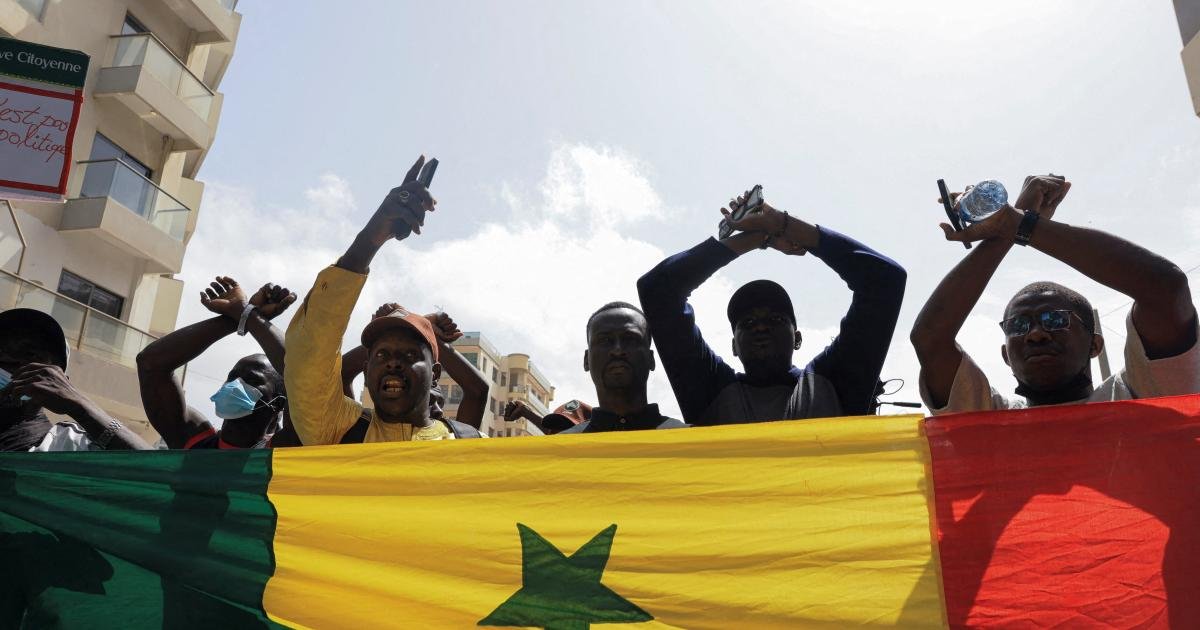
West Africa is reeling. Over the past five years, coups have racked Burkina Faso, Mali, and Niger, and the juntas now in charge are dismantling the countries’ institutions. Even as they repress their subjects, they are losing territory to emboldened insurgents. And as these insurgent groups become more entrenched in the central Sahel, they are beginning to threaten the coastal states of Benin, Côte d’Ivoire, Ghana, and Togo.
But amid this upheaval, Senegal remains a democracy in which strong institutions mostly govern capably. The country possesses skilled civil servants with track records of transparent, efficient fiscal management. In 2024, Senegal faced a severe political crisis when the outgoing administration resisted leaving power, but an independent Constitutional Council and an engaged civil society prevented an unconstitutional postponement of elections. Senegal is essentially the only major country in Francophone West Africa whose government remains accountable to its citizens; its stability telegraphs to its neighbors that democratic rule is both desirable and achievable.
Now, however, Senegal is grappling with its own existential threat. On a single day in February 2025, the country went from being considered one of Africa’s most stable economies to one of its most vulnerable after the discovery that President Diomaye Faye’s predecessor, Macky Sall, had hidden extensive debt. The country’s debt-to-GDP ratio has since soared from under 75 percent to over 132 percent. Amid a recent fallout between the country’s top two political leaders, Senegal is attempting to negotiate a new program with the International Monetary Fund. Without help, Senegal could default.
A little support in the form of debt relief from the IMF and the World Bank would quickly help restore balance. A punishing debt burden, on the other hand, would sap resources for badly needed public services, infrastructure, and economic development initiatives. Beyond weakening Senegal’s governing capabilities, such an outcome would create new political and security vulnerabilities throughout West Africa at precisely the moment when Russia is trying to exploit disorder to recruit new proxies.
HIDDEN FIGURES
Over the past five years, military regimes seized power in the central Sahel states, Côte d’Ivoire elected an 83-year-old fourth-term president who banned opposition candidates from running, and Togo pushed through constitutional reforms to keep a two-decade-old dynasty in power. But Senegal managed to remain stable and accountable. In 2024, civil society actors and an independent judiciary drew on what the political scientists Ibrahima Fall and Catherine Lena Kelly describe as Senegal’s democratic “muscle memory”—decades of mobilizing to defend checks and balances—to ensure elections proceeded on schedule. A duo of youthful reformers (Faye and the fiery Ousmane Sanko, who now serves as speaker of the National Assembly) defeated Sall’s handpicked candidate in a decisive first-round victory.
And until February 2025, Senegal’s economic outlook was mostly sunny, having enjoyed a strong recovery after the COVID pandemic. In recent decades, Senegal has expanded access to quality public services, closed the gender gap in school enrollment, and significantly reduced infant mortality rates. New hydrocarbon projects were expected to allow for increased government investments in roads, energy, and water.
But when Faye took over from Sall, his government commissioned an independent audit of state finances to establish the extent of Senegal’s public debt amid rumors of anomalies. The audit’s findings, published on February 12, 2025, came as a shock: they revealed an estimated $7 billion to $13 billion in unreported debt incurred between 2019 and 2023. It became clear that over the course of his second term, Sall had significantly boosted government borrowing and spending as he pursued an unconstitutional third term, all while intentionally misreporting debt figures in legally mandated public accounting to Senegal’s parliament.
The huge debt had gone unnoticed because Senegal’s presidency and finance ministry had hidden it from the National Assembly, the IMF, and the World Bank by keeping unrecorded loans off the books. But the latter two institutions played a role in the accrual of the illegal debt. Since the 1990s, the IMF and the World Bank have been long-term development partners for Senegal, making substantial technical and financial commitments intended to promote growth and reduce poverty. The most recent were a $1.8 billion loan package from the IMF and $300 million in budget support from the World Bank. At that point, these institutions had enough material evidence to discern anomalies, yet they kept financing Sall’s government.
Senegal’s IMF reporting had red flags as early as 2021.
Under Senegal’s program with the IMF, the multilateral lender would have had full electronic access to the government’s fiscal and financial data, enabling it to closely monitor financial activity. Senegalese authorities were required to provide electronic reporting every three to six months, often giving the IMF more detailed oversight of the government’s finances than the country’s own parliament enjoys. Such a discrepancy is reprehensible but by no means unusual. Members of parliament and ministry officials across Africa often appeal to World Bank officials for more detailed information about government finances than their own finance ministry provides.
Red flags appeared in Senegal’s reporting to the IMF as early as June 2021, according to IMF biannual reviews that showed that Dakar had requested modifying performance criteria regarding borrowing and fiscal balance; one review in June 2022 even waived the performance criteria altogether. By the summer of 2023, as Sall faced growing public demands that he step down when his term ended, the IMF would already have flagged serious reporting inconsistencies. But despite the IMF’s substantial access to Senegalese records (and, no doubt, misled by reporting that mixed legitimate data with alleged falsifications and significant omissions), the IMF and the World Bank gave Senegal extra money in 2023: in May, the World Bank greenlighted an extra $300 million in budget support to maintain essential public services, and in June, the IMF approved a new $1.8 billion loan package for Dakar, disbursing $279 million immediately.
Sall likely used the June 2023 disbursement as implicit collateral to convince other lenders, such as the West African Economic and Monetary Union’s regional debt market, to keep loaning him more money. Senegalese authorities submitted internal documents to the IMF in the second half of 2023 that clearly showed overborrowing. In its public December 2023 program review, the IMF identified that a financing “shift” had occurred in Senegal between 2023 and 2024, but it claimed the shift constituted “a debt management operation with no material impact” on Senegal’s debt level.
At best, the IMF failed to carry out the supervision that is essential to its role. At worst, it was pressured to ramp up lending to try to help Sall stay in power. There is some evidence for the latter in the highly anomalous way that the IMF’s reporting acknowledged and rationalized overfinancing, tarting it up as “precautionary liquidity buffers.” Western partners, and France in particular, certainly had reasons for preferring Sall over Faye and Sonko. Sall was a solid Western ally, whereas Faye and Sonko were campaigning on a sovereigntist platform and threatening to leave the French-backed regional currency. At a time when France was rapidly losing African allies to Russia, keeping Senegal close would have been a strong priority.
A DEBT BOMB DETONATES
The IMF and the World Bank are pushing Dakar for talks about restructuring. Yet they have not undertaken efforts to adjust Senegal’s debt service payments or investigate their own roles in exacerbating the crisis; they have merely asked Senegal to create a unified debt directorate and are waiting for the credit crunch to force it to the table. Meanwhile, Sall’s successors, Faye and Sonko, have been harshly punished for the sins of his regime. Senegal’s mushrooming debt problem has hovered over their administration, compelling them to abandon promises to lower electricity and fuel prices, freeze funding for dozens of planned infrastructure projects, impose austerity measures (such as reducing health-care spending by nearly 20 percent), and scramble for new financing.
Worse, the debt crisis has driven a wedge between the reformist duo. Sonko has taken a sovereigntist line and advocated against restructuring the debt (without laying out a convincing alternative), while Faye has preferred to negotiate with the IMF. In May, this dispute blew up their alliance. Faye sacked Sonko from his prime minister role; Sonko resumed his parliamentary seat and was elected the body’s president, with 132 out of 165 members of parliament voting for him. The resulting institutional crisis has pitted Senegal’s executive against its legislature. The latter has the authority to block any budget legislation or debt-restructuring framework that the presidency tries to pass. Sonko warned in June that even if Senegal enters “a crisis involving the dissolution of parliament … there will never be an agreement with the IMF.”
As Senegal’s executive and parliamentary branches remain in a deadlock, the country’s debt continues to grow and the options to address it narrow. The deadlock, however, also reflects the strength and independence of Senegalese institutions, which are nourished by a steady stream of inclusive debate. It highlights the health of a democracy that has been revitalized by a new generation’s participation.
As the leaders of neighboring countries insist that authoritarian rule is necessary to stabilize their countries, Senegal’s democracy stands as a vital rebuttal and applies positive pressure on the citizens and leaders of those countries to seek similar freedoms. Exiled West African civil society leaders often travel to Dakar to pursue graduate degrees, investigate and prepare reports on human rights abuses, and convene conferences on civil liberties. And at a time when West Africa’s rural areas are experiencing deepening abuse and neglect, it is worth noting that these freedoms extend well beyond Senegal’s capital. A few years ago, when Malians and Senegalese people living along the Falémé River mobilized to protest its devastation by gold mining practices, the state responses could not have been more different. Malian forces, siding with miners, beat and detained activists, while Senegal’s Faye issued a decree suspending all mining within 550 yards of the river.
WIN-WIN SOLUTION
Senegal is left with two ugly options: borrow more on worse terms to service its debt or restructure under a new IMF program. Faye is under significant pressure from Sonko’s legislature and the public not to pursue restructuring: the term has acquired a stink, with Sonko calling it a “disgrace.” Restructuring would likely entail highly unpopular measures such as removing fuel subsidies and lowering teachers’ salaries. For many Senegalese people, restructuring recalls the catastrophic structural adjustment programs the IMF imposed on their country in the 1980s and 1990s, which crimped the government’s autonomy and led to cuts in key sectors such as health and education without meaningfully freeing Senegal from cycles of debt and dependence. But in late June, Sonko softened his opposition to restructuring, likely to pave the way for a presidential bid by opening the door for a painful restructuring that will inevitably make Faye look bad.
If Senegal does not restructure its loans, its colossal and criminally acquired debt could crush the economy. Some public salaries are already in arrears, and pensions and energy subsidies could soon face cuts, events that could spark riots and wider unrest. And if the institutional deadlock persists, it could start to erode Senegalese democracy. The IMF already bears some responsibility for the crisis. And now its official insistence on full repayment to creditors is putting Senegal’s macroeconomic stability at risk and undermining the government’s ability to provide health care and education, transition from agriculture to manufacturing, and invest in much-needed public infrastructure.
To pull Senegal back from the brink, Washington should push the IMF and the World Bank to take a significant haircut. Between 2027 and 2031, Senegal is due to pay principal, interest, and fees on its IMF debt amounting to about $891 million; it will owe the World Bank roughly $1.37 billion in debt service over the same period. Taken together, these figures neatly parallel the $2 billion that these institutions lent Senegal in 2023, when it should have been abundantly clear not to. Relief on the approximately $2 billion owed to the IMF and the World Bank could reduce the country’s total external debt service by 16 percent, leaving it with still considerable yet more manageable payments.
The IMF and the World Bank should cancel these payments. These institutions’ principal shareholders, especially Washington and Paris, should urge them to support cancellation and bring other shareholders such as Beijing on board. The IMF and the World Bank likely believe that new oil revenue and increased fiscal pressure (that is, higher taxes and lower fuel subsidies) will allow Senegal to continue to service its debt. They are wrong. Over the past three years, oil revenue has proved disappointing, and much of it may already have been pledged as future sales. Revenues from sharply raising taxes and lowering subsidies will destabilize the country.
Some public salaries in Senegal are already in arrears.
Although board members may argue that debt relief sets a bad precedent, the IMF and the World Bank have already helped Argentina on a much bigger scale, and in 2004, the two organizations’ HIPC debt relief initiative, aimed at helping heavily indebted poor countries, granted extensive forgiveness to reduce debt burdens to sustainable levels in Senegal. Canceling Senegal’s debt service would entail trivial losses for these international institutions, which—unlike Senegal—can seek special replenishment from other sources. Beyond assisting Dakar, this relief would benefit Paris and Beijing, its two largest bilateral creditors, by allowing the country to make good on its payments to them. And Paris has an interest in stabilizing Senegal’s debt to prevent a wider contagion. Senegal’s debt crisis threatens the larger regional economic bloc, the West African Economic and Monetary Union, whose shared currency is guaranteed by the French Treasury.
Breathing room would allow Senegal’s leaders to get back to governing and shore up stability in a region that badly needs it. It would also help the IMF and the World Bank retain their reputation for integrity at a moment when such institutions are viewed with increasing skepticism.
Dakar must also launch an investigation into the Senegalese actors responsible for the illegal debt. So far, Faye has declined to do so, likely because he worries his government may have to expose or prosecute political figures whose support he will need in the future. To incentivize Senegal to investigate its own institutions, significant debt relief from international organizations could be made contingent on a public investigation into the illegal debt to ensure a crisis like this cannot happen again and make the country’s institutions even more accountable.
El-Ghassim Wane, a former senior African Union adviser from the Sahel steeped in how good governance helps ward off conflict, noted to us that “the cost of supporting a country that has remained committed to constitutional governance and democratic principles is far lower than the cost of managing instability once it takes hold.” Debt forgiveness would help protect Senegal’s achievements; without it, the country risks falling into a debt trap for years, if not decades. And the region will lose its democratic anchor.
Loading…
