

The Secret Service has been updating how it tracks employee working hours and assigns agents to protective operations, as a new report reveals the extent to which the agency grappled with understaffing and relied on incomplete workforce data amid high-profile security incidents in recent years.
The Department of Homeland Security inspector general’s partially redacted June 30 report puts the Secret Service’s well-known staffing challenges under a microscope. The redacted report found the Secret Service was understaffed by an average of 21.4% across fiscal 2023 and 2024.
The staffing challenges and “inadequate planning,” the IG found, led to the Secret Service assigning agents to marathon shifts with little time for rest in between, contributing to burnout and exhaustion within the agency’s ranks. Poor planning also led to the Secret Service assigning unqualified personnel to protective events.
Employees were working so much overtime and premium pay hours, the IG reports, that the Secret Service blew past statutory pay caps.
Agents reported working a collective 1.192 million overtime hours and 1.4 million Law Enforcement Availability Pay (LEAP) hours in calendar year 2024. Secret Service personnel lost out on $15.19 million in overtime earnings between 2020 and 2024 because the pay would have exceeded congressionally set caps, according to the report.
“The Secret Service relied on overtime and premium pay, consecutive shifts, and external law enforcement partners to meet operational needs,” the report states.
Those challenges were further exacerbated by how the agency was planning out its staffing needs based on incomplete data.
“Secret Service agents further reported they did not input all the hours they worked because their hours changed too frequently, they did not have time to update their schedule in [Enterprise Personnel Scheduling], and they are only paid for pre-scheduled overtime,” the IG reports.
The report found the Secret Service doesn’t have a policy for determining shift length or time in between shifts. Auditors quoted one anonymous Secret Service official as stating that if the agency did have such policies, “I do not think we would get anything done. We do not have enough people.”
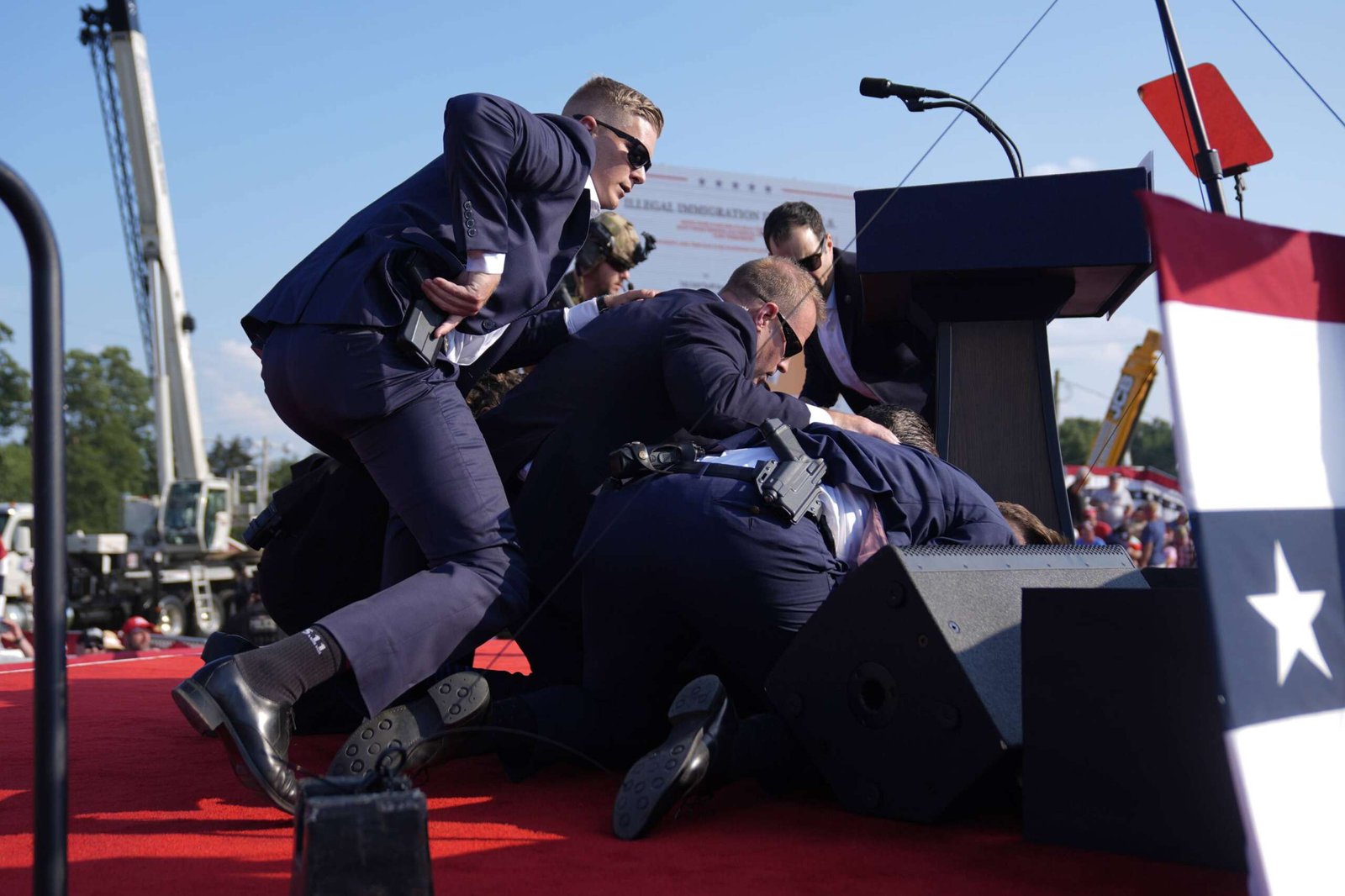
The staffing and planning challenges overlap in many ways with a separate DHS IG report, also dated June 30, on the Secret Service’s failure to prevent and disrupt the July 13, 2024, assassination attempt on then-candidate Donald Trump at a Butler, Pa., campaign rally.
In that incident, for instance, the IG found the Secret Service assigned an under-trained counter-unmanned aerial system operator to work C-UAS for the event. The operator’s C-UAS system malfunctioned during the event, and their inability to address the issue led to the Secret Service missing an opportunity to detect a drone flight by suspected assassin Thomas Crooks.
The report also found the Secret Service didn’t allocate enough personnel to the campaign rally because of insufficient intelligence sharing within the agency.
But the Secret Service says it is taking action to address workforce management challenges.
In response to the IG’s understaffing report, the Secret Service said it had enhanced its Enterprise Personnel Scheduling application to ensure it accurately records all hours worked, ensuring employees are paid “appropriately.”
The Secret Service also updated its staffing models using the scheduling application’s data “to ensure its models are accurate and defensible to the changing needs of the mission,” the agency told the IG.
Furthermore, the Secret Service’s Office of Protective Operations is developing a new “Protective Resource Management” application, the agency informed auditors, “to further improve personnel resource management and maximize the efficient use of personnel resources.
The application “is intended to support decision making by incorporating factors such as personnel availability, geographic location, and competing assignment requirements,” the Secret Service wrote, adding that an initial version is tentatively scheduled for deployment this September.
Meanwhile, the IG report largely covers past workforce challenges and doesn’t delve into progress on the Secret Service’s goal to hire 4,000 new staff through 2028. The agency’s plans have been further bolstered by $1.2 billion for the Secret Service in last year’s “One Big Beautiful Bill Act.”
The Secret Service’s $3.5 billion fiscal 2027 budget request would build toward that goal by adding 852 new positions to the agency’s ranks.
During an April 16 hearing, Secret Service Director Sean Curran told the House Appropriations homeland security subcommittee that the agency has a goal of hiring 2,000 new law enforcement personnel by the end of fiscal 2027.
“We’re recruiting, hiring and training with a purpose,” Curran said. “Using new methods like accelerated candidate hiring events to reduce time to hire without lowering our standards.”
He also highlighted $42 million included in the budget request to upgrade the Secret Service’s training infrastructure.
“Our new recruits and officers are still training on the same firing ranges I used 24 years ago with little change,” Curran said. “It’s unacceptable. To boost our training capacity by 250 percent, we need to upgrade our facilities.”
The budget request also includes $23 million to increase overtime pay. But, Curran added, “we know we cannot keep working our people at this current pace.”
Copyright
© 2026 Federal News Network. All rights reserved. This website is not intended for users located within the European Economic Area.
