

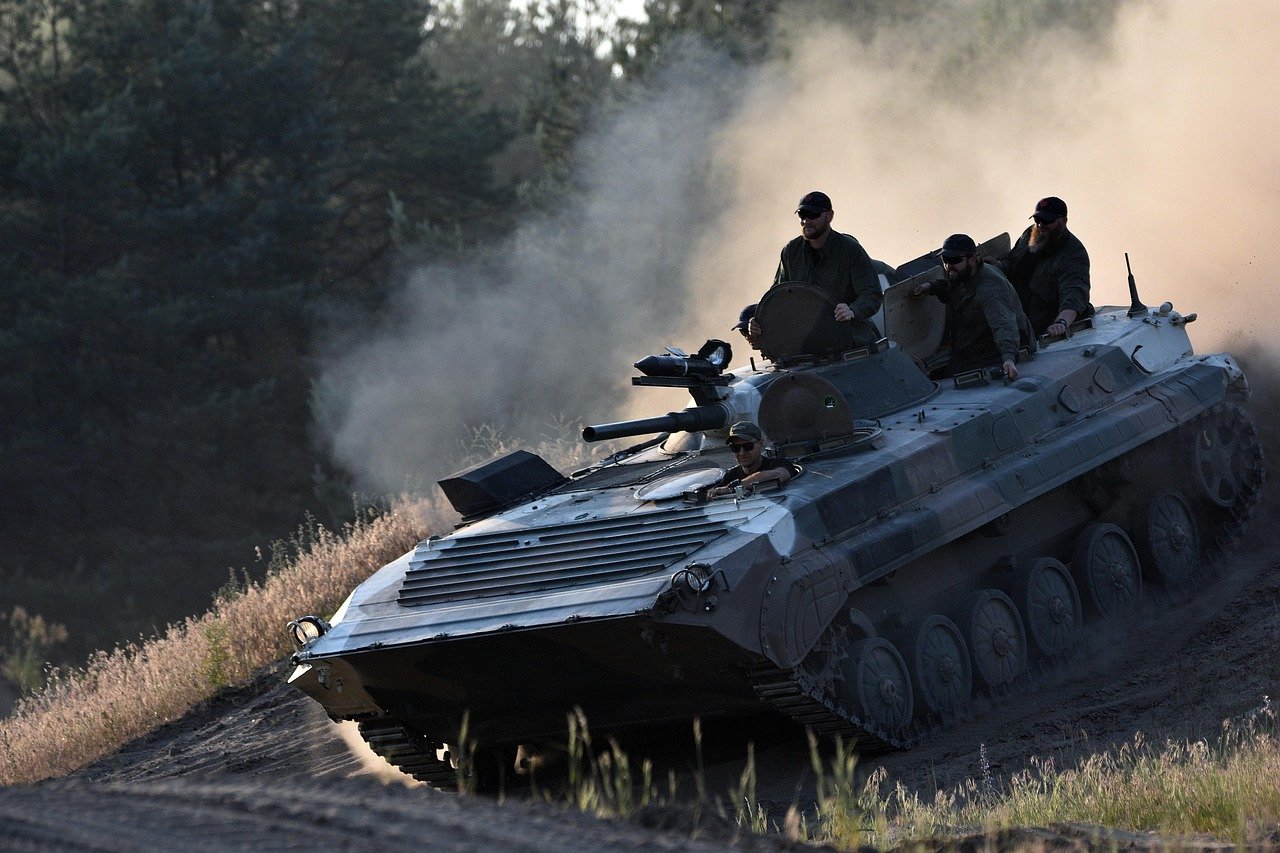
Romania’s Ministry of National Defence has drawn down a further 66 Lynx combat vehicles from Rheinmetall under an existing framework contract, in an order the German company values at about 738 million euros. The call-off is not a cancellation: it is a firm order placed against a framework agreement that Bucharest signed earlier this year. With it, the full number of vehicles covered by that framework is now on order.
Key facts
- Romania has ordered 66 additional Lynx vehicles, worth roughly 738 million euros, from Rheinmetall.
- The framework contract, awarded in late May 2026, covers a total of 298 Lynx vehicles.
- An initial batch of 232 vehicles was called off when the framework was awarded, so the new order takes the total ordered to 298.
- The fleet will consist mainly of infantry fighting vehicles, along with armoured mortar carrier, command post and medical variants.
- Deliveries are scheduled to begin in 2028 and to be completed by 2030.
Background
The Lynx deal is part of a much larger package. According to a Rheinmetall release dated 2 June 2026, Romania’s Directorate General for Armaments awarded the contracts on 29 May, covering combat vehicles, air defence systems, medium-calibre ammunition and four naval vessels. The package is worth 5.7 billion euros in total, and Rheinmetall described it as its largest international contract package in recent years. Breaking Defense put the figure at about 6.6 billion US dollars.
The procurement is financed through the European Union’s Security Action for Europe (SAFE) programme, which provides loans to member states for defence purchases. Romania is the second-largest beneficiary of the 150 billion euro scheme after Poland, with an allocation of about 16.68 billion euros. Armoured personnel carriers and infantry fighting vehicles were among the categories Bucharest listed as eligible for SAFE funding.
Besides the Lynx vehicles, the package includes Skyranger air defence systems mounted on the Lynx chassis. Rheinmetall has said it will keep Romania’s Gepard anti-aircraft gun vehicles operational until the Skyranger enters service. The naval element comprises two offshore patrol vessels and two diver support vessels.
The Lynx is a tracked vehicle family that Rheinmetall markets as a modular, latest-generation design. Hungary became the first customer on NATO’s eastern flank when it ordered 218 vehicles in 2020, in a deal valued at more than 2 billion euros, and Romania is now set to become the second. The platform has also drawn attention in Ukraine, where TBH Center has reported on Ukraine’s new Lynx KF41 vehicles intended to counter drones.
What it means
For Rheinmetall, the call-off turns a framework commitment into firm revenue and adds to an already large land systems order book. Framework contracts give armed forces flexibility to order in stages, and the fact that Romania has ordered the remaining 66 vehicles within about six months suggests the programme is moving ahead as planned.
The deal also carries a major industrial element. Rheinmetall has said it will expand its existing capacity in Romania, invest several hundred million euros, transfer technology and bring more than 200 subcontractors into its supply network, with thousands of jobs expected. Its local subsidiary, Rheinmetall Automecanica in Medias, will be joined by other Romanian sites. Mihai Jurca, who coordinates the government’s SAFE implementation working group, said that “over 50% of production will take place in Romania or in collaboration with local companies.”
More broadly, the order adds to strong European demand for tracked infantry fighting vehicles as countries replace Cold War-era fleets. Rival suppliers are also winning large contracts, such as BAE Systems’ $6bn five-nation CV90 order. SAFE-funded programmes with local production requirements may increasingly shape how such contracts are structured across the EU.
FAQ
Does “call-off” mean Romania cancelled the Lynx vehicles?
No. In defence procurement, a call-off is a firm order placed under an existing framework contract. Romania has ordered 66 more vehicles, not cancelled any.
How many Lynx vehicles has Romania now ordered?
The framework covers 298 vehicles. After the first batch of 232 and this second batch of 66, all 298 vehicles are now on order.
When will Romania receive the vehicles?
Rheinmetall says deliveries are scheduled to start in 2028 and to be completed by 2030, with a substantial share of production taking place in Romania.
Sources
Original reporting: Soldier Systems Daily (by Eric G.), with additional reporting from Breaking Defense
Official source: Rheinmetall press release: Major historic contract in Romania worth 5.7 billion euros
