

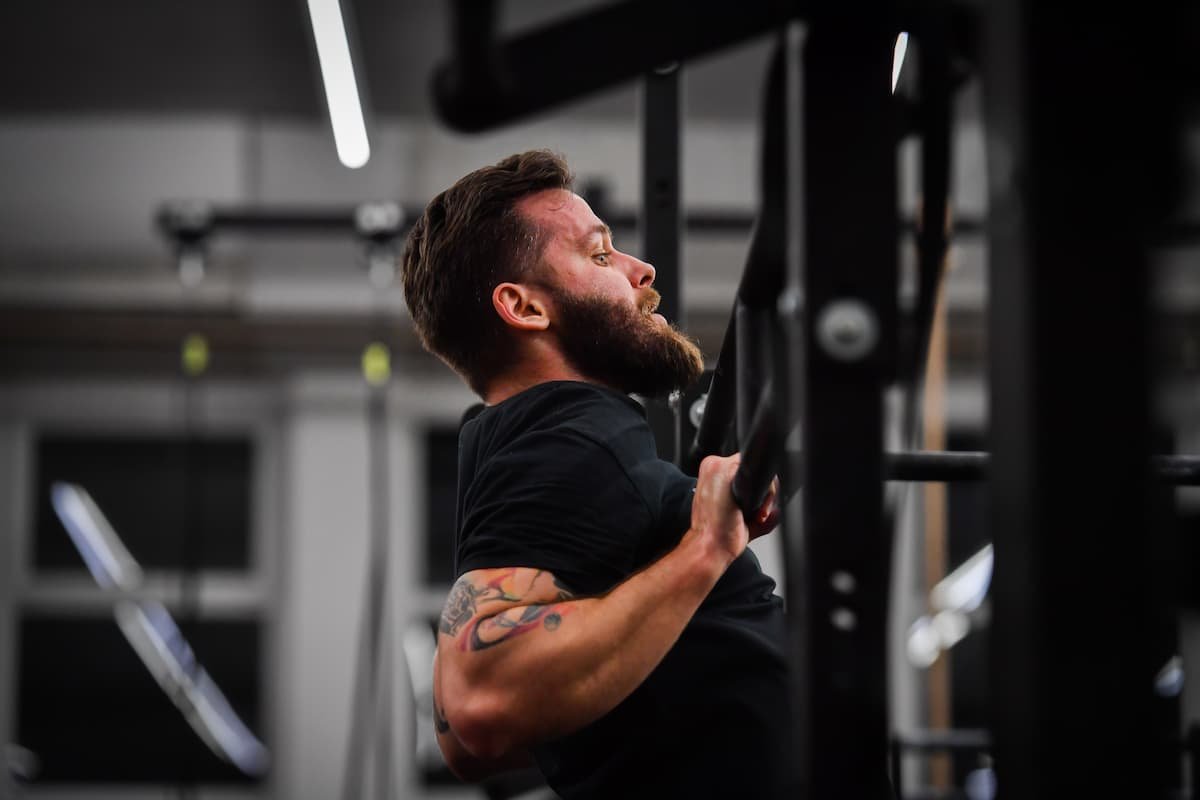
A V shaped back is created by building enough width through the upper lats while also developing the muscles that add thickness across the middle back. Your shoulder width, waist size, body fat level, and overall muscle mass all affect how dramatic that shape looks, but back training is the part you can directly control.
Pull ups and dumbbell rows are both excellent exercises, yet they challenge the back in different ways. Pull ups emphasize a vertical pulling pattern and make your lats work hard to move your whole body. Dumbbell rows use a horizontal pulling pattern, allowing you to train each side independently and load the movement progressively. Neither exercise is useless for width or thickness. The better question is which one deserves priority for your current goal, strength level, and training setup.
For most lifters who want the best possible V shaped back, pull ups should be the main width builder and dumbbell rows should be the supporting exercise that adds muscle across the mid back while helping each lat grow evenly. The strongest result comes from using both intelligently.
What Creates a V Shaped Back?
The latissimus dorsi is the largest muscle in the upper body. It runs from the lower spine and pelvis toward the upper arm, giving the back much of its visible width when it is developed. The lats help extend the shoulder, bring the upper arm down toward the torso, and draw it back behind the body.
A pronounced V shape also depends on the teres major, rear delts, trapezius, rhomboids, and spinal erectors. The lats provide the broad outer sweep, while the muscles between and around the shoulder blades create density and definition. Building your shoulders can also improve the visual contrast between your upper body and waist.
No single exercise can maximize every part of the back equally. Vertical pulls usually place more emphasis on moving the upper arm downward toward the torso. Rows usually involve more shoulder extension and shoulder blade retraction. Both actions matter, which is why a complete program should include both types of movement.
Pull Ups for Back Width
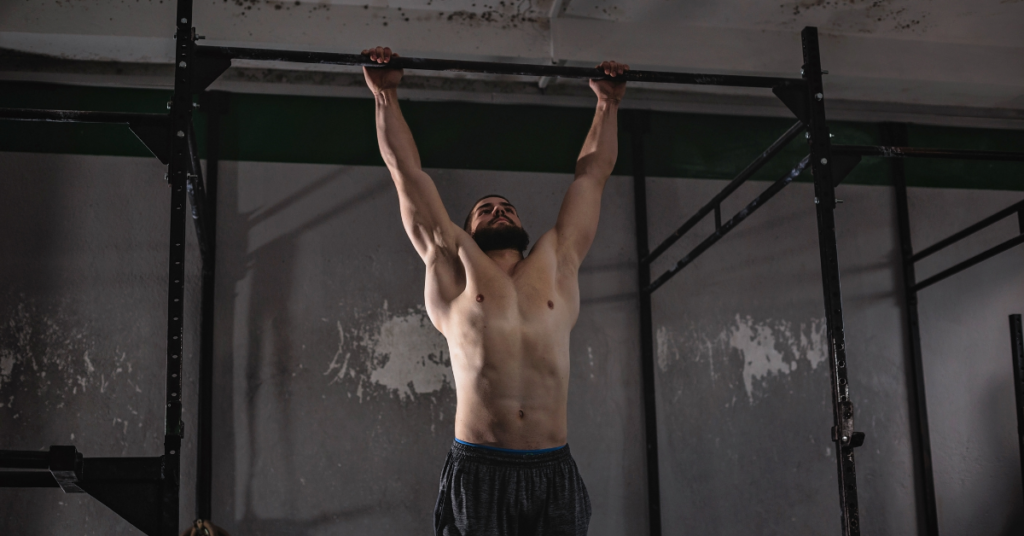
A pull up is a closed chain vertical pulling exercise. Your hands stay fixed to the bar while your body travels through space. This makes the movement demanding because you must lift a large percentage of your body weight while stabilizing your trunk, shoulders, and grip.
Why Pull Ups Target the Lats So Well
During a strict pull up, your lats work to bring your upper arms down and toward your sides as you pull your chest upward. This is one of the key functions of the lats. Research using muscle activation measurements shows that pull up variations produce substantial latissimus dorsi activity, although acute muscle activation alone cannot predict long term muscle growth with certainty.
The pull up also trains the lats at a long muscle length when you begin each repetition from a controlled hang. Resistance training research suggests that training muscles through a full range of motion is an effective strategy for hypertrophy and strength development. A full hang does not mean relaxing into an uncontrolled shoulder position. Instead, keep the shoulders active, maintain control, and begin the pull by driving the elbows down.
For a V shaped back, think about pulling your elbows toward your ribs rather than trying to pull only with your hands. This cue can help you use a cleaner path and avoid turning every repetition into an arm dominant movement.
Pull Ups Build Useful Strength
Pull ups offer a simple measure of relative upper body strength. When you become stronger at strict pull ups, you are moving more of your body weight with the lats, upper back, arms, and grip. This makes them a valuable compound exercise for lifters who want muscle and athletic upper body strength.
Progression is straightforward once bodyweight reps become reliable. You can add repetitions, slow the lowering phase, pause at the top, use a weighted belt, or increase the total number of quality sets over time. If you cannot yet perform full pull ups, assisted pull ups, band assisted pull ups, controlled eccentric repetitions, and lat pulldowns can help build the required strength.
Limitations of Pull Ups
Pull ups can be difficult to scale precisely. A small change in body mass can substantially change the resistance, and some lifters reach failure because their grip or biceps fatigue before the lats receive enough productive work. They can also be challenging for beginners who do not yet have the strength to control their bodyweight.
Technique matters. Swinging, kicking, shortening the bottom range, and craning the neck toward the bar reduce the quality of the movement. A strict pull up does not need an exaggerated chest lift, but it should involve a controlled hang, a smooth pull, and a deliberate lowering phase.
Grip width is often overcomplicated. A wider grip does not automatically create wider lats. Current research suggests that pull up grip variations can produce broadly similar lat activation, so the best grip is usually one that allows you to train hard, use a comfortable range of motion, and progress consistently. A grip around shoulder width or slightly wider is a sensible starting point for most people.
Dumbbell Rows for Thickness and Balanced Development
The one arm dumbbell row is a horizontal pulling exercise that lets you train one side at a time. It is particularly useful because each arm can work independently, reducing the chance that one side dominates the movement.
A dumbbell row can train the lats, middle trapezius, rhomboids, rear delts, biceps, and forearm muscles. The exact emphasis changes with elbow path, torso position, and the direction in which you pull.
Why Dumbbell Rows Build a More Complete Back
When you row a dumbbell with the elbow close to the torso, the latissimus dorsi contributes strongly by extending the shoulder. When you pull the elbow farther out to the side, more emphasis shifts toward the upper back and rear delts. Neither version is wrong, but a closer elbow path is generally more useful when lat development is the priority.
Dumbbell rows have a major practical advantage over pull ups: they are easy to load in small increments. You can gradually move from one dumbbell weight to the next, add repetitions, or improve control at the same weight. This makes progressive overload easier to apply, particularly for beginners and intermediate lifters.
They also allow you to use a substantial range of motion. Lower the dumbbell under control, allow the shoulder blade to move naturally, then pull the elbow toward the hip without twisting the torso. The goal is to create tension through the back, not to use momentum to launch the weight upward.
The Unilateral Advantage
Training one side at a time can reveal differences in control, strength, and coordination. If your right side regularly performs more work during bilateral rowing movements, dumbbell rows give your left side an equal opportunity to train. This can support more symmetrical back development over time.
A supported dumbbell row, using one hand and one knee on a bench, is often a good option for learning the movement. It reduces the demand on the lower back and makes it easier to focus on pulling with the upper arm. A chest supported dumbbell row can also be useful when you want to train the back hard without fatigue from holding a bent over position.
Limitations of Dumbbell Rows
Dumbbell rows do not replicate the vertical path of a pull up. They can grow the lats very effectively, but they are less specific to the downward pulling action that makes pull ups such a strong exercise for back width and relative strength.
Many lifters also turn rows into a whole body movement. Excessive torso rotation, jerking the dumbbell, and cutting the lowering phase short can allow you to use more weight, but they often reduce tension where you want it. Choose a weight you can control, keep your torso stable, and avoid allowing the shoulder to roll forward aggressively at the bottom.
Which Exercise Is Better for a V Shaped Back?
If you must choose only one exercise, pull ups have the stronger case for building the visual width associated with a V shaped back. The vertical path directly challenges the lats through an action they are designed to perform, and the exercise requires meaningful effort from the upper body musculature.
However, that does not make dumbbell rows a second rate choice. Rows can add substantial lat size, improve left to right balance, and develop the mid back muscles that prevent a wide back from looking flat. A back that is only wide without enough density can look incomplete, especially from the side or when flexing.
The most productive approach is to treat the exercises as complementary. Use pull ups for vertical pulling strength and lat focused width. Use dumbbell rows to add controlled horizontal pulling volume and develop thickness through the middle of the back.
Your choice should also reflect your current ability. A lifter who cannot perform a strict pull up should not force poor repetitions. Start with assisted variations or pulldowns, while using dumbbell rows to build pulling strength. A strong lifter who can already perform many bodyweight pull ups should consider adding load so that the exercise remains challenging within a productive repetition range.
How to Program Both Exercises
Resistance training research supports using multiple challenging sets, progressive overload, and enough weekly training volume to stimulate adaptation. The ideal amount varies between people, but adding training volume gradually and monitoring recovery is more reliable than jumping immediately into very high volume.
Blow Up Your Pecs Using These 3 Exercises in the Gym
Train your back at least twice per week if possible. This can make it easier to distribute quality work and maintain strong performance across your sets. Begin sessions with the exercise that best matches your primary goal, because fatigue can reduce your performance later in the workout.
If back width is your priority, start with pull ups. Perform three to five hard sets of approximately five to ten controlled repetitions. Rest long enough to preserve form and effort. If you cannot achieve that rep range, use assistance. If you can exceed it comfortably, add load.
Follow with dumbbell rows for three to four sets of eight to fifteen repetitions per side. Use a neutral grip, pull the elbow toward the hip, and lower the weight with control. This combination gives you vertical and horizontal pulling volume without relying on one pattern alone.
For a more balanced back session, add an exercise that targets the upper back and rear delts, such as a chest supported row with the elbows slightly wider or a reverse fly variation. This can help develop the muscles around the shoulder blades, which contribute to a complete back physique.
Technique Cues That Matter
For pull ups, begin from a controlled hang with your ribs stacked over your pelvis. Pull the elbows down, avoid swinging, and finish each repetition without forcing the neck forward. Lower yourself slowly enough to maintain control and reach a comfortable full range of motion.
For dumbbell rows, brace your trunk before you pull. Let the dumbbell descend under control, then drive the elbow toward your back pocket. Keep your shoulders level and resist the temptation to rotate dramatically toward the working side. If you cannot pause briefly near the top without losing position, the dumbbell is probably too heavy.
Neither exercise should cause sharp pain in the shoulder, elbow, or wrist. A different grip, a reduced range of motion, lighter loading, or a supported row variation may improve comfort. Persistent pain deserves assessment from an appropriately qualified health professional.
The Bottom Line
Pull ups are the better standalone exercise for most people seeking a wider looking back and stronger vertical pulling ability. They challenge the lats hard, train relative strength, and can become an excellent long term muscle builder when progressed with added load.
Dumbbell rows are the better tool for controlled unilateral loading, back thickness, and making sure each side receives high quality work. They are easier to scale for beginners and remain valuable for advanced lifters who need more back volume without performing endless pull ups.
Use pull ups as your primary width exercise, then use dumbbell rows to build the depth, symmetry, and overall back mass that make the V shape more impressive.
Key Takeaways
| Exercise | Main strength | Best use for a V shaped back | Practical recommendation |
|---|---|---|---|
| Pull ups | Vertical pulling strength and strong lat involvement | Building visible back width and relative upper body strength | Prioritize them first when width is your main goal |
| Dumbbell rows | Unilateral loading and horizontal pulling volume | Adding mid back thickness, lat size, and side to side balance | Use them after pull ups for controlled sets on each side |
| Both exercises | Complete back development | Combining width with density and balanced muscular development | Train both across the week and progress gradually |
References
- American College of Sports Medicine (2009) ‘American College of Sports Medicine position stand. Progression models in resistance training for healthy adults’, Medicine and Science in Sports and Exercise, 41(3), pp. 687–708.
- Di Fonza, D., Di Claudio, G., Colantuono, G., Persichini, L., Cerulo, N., Sangregorio, B., Buonsenso, A., Fiorilli, G., Calcagno, G. and di Cagno, A. (2026) ‘Electromyographic analysis of latissimus dorsi activation during common resistance training exercises: A narrative review’, Journal of Functional Morphology and Kinesiology, 11(3), article 315.
- Grgic, J., Schoenfeld, B.J., Orazem, J. and Sabol, F. (2022) ‘Effects of resistance training performed to repetition failure or non failure on muscular strength and hypertrophy: A systematic review and meta analysis’, Journal of Sport and Health Science, 11(2), pp. 202–211.
- Schoenfeld, B.J., Ogborn, D. and Krieger, J.W. (2016) ‘Dose response relationship between weekly resistance training volume and increases in muscle mass: A systematic review and meta analysis’, Journal of Sports Sciences, 35(11), pp. 1073–1082.
- Schoenfeld, B.J., Ogborn, D. and Krieger, J.W. (2017) ‘Strength and hypertrophy adaptations between low versus high load resistance training: A systematic review and meta analysis’, Journal of Strength and Conditioning Research, 31(12), pp. 3508–3523.
- Schoenfeld, B.J., Grgic, J., Ogborn, D. and Krieger, J.W. (2019) ‘Strength and hypertrophy adaptations between low versus high load resistance training: A systematic review and meta analysis’, Journal of Strength and Conditioning Research, 31(12), pp. 3508–3523.
- Schoenfeld, B.J., Grgic, J., Van Every, D.W. and Plotkin, D.L. (2021) ‘Loading recommendations for muscle strength, hypertrophy, and local endurance: A re examination of the repetition continuum’, Sports, 9(2), article 32.
- Schoenfeld, B.J., Grgic, J., Van Every, D.W. and Plotkin, D.L. (2021) ‘Effects of range of motion on muscle development during resistance training interventions: A systematic review’, Sports Medicine, 51(10), pp. 2163–2178.
