

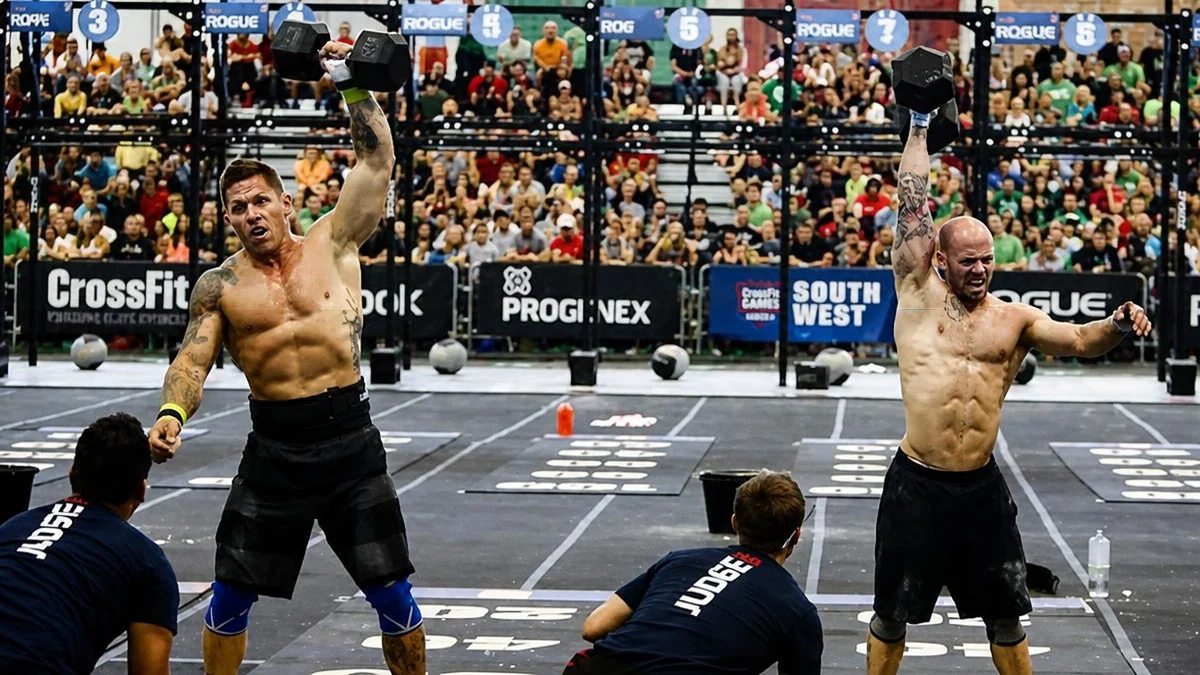
A V-shaped torso comes from building the muscles that add width to your upper body, especially your lats and the outer portions of your shoulders. Dumbbells can help you train both areas with a small, straightforward exercise selection. They cannot change your underlying bone structure, but they can help you develop the muscles around your shoulders and back.
These three exercises cover the main goal: a one-arm dumbbell row and a dumbbell pullover for your back, plus a lateral raise for your shoulders. The evidence behind exercise selection is useful, but it has limits. Short studies that measure muscle activity with electromyography, or EMG, show which muscles are working during a movement. They do not prove that an exercise will produce more muscle growth over time. Consistent training, gradually increasing the challenge, and using a range of motion you can control all matter.
Why Train Your Back and Shoulders?
Your latissimus dorsi muscles, usually called the lats, cover much of your mid and lower back and help move your upper arms down and back. Building them can add visible width below your shoulders. The deltoids cap the shoulder joint. The middle portion, sometimes called the lateral deltoid, contributes to the appearance of broader shoulders when developed.
A one-arm dumbbell row lets you train each side of your back separately. A pullover adds a different shoulder movement, while a lateral raise gives the middle deltoid more direct work. The goal is not to find one perfect exercise. It is to choose movements that train different parts of the upper body and perform them consistently.
1. One-Arm Dumbbell Row
Why it earns a place in your workout
The one-arm dumbbell row is the main pulling exercise in this routine. Rows train several muscles in the upper back, including the lats, while also involving the elbow flexors. Research comparing common lat exercises found that seated rows and pulldowns produced strong lat activity relative to biceps activity. That study did not test this exact dumbbell variation, so it cannot prove that a one-arm row is better than other options. It does support including a rowing movement in a back-focused plan.
A dumbbell row is also easy to adjust. You can brace one hand on a bench or sturdy surface, which helps support your torso while your other arm rows. If you do not have a bench, a staggered stance with your free hand braced on your thigh can work, provided you can hold a steady position.
How to do it
Place one hand and the same-side knee on a bench, with your other foot on the floor. Hold a dumbbell in your free hand and let your arm hang beneath your shoulder. Keep your back steady and your torso close to parallel with the floor. Pull the dumbbell toward your hip, keeping your elbow fairly close to your side. Lower the weight under control until your arm is extended again, then complete your repetitions and switch sides.
Think about moving your upper arm rather than yanking the weight with your hand. Avoid twisting your torso to lift a heavier dumbbell. If you cannot lower the weight smoothly or keep your trunk stable, reduce the load.
Sets and repetitions
Start with three sets of 8 to 12 repetitions per side. Choose a weight that allows you to maintain your position while making the last few repetitions challenging. When you can complete 12 clean repetitions on both sides for every set, increase the weight slightly and build back up from 8 repetitions.
2. Dumbbell Pullover
Why it earns a place in your workout
The pullover trains shoulder extension while your arms move from overhead toward your chest. It also involves the chest, so it should not be treated as a lat isolation exercise. In a small study that measured muscle activity during a barbell pullover, the pectoralis major showed more activity than the lats under the tested conditions. That finding is a useful reminder that an exercise’s name or intended target does not guarantee it will work only one muscle.
The pullover still offers a different movement from the row, and it can be a useful addition if it feels comfortable for your shoulders. There is limited direct evidence showing that dumbbell pullovers produce more lat growth than other back exercises. Use it as one part of a balanced routine, rather than expecting it to create a wider back by itself.
How to do it
Lie on a bench with your head and upper back supported and your feet planted on the floor. Hold one dumbbell securely with both hands above your chest, keeping a slight bend in your elbows. Brace your trunk and lower the dumbbell in an arc behind your head. Stop when you feel a comfortable stretch and can still keep your ribs from lifting and your lower back from arching. Bring the dumbbell back above your chest using the same controlled arc.
Use a conservative range of motion at first. Your shoulders do not need to reach a specific position behind your head, and you should not force a stretch that feels painful. If the movement bothers your shoulders, skip it and put more training effort into rows.
Sets and repetitions
Perform two or three sets of 10 to 15 repetitions. Use a lighter weight than you might use for a row, since the long lever of your arms can make the movement challenging even with a modest dumbbell. Lower the weight slowly enough to stay in control, then return it smoothly.
3. Dumbbell Lateral Raise
Why it earns a place in your workout
The lateral raise is the most direct of these three exercises for training the middle deltoid. In a study comparing several shoulder exercises in resistance-trained men, the lateral raise produced more activity in the middle deltoid than the bench press and dumbbell fly. The study measured muscle activity during a single workout, not long-term muscle growth, but it supports using lateral raises when the aim is to train the side of the shoulders.
The Best 3 Twisting Core Exercises for Beginners
The movement uses relatively light weights because your arms are held away from your body. That is normal. Chasing heavier dumbbells often encourages swinging, shrugging, or shortening the movement. A controlled lift with a weight you can manage is more useful than a heavier repetition you cannot repeat consistently.
How to do it
Stand with a dumbbell in each hand and your arms by your sides. Keep a small bend in your elbows and your shoulders relaxed. Raise your arms out to the sides until your hands are around shoulder height, or slightly below if that is more comfortable. Lower the dumbbells slowly to the starting position.
Keep your torso steady and avoid using momentum to swing the weights upward. Let your hands travel naturally rather than forcing your thumbs to point down. If your neck and upper traps take over, reduce the load and focus on smooth repetitions.
Sets and repetitions
Do three sets of 12 to 20 repetitions. Select a weight that lets you move through the same controlled range on every repetition. When you can complete 20 repetitions in every set without swinging, use the next available weight and build your repetitions up again.
How to Put the Exercises Together
Train these exercises once or twice per week, leaving enough time between sessions to recover. If you are new to resistance training, start with two sets per exercise and add a third set after a few weeks if you are recovering well. If you already train regularly, three sets of each exercise is a sensible starting point.
The exact number of weekly sets that works best differs between people. A meta-analysis found a general relationship between higher weekly resistance training volume and greater muscle growth, although more work is not automatically better for every person. Begin with a manageable amount and add work only if your technique, performance, and recovery remain solid.
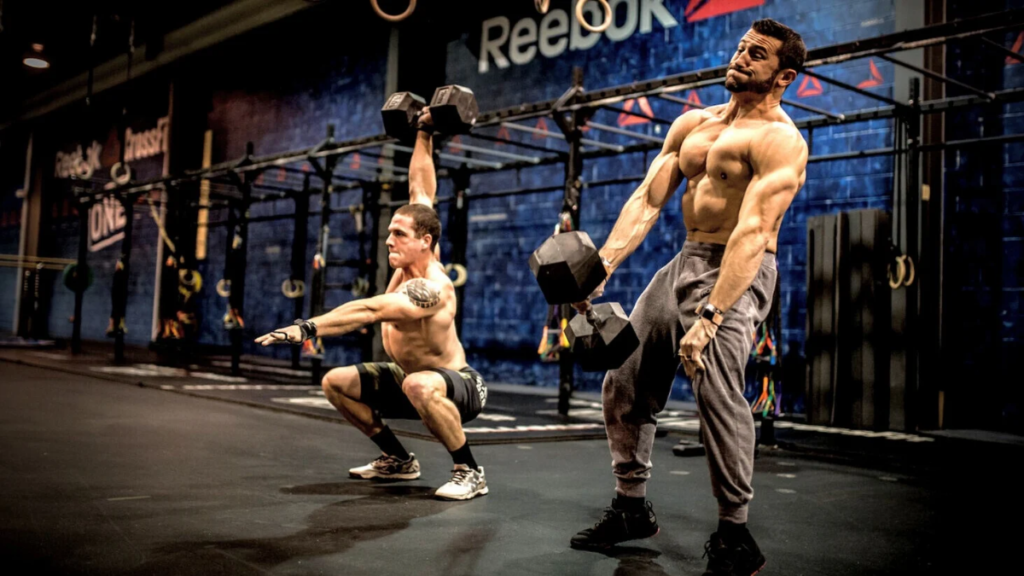
You do not need to take every set to the point where you cannot complete another repetition. A meta-analysis comparing training to failure with training that stops short of failure found only a small difference in muscle growth, with uncertainty around the result. Most sets can finish when you estimate that you could still complete one to three good repetitions. This gives you a challenging effort without requiring every set to become a grind.
Progression can be simple. Add repetitions while keeping your technique consistent. Once you reach the top of your target range for all sets, increase the dumbbell weight by a small amount and work back up. Keep a brief record of your weights and repetitions so you can see whether your training is moving forward.
What Dumbbells Can and Cannot Do
Dumbbells are useful because they allow each side of your body to work independently and require you to control the weights through the movement. The three exercises here can give you a practical foundation for training your back and shoulders. They are not the only exercises that can build these muscles, and research has not established that a specific three-movement dumbbell routine is uniquely effective for creating a V-shaped torso.
Muscle development also depends on factors beyond exercise choice, including training consistency, recovery, and nutrition. Your natural shoulder and waist proportions influence how your torso looks, and resistance training cannot change your skeletal structure. For a visible change, focus on building muscle over time and use a sustainable approach rather than trying to rush progress.
Key Takeaways
| Focus | What to do |
|---|---|
| Back width | Use the one-arm dumbbell row as your primary back exercise. |
| Shoulder width | Train the middle deltoids with controlled dumbbell lateral raises. |
| Exercise variety | Add dumbbell pullovers if they feel comfortable and suit your shoulders. |
| Training effort | Finish most sets with about one to three good repetitions left. |
| Progress | Add repetitions first, then increase the dumbbell weight when you reach the top of your range. |
References
- Campos, Y.A.C., Vianna, J.M., Guimarães, M.P., Oliveira, J.L.D., Hernández-Mosqueira, C., da Silva, S.F. and Marchetti, P.H. (2020) ‘Different shoulder exercises affect the activation of deltoid portions in resistance-trained individuals’, Human Movement, 21(4), pp. 44–51.
- Grgic, J., Schoenfeld, B.J., Orazem, J. and Sabol, F. (2022) ‘Effects of range of motion on resistance training adaptations: A systematic review and meta-analysis’, Sports Medicine, 52(2), pp. 289–301.
- Lehman, G.J., Buchan, D.D., Lundy, A., Myers, N. and Nalborczyk, A. (2004) ‘Variations in muscle activation levels during traditional latissimus dorsi weight training exercises: An experimental study’, Dynamic Medicine, 3(1), article 4.
- Marchetti, P.H. and Uchida, M.C. (2011) ‘Effects of the pullover exercise on the pectoralis major and latissimus dorsi muscles as evaluated by EMG’, Journal of Applied Biomechanics, 27(4), pp. 380–384.
- Robinson, Z.P., Pelland, J.C., Remmert, J.F.,_loaded?
- Schoenfeld, B.J., Ogborn, D. and Krieger, J.W. (2017) ‘Dose-response relationship between weekly resistance training volume and increases in muscle mass: A systematic review and meta-analysis’, Journal of Sports Sciences, 35(11), pp. 1073–1082.
