

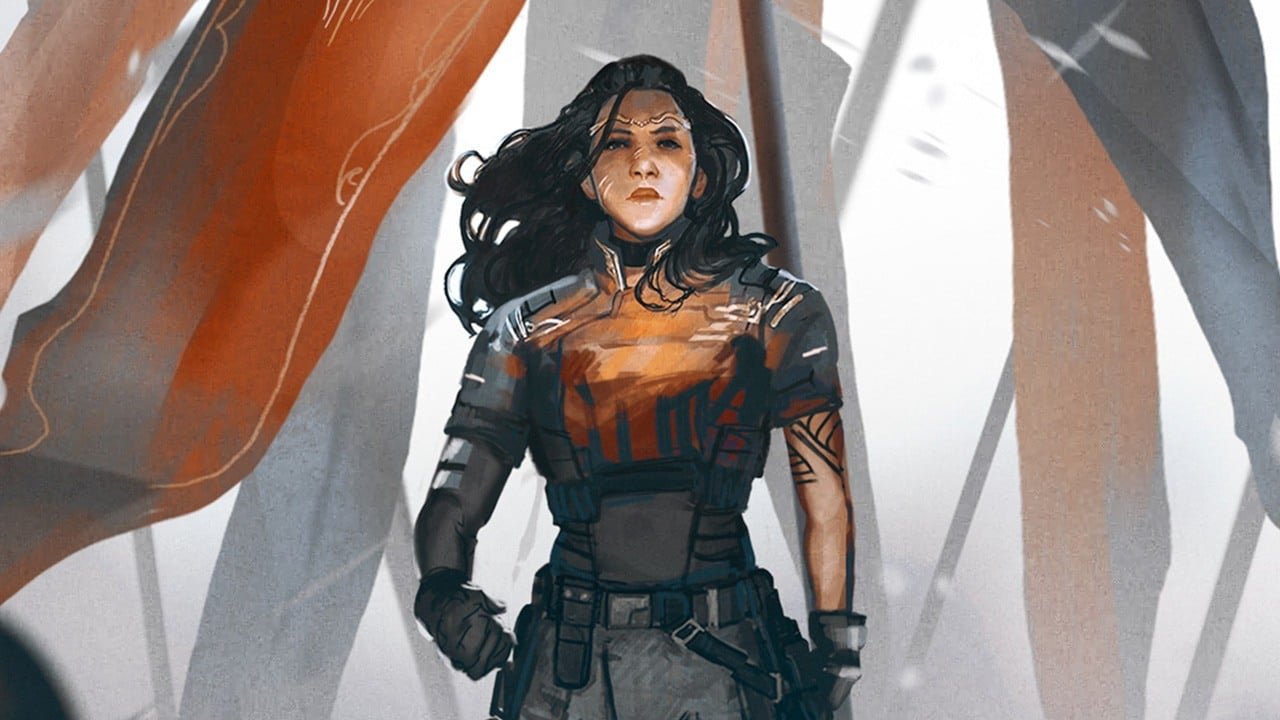
Here’s something I haven’t done in a while: dig through Xbox Game Pass to check out all the turn-based RPGs and strategy games currently available on the popular subscription service, which I’ve been faithfully paying for despite having very little time to actually play.
The last time I used the service was when Clair Obscur launched, and since then I haven’t checked what’s new or what’s still available for players who share my passion for turn-based games.
That said, I can confidently say that the service has plenty of great titles to get your money’s worth out of the subscription, and below I’ve rounded up 17 that I think deserve a special mention.
Clair Obscur: Expedition 33
How could I start anywhere else? Clair Obscur: Expedition 33 is probably the most obvious recommendation on the entire list.
Sandfall Interactive managed to create a game that gave an enormous amount of visibility to turn-based RPGs and, more specifically, to a style of combat clearly influenced by JRPGs without simply reproducing what other games had already done.
I don’t think Expedition 33 needs much of an introduction at this point. Its story is among the most intriguing and mature I’ve encountered in recent years, built around the Paintress and the yearly expedition sent to stop her terrifying countdown.
The combat is just as important. There is a traditional turn-based foundation underneath everything, skills, builds, status effects, party composition, but dodges, parries, timed attacks, free aiming, and combo opportunities constantly keep you involved during battles.
And then there is the presentation. The environments are gorgeous, the soundtrack is outstanding, and some scenes genuinely look like paintings in motion.
For me, Clair Obscur has already earned a place among the great RPGs of its generation. If you’re considering PC Game Pass and need one major reason to subscribe, this could easily be it.
Heroes of Might and Magic II & III
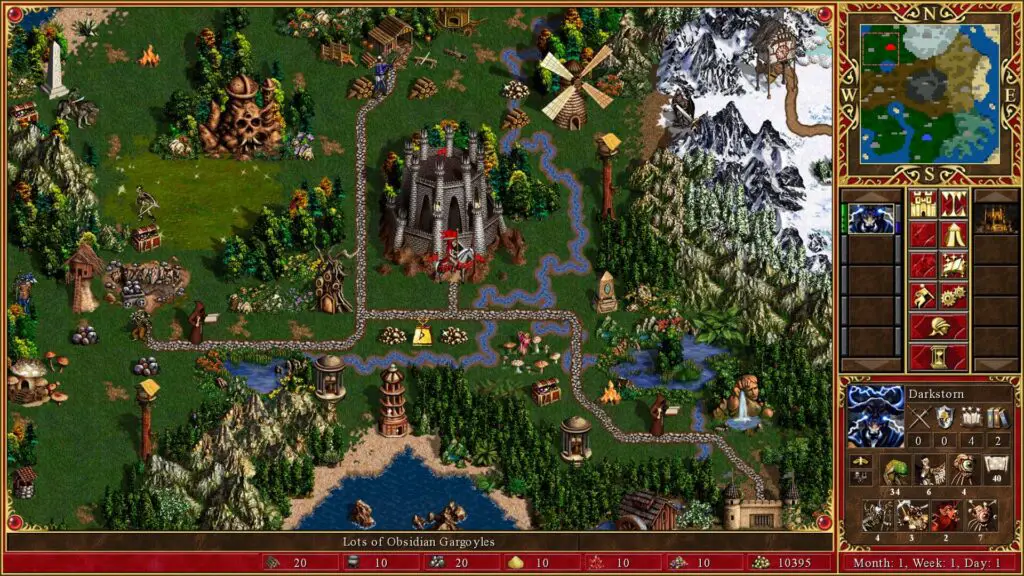
This was probably my favorite discovery while checking the Game Pass catalog. Both Heroes of Might and Magic II and Heroes of Might and Magic III are available, meaning subscribers can jump directly into one of the most iconic turn-based strategy series ever created.
These are the kind of games I think every strategy enthusiast should try at least once. You explore maps with your heroes, collect resources, conquer mines, build towns, recruit armies, hunt for artifacts, and eventually clash with opposing forces in tactical battles.
The formula sounds simple when reduced to a few sentences, but it can become dangerously addictive.
And then there’s Heroes III. More than two decades later, there are still players who consider it the high point of the entire franchise, and it isn’t difficult to understand why. Its factions, maps, creatures, progression, and almost board-game-like exploration loop remain incredibly effective.
Of course, these are old games. Don’t expect modern interfaces or conveniences everywhere. Give them a little time, though, and you’ll understand why people are still playing them.
South Park: The Fractured But Whole

Here’s one I have to confess I’ve never actually played. I’ve had South Park: The Fractured But Whole sitting somewhere on my mental backlog for years, and seeing it on Game Pass finally gives me a reason to do something about it. I will probably be playing it very soon.
At first glance, it’s also easy to underestimate. You see South Park, you expect crude humor, ridiculous situations, and a game that exists mostly to make fans of the show laugh for a few hours. It certainly has all of that.
What surprised me when looking deeper into it, though, is how much attention went into the actual RPG systems. Combat takes place on a grid and revolves around movement, positioning, knockbacks, area attacks, status effects, and the different abilities provided by its superhero classes.
It’s considerably more tactical than its cartoon presentation suggests. So yes, you get the irreverent South Park humor. But underneath it there’s also a proper turn-based RPG with a combat system that appears to have much more going on than I originally gave it credit for.
Wasteland 3
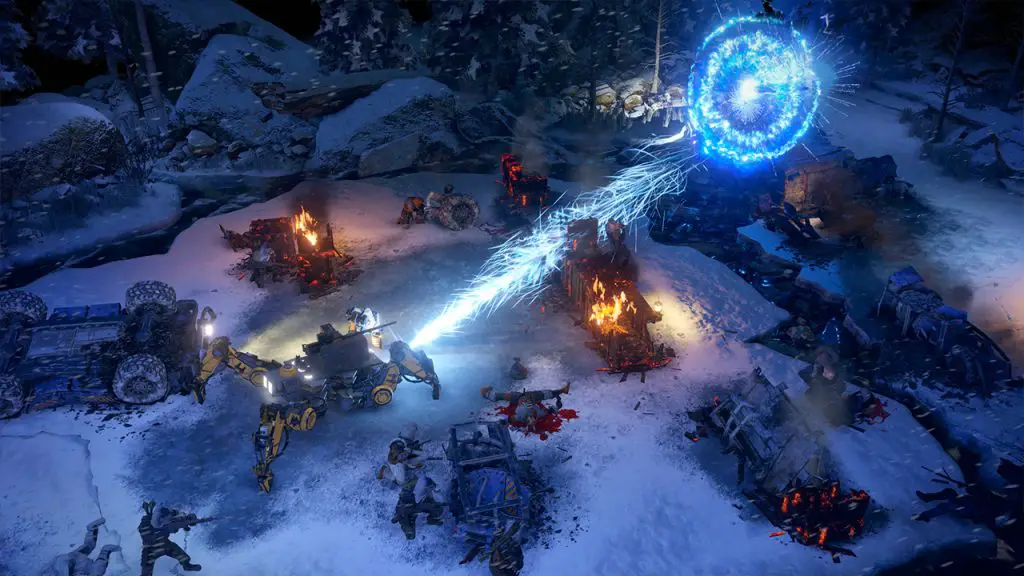
Now we’re entering familiar territory. Wasteland 3 is one of the best CRPGs released in recent years and easily one of the strongest games you can currently find on PC Game Pass.
The setup sends the Desert Rangers into the frozen remains of Colorado, where they strike a deal with the Patriarch, a local ruler whose assistance comes with quite a few strings attached. From there, things get complicated.
Factions clash, people lie, questionable characters ask you to do even more questionable things, and the game rarely gives you a perfectly clean solution to its problems. That’s exactly where Wasteland 3 shines.
Its turn-based combat is excellent too. Cover, positioning, weapon types, perks, explosives, environmental hazards, and character builds all come together in battles that regularly reward experimentation.
I’ve always considered it one of those CRPGs that manages to be deep without becoming unnecessarily difficult to approach or boring. If you’ve been putting it off, Game Pass makes that excuse increasingly difficult to justify.
BATTLETECH
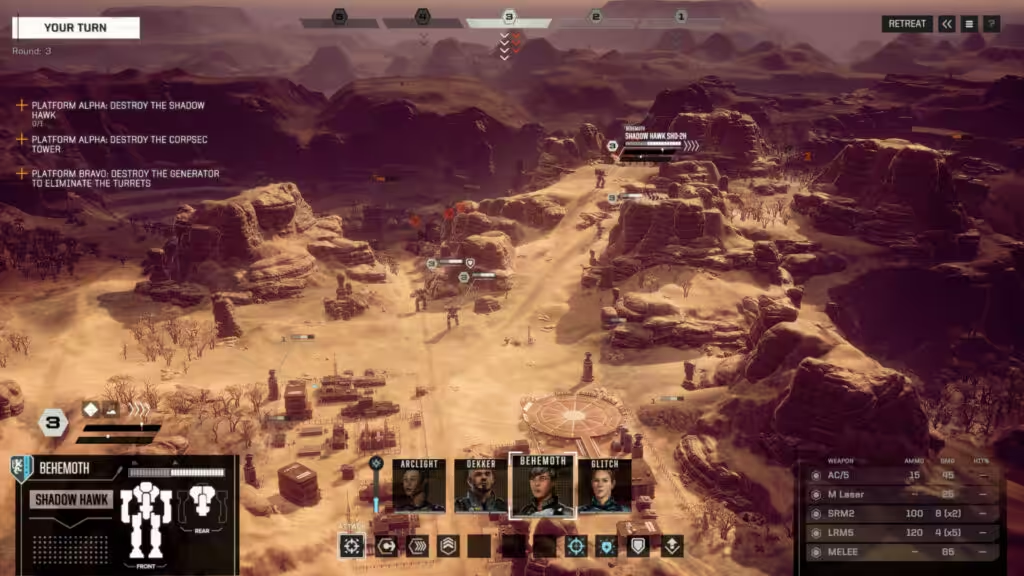
Four enormous machines walk onto a battlefield. Missiles start flying. One of them loses an arm. Another begins overheating. And suddenly the repair bill for your supposedly successful mission starts looking terrifying. That’s BATTLETECH.
Harebrained Schemes’ tactical RPG isn’t only about controlling BattleMechs during combat. You’re also managing an entire mercenary company between missions, and every damaged piece of machinery costs money.
That changes how you approach battles. Winning is important, obviously, but winning without destroying half of your own lance is even better.
Combat itself involves armor facing, heat, weapon ranges, positioning, pilot abilities, terrain, and the individual strengths of each BattleMech. There’s a satisfying weight to almost every action, especially when a carefully planned attack finally removes an enemy weapon or knocks a machine down.
It isn’t the fastest game out there, but that deliberate pace is part of what makes it work.
Death Howl
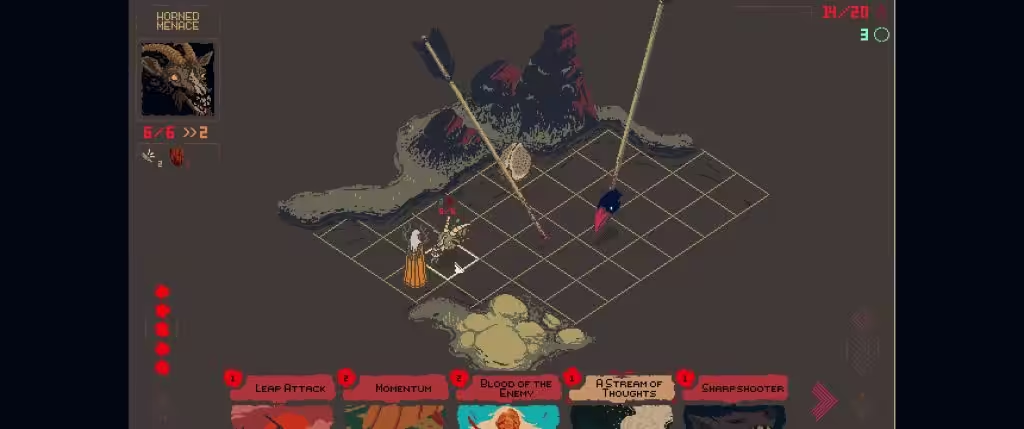
Death Howl immediately stands apart from almost everything else here. Instead of traditional party-based combat, it mixes grid movement with deckbuilding inside a dark spiritual world.
You play as Ro, a mother who enters the realm of the dead following the loss of her son. It’s a grim premise, and the game’s pixel-art environments do a surprisingly good job of reinforcing that atmosphere.
Battles revolve around cards with poison builds, defensive setups, sacrifice mechanics, movement abilities, retaliation effects, and other strategies that can all be developed through the cards you collect and craft.
There’s also a noticeable Soulslike influence in the way the game expects you to learn from dangerous encounters. It’s strange, gloomy, mechanically unusual, and exactly the sort of smaller RPG I’m glad to see included in a subscription service.
Echo Generation 2
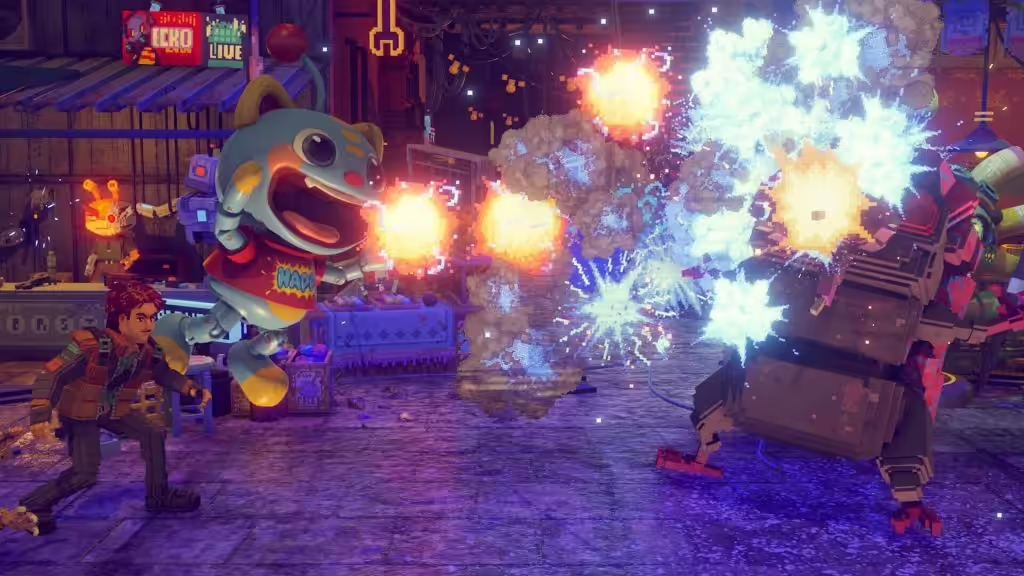
Another unusual one. The original Echo Generation was already difficult to categorize neatly, and the sequel pushes even further into its own identity by introducing deckbuilding mechanics and several playable characters.
You build decks around individual heroes, create parties of three, and use their abilities together during turn-based encounters. One of the more interesting mechanics is the stance system. Enemies have defenses connected to specific symbols, and matching those symbols with your cards can break their posture and create opportunities for stronger attacks.
Visually, Cococucumber retains the wonderful voxel aesthetic that made the first game immediately recognizable, but the scope is broader this time around, jumping between different characters and increasingly bizarre sci-fi situations.
Not every RPG needs to be a 100-hour fantasy epic. Echo Generation 2 is a good reminder of that.
For The King II
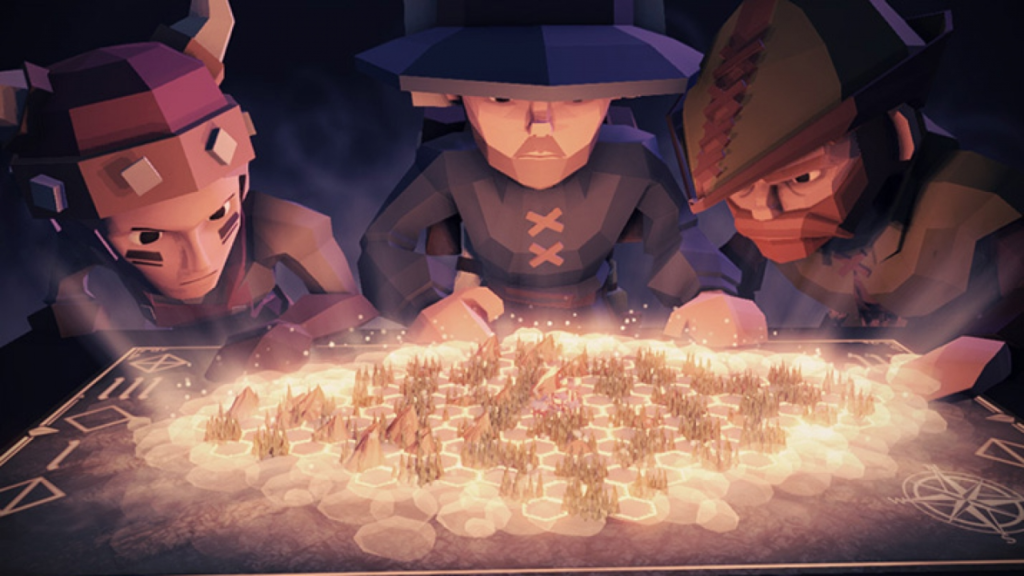
For The King II is probably one of the easiest games here to recommend to a group of friends. The whole thing feels like somebody threw a tabletop RPG, a roguelite, and a tactical adventure game into the same box.
You move across procedural maps, complete quests, visit towns, collect equipment, fight enemies, and repeatedly hope the dice don’t decide that your carefully prepared plan deserves to collapse. And sometimes they do. That’s part of the fun.
The sequel supports parties of four, while the tactical grid gives positioning more importance than it had in the original game. Certain characters can protect others, enemies can be moved into dangerous spaces, and formations start making a meaningful difference once fights become more complicated.
You can play alone and control the whole party, but the unpredictable nature of the game makes considerably more sense when there are several people around to blame when everything goes wrong.
Gears Tactics
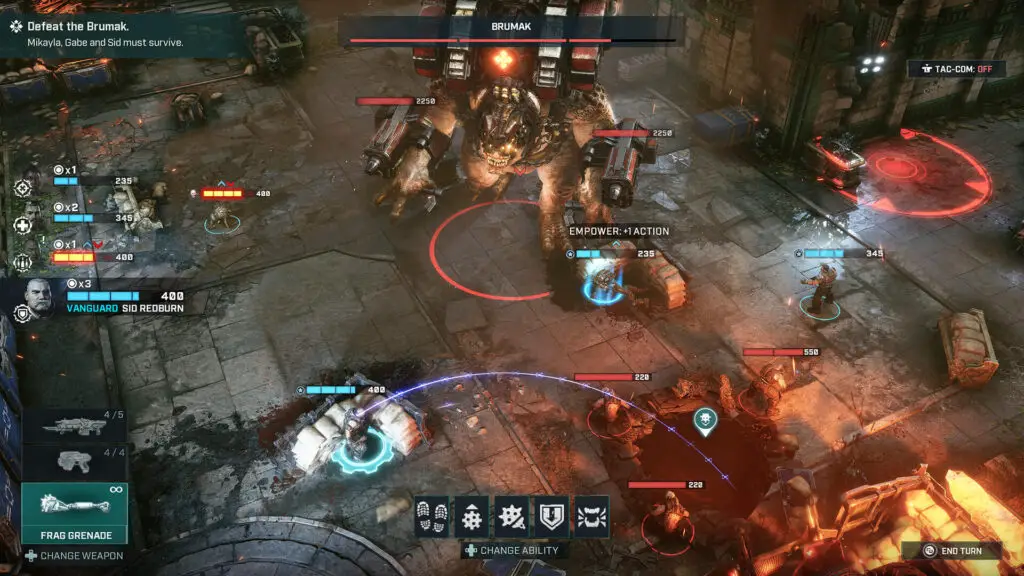
I think Gears Tactics gets overlooked far too often when people talk about modern tactical games. Maybe that’s because of the name.
Anyone familiar with Gears of War naturally associates the series with third-person shooters, but Gears Tactics translates that universe into a surprisingly effective turn-based format.
You’ll immediately recognize some XCOM-like ideas: cover, action points, character classes, overwatch, equipment, and skill trees. At the same time, the game is much more aggressive in the way it expects you to move around the battlefield.
Executions can restore actions to squad members. Enemies arrive in significant numbers. Staying in one defensive position indefinitely usually isn’t the solution.
The strategic management side isn’t especially deep, so don’t go in expecting an XCOM campaign layer. The missions themselves, however, are excellent, and some of the enormous boss battles are still impressive.
Heroes of Might and Magic: Olden Era
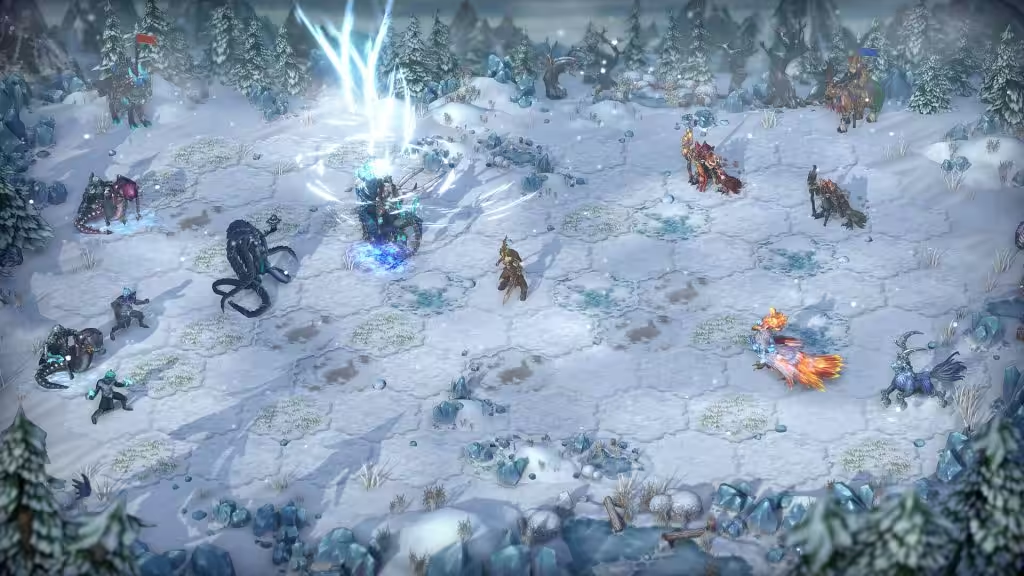
And now we return to Heroes of Might and Magic, only this time with something much newer.
Olden Era brings the classic formula back with modern production values while keeping the basic structure longtime fans expect: heroes exploring adventure maps, armies growing creature by creature, towns developing over time, resources being fought over, and tactical battles deciding who gets to keep everything.
For someone coming directly from Heroes III, the similarities are immediately apparent. There are also new ideas, including abilities powered through a Focus resource generated during combat, along with a huge selection of heroes, factions, artifacts, spells, and creature combinations.
In a strange way, having Heroes II, Heroes III, and Olden Era sitting inside the same subscription makes Game Pass a pretty interesting little history lesson in how this series has evolved.
Like a Dragon: Infinite Wealth
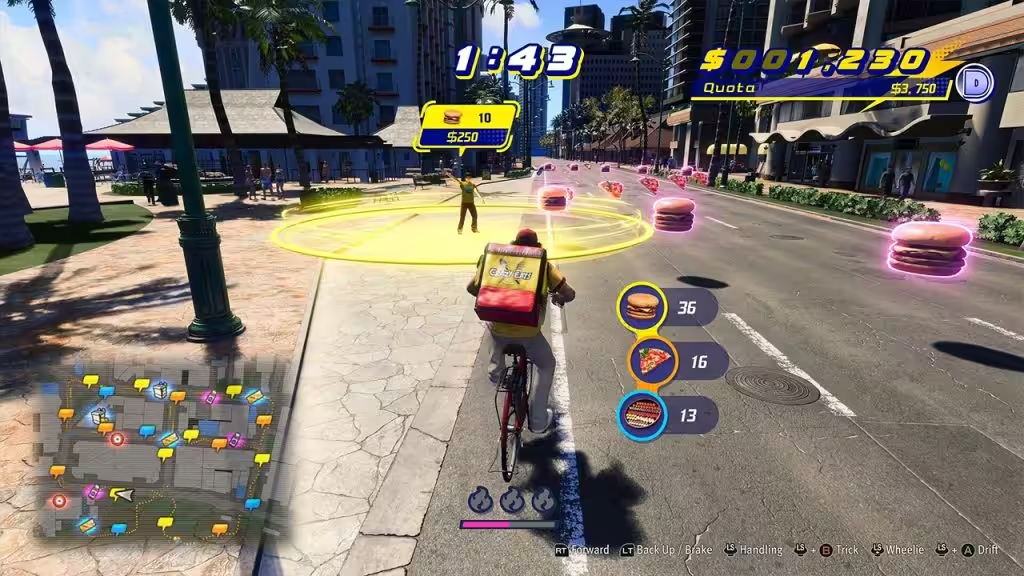
I don’t even know where to begin describing Like a Dragon: Infinite Wealth without making it sound completely absurd. And maybe that’s appropriate.
One moment you’re following an emotional storyline involving Ichiban Kasuga and Kazuma Kiryu. A little later you’re participating in some ridiculous side activity that feels as if it came from an entirely different videogame. Somehow, it works.
Combat continues the turn-based direction introduced with Yakuza: Like a Dragon, but positioning plays a much bigger role. Characters can move within their available area, line up attacks, knock enemies into objects or other opponents, and coordinate with nearby party members.
The job system adds depth with different classes changing abilities, stats, and combat roles. It’s also absolutely enormous.
Between the main story, side quests, minigames, optional activities, and character progression, you could probably spend your entire Game Pass subscription playing this one game and still have things left to do.
Persona 5 Royal

There’s very little I can say about Persona 5 Royal that hasn’t already been said somewhere over the last several years. It’s one of the defining JRPGs of its generation.
You divide your time between the everyday life of a Japanese student and the supernatural activities of the Phantom Thieves, entering Palaces, fighting Shadows, collecting Personas, strengthening relationships, and constantly deciding how to spend the limited days available to you.
The turn-based combat remains fast and stylish, particularly once you start exploiting weaknesses, switching Personas, chaining attacks, and building a team capable of controlling encounters before enemies can respond.
But the combat is only half the experience. Social relationships directly influence progression. Activities performed after school can improve different attributes. Calendar management becomes its own strategy game.
And then there’s that soundtrack. If you’ve somehow avoided Persona 5 until now, the Royal version is the one to play. Just don’t start it while telling yourself you’ll only spend a few evenings with it.
The Bard’s Tale IV: Director’s Cut
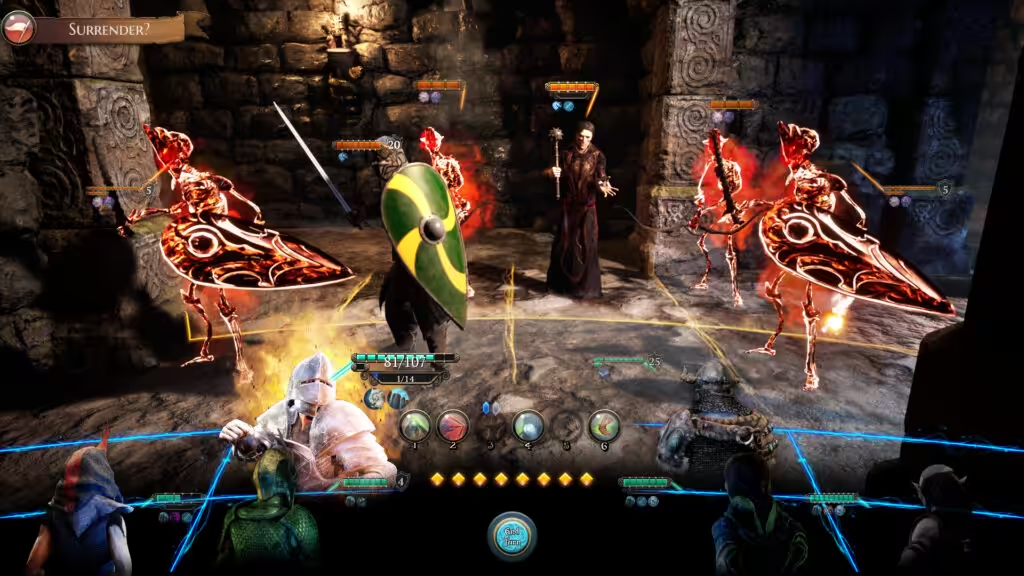
Here’s something for players who miss old-school dungeon crawlers. The Bard’s Tale IV returns to a first-person perspective, sending your party through towns, ruins, dungeons, and puzzle-filled environments while gradually building a team capable of dealing with increasingly complicated encounters.
Its combat system uses party formations and encourages you to think carefully about where every character is positioned.
Abilities can interact with one another, enemies can be moved around the battlefield, and certain setups work best when party members act in a specific sequence. Outside combat, exploration has a slower, more traditional feeling. There are puzzles to solve, secrets to uncover, characters to recruit, and plenty of opportunities to modify your party.
It’s probably not the first RPG I would use to introduce somebody to Game Pass, but for fans of dungeon crawlers, its presence in the catalog is definitely worth remembering.
The Thaumaturge
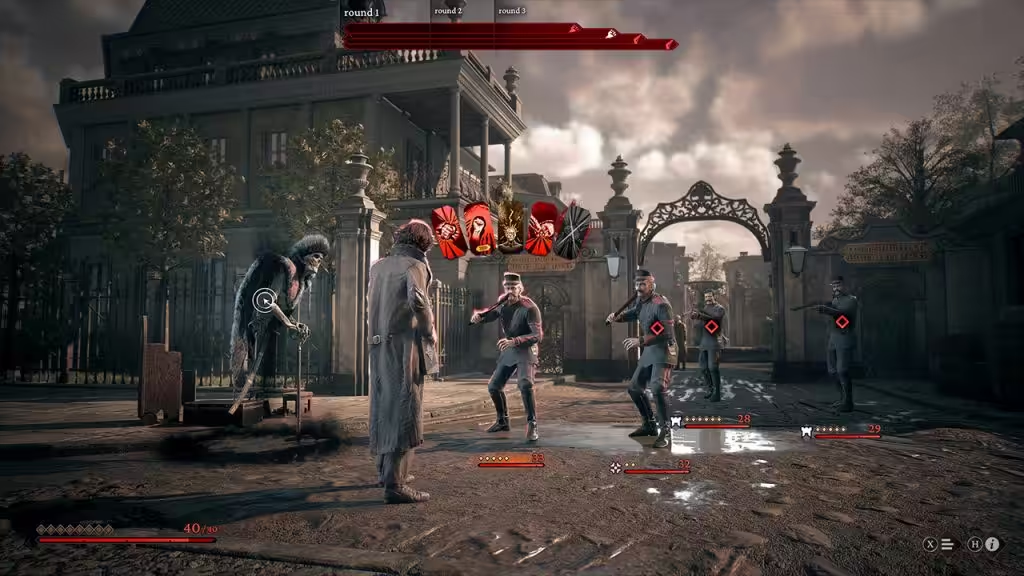
Warsaw, 1905. That’s already enough to make The Thaumaturge feel different from almost every RPG surrounding it.
Instead of another traditional fantasy kingdom, Fool’s Theory built its story around an early-20th-century city filled with political tension, social divisions, crime, and supernatural creatures called Salutors.
Wiktor Szulski is capable of perceiving traces left behind on objects and people, allowing him to investigate situations and discover information that other characters cannot see. Those investigative abilities frequently spill into conversations. Learning somebody’s secrets may provide an entirely new way to approach them later.
Combat is turn-based and pairs Wiktor’s abilities with those of his Salutors, but I think the real appeal here comes from the atmosphere and the role-playing side of the experience. It’s weird in a very good way.
Wartales
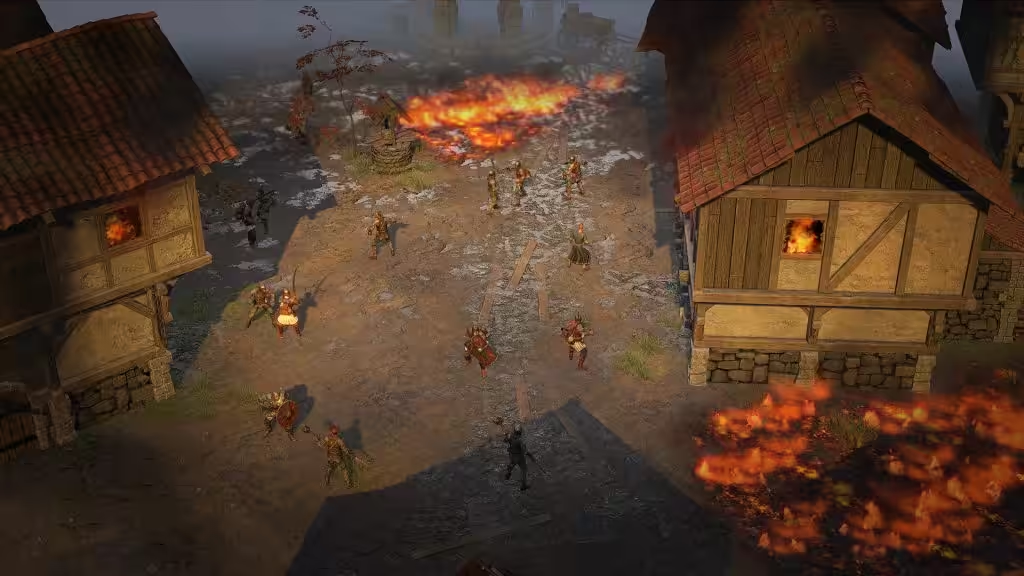
No chosen hero. No ancient prophecy. No immediate obligation to save the world. In Wartales, you’re managing a group of mercenaries who would mostly like to earn some money and make it to tomorrow alive.
That simple premise gives the game an unusual sense of freedom. You travel across a large medieval world, take contracts, recruit new companions, explore ruins, hunt criminals, manage food and wages, improve your camp, and slowly turn a small band of nobodies into something much more dangerous.
Turn-based battles emphasize positioning and engagement. Once two characters lock into combat, moving them isn’t always straightforward, so controlling the battlefield becomes increasingly important as your company grows.
What I like most about the idea behind Wartales is that the story belongs largely to your group. One mercenary might become the backbone of the company. Another could die during a completely routine contract because you got careless. Someone you recruited almost as an afterthought can eventually become indispensable.
These small stories accumulate over dozens of hours. And Wartales can absolutely consume dozens of hours with devs keep pushing with new updates and DLCs.
Pillars of Eternity II: Deadfire

Yes, I know. Pillars of Eternity II: Deadfire was originally designed around real-time-with-pause combat. But it also has a full turn-based mode, so I’m including it. And I’m happy to have an excuse.
Obsidian’s second Pillars game takes players to the Deadfire Archipelago, trading the more traditional setting of the original for islands, ships, pirates, colonial powers, ancient ruins, and some extremely complicated political relationships.
The amount of freedom in character building is enormous. You can stay with a single class, experiment with multiclass combinations, customize companions in several directions, and build parties around very specific interactions between abilities.
Turn-based mode changes the pace dramatically. Battles become longer, but individual decisions become easier to read, and positioning, initiative, spell timing, and resource management receive much more attention.
Deadfire is dense. It asks you to read, experiment, learn its systems, and spend time understanding the people and factions around you. But that’s exactly what I want from a CRPG.
Phoenix Point
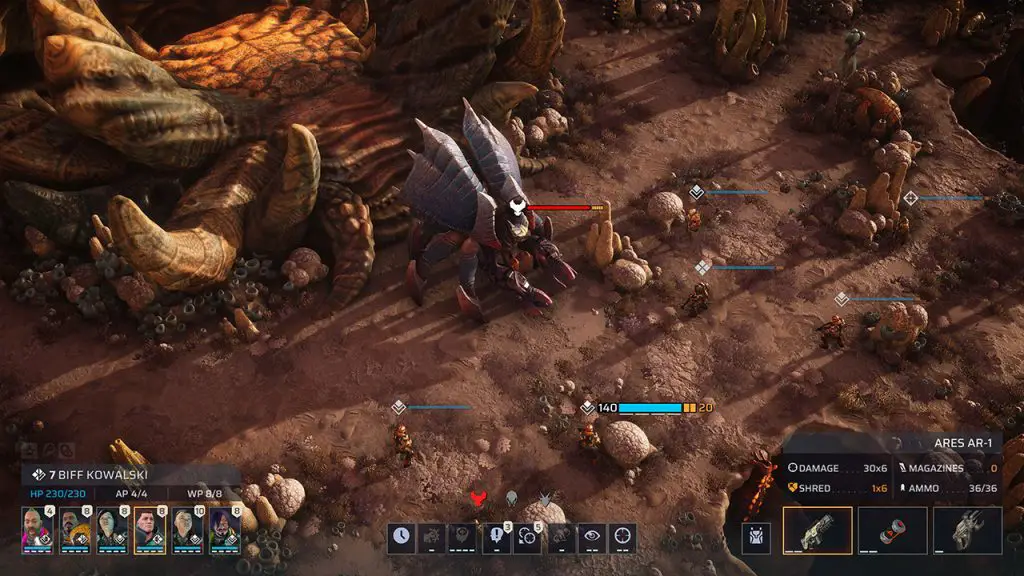
If you’re one of those people still waiting for a new XCOM, Phoenix Point is probably one of the first games you should download.
And there’s a good reason for the similarities. It comes from Snapshot Games and Julian Gollop, the creator of the original X-COM series, although Phoenix Point takes several of those familiar ideas in its own direction.
Humanity is barely hanging on after the Pandoravirus has transformed much of the planet’s population into constantly evolving creatures. You take control of the Phoenix Project and, from there, you’re responsible for pretty much everything: exploring the globe, establishing bases, researching technology, managing resources, dealing with the remaining human factions, and sending squads into turn-based tactical missions.
The part I’ve always found particularly interesting is the free-aim system. You aren’t limited to simply selecting an enemy and watching the percentage roll. You can manually target specific body parts, destroy an alien’s weapon, disable an arm, remove an ability, or simply aim for whatever exposed section gives you the best chance of doing some damage.
Enemies also mutate during the campaign, so a solution that worked perfectly several missions ago might not remain effective forever. On the strategic side, New Jericho, Synedrion, and the Disciples of Anu have completely different ideas about humanity’s future, and deciding who to support, or who to make an enemy of, becomes another part of the campaign.
It’s demanding, sometimes pretty unforgiving, and certainly not as immediately accessible as XCOM 2. But if what you want from Game Pass is a deep tactical game where you can spend an unreasonable amount of time building soldiers and thinking about how to kill one particularly annoying alien, Phoenix Point absolutely belongs on this list.
