

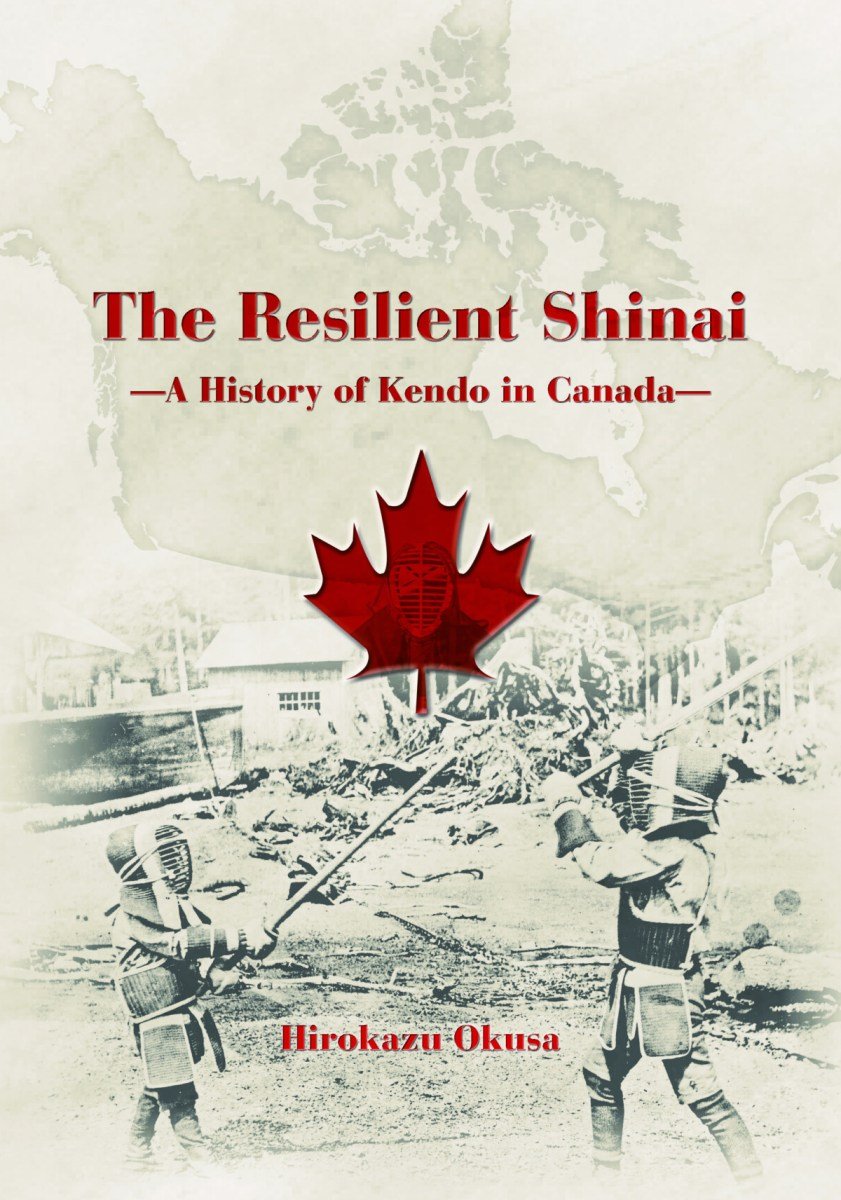
I recently read and finished the book about Canadian Kendo entitled, The Resilient Shinai, from Hirokazu Okusa. Reading Okusa’s book was in an effort to understand Kendo as it exists and how it is organized outside of Japan, as Japan has much of the focus for kendo history and discussion. To be fair, Kendo originated from Japan and had a multitude of evolutions and changes since its inception. What I was trying to do was broaden the horizon and broaden the scope of kendo history, essentially, to the larger world, including countries outside of Asia. When looking at kendo’s time in the Americas – North, Central, and South America – one notices that there is a starting point, a disruption point, and a restart point. This cycle has been very prominent within my research of American Kendo history, and it is a cycle that unifies the kendo communities of both America and Canada. The importance of Okusa’s work is providing a starting point for others to begin their journey into Canadian Kendo history.
The Resilient Shinai opens with a discussion of the Internment period of Canadian Kendo. While the periods are not in chronological order, I feel that Okusa’s start with the Internment Period was to demonstrate the resiliency of both the Japanese Canadians and the kenshi forced into the internment camps, to which helps the reader understand the supposed origin of the book’s title.
Speaking of Internment, for those that have read my previous articles on the Japanese Internment during the Second World War in the United States, the internees had a difficult time receiving the necessary permissions and collecting the required training equipment, compared to that of judo, baseball, sumo, and basketball. The Japanese Canadians, by contrast, were allowed by the camp authorities to practice kendo on a regular basis throughout their stay in the camps. Joseph Svinth discusses this difference in Internment experiences in his 2003 book chapter, however, Okusa provides names, faces, and lived experiences to transform this time in Canadian Kendo history into something more tangible for the reader.
Okusa does not leave the Internment period behind to discuss prewar kendo in Canada, leaving each section as its own isolated chapters. Rather, Okusa asserts that such resilience during this dark time in the collective Japanese Canadian/American experience was born from the bonds, communities, and the training underwent during the Prewar Period. He further emphasizes the shared history between Canadian and American issei and nisei: immigrants settling in a new country, a new land, and almost a hostile new home. Here, the Japanese communities formed around Canada’s western coast. Each community prioritized their work and building their families and neighborhoods. Kendo was secondary for the sole reason that these new settlers did not have the ample leisure time as their descendants would have. These issei focused on achieving the necessary means to sustain themselves in Western Canada.
Kendo did grow during this time, however, Okusa describes incidences that stunted its spread originating from Canadian citizens and Yellow Peril fears. Besides their White neighbors, geography played a crucial role in establishing infrequent contact between these almost remote Japanese and kendo strongholds. Regardless of the geography, the kenshi of the Prewar Period established a large enough network of practitioners to create yearly or bi-yearly tournaments and seminars which, as Okusa discussed in his first chapter, allowed some Japanese Canadians to rally around kendo during Internment.
Okusa highlights the importance of this prewar kendo network and the influential instructors and leaders that assisted the art’s revival after the War. However, kendo was not immediately able to rise from the ashes. Okusa points out that the Canadian government, unlike the American Government, gave the internees two options: resettle in the eastern part of Canada or relocate to Japan. Those that chose to make their new lives in the east found themselves reliving similar struggles as their close relatives did only a few decades ago: make enough to survive, then thrive, then kendo reappeared into the picture.
Okusa ends the Resilient Shinai with a conclusion that some Japanese-centric kendo history enthusiasts would find a bit jarring; he mentions that the future of Canadian Kendo is not within the Japanese community, the Nikkei, but rather the Canadian community – the larger Canadian community. Canadian Kendo, according to Okusa, is becoming something more than an activity for the Japanese community or the Japanese. Rather, kendo has become something for many people of diverse backgrounds to enjoy. From Okusa, the Canadian Kendo community – and to an extent, the American Kendo community – can create a kendo that best fits into their (Canada’s) own paradigm or cultural zeitgeist, where the art appeals to the values and beliefs of the broader Canadian society, not just a novel cultural import.
Understanding the past can help one create a better future. With Okusa providing his work as the foundation for Canadian Kendo history, he has given the current Canadian Kendo community a blueprint for its future.
