

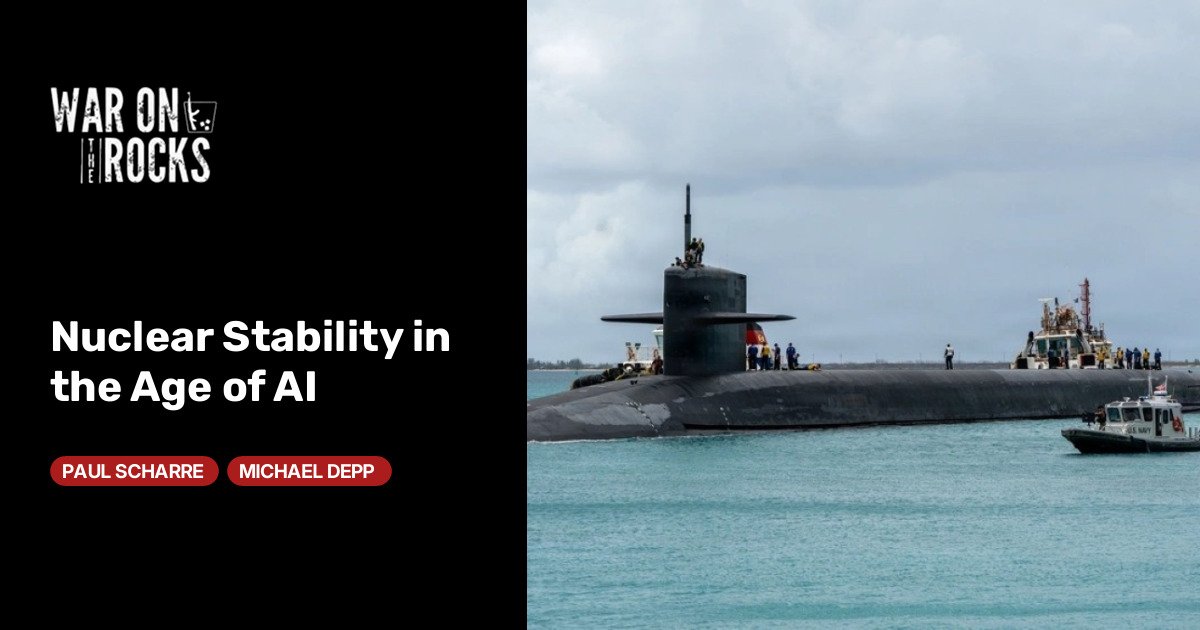
In 2024, Paul Scharre and Michael Depp wrote, “Artificial Intelligence and Nuclear Stability,” where they argued integrating artificial intelligence into the nuclear chain of command presents both opportunities and risks. Two years later, as AI becomes increasingly integrated into military systems and processes, we asked them to revisit their arguments. Image: Senior Airman Jason Wiese via Wikimedia CommonsIn 2024, you argued that integrating artificial intelligence into the nuclear chain of command presents both opportunities and risks. Where does that integration stand today? Is nuclear AI a priority for the Department of Defense, or does it currently take a back seat to other pressing concerns?Integrating AI into nuclear operations is one concern among many currently for the Department of Defense, and, for the time being, is clearly taking a back seat. This does not mean that progress on this front has stopped, such as incorporating AI in nuclear NC3 cybersecurity, but the focus of the department is with adopting AI for planning, intelligence analysis, operations, and back-office business functions. The Pentagon has used AI in recent military operations, most notably in supporting intelligence analysis and planning for in Iran.How have other countries, namely nuclear-armed adversaries, progressed in their use of AI in nuclear systems? Do other nuclear powers seem to show more restraint or more willingness than the United States in allowing AI to play a central role in nuclear systems?Since our article’s release, we have seen modest progress towards nuclear-armed states agreeing to human control over nuclear weapons use. In November 2024, China publicly agreed with the United States that humans must maintain control of nuclear weapons. This is a valuable first step and one that we argued for in our piece. As we noted, related to the prior American commitment to human control, much work needs to be done
Members-Only Content
This article is reserved for War on the Rocks members. Join our community to unlock exclusive insights and analysis.
In 2024, Paul Scharre and Michael Depp wrote, “Artificial Intelligence and Nuclear Stability,” where they argued integrating artificial intelligence into the nuclear chain of command presents both opportunities and risks. Two years later, as AI becomes increasingly integrated into military systems and processes, we asked them to revisit their arguments. Image: Senior Airman Jason Wiese via Wikimedia CommonsIn 2024, you argued that integrating artificial intelligence into the nuclear chain of command presents both opportunities and risks. Where does that integration stand today? Is nuclear AI a priority for the Department of Defense, or does it currently take a back seat
