

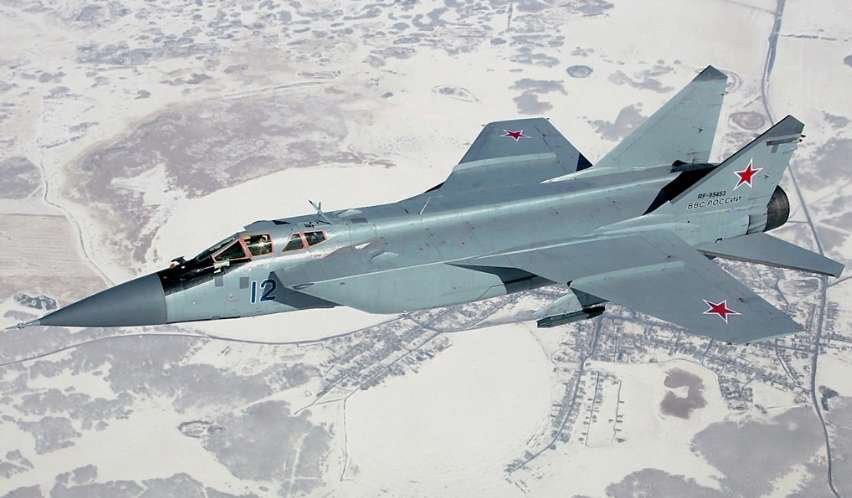
The MiG-31 Foxhound was built for a job most fighter jets were never meant to do: catch things before they got close.
That sounds simple until you look at the distances involved. The Soviet Union had huge stretches of airspace with few airfields, while the threats it worried about could fly low, fast, and far. A normal fighter could not simply patrol every corner and wait for trouble to appear.
The answer was the MiG-31.
With a top speed of about Mach 2.83, a service ceiling near 20 to 21 kilometers, and a powerful long-range radar, the MiG-31 Foxhound was designed to turn speed and detection range into time. And in air defense, time is everything.
The aircraft first flew in 1975 and entered Soviet service in 1981. It looked related to the older MiG-25 Foxbat, but treating the Foxhound as a faster MiG-25 misses the point. The MiG-31 was built around a different idea: detect targets earlier, share that information with other aircraft, and attack from far outside traditional dogfight range.
That explains its unusual two-person crew. The pilot flies the aircraft, while the weapon systems officer manages radar, sensors, and weapons. The arrangement makes sense when the aircraft may be moving at nearly 3,000 km/h while tracking several targets.
I find the most interesting part of the MiG-31 isn’t its headline speed. It’s what that speed was meant to achieve.
The Foxhound was never designed to circle over a battlefield looking for trouble. It was built to sprint toward trouble, launch missiles at long range, and get back into the Soviet air-defense network.
That mission still shapes why Russia keeps the MiG-31 Foxhound flying today.
Why Was the MiG-31 Foxhound Developed?
The MiG-31 exists because the MiG-25 could not solve every problem the Soviet Union had. The Foxbat was brutally fast, but Soviet air defense needed something that could do more than chase high-flying aircraft.
By the late 1960s, the threat was changing. Western bombers and cruise missiles were becoming harder to spot and could approach at low altitude, using terrain to hide from ground radar. A fighter built mainly around extreme speed and altitude had a problem: low targets were much harder to find and track.
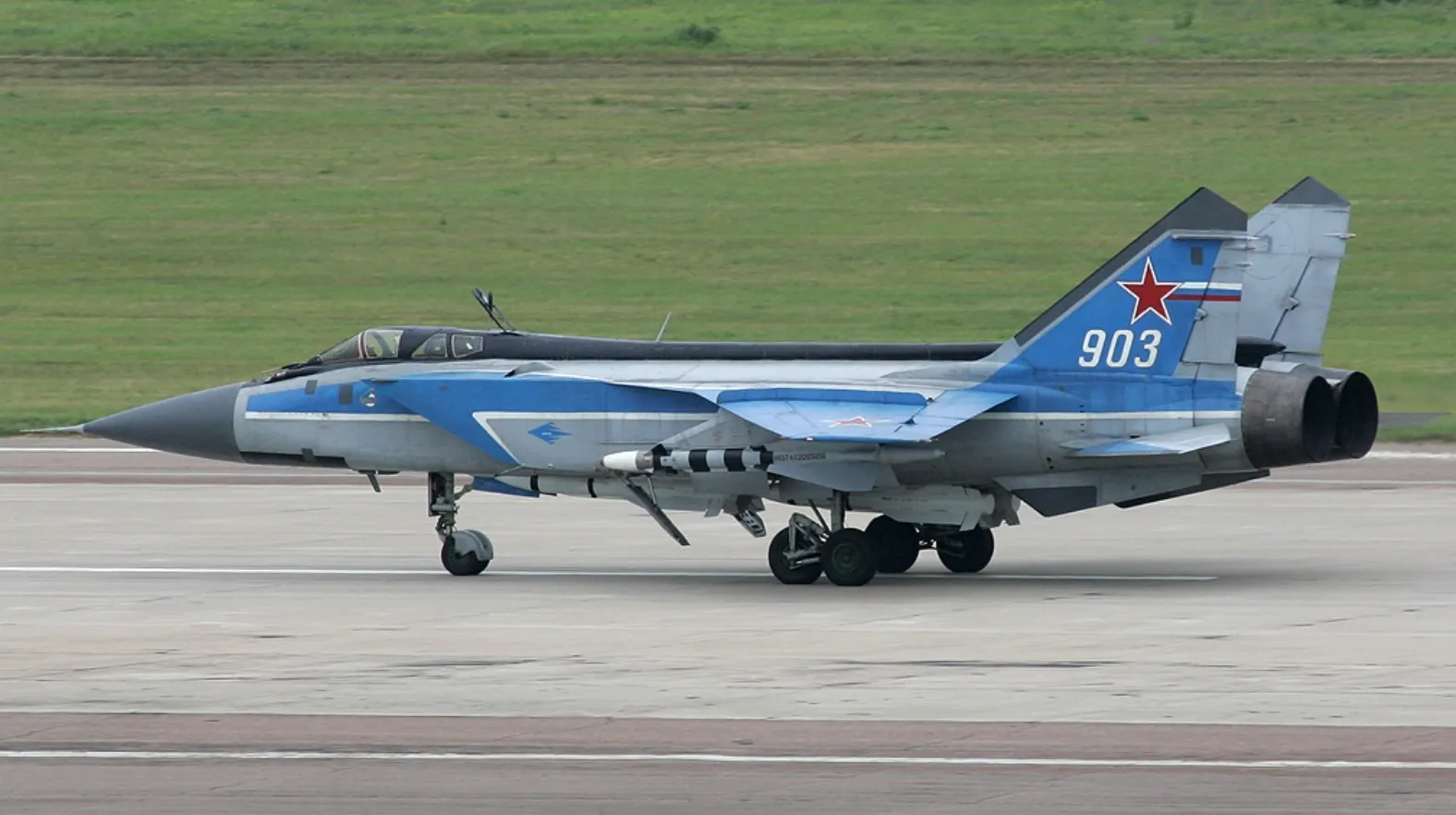
So Soviet designers went back to the drawing board.
The result began as the Ye-155MP, a development aircraft that first flew in September 1975. It kept the basic twin-engine, twin-tail layout of the MiG-25, but almost everything that mattered for interception was pushed further. The aircraft received a new radar, a second crew member, improved engines, and a much stronger ability to share target data.
That second crew member wasn’t there for comfort.
The pilot could concentrate on flying while the weapon systems officer handled radar and interception tasks. At nearly Mach 3, that division of work becomes practical rather than extravagant.
The mission was also broader. The MiG-31 could attack targets at high altitude, but it was built to detect and engage aircraft flying much lower. That’s a key distinction people often miss when they call it simply a “faster MiG-25.”
The Foxhound was really a flying part of a larger air-defense system.
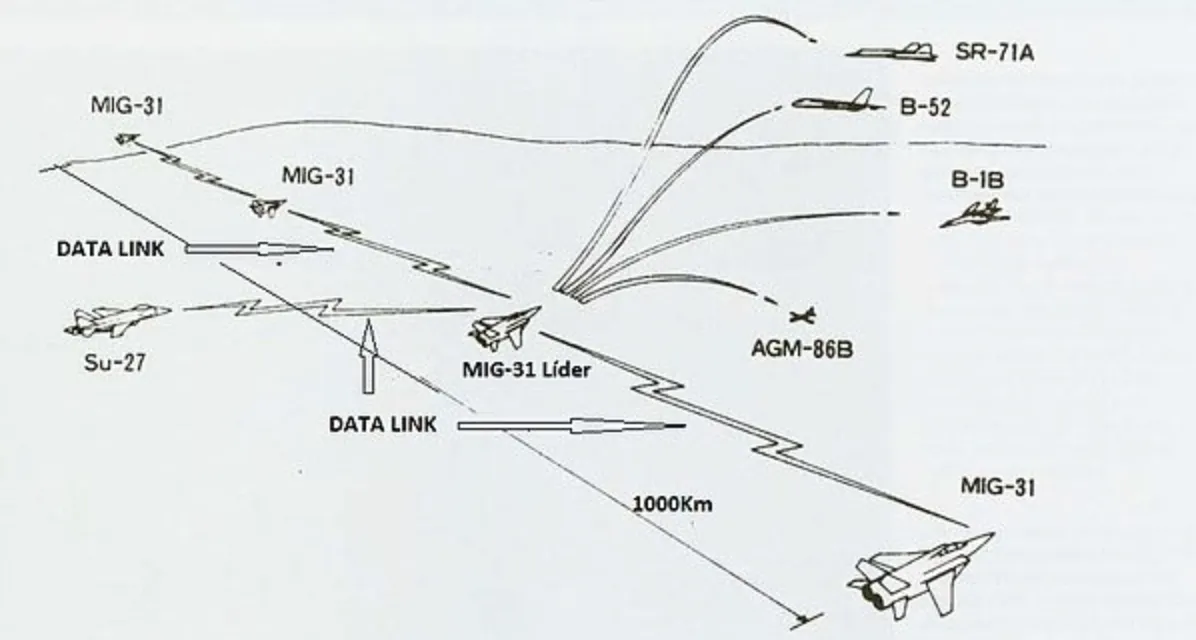
Four MiG-31s could share information through their data links, allowing one aircraft to pass a target picture to others. That mattered across the Soviet Union’s enormous northern airspace, where ground-based radar coverage could be thin.
By 1981, the MiG-31 entered Soviet service. Its basic logic was already clear: don’t wait for an intruder to come to you.
Find it early. Close the distance quickly. Fire before the target can dictate the fight.
How Fast Is the MiG-31 Foxhound?
The MiG-31 Foxhound is famous for its speed, but the useful number isn’t simply “Mach 2.8.” The real advantage is how quickly that speed lets the interceptor reach a distant target and bring its sensors and missiles into the fight.
The Foxhound can reach about Mach 2.83, roughly 3,000 km/h, at high altitude. Its service ceiling is around 20 to 21 kilometers. Two Soloviev D-30F6 afterburning turbofan engines provide the thrust, with each producing roughly 15,500 kgf of afterburning thrust.
Those figures put the MiG-31 in a strange category. It isn’t a fighter designed around tight turns or low-speed agility. Its enormous engines, large airframe, and heavy fuel load make that clear.
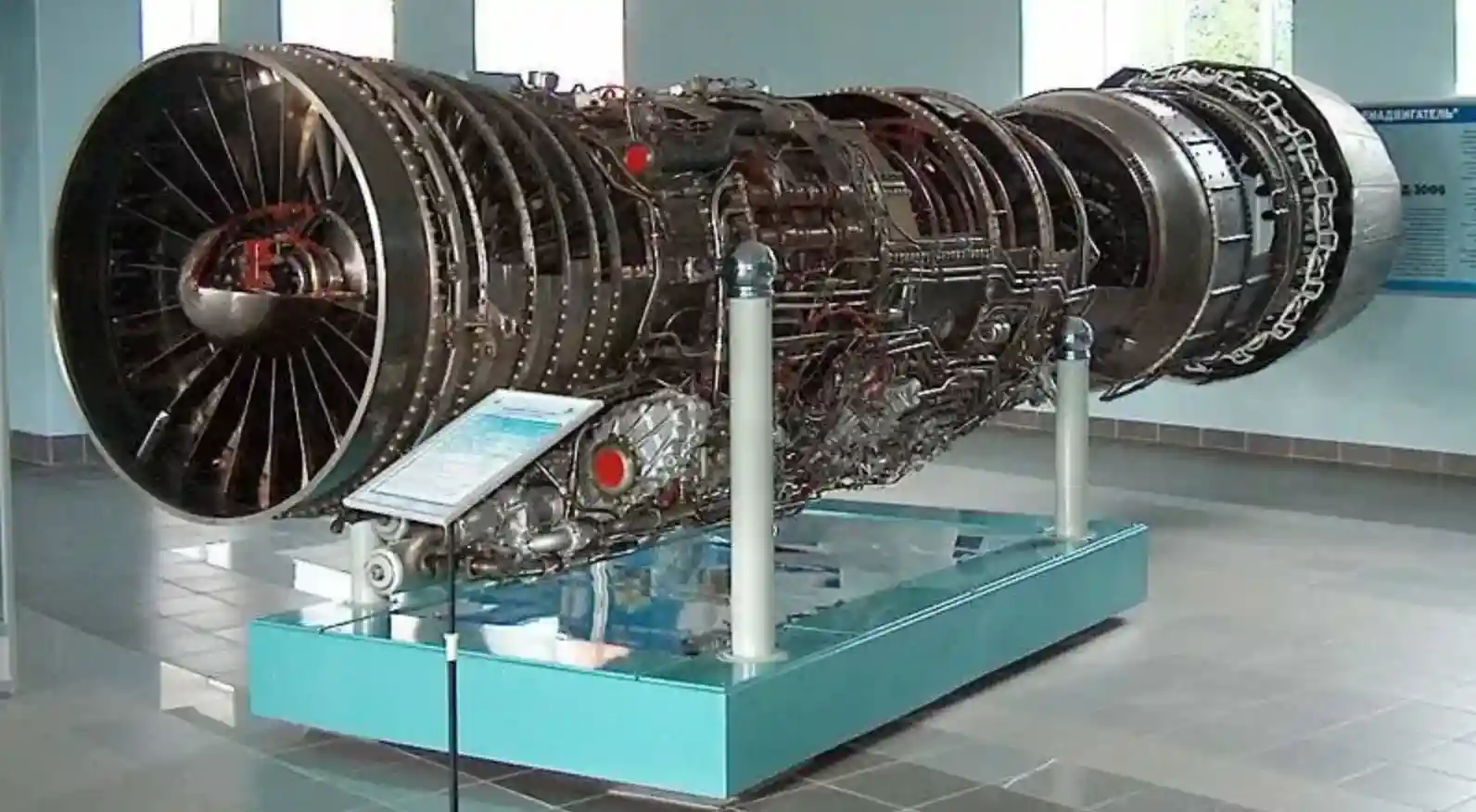
The aircraft’s job is to cover distance.
Imagine an interceptor based hundreds of kilometers from a suspected approach route. A conventional fighter may need considerable time to reach the area. The MiG-31 can burn through that distance at speeds few operational aircraft can match.
But there’s a catch.
Mach 2.83 isn’t a speed the Foxhound should simply maintain everywhere. Drag, engine temperature, fuel use, and airframe heating all become serious issues as speed rises. Maximum speed figures are therefore best understood as performance limits under suitable conditions, not normal patrol speeds.
This is where comparisons with the MiG-25 get interesting. Both aircraft were built around very high speed, but the MiG-31 added better radar, weapons, data links, and low-altitude interception capability. Speed became part of a larger system rather than the entire selling point.
The Foxhound’s altitude also matters. At around 20 kilometers, it can operate far above most conventional air traffic and many low-level threats. From there, its radar and missiles gain a useful view of the airspace below.
So why build something this fast?
Because an interceptor doesn’t get points for arriving late.
For the MiG-31, speed buys reaction time, and reaction time is the resource its designers cared about most.
MiG-31 Radar and Avionics: What Made It Different?
The MiG-31’s real trick was never just speed. It was the radar. The aircraft could move at nearly Mach 3, but that mattered far less if its crew couldn’t find the target early enough.
That problem led to Zaslon, the radar fitted to the original MiG-31.
Zaslon used a passive electronically scanned array, or PESA, instead of the mechanically steered radar common on many fighters of the era. The antenna could steer its beam electronically, which reduced the need to physically move the radar dish and allowed the system to handle several tracks at once.
That was a big deal in the late 1970s.
The Foxhound was built to find targets flying at very different heights, including aircraft and cruise missiles approaching at low altitude. This required look-down/shoot-down capability, because the ground itself creates a messy radar background that can hide low targets.
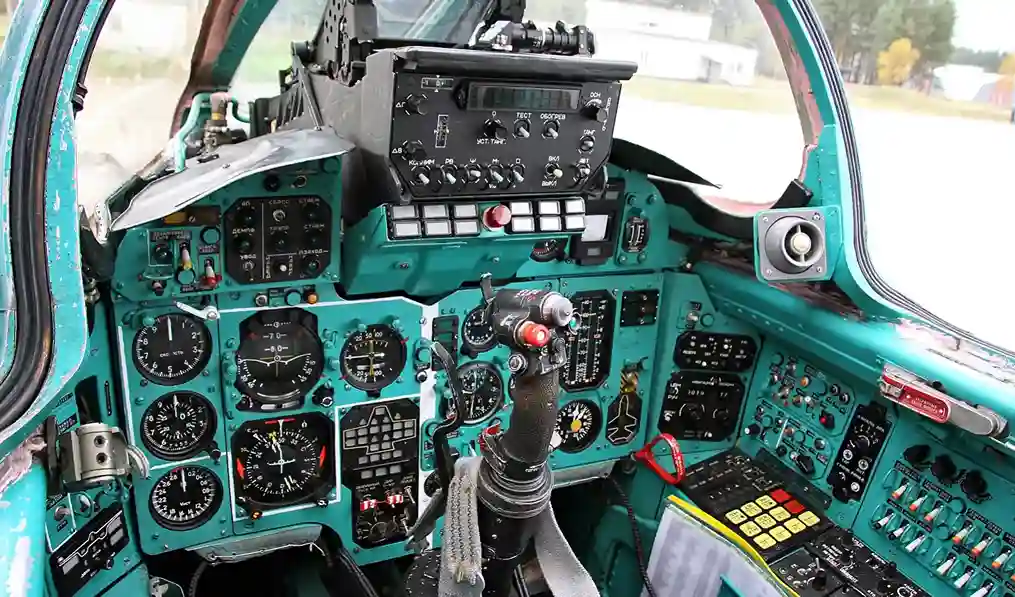
The radar also changed how the crew worked. The MiG-31 carried two people because its mission demanded more than flying and pointing a nose at another aircraft. The weapon systems officer could manage radar tracks and weapons while the pilot concentrated on positioning the interceptor.
And then there’s the part that makes the MiG-31 unusual even today: data sharing.
MiG-31s can exchange information through the APD-518 data link. In a four-aircraft formation, one aircraft could detect a target and pass information to another. That meant the Foxhounds didn’t always have to behave like four independent fighters.
They could act more like a team.
The later MiG-31BM pushed this system further with upgraded avionics and the Zaslon-AM radar. Rostec has cited a detection range of up to 320 kilometers for the upgraded system, although radar range varies with target size, altitude, aspect, and other conditions. Treating 320 km as a guaranteed engagement range is a common mistake.
The important point is simpler.
The MiG-31 Foxhound was built around a sensor network, not a speed record. Its radar tells the crew where to go, its data link expands what each aircraft can see, and its speed helps turn that information into an interception before the target gets much closer.
What Weapons Can the MiG-31 Carry?
The MiG-31 was designed to fight at a distance, and its weapons make that obvious. Its signature missile was the R-33, a long-range air-to-air weapon built specifically around the Foxhound’s radar and interception mission.
The pairing matters. A long-range missile is only useful if the aircraft can detect, track, and guide it toward a target. The MiG-31’s Zaslon radar and onboard computers were developed as part of the same system, so the aircraft wasn’t simply carrying a large missile and hoping for the best.
The original MiG-31 could carry up to four R-33 missiles beneath the fuselage. The missile used semi-active radar guidance for much of its service life, meaning the launch aircraft had to keep supporting the target with radar energy during the engagement.
Later versions changed the equation.
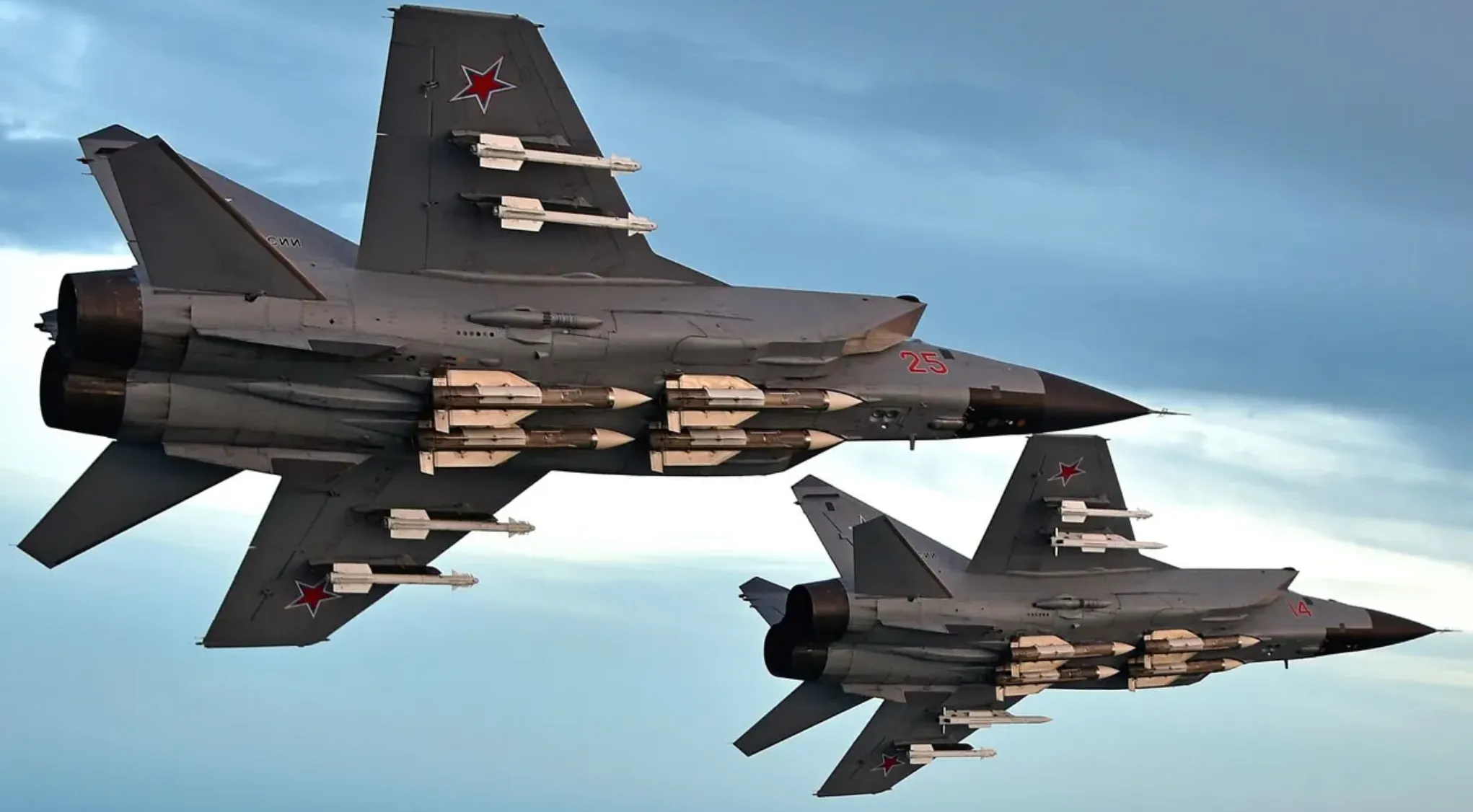
The MiG-31BM can employ newer weapons, including the R-37M, a much longer-range air-to-air missile designed for modern Russian fighters and interceptors. Publicly stated range figures for the R-37M vary by source and launch conditions, so claims of a single fixed maximum range should be treated carefully. A missile launched high and fast against a favorable target is not operating under the same conditions as one launched low and slow.
That distinction gets lost online.
The Foxhound also carries a GSh-6-23 23 mm six-barrel cannon on applicable versions. It sounds impressive on paper, but the cannon isn’t what defines the aircraft. A close-range gun fight is almost the opposite of what the MiG-31 was built to do.
Its weapon load reflects a very specific doctrine: detect a target at long range, accelerate toward the engagement area, and launch before the fight turns into a visual-range contest.
The MiG-31BM can carry a broader mix of air-to-air weapons than the original interceptor, including R-77-family missiles alongside its longer-range weapons. That gives the upgraded aircraft more flexibility when a target gets inside the ideal engagement envelope.
Still, calling the MiG-31 a traditional air-superiority fighter misses the point.
It is better understood as a heavy missile interceptor with exceptional reach. The aircraft’s speed, radar, crew arrangement, and weapons all reinforce that one job.
MiG-31 Variants Explained: From Foxhound-A to MiG-31BM
The MiG-31 family is less uniform than its silhouette suggests. The original interceptor and today’s upgraded aircraft share the same basic airframe, but their electronics, weapons, and missions can be quite different.
The first production aircraft is commonly identified as the MiG-31A, or Foxhound-A in NATO reporting terms. It entered Soviet service in 1981 with the core package that defined the aircraft: Zaslon radar, two-person crew, D-30F6 engines, and R-33 long-range missiles.
The next major step was the MiG-31B. This version received improved avionics and better support for newer weapons. It also added an in-flight refueling probe, giving the interceptor more flexibility on long missions.
Older aircraft were later upgraded into MiG-31BS and MiG-31BSM configurations. This is where the naming can get confusing. These weren’t simply new-build aircraft with a fresh label. Some were earlier airframes brought closer to the capability of later versions.
Then comes the MiG-31BM, arguably the most significant operational modernization.
The BM received updated cockpit displays, mission computers, communications, radar equipment, and weapons integration. The aircraft could also use newer missiles such as the R-37M. Its radar and fire-control system were updated to support a broader engagement picture.
But the MiG-31 family has another branch that gets far more attention today.
Key MiG-31 Variants
| Variant | Main role or change |
| MiG-31 | Original production interceptor |
| MiG-31B | Improved avionics and refueling capability |
| MiG-31BS/BSM | Upgraded earlier airframes |
| MiG-31BM | Major modernized interceptor |
| MiG-31K | Modified to carry the Kinzhal |
| MiG-31D | Experimental anti-satellite aircraft |
The MiG-31K was modified to carry the Kh-47M2 Kinzhal missile. That changed the aircraft from a pure interceptor into an air-launched strike platform.
The MiG-31D is another interesting case. It was developed for an anti-satellite role and featured distinctive modifications, but it never became a standard operational MiG-31 variant.
That’s the key mistake to avoid when discussing the Foxhound family: not every MiG-31 with a new designation represents a widely deployed combat version.
The airframe has had a long career because Soviet engineers created a platform with enough size, power, and internal capacity to accept major upgrades decades later. The hardware changed, but the basic Foxhound airframe remained useful.
Why Does Russia Still Use the MiG-31?
The simplest answer is geography. Russia has enormous stretches of airspace to watch, and the MiG-31 was built for exactly the kind of long-range patrol and interception problem that geography creates.
A modern fighter can be more flexible, but flexibility isn’t the only requirement for air defense. The Foxhound brings something different: speed, altitude, radar reach, and a heavy missile load in one large package.
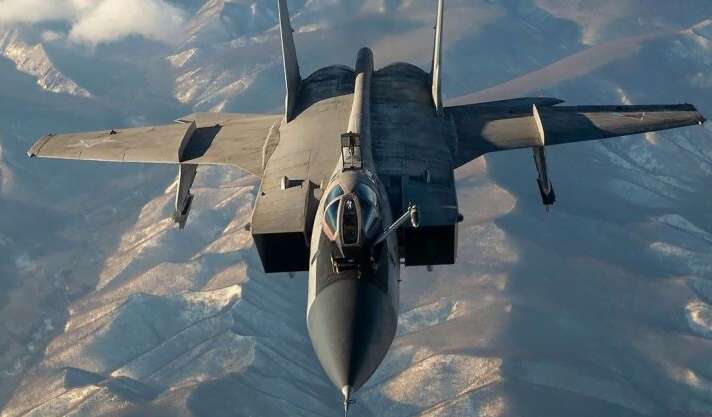
That combination remains useful over northern Russia, where distances between bases and potential approach routes can be vast. A MiG-31 can launch from a relatively remote airfield and cover ground quickly, then use its radar and data links to build a picture of approaching aircraft.
The Arctic is a good example.
Russia has operated MiG-31s from northern locations, including Rogachevo on Novaya Zemlya, where the aircraft’s ability to operate in harsh conditions and cover long distances fits the mission. The exact readiness and availability of individual units are much harder to establish from public information, so claims about how many aircraft are immediately combat-ready should be treated cautiously.
And this is where the Foxhound’s age becomes less important than it first appears.
A 1980s airframe doesn’t automatically mean 1980s capability. The MiG-31BM modernization replaces or upgrades major parts of the aircraft’s mission system, giving older airframes newer computers, displays, radar functions, communications, and weapons.
Think of it as keeping the truck while replacing the tools.
That doesn’t make the MiG-31 a modern stealth fighter. It still has a large radar signature and lacks the low-observable design of aircraft such as the F-35. Its enormous size and hot engines aren’t exactly secrets to modern sensors.
But the Foxhound doesn’t need to win a stealth contest to perform its intended mission.
Its value comes from rapid interception over huge distances. If a radar network detects a bomber, patrol aircraft, or another airborne target far from the defended area, a fast interceptor can reach the engagement zone sooner than a slower aircraft.
There’s another reason Russia has kept investing in it: replacing a specialized heavy interceptor with a completely new aircraft would be expensive and technically demanding.
So the MiG-31 survives because its niche still exists.
Its design is old. Its mission isn’t.
