

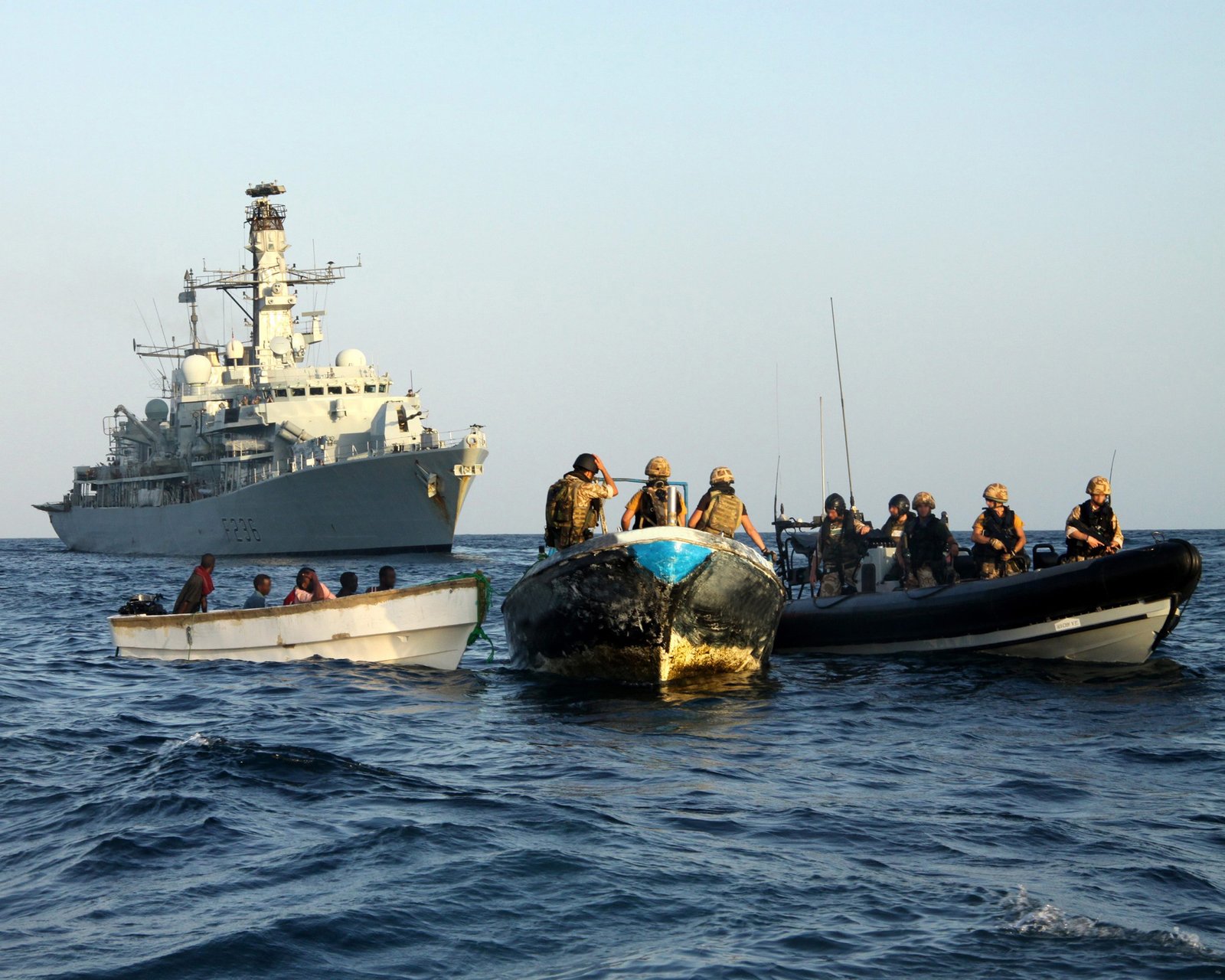

Reported piracy and armed robbery at sea incidents have fallen to the lowest level for the first quarter of any year since 1991, according to figures released on 8 April by the International Chamber of Commerce International Maritime Bureau (ICC IMB).
According to IMB’s figures for the January-March 2026 period, 16 incidents were recorded worldwide. This figure compares to 45 and 33 in the first quarters of 2025 and 2024, respectively.
Piracy refers to acts carried out on the high seas, outside 12 nautical miles of territorial waters; within that boundary, such acts are known as armed robbery at sea.
In a press release accompanying the report, the IMB emphasised the importance of international cooperation on maritime security issues in reducing the piracy threat but noted that the threat persists. “While the decline highlights the positive impact of sustained cooperation and enforcement efforts, risks to seafarers remain,” the report said. Timely incident reporting, to enable maritime security forces to respond to the threat, was also recognised as an important factor in reducing risks.
“Most of the world’s commerce travels by sea. Keeping key routes safe is therefore not just a maritime issue. It’s a confidence issue for the global economy,” ICC Secretary General John Denton said in the statement.
Highlighting the ongoing risk, however, the report noted that attackers succeeded in boarding the target vessels in 94% of the incidents, with two crew members taken hostage and one injured. In several incidents, attackers were reported to carry weapons.
The IMB press release highlighted trends across four key areas.
In the Singapore Straits, while the decrease to eight incidents in 2026 (from 31 in 2025) was significant, the area remains the current primary global ‘hot spot’ for incident numbers.
Off Somalia, the location of the world’s primary piracy ‘hot spot’ between 2008 and around 2014, two incidents were reported in the first quarter of 2026. Layers of counter-piracy guidance remain in place as a legacy of the international campaign off Somalia during 2008-14, including the publication of the Best Management Practices (BMP) brochure by a collaborative, international group of shipping and wider maritime security stakeholders. The IMB report emphasised the importance of seafarers continuing to follow BMP guidance when transiting in and around Somali waters.
In the Gulf of Guinea, which became the next ‘hot spot’ as the Somali issue started to cool down, only one attack was reported in the first quarter of 2026.
The Philippines saw an increase in incidents to four (compared to none in 2025).
In the case of the Philippines, the IMB report highlighted the need for closer cooperation between regional authorities and the shipping industry. What is notable from the other three examples is that all of them now serve as case studies demonstrating how coordinated cooperation among stakeholders is vital in managing and reducing the piracy threat there. Such cooperation was established across regional and extra-regional navies and coastguards, between regional countries, and among various security stakeholders with interests in the region.
Naval and other maritime security forces also consistently remain present in those three areas.
by Dr. Lee Willett
