


Recovered missile debris highlights the operational impact of the AGM-188A Rusty Dagger, Ukraine’s high-survivability, long-range strike weapon.
On June 6, Russian military forces recovered a Controlled Reception Pattern Antenna (CRPA) from missile wreckage found inside Russia. The antenna, sourced back to Zone 5 Technologies — a company recently purchased by Norway’s Kongsberg — by an identifying CAGE code on the debris. That identified antenna was the guidance element of an AGM-188A Rusty Dagger low-cost cruise missile — a weapon currently competing in the U.S. Air Force’s Extended Range Attack Munition and Family of Affordable Mass Munitions competitions.
Russian media and military analysis groups were perplexed by the weapon’s presence deep inside Russian territory, noting its range and survivability against jamming compared to Ukraine’s FP-1 drones that, while still capable, have achieved impact rates below 50%. The weapon featured robust anti-jamming equipment and identifying codes that linked their construction to NATO partners in Europe and the United States.
Less than two weeks later, the same type of missile debris was found in the rubble of Russia’s largest semiconductor plant. Rusty Dagger missiles had flown over 200 miles to Voronezh Semiconductor Plant rendering the facility’s production lines — critical for the manufacturing of dozens of Russian missile and drone systems — useless.
Ukraine’s MiG-29 and Su-27 fleet carried out the attack, according to officials familiar with the weapon’s deployment, paying homage to Russia’s countless claims of completing the total destruction of the Ukrainian Air Force’s fixed-wing aviation fleet that, even this month, continues to fly combat missions.
Since the first attacks in June, Zone 5’s Rusty Dagger has proven itself as Ukraine’s most capable and effective long-range strike weapons, demonstrating “extreme survivability” even against Russia’s most capable air defense systems, according to a source who spoke with Naval News on the condition of anonymity. Strikes have been successful on several military targets, underscoring the weapon’s success while showcasing NATO’s quiet role in enabling Russia’s defeat beyond the battlefield.
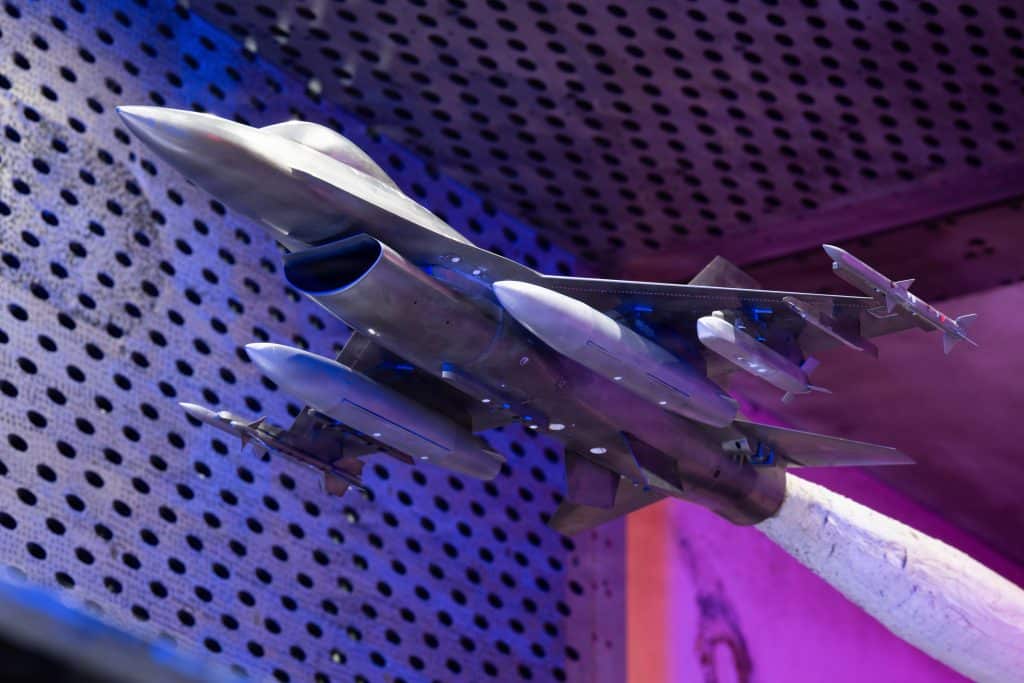
Naval News understands Rusty Dagger ERAM is showing extreme survivability with the last strike having confirmed all missiles made it to target with a confirmed battle damage assessment.
Rusty Dagger has a 300 nautical mile (555 km) range in low-altitude strikes, and a 500 nautical mile (926 km) range in medium-altitude strikes, giving the missile long reach against targets inside Russia. “[Attacks] are less about occupied Ukraine or Russia, more that the mission planning was design around unrestricted targeting, […] all to allow deep strike well outside of occupied Ukraine.”
A growing threat
Since the June attacks, Russia has been plagued by daily missile alerts that make it as far as Moscow’s air defense rings during major attacks. “This could explain the large amount of quiet missile alerts in Russia,” a second source familiar with Russia’s air defense and early warning systems told Naval News. “We hear on alert pages … but then hear nothing after. That’s happened over the last few weeks a lot, along with more talk of rocket and bomb danger from Ukrainian aircraft.”
In some cases, Russian alerts have been triggered just by Ukrainian Air Force aircraft taking off, mirroring Ukraine’s own practice of sounding alarms when Russian MiG-35Ks take off from bases inside Russia and Belarus. Russia began warning of Ukraine’s air-launched attacks in May.

Similar alerts have warned Russian residents of long-range threats posed by Ukrainian aircraft — a staunch difference in threat posed by Ukraine’s Air Force since its first trial by fire against Russian forces in 2022. Last week, the United States Chairman of the Joint Chiefs confirmed Ukraine’s success in shooting down a fourth-generation Russian Su-35 fighter with an F-16 — the first time in recent history that the American-built fighter has scored a kill on a manned aircraft.
Rusty Dagger offers dramatically increased survivability in strike missions for the Su-27s, MiG-29s, and any other fourth-generation fighter fleet equipped with the missile. The missile enables those fleets to hit targets hundreds of miles away in any condition with extreme resistance to GPS jamming. The source who spoke with Naval News emphasized the missile’s design and delivery being devoid of any territory restrictions, with “unrestricted targeting” part of the weapon’s initial delivery and core mission.
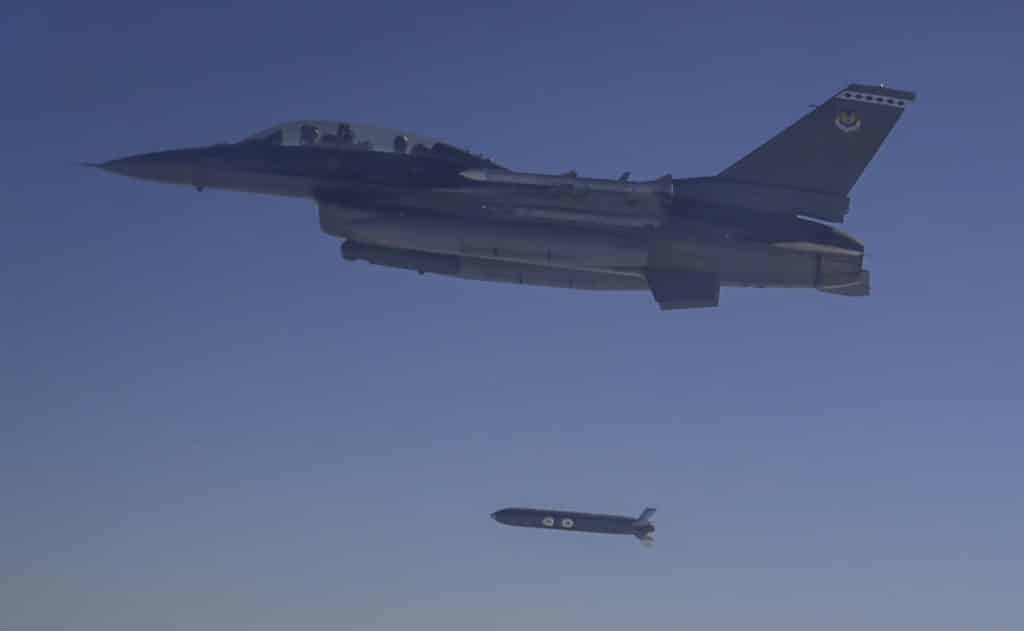
Ukraine’s F-16 fleet will also be modified to fire the missile, with first use expected in the next three months. U.S. Air Force F-16s at the Eglin Test and Training Range have already flown with the missile in captive-carry and live-fire configurations.
Stellar performance in a fierce competition
Rusty Dagger’s demonstrated performance, as indicated by sources familiar with the weapon’s use, has exceeded all expectations. Similar applications in the naval strike domain have the opportunity to rapidly broaden U.S. and NATO land-attack and maritime strike capabilities at a time when demand is at an all-time high. Naval News previously reported on the United States’ intention to double, or even triple Long Range Anti-Ship Missile production.
“The drive towards lower cost, yet still highly sophisticated and capable, missiles is a trend which will have real impact on naval and military strategy,” H. I. Sutton, a naval analyst and contributor to Naval News, said. “Even lower cost drones and drone-missiles have their place at the volume end of the strike package. But superior weapons like [Rusty Dagger] can lead the way, opening gaps and hitting the best defended targets.”
As previously mentioned, Rusty Dagger has a range exceeding 500 nautical miles (926 km) in optimal flight profiles. At that range, Ukrainian Air Force fighters over Kyiv can threaten critical air defense targets in central Moscow, paving the way for more success with more numerous one-way attack drones. From the same place, those fighters could also threaten targets south of Crimea. The missile has already proven itself capable of penetrating Russia’s most dense anti-access/area-denial air defense systems, pushing it leagues ahead of competitors for the U.S. Air Force’s ERAM low-cost cruise missile competition.
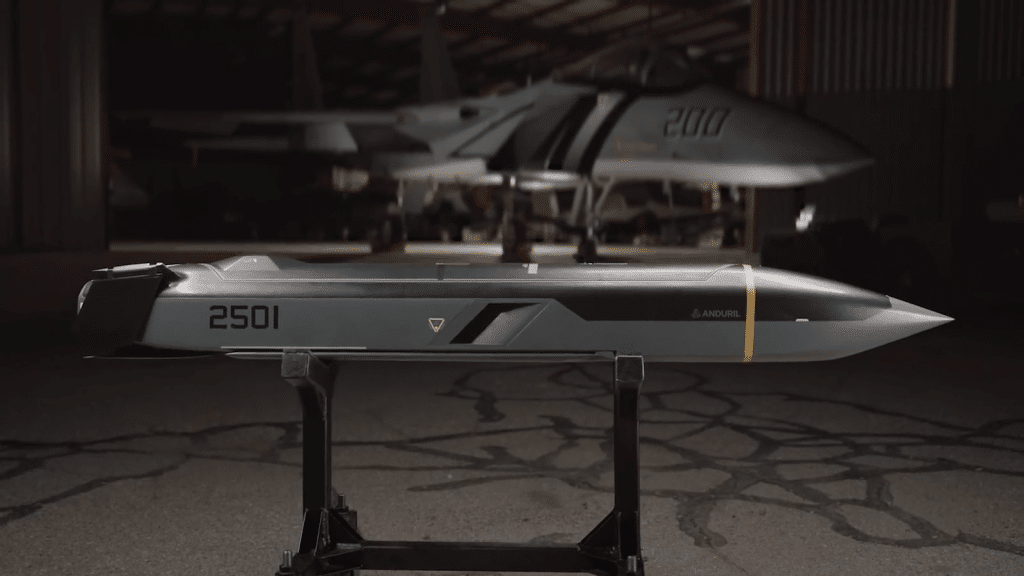
“ERAM is a program consisting of missiles from both Zone 5, Co-Aspire with [the Rapidly Adaptable Affordable Cruise Missile], however the latter is still not operational. The Barracuda AGM-189 is another ERAM missile from Anduril. It is also far behind,” the source told Naval News.
Development efforts beyond the ERAM initiative include the U.S. Air Force’s Family of Affordable Mass Missiles (FAMM) program, the U.S. Army’s Low-Cost Containerized Missile (LCCM) program, and the U.S. Navy’s Coalition Heterogeneous Affordable Offensive Strike (CHAOS) program, all of which Kongsberg’s Zone 5 subsidiary is on contract for.
“It seems inevitable that weapons like this will be employed in the naval arena. And certainly used in combined arms campaigns such as we are seeing in the Sea of Azov and Black Sea today.”
H. I. Sutton
