

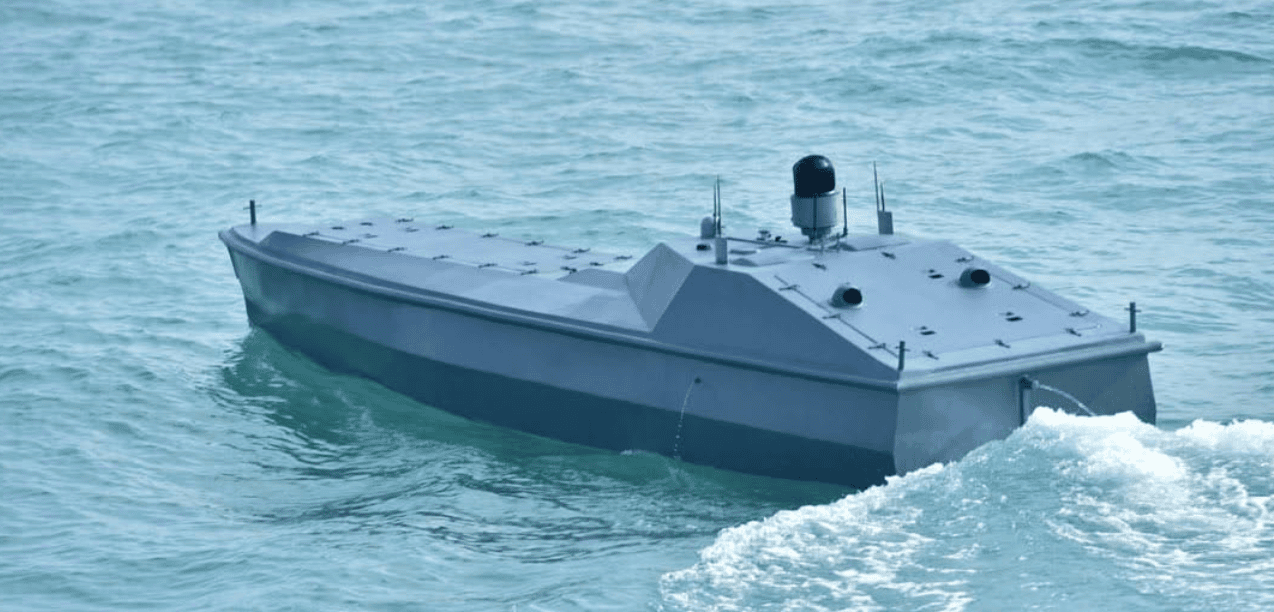
The Indonesian Navy (TNI-AL) has unveiled a new, autonomous, attack unmanned surface vessel (USV), signalling its growing interest in uncrewed maritime systems to complement its expanding naval fleet and asymmetric-warfare capabilities.
Footage released by the TNI-AL shows an unnamed one-way attack, or “kamikaze”, USV being launched from the well deck of the multipurpose hospital ship KRI Soeharso before transiting towards a target.
The vessel features a low-observable hull with clean lines to reduce its radar cross-section, while an electro-optical turret and communications antennas are mounted above the deck.
State-owned shipbuilder PT PAL later confirmed that it had developed the USV, which achieved speeds reaching 55kt, and carried a warhead payload of 150kg.
The company added that the USV features an artificial-intelligence targeting and identification system, and that it can even be directed from what it calls “autonomous submarine command control”.
The unveiling makes Indonesia the first Southeast Asian navy to publicly showcase a one-way-attack USV concept. Such platforms have gained prominence following their extensive use during the Ukraine conflict and, more recently, the US Navy’s employment of uncrewed maritime systems during operations against Iran.
Indonesia’s interest in autonomous naval systems extends beyond surface vessels too.
PT PAL has been developing the KSOT uncrewed underwater vehicle and, in October 2025, it demonstrated the launch of a lightweight torpedo from the platform, highlighting the TNI-AL’s growing emphasis on affordable, asymmetric, maritime capabilities.
The USV demonstration formed part of a wider naval exercise showcasing the TNI-AL’s evolving combat capabilities.
During the exercise, the Thaon di Revel-class offshore patrol vessel KRI Prabu Siliwangi demonstrated naval fire support against shore targets, which included the launch of Indonesian Marine Corps RM-70 Vampire 122mm multiple-launch rockets from the ship’s flight deck.
Meanwhile, the lead ship of the Sampari-class fast attack craft fired a Chinese-made C-705 anti-ship missile against a land target, demonstrating the weapon’s secondary land attack capability beyond its traditional anti-surface warfare role.
by Chen Chuanren
