

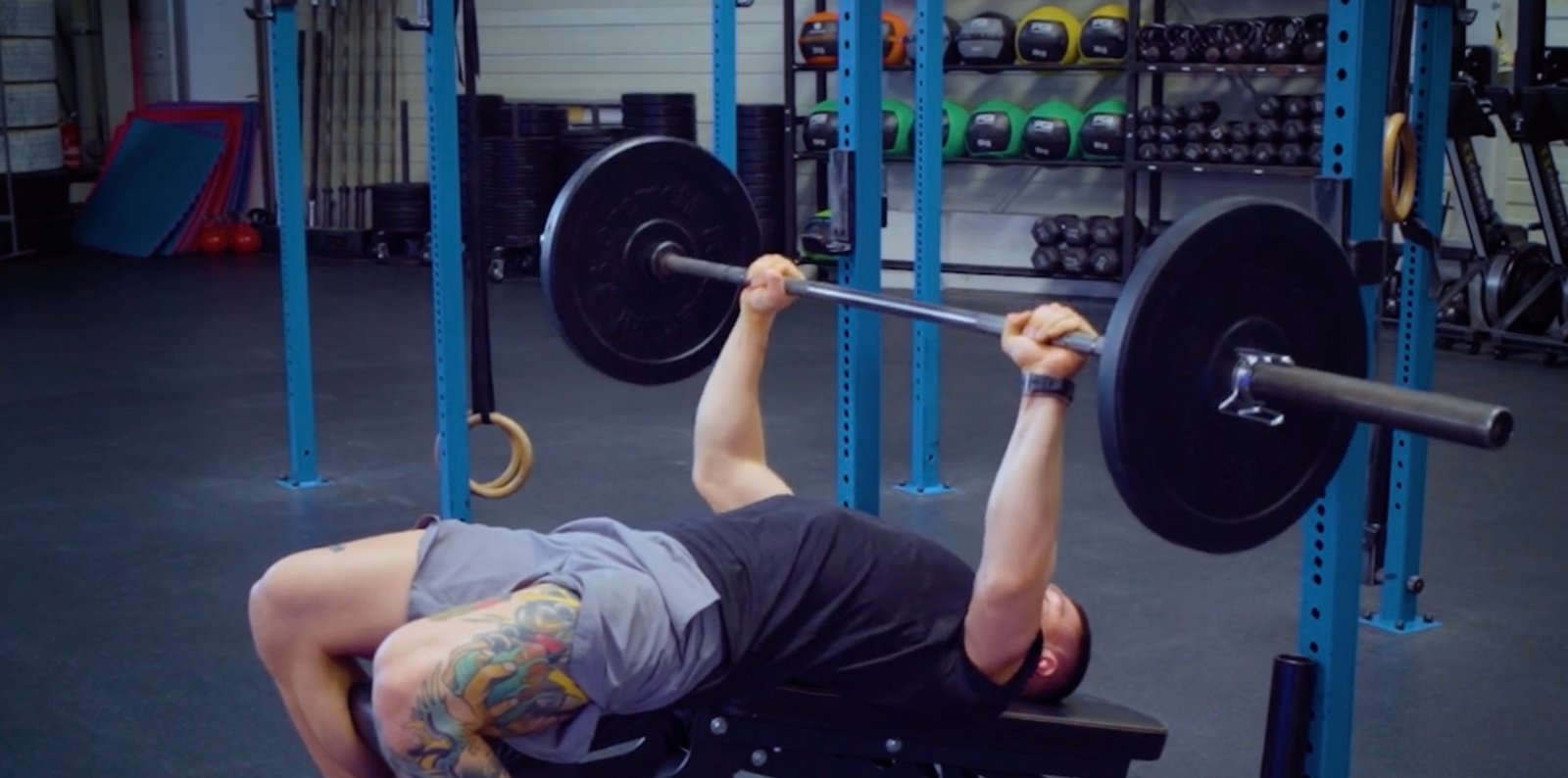
Building a bigger chest is not simply about pressing the heaviest weight possible. Exercise selection matters because the pectoralis major is a broad, fan shaped muscle with fibers that run in different directions. Changing the angle of the bench changes the line of resistance, the muscles that contribute most strongly, and the part of the chest that receives the greatest emphasis.
The incline bench press and decline bench press are both useful chest builders, but they are not interchangeable. Incline pressing is generally the better choice for lifters who want to emphasize the upper chest and create a more complete, muscular look through the torso. Decline pressing can be an effective way to train the larger sternocostal portion of the pectoralis major with heavy loads, particularly when it feels more comfortable on the shoulders.
For most people pursuing massive chest gains, the answer is not that one movement is universally superior. The better exercise is the one that targets the area you need to develop, allows you to train hard with good technique, and fits into a weekly plan you can recover from consistently.
What Changes When You Alter the Bench Angle?
The pectoralis major has a clavicular portion, often called the upper chest, and a larger sternocostal portion that covers much of the chest. Both portions contribute to horizontal adduction, which is the action of bringing your upper arm across your body. However, the direction of the press affects which fibers are placed in the most favorable position to produce force.
An incline bench places your torso at an upward angle. This shifts the pressing path upward and tends to increase the contribution of the clavicular portion of the pectoralis major, along with the front of the shoulder. A decline bench places your torso at a downward angle. This usually shifts more emphasis toward the sternocostal fibers and can reduce the contribution required from the anterior deltoid.

Electromyography research supports the idea that bench angle changes muscle activation. However, muscle activation during a single set is not the same as proving greater long term muscle growth. It can help explain why an exercise feels different, but progressive training studies are more useful when deciding how to build a program.
The available evidence suggests that both horizontal and incline pressing can produce meaningful chest development. In an eight week study of previously untrained men, horizontal bench press, incline bench press, and a combination of both produced similar improvements in general pressing strength when total sets were matched. The incline group did show greater thickness gains at one upper measurement site of the pectoralis major, which suggests that incline work can be useful when upper chest development is a priority.
The Case for the Incline Bench Press
It Emphasizes the Upper Chest
The strongest argument for the incline bench press is its ability to emphasize the clavicular portion of the pectoralis major. A low to moderate incline changes the arm path so that the upper chest can contribute more effectively. This can be particularly valuable for lifters whose chest looks flat near the collarbones, even when their lower and middle chest are already well developed.
Research comparing several bench angles found that a moderate incline produced greater activation of the clavicular portion of the pectoralis major than flat and steeper incline positions. As the bench became steeper, anterior deltoid activity increased substantially. In practical terms, a moderate incline is usually more chest focused than a very steep incline.

For most lifters, an angle around 15 to 30 degrees is a sensible starting point. A bench set too high can turn the movement into something closer to a shoulder press. You may still feel your chest working, but your front delts are likely taking on a much larger share of the effort.
It Helps Build a More Complete Looking Chest
Chest development is not divided into perfectly isolated sections. You cannot fully isolate one small portion of the pectoralis major while switching off the rest. Still, changing exercise angles can bias the training stimulus toward different regions of the muscle.
A fuller upper chest often makes the entire torso look more muscular. It can improve the transition from the chest to the shoulders and create a stronger appearance when viewed from the front or side. For physique focused lifters, this is often a worthwhile reason to make incline pressing a regular feature of training.
The incline bench press can be performed with a barbell, dumbbells, cables, machines, or a Smith machine. Dumbbells and machines may be especially useful if a barbell incline press irritates your shoulders, because they can allow a more natural arm path and easier load adjustments.
It Is Easy to Program Alongside Other Chest Work
Incline pressing fits well into a chest focused program because it can be used as either a main lift or a secondary movement. If upper chest size is the main goal, begin a session with incline pressing while you are fresh and able to use challenging loads with controlled technique.
If general chest growth is the goal, you can use incline work after a flat press or pair it with a machine press on another training day. The important factor is that the movement contributes productive hard sets rather than adding fatigue with no clear purpose.
The Case for the Decline Bench Press
It Can Load the Chest Heavily
The decline bench press can be a strong option for lifters who enjoy heavy pressing. The angle often allows people to use loads that feel close to, or occasionally greater than, what they can use on a flat bench press. The reduced range of motion and altered pressing mechanics can make the movement feel stable and powerful.
Heavy loading is useful for muscle growth when it is combined with sufficient volume, a controlled range of motion, and sets performed close enough to failure to challenge the muscle. A decline press can therefore be an effective way to apply high mechanical tension to the chest.
The sternocostal portion of the pectoralis major makes up most of the chest’s visible mass. Training it hard matters, and decline pressing can contribute to that goal. However, it is not the only way to build this region. Flat barbell presses, dumbbell presses, push ups, dips, and chest press machines can all provide a productive stimulus.
It May Feel Better for Some Shoulders
Some lifters find that decline pressing is more comfortable than flat or incline pressing. The exact reason varies from person to person, but the movement may involve less shoulder flexion and a different arm path. If incline pressing consistently creates shoulder discomfort despite sensible technique and appropriate loading, decline pressing may be a useful alternative.
Comfort matters because chest training only works when you can perform it consistently. You do not need to force a barbell variation that causes pain simply because it is popular. A pain free exercise that allows hard, stable sets will generally be more productive than a theoretically ideal exercise you cannot train properly.
What Happens If You Do a Dead Hang Every Day for 30 Days?
That said, decline benches can be awkward to set up, especially when using a barbell. The body is secured under pads, getting into position can be inconvenient, and reracking a heavy bar may feel less safe than a standard bench press. If your gym has a decline chest press machine or a Smith machine setup, those can be simpler options.
It Is Not a Complete Replacement for Incline Work
Decline pressing is useful, but it does not offer the same upper chest emphasis as a moderate incline press. If you only perform decline work, you may leave a potential gap in your chest training, particularly if your clavicular chest is a weak point.
There is also much less direct hypertrophy research comparing decline pressing with incline pressing. It is reasonable to view decline work as a valuable variation, not as a proven superior choice for whole chest development.
Which Exercise Builds More Chest Mass?
If you can only choose one exercise for a period of training, incline bench press is the better overall choice for most lifters focused on aesthetics and balanced chest development. It trains the chest effectively while providing more direct emphasis to an area that many people neglect.
This does not mean decline bench press is ineffective. It can be excellent for lifters who prefer it, tolerate it well, and want another heavy compound chest movement. It may also be a smart choice for someone whose shoulders dislike incline pressing.
The most evidence based answer is that total productive training matters more than declaring one angle the winner. Research on resistance training shows that muscle growth improves when training volume is increased appropriately, although the benefit becomes smaller as volume rises. The best number of weekly sets varies between people, but adding hard, recoverable work over time is more important than hunting for a magic press angle.
You also do not need to reach complete muscular failure on every set. Research indicates that training close to failure can produce similar hypertrophy outcomes to training to failure when the overall program is properly designed. Leaving a small number of reps in reserve can help you maintain better technique and recover for future sessions.
How to Use Incline and Decline Presses for Growth

Prioritize Incline Pressing for Upper Chest Development
If your upper chest is underdeveloped, perform incline pressing first in one or two weekly sessions. Use a low to moderate incline and choose a load that allows controlled repetitions through a comfortable range of motion.
A useful approach is to perform three to four working sets of six to 12 repetitions. Rest long enough to maintain performance on subsequent sets. This is usually around two minutes or longer for challenging compound exercises.
Lower the bar or dumbbells under control, keep your upper back firmly against the bench, and avoid excessively flaring the elbows. Bring the bar toward the upper to mid chest rather than the neck. Your grip and elbow position should feel stable and comfortable rather than forced into an extreme position.
Use Decline Pressing as a Heavy Secondary Option
If you enjoy decline pressing, use it after incline work or on a separate chest session. Two to four hard sets of six to 12 repetitions can provide plenty of stimulus. You can also use a slightly higher repetition range on a machine or dumbbell variation if that feels more comfortable.
Do not add decline work just because it exists. Include it when it provides a clear benefit, such as heavier chest loading, a pain free alternative to flat pressing, or extra volume for the sternocostal chest.
Keep Your Weekly Volume Productive
A practical chest training week might include incline pressing on one day and decline pressing on another. For example, perform four sets of incline dumbbell press early in the week, then three sets of decline machine press later in the week. Add a fly or cable movement only if you can recover from it and continue progressing.
Track your performance over time. If you gradually add repetitions, load, or better control while maintaining good technique, the exercise is doing its job. If your shoulders ache, performance stalls, and fatigue accumulates, reduce volume, adjust the angle, or choose a different variation.
The Bottom Line
Incline bench press is usually the better choice for lifters who want balanced, impressive chest development. A moderate incline can emphasize the upper chest and help create a fuller look through the collarbone area without turning the movement into a shoulder press.
Decline bench press remains a useful chest building tool. It can allow heavy loading, train the larger sternocostal region effectively, and feel more comfortable for some lifters. It is best viewed as a valuable variation rather than a replacement for all other pressing angles.
For massive chest muscle gains, prioritize progressive overload, enough hard weekly sets, a full pain free range of motion, and consistent training. Use incline pressing as your foundation if upper chest development matters, then add decline pressing when it helps you train harder, more comfortably, or with greater variety.
References
- Chaves, S.F.N., Rocha Júnior, V.A., Encarnação, I.G., Martins Costa, H.C., Freitas, E.D.S., Coelho, D.B., Franco, F.S.C., Loenneke, J.P., Bottaro, M. and Ferreira Júnior, J.B. (2020) ‘Effects of horizontal and incline bench press on neuromuscular adaptations in untrained young men’, International Journal of Exercise Science, 13(6), pp. 859–872.
- Grgic, J., Schoenfeld, B.J., Orazem, J. and Sabol, F. (2021) ‘Effects of resistance training performed to repetition failure or non failure on muscular strength and hypertrophy: A systematic review and meta analysis’, Journal of Sport and Health Science, 11(2), pp. 202–211.
- Schoenfeld, B.J., Grgic, J., Krieger, J. and Agergaard, J. (2026) ‘The resistance training dose response: Meta regressions exploring the effects of weekly volume and frequency on muscle hypertrophy and strength gains’, Sports Medicine, 56, pp. 481–505.
- Rodríguez Ridao, D., Antequera Soler, E., Martín Fuentes, I., Muyor, J.M. and Marcos Pardo, P.J. (2020) ‘Effect of five bench inclinations on the electromyographic activity of the pectoralis major, anterior deltoid, and triceps brachii during the bench press exercise’, International Journal of Environmental Research and Public Health, 17(19), 7339.
- Rodríguez Ridao, D., Ortega, J.P., Marcos Pardo, P.J. and Muyor, J.M. (2023) ‘Electromyographic activity of the pectoralis major muscle during traditional bench press and other variants of pectoral exercises: A systematic review and meta analysis’, Applied Sciences, 13(8), 5203.
Key Takeaways
| Question | Practical answer |
|---|---|
| Which press is best for balanced chest growth? | Incline bench press is usually the better primary choice because it effectively trains the chest while emphasizing the upper region. |
| What incline angle should you use? | Start with a low to moderate incline, usually around 15 to 30 degrees, to keep the movement chest focused. |
| Is decline bench press good for hypertrophy? | Yes. It can be a productive heavy chest movement, especially if it feels comfortable and allows consistent progression. |
| Should you use both exercises? | Use both if they fit your recovery and each serves a clear purpose in your program. |
| What matters most for chest size? | Consistent progressive overload, enough hard weekly sets, sound technique, recovery, and choosing exercises you can train without pain. |
