

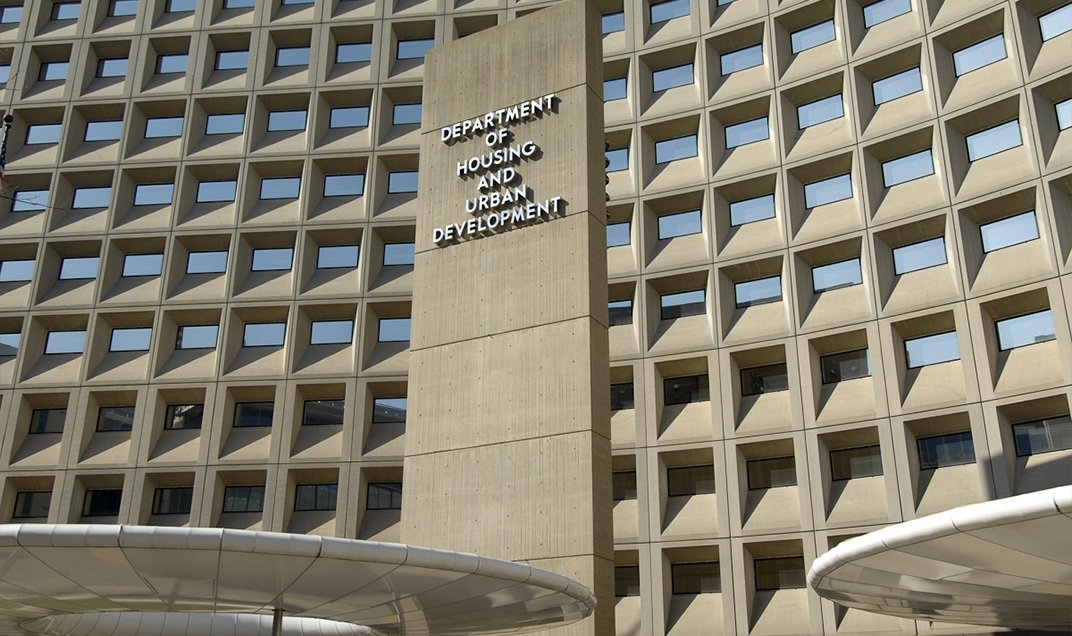
The Department of Housing and Urban Development proposed plans for a large-scale reorganization to accommodate a significantly downsized workforce, but then quickly withdrew those plans for unknown reasons, documents obtained by Federal News Network show.
HUD initially issued a preview of its “notice of intent to reorganize” on Sept. 4 in the Federal Register’s public inspection repository. But later in the day, HUD’s Office of General Counsel submitted a request for the document to be withdrawn from public inspection and to cancel its formal publication in the Federal Register, without providing a reason for the withdrawal.
The draft reorganization plans and withdrawal notice, both viewed by Federal News Network, show that HUD was planning to reorganize and consolidate many of the department’s components, in large part due to thousands of employee separations that occurred throughout 2025.
“Certain offices were particularly impacted by these departures, leaving them constrained in the ability to accomplish departmental goals and objectives,” HUD wrote in the now-rescinded document.
HUD is currently staffed with around 5,800 employees, compared with about 8,800 during fiscal 2024. The headcount reductions were driven by employee separations through the deferred resignation program (DRP) and other voluntary separation programs during 2025.
“Current staffing levels are almost 35% below historic staffing levels and this reorganization will provide HUD with the ability to operate even more effectively at current staffing levels, ultimately carrying forward savings from the reduced salaries and expenses of the department,” the document, signed by HUD Deputy Secretary Andrew Hughes, states.
It’s not clear why the notice was withdrawn or whether HUD plans to pursue a reorganization in the future. Federal News Network’s emails seeking details from HUD on the draft reorganization plans and the reason for rescinding the notice were not immediately answered.
According to the draft proposal, the large-scale reorganization is meant to streamline the department in response to markedly lower staffing levels. The reorganization would not relocate any employees or further reduce staffing, HUD wrote.
The document described plans to merge some smaller departmental units and move some divisions under different chains of command.
For instance, HUD’s Office of the Chief Information Officer would create a new customer experience division, while consolidating its contract and financial management arms.
The now-withdrawn plan also proposed consolidating functions of the Office of Public and Indian Housing due to staffing reductions in that component. It would put all public housing work under one office, and all voucher programs under another.
“This will streamline both processes and program administration,” HUD wrote.
The Office of Fair Housing and Equal Opportunity, the Office of Community Planning and Development, the Office of Policy Development and Research, the Office of Public Affairs, and the Office of Lead Hazard Control and Healthy Homes would each undergo some level of consolidation. Ginnie Mae would be restructured and have some new branches added.
The Federal Housing Administration’s Office of Single Family Housing would transition from a “geographic-based” to a “function-based” model. And FHA’s Office of Operations would be merged with other support offices “to increase operational efficiency and eliminate redundancies,” the document states.
HUD’s Office of General Counsel would be reorganized to consolidate headquarters, regional and field offices into a single “unified structure.”
The Office of the Chief Financial Officer would be restructured into three divisions, focusing on budget assistance, financial management and travel management. And the Office of the Chief Human Capital Officer would create two new divisions: one focused on implementing “new workforce accountability and suitability measures,” and a “business partner division” that would consolidate work currently housed under individual program offices.
“The reorganization is expected to significantly enhance operational efficiency, as well as improve HUD’s program delivery and the service provided to HUD’s customers,” the document states.
The draft reorganization plans come as the Trump administration is seeking to reduce overall spending at HUD. The White House’s 2027 budget proposal calls for a $73.5 billion discretionary budget for HUD, representing a $10.7 billion or 13% decrease from enacted 2026 spending levels.
HUD shared its proposed reorganization plans with Congress in April, according to the draft notice document.
“This notice reflects the next step in moving forward with these plans,” HUD wrote in the now-rescinded document.
HUD proposed starting the reorganization process 90 days after publishing the notice and projected completion of its restructuring plans during fiscal 2027. But since the notice was withdrawn, it’s not clear when or if these plans will take effect.
If you would like to contact this reporter about recent changes in the federal government, please email drew.friedman@federalnewsnetwork.com or reach out on Signal at drewfriedman.11
Copyright
© 2026 Federal News Network. All rights reserved. This website is not intended for users located within the European Economic Area.
