

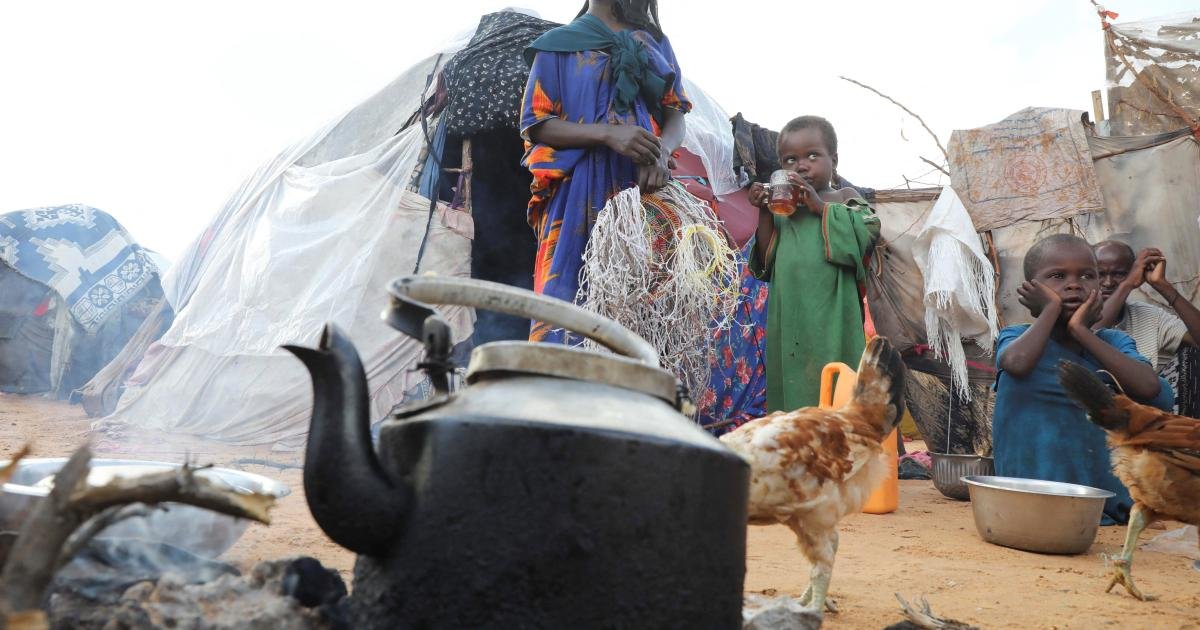
In a world of great-power standoffs, climatic tipping points, and technological arms races, global hunger may not seem like a particularly significant problem. Yet last year, a total of 2.1 billion people, or more than a quarter of the planet’s population, experienced food insecurity—meaning they either ran out of food over the course of a year or were forced to reduce the quality or quantity of their diet. Over 260 million faced acute food insecurity, meaning their lives or livelihoods were in immediate danger because they could not get enough to eat. Almost a quarter of all children under the age of five were permanently stunted because of malnourishment and will likely reach lower levels of education, earn less over the course of their lives, and live with more chronic health challenges than properly fed kids. And these startling figures do not reflect the food crises that could be unleashed this year by rising energy and fertilizer prices, decreases in grain exports from Russia and Ukraine, and an intensifying El Niño weather pattern.
Food insecurity is terrible in and of itself. But it also has disastrous political consequences. It inhibits economic growth, heightens the risk of violent conflict, and destabilizes governments. These problems, in turn, create trouble for the whole world. That means countries that are not overwhelmed by food insecurity still have strong, self-interested reasons to tackle it—the United States included.
In fact, a U.S.-led effort to address hunger would do more than create a healthier and more stable planet. Given the waning goodwill toward the United States, Washington needs an agenda through which it can rebuild global confidence in its leadership and demonstrate the value of international cooperation. Addressing global food security could be at the center of such a plan. Different parts of the world, after all, may have different geopolitical ambitions. But almost no government—northern or southern, democratic or autocratic—wants to see so many people go hungry. There may be no better way to rebuild confidence in the liberal world order and in the United States as a committed member of it than for Washington to address this challenge.
FOOD, GLORIOUS FOOD
It is difficult to overstate just how intertwined food security is with global development, state security, and even international competition. Malnutrition leads to reduced educational attainment, compromised human capital, and lost productivity, costing the world economy $3.5 trillion a year in forgone economic growth and in added health-care costs. Food price spikes can also exacerbate grievances and lead to riots that destabilize governments; anger over hunger, for example, set the conditions for the Arab Spring protests. In rural areas, food insecurity helps armed groups recruit soldiers and causes disputes over scarce land and water resources. And it causes people to migrate to wealthier states.
These reasons are, by themselves, enough for Washington to helm a global campaign to reduce hunger. But so should the fact that leading on global food security means helping shape the future of the world’s entire agricultural system—something China is on a path to do. In 2019, Beijing invested significant capital in securing leadership of the Food and Agriculture Organization of the UN, a role with substantial influence over how governments work together on food-related issues. It is also quickly developing other ways to lead the world on matters of food security. China spends double what the United States spends on public agricultural research and development, and its output of agricultural patents and scientific publications has skyrocketed while U.S. output has stagnated.
Thankfully for American officials, the United States is still well positioned to lead the world when it comes to food security. The United States is among the world’s largest agricultural exporters. It was instrumental in founding the UN architecture dedicated to food security, including the Food and Agriculture Organization and the World Food Program. And for much of these institutions’ history, Washington has been their largest donor. In fact, for decades, the United States’ international development agenda was the most ambitious in the world, and it was backed by a willing public.
Washington retains many of the tools needed to combat global hunger.
The country still has such a public: in early 2026 polling, a strong majority said that the United States should be a moral leader in the world. But a strong majority didn’t believe it was. Perhaps this is because the United States has been walking away from this legacy and this opportunity to lead. In mid-2025, for example, Congress clawed back nearly $8 billion in foreign assistance funds. The United States is now a reluctant international donor and a surly member of key international organizations.
Washington, however, still retains many of the tools needed to combat global hunger. In addition to increasing foreign assistance, it can leverage trade policies, public investment in innovation, and even its impressive data collection systems. Washington, however, will also need to work multilaterally. And to build credibility, it should advance a practical and achievable agenda with clear benefits for all. One overarching goal for collective action should be increasing predictability wherever possible. The global food system is afflicted by uncertainty across many domains—weather, supply chains, labor, trade, and beyond. This wreaks havoc on policymaking, markets, and livelihoods. Being able to better understand these trends and know what tools will be available to manage them could thus do much to shore up food networks and prepare for disasters.
Washington should, for example, work with partners to strengthen the world’s fractured early warning systems and the data that enables them. Early warning of shocks to the food system—such as extreme weather, supply disruptions, economic turbulence—buys critical time for preparation and response. The United States should also spearhead the transition of international emergency food assistance funding away from voluntary, ad hoc contributions to preplanned, multiyear commitments. It should simultaneously encourage more donors to contribute in amounts commensurate with their abilities, starting with itself.
Food security is one of the few issues that can bring the whole world together.
Solving food emergencies requires more than just additional funding. The United States also needs to work to strengthen international norms that protect access to food during conflict. That means making sure humanitarian groups can get into conflict zones, protecting agricultural infrastructure from attacks, and prohibiting the use of starvation as a weapon of war. These concepts have a long-standing basis in international law, but the conflicts in Gaza, Sudan, and Ukraine have demonstrated they need reinforcement. Washington should advance these norms through resolutions and interventions in the UN Security Council and General Assembly and use diplomacy to try to get violators to change their behavior.
Food security diplomacy, however, must extend beyond conflict zones. The United States should forge a broad global commitment to avoid unilateral, reactionary policies to agricultural shocks—such as when a grain exporter suddenly bans external shipments in response to price spikes, leaving international buyers in the lurch. Such policies may be politically attractive for governments that want to show citizens they will keep costs down. But they leave other states worse off and often don’t even work at home. Instead, the United States should promote more international financing options that maintain the flow of traded agricultural commodities during periods of price volatility and that fast-track funding to countries facing shocks.
Finally, the United States should lead a collective action campaign aimed at protecting agricultural systems from a particularly pernicious challenge: agricultural pests and diseases. Pests and diseases destroy up to 40 percent of global crop production each year, pushing down rural incomes, driving up consumer prices, and wasting natural resources. The existing international surveillance and response systems for these ailments are limited in scope. But Washington can build global support for more comprehensive ones.
MORE WITH LESS
The world certainly needs better ways of managing food crisis and risk. But it also needs to foster sustainable agricultural productivity growth—or the ability to produce more food with fewer inputs. Such growth is particularly important where populations are rising, as most food consumed is produced domestically. Only certain food commodities can be easily traded across long distances, so international commerce cannot fully solve food and nutritional supply challenges.
The most important step countries can collectively take is to promote innovation. To encourage that process, U.S. officials should start by focusing on international agricultural research centers, such as the World Vegetable Center in Taiwan and the International Maize and Wheat Improvement Center in Mexico (both of which the United States helped found). These facilities have long been an engine for progress in productivity, food security, and natural resource management, particularly in the developing world. For example, over the last few decades, international centers have developed flood-tolerant rice and drought-tolerant corn that have prevented crop failure for millions of poorer smallholder farmers. In fact, according to studies by a variety of economists, research undertaken by these centers offers an impressive return on investment—for every dollar spent, ten dollars are gained in the form of yield increases, lower production costs, lower consumer prices, and other benefits. But like many institutions, these research centers have suffered from mission creep and bureaucratic accretion. To maximize their effectiveness, the United States should build global support for refocusing their strategy, streamlining their operations, and making new investments in them.
The world needs research to keep just ahead of the latest challenges—such as rising temperatures and new strains of old agricultural diseases. But it should also aim higher. Washington thus ought to work with other actors to tackle tough, high-reward problems that have never had the benefit of a truly concerted international effort. This could include, for example, trying to develop high-yielding perennial or nitrogen-fixing grains that would promote healthier landscapes, reduce labor requirements, and need less fertilizer. It might also feature an endeavor to increase photosynthesis efficiency so that plants can produce more from the sunlight they receive. Such inventions would not only change the world, they would also showcase the power of American innovation and deepen Washington’s ties with its partners.
But to enable ambitious research, the United States should take steps to reform the International Treaty on Plant Genetic Resources for Food and Agriculture. The agreement was designed to make plant genetic resources, or seeds and tissue, fully and freely available to researchers everywhere. These resources can be used to breed new varieties of crops that are higher yielding, more resilient to climate change, and more nutritious. But the treaty is falling short. Researchers see benefit-sharing provisions as too costly; developing countries see them as offering too little. As a result, fewer researchers seek material that could accelerate innovation, and fewer countries are willing to share it. The United States should thus push everyone to reinterpret the benefit-sharing provisions in a more generous manner. It should also properly fund the Global Crop Diversity Trust’s endowment, which funds the international seed banks that conserve the biological foundation of food crops (particularly since governments, including Washington, are doing an inadequate job of conserving their collections). And if U.S. officials determine that the treaty cannot be saved, they should lead an effort to draft a new one.
Lastly, Washington must do whatever it can to make sure that new agricultural and food technologies are quickly adopted. This will require reforms of the international Codex Alimentarius Commission, which is responsible for developing food safety guidelines that protect consumers and facilitate trade. The commission’s guidelines have significant ramifications for technologies that could strengthen global food security, but the body is slow, underfunded, and controversial. The United States should therefore try to enhance its capacity and legitimacy, including by pushing for increased support to the scientific committees that help set Codex standards.
REAPING AND SOWING
At a time of rising global competition, there are few issues that can bring the whole world together. Food security is one of them. Almost every government knows that hunger is a problem, and almost all of them at least say they want to address it. If the United States can spearhead a strong effort do so, it could bring the planet together under its leadership.
That does not mean Washington should instrumentalize food aid or other agricultural endeavors. The United States should not echo its 1970s policies around food power, during which officials boasted of altruism while attempting to exert political strength by alternatively deploying and withholding its grain supply. Instead, the United States must emphasize mutual benefit. It must persuade other actors that it is a constructive and reliable partner. Doing so will strengthen its diplomatic relationships and increase stability around the world—inherently advancing U.S. interests.
Rarely do Washington’s strategic imperatives and humanitarian principles align so neatly. It is rarer still for a U.S. foreign policy agenda to clearly reflect what the American people want their country to be: not just strong, but moral. Food security, in other words, is a unique opportunity for the United States. The country cannot afford to waste it.
Loading…
