

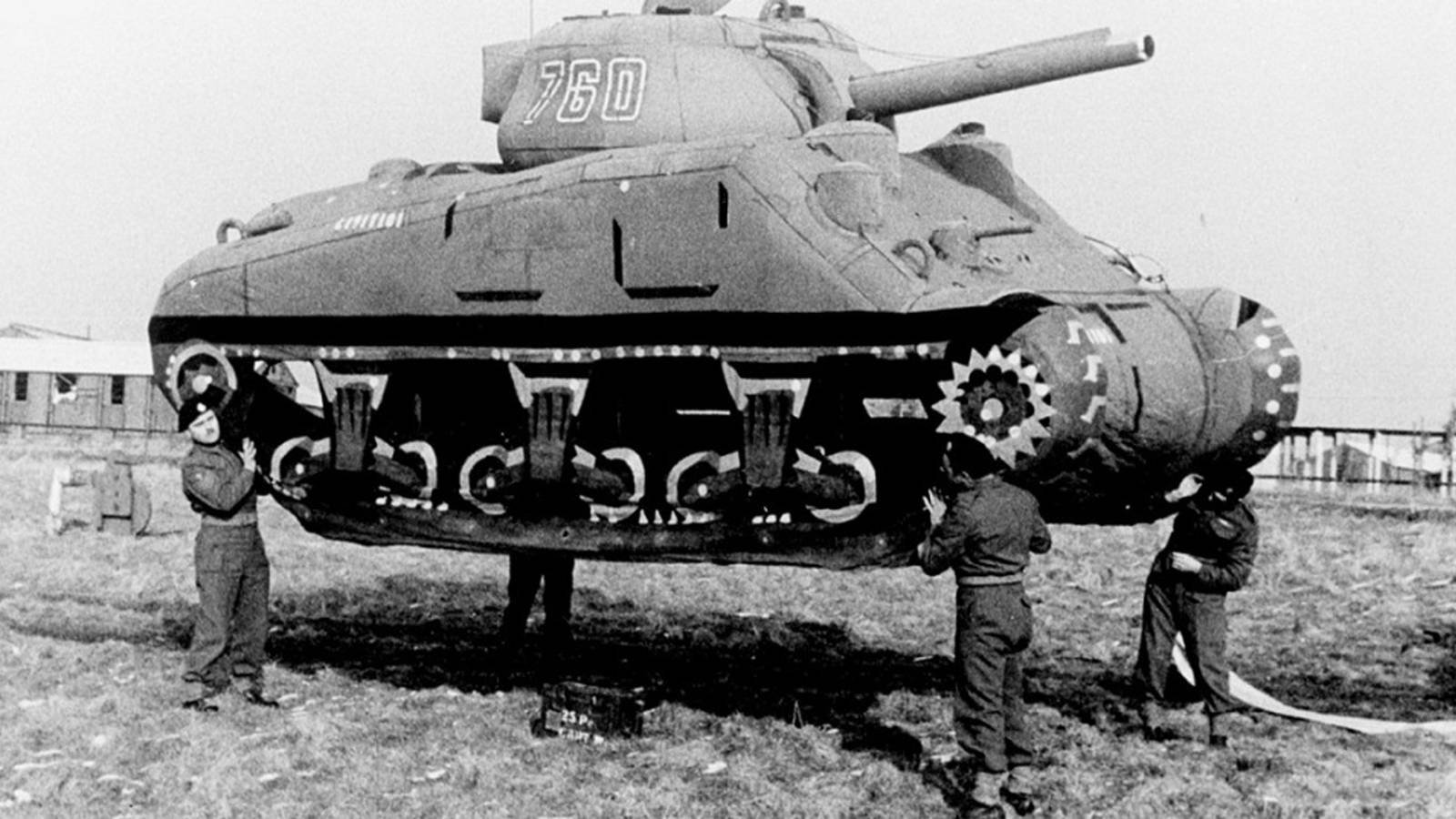
In World War II, one Army unit fought with rubber, canvas, loudspeakers and radios. The 23rd Headquarters Special Troops, known as the Ghost Army, ran deceptions meant to make German commanders believe American forces were somewhere they were not. Congress recognized the 23rd Headquarters Special Troops and the 3133rd Signal Service Company in 2022 with the Ghost Army Congressional Gold Medal Act.
A Unit Built to Deceive
The Army activated the 23rd Headquarters Special Troops on Jan. 20, 1944, at Camp Forrest, Tenn., according to the unit’s official history, written in 1945. By the time the unit reached France, it had grown to 82 officers and 1,023 enlisted men. Different components handled different tricks. The 603rd Engineer Camouflage Battalion built inflatable dummy equipment; the Signal Company Special ran fake radio traffic; the 3132d Signal Service Company handled sound; and the 406th Engineer Combat Company provided security and construction work.
Related: 9 WWII Army Cartoons Made by the Minds Behind Dr. Seuss and Looney Tunes
Many of the men came from art schools, advertising and technical fields. Army University Press’s NCO Journal names two sergeants who became well known after the war, fashion designer Bill Blass and painter Ellsworth Kelly.
A 15-man platoon from the 603rd, known as Task Force Mason and led by Lt. Bernie Mason, landed at Omaha Beach on June 14, 1944. It imitated the 980th Artillery Battalion with inflatable howitzers and worked alongside that unit for 28 days without casualties, the NCO Journal reports.
21 Full-Scale Deceptions
Operation Elephant, July 1-4, 1944, was the first of 21 full-scale tactical deceptions the unit carried out, according to the Ghost Army Congressional Gold Medal Act The official history lists them from Elephant through Operation Viersen, March 18-24, 1945, across France, Belgium, Luxembourg and Germany.
Congress also credited the unit with a role beyond deception. The act says its radio operators reinforced the 82nd Airborne Division after the division lost 95% of its radio equipment. It says three soldiers died and dozens were injured.
Operation Viersen
Operation Viersen was the unit’s final mission. As part of a Ninth Army deception plan, the unit simulated the 30th and 79th Infantry Divisions in assembly areas in the XIII Corps zone, with the aim of deceiving the enemy about where the Rhine River crossing would happen, the official history states. The National WWII Museum says the 23rd and its 600 inflatable dummies drew German attention away from the designated entry point and that the Ninth Army crossed the Rhine “virtually unimpeded.” Lt. Gen. William H. Simpson, the Ninth Army commander, issued the unit a commendation.
The act quotes a military intelligence officer of the 79th Infantry, who said, “Operation Viersen materially assisted in deceiving the enemy.”
Related: They Survived WWII in B-17 Bombers. Now 10 of the Last Combat Veterans Are Telling Their Stories.
Secrecy and Recognition
The units’ activities stayed classified for more than 40 years after the war, according to the act. The Army’s official history of the unit was declassified in 1996 and is now held at the National Archives.
Public Law 117-85, approved Feb. 1, 2022, directs Congress to arrange a gold medal for the 23d Headquarters Special Troops and the 3133d Signal Service Company. After the award, the medal goes to the Smithsonian Institution for display and research.
Want to Learn More About Military Life?
Whether you’re thinking of joining the military, looking for post-military careers or keeping up with military life and benefits, Military.com has you covered. Subscribe to Military.com to have military news, updates and resources delivered directly to your inbox.
