

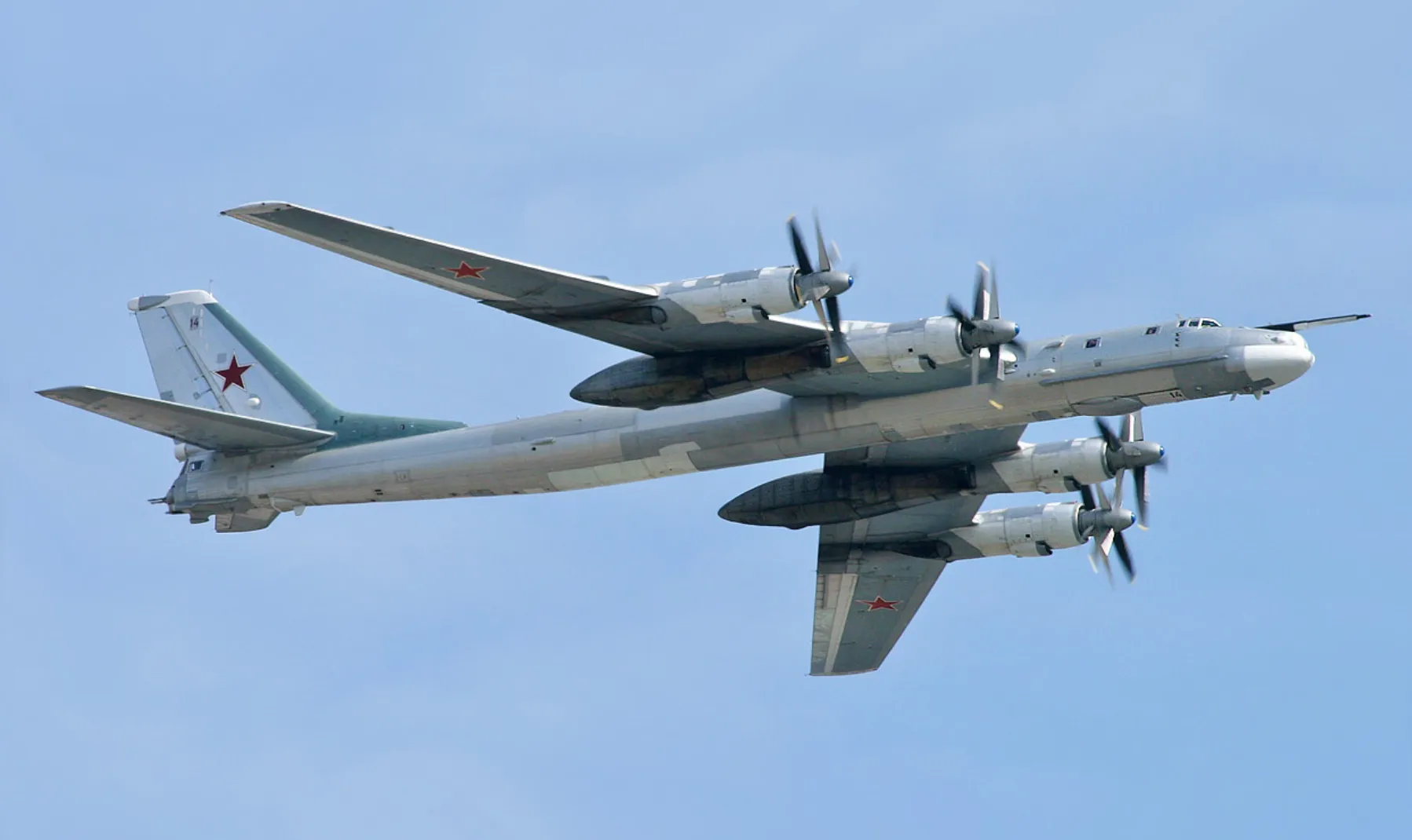
Imagine an aircraft that first flew in 1952, yet still carries long-range cruise missiles for one of the world’s most powerful militaries. No stealth coating. No supersonic dash. Just four enormous turboprop engines and a distinctive howl that makes the Tupolev Tu-95 difficult to mistake for anything else.
Known to NATO as the Bear, this Russian strategic bomber has outlasted generations of military aircraft. Its continued service raises an intriguing question: how powerful can a bomber designed during the early Cold War really be today?
The answer isn’t as simple as looking at its top speed or engine output.
The Tu-95 was built to travel enormous distances, but its modern role goes beyond dropping bombs. Updated variants, particularly the Tu-95MS, can launch long-range cruise missiles, allowing the aircraft to threaten distant targets without necessarily flying directly over them.
That’s a significant advantage. An aircraft doesn’t need to be the fastest in the sky if its weapons can travel hundreds or thousands of kilometers toward their targets.
Still, age brings complications. The Tu-95 lacks the stealth characteristics of newer designs, and its large airframe presents challenges in heavily defended airspace. Modernization helps, but it doesn’t magically turn a Cold War bomber into a fifth-generation aircraft.
So, what makes the Tupolev Tu-95 such an enduring part of Russia’s strategic arsenal? To find out, we’ll examine its engines, speed, range, weapons, and upgrades, and compare its capabilities with modern strategic bombers.
The Bear’s greatest strength may not be what you expect.
What Is the Tupolev Tu-95 and Why Was It Developed?
The Tupolev Tu-95 wasn’t designed to win a dogfight or outrun modern fighters. Its original mission was much more ambitious: carry a heavy payload across continents, strike distant targets, and return home. During the early Cold War, that requirement presented Soviet engineers with a formidable challenge.
Development began in the late 1940s, when Soviet leaders wanted a strategic bomber capable of reaching the United States from Soviet territory. The aircraft also needed enough range to return without relying on overseas bases.
According to Russia’s United Aircraft Corporation, the Tu-95 made its first flight on November 12, 1952. Production began in 1955, and the bomber entered service in September 1957.
Why did Tupolev choose turboprop engines?
The answer comes down to endurance and fuel efficiency. Jet engines offered impressive speed, but turboprops could provide efficient propulsion over long distances. Tupolev’s design team paired four powerful engines with swept wings and large, contra-rotating propellers.
That combination looked unusual, even by the standards of the 1950s. Yet it gave the Tu-95 a distinctive balance of range and speed. The aircraft became one of the fastest production propeller-driven aircraft ever built, a remarkable achievement for such a large bomber.
From nuclear bomber to missile carrier
The original Tu-95 family evolved as military technology changed. Early versions were designed primarily to carry bombs, including nuclear weapons. Later variants incorporated stand-off missiles, allowing the aircraft to attack targets from greater distances.
The Tu-95MS, introduced decades after the original design, represents this shift particularly well. Rather than relying solely on flying over a target, it serves as a platform for launching long-range cruise missiles.
| Milestone | Date |
| First flight | November 12, 1952 |
| Production began | 1955 |
| Entered Soviet service | September 1957 |
| Tu-95MS first flight | September 1979 |
| Tu-95MS production began | 1981 |
The important distinction is that the Tupolev Tu-95 is a family of aircraft, not one unchanging design. Its longevity comes partly from adapting the original airframe to new missions and weapons. That evolution helps explain why a bomber conceived during the Cold War remains relevant to Russia’s long-range aviation today.
How Powerful Are the Tu-95’s Engines and How Fast Can It Fly?
The Tupolev Tu-95 makes an unusual first impression. Instead of roaring through the sky on jet engines, this massive Russian bomber relies on four turboprops spinning eight enormous propeller blades. The result is a combination of power, endurance, and speed that still stands out in military aviation.
At the heart of the aircraft are four Kuznetsov NK-12 turboprop engines, each driving a pair of contra-rotating propellers. These engines rank among the most powerful turboprops ever put into operational service. Their counter-rotating blades help absorb engine power efficiently while reducing some of the torque effects associated with a single propeller.
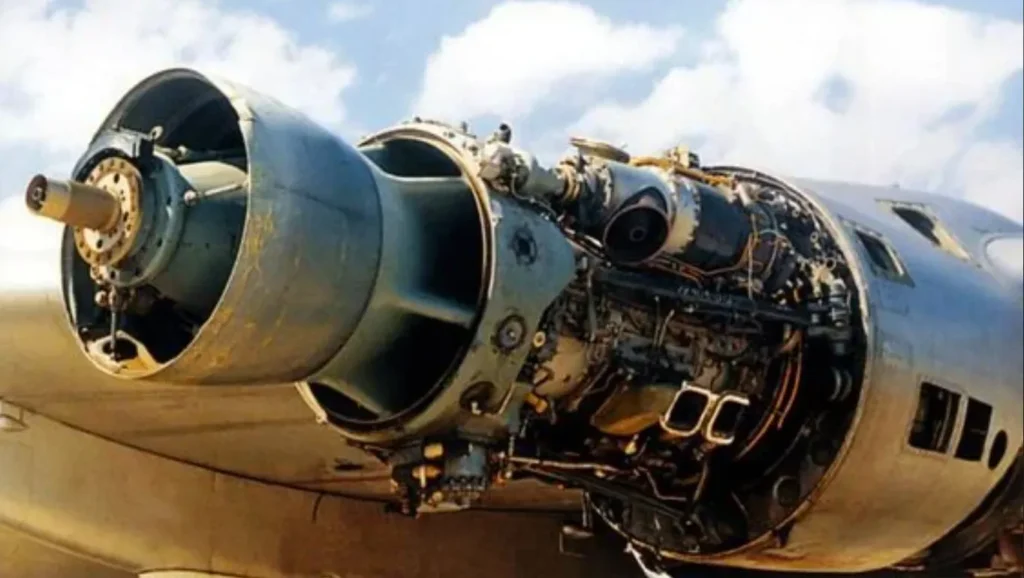
Why does that matter? The Tu-95 needs to carry substantial fuel and weapons over long distances. Efficient propulsion helps it sustain those missions without consuming fuel as quickly as a comparable jet-powered design might under similar conditions.
How fast is the Tu-95 Bear bomber?
Despite using propellers, the Tu-95 can reach approximately 925 km/h (575 mph) under suitable conditions. Guinness World Records recognizes the Tu-95/142 family as the fastest production propeller-driven aircraft. That’s an extraordinary figure for an aircraft weighing well over 100 tons when fully loaded.
For perspective, many modern turboprop aircraft fly considerably slower. The Bear’s combination of enormous engine output, swept wings, and carefully developed aerodynamics allows it to approach the lower end of the jet-powered speed range.
However, maximum speed isn’t the same as normal cruising speed. The Tu-95 typically cruises more slowly to balance fuel consumption, endurance, and mission requirements.
| Performance feature | Approximate figure |
| Engines | 4 Kuznetsov NK-12 turboprops |
| Maximum speed | 925 km/h (575 mph) |
| Typical cruising speed | Around 710 km/h (440 mph) |
| Propeller arrangement | Four contra-rotating pairs |
| Primary performance advantage | Long-range endurance |
Why the propellers make so much noise
There’s another consequence of this design: sound. The propeller blade tips can reach supersonic speeds, producing intense noise and distinctive acoustic effects. It’s a reminder that the Tu-95 achieves its performance through a very different engineering approach than modern jet bombers.
Still, raw engine power doesn’t tell the whole story. The Bear’s real strength is combining substantial speed with the ability to travel vast distances while carrying weapons. And that leads to its next major advantage: range.
How Far Can the Tu-95 Fly Without Refueling?
A strategic bomber’s real value isn’t measured only in speed. It also depends on how far it can travel, how long it can remain airborne, and whether it can reach distant targets without relying on nearby bases. This is where the Tupolev Tu-95 truly earns its reputation.
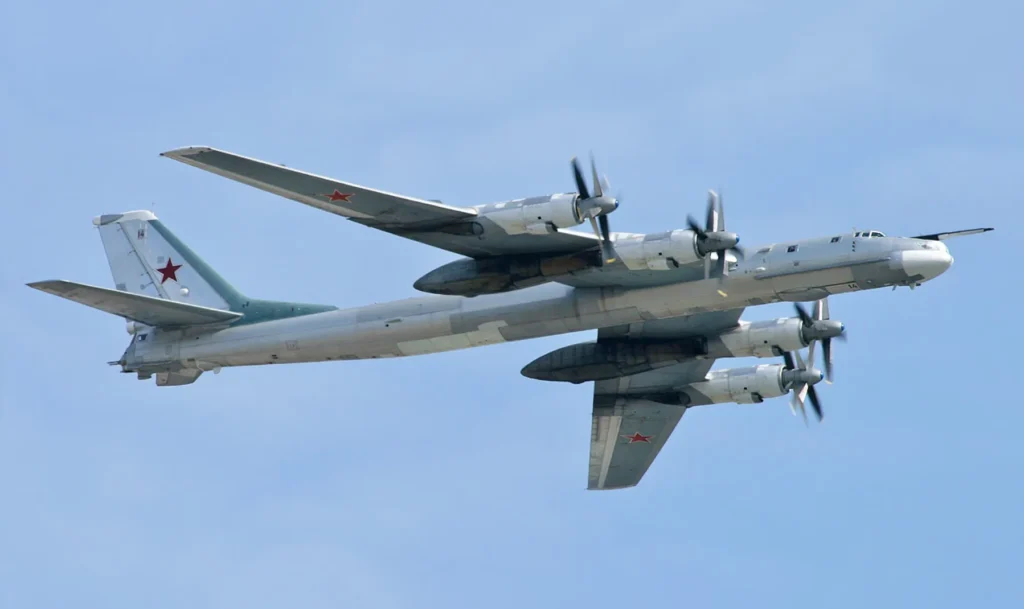
The Bear was designed for intercontinental missions during an era when the Soviet Union needed aircraft capable of carrying nuclear weapons across enormous distances. Its turboprop engines helped make that possible, combining substantial power with efficient cruising over long stretches of ocean and land.
Depending on the variant and published specification, the Tu-95 family is commonly credited with a maximum range of approximately 10,000–15,000 kilometers (6,200–9,300 miles). These figures shouldn’t be treated as interchangeable: aircraft configuration, payload, flight profile, and refueling arrangements can all affect the distance achievable on a particular mission.
Think of it as the difference between a car’s advertised maximum driving range and the distance it can cover while towing a heavy trailer. The aircraft’s weapons and mission requirements matter just as much as its fuel capacity.
Why aerial refueling extends the Bear’s reach
The Tu-95 can also receive fuel in flight, allowing compatible variants to extend their missions beyond what their onboard fuel alone would permit. This capability matters when Russia wants to conduct distant patrols or maintain an airborne presence far from its home bases.
| Range factor | Why it matters |
| Fuel efficiency | Supports long-distance cruising |
| Weapons payload | Heavier loads can affect achievable range |
| Aerial refueling | Extends mission endurance |
| Flight profile | Altitude and speed influence fuel consumption |
It’s also important to distinguish maximum range from combat radius. Maximum range describes how far an aircraft can travel under specified conditions, while combat radius concerns the distance it can fly to perform a mission and return.
For the Tu-95, that distinction helps explain its strategic value. It can cover immense distances, but actual mission reach depends on fuel reserves, payload, route, and operational requirements.
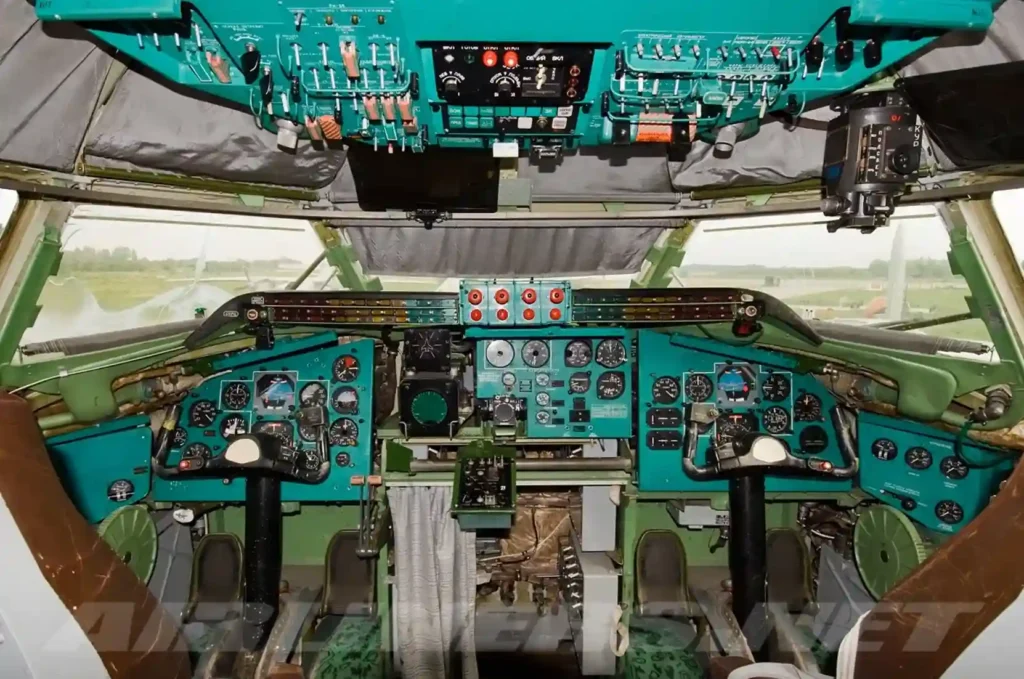
The Bear’s range is impressive, yet distance alone doesn’t make a bomber effective. It must also deliver a useful weapon against its intended target. That’s why the Tu-95’s transformation into a long-range missile carrier is so important, and why its weapons deserve a closer look.
What Weapons Can the Tu-95 Bear Bomber Carry?
The Tupolev Tu-95 becomes far more interesting when you look beyond its enormous engines. Its real strategic power lies in the weapons it can deliver over long distances, particularly the cruise missiles carried by modernized variants.
Early Tu-95 bombers were designed to deliver bombs, including nuclear weapons, directly against strategic targets. But air defenses grew more capable, making it increasingly dangerous for large bombers to approach heavily defended areas. Russia’s answer was to adapt the Bear into a long-range missile carrier.
The Tu-95MS is central to this transformation. Rather than relying exclusively on flying over a target, it can launch cruise missiles from a distance, allowing the weapons to cover the remaining journey independently. This stand-off approach has helped keep the aircraft relevant decades after its original introduction.
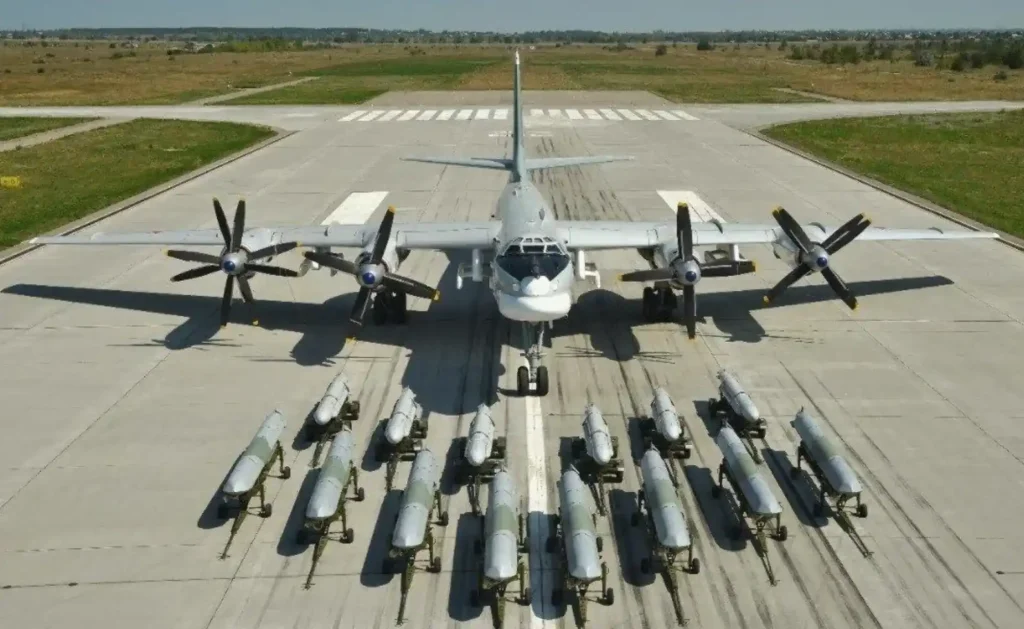
The distinction matters: a bomber’s combat value depends not just on its own speed or survivability, but also on the reach and capabilities of its weapons.
Which cruise missiles can the Tu-95 carry?
Several missile families illustrate how the Bear’s role has changed over time.
- Kh-55: A Soviet-designed, air-launched cruise missile originally developed for nuclear strikes. It helped establish the Tu-95MS as a long-range missile platform.
- Kh-101: A modern, conventionally armed cruise missile designed for long-range precision strikes. It gives the bomber a non-nuclear attack option against distant targets.
- Kh-102: The nuclear-capable counterpart to the Kh-101, associated with Russia’s strategic nuclear deterrent.
The Tu-95MS’s missile capacity depends on its variant and configuration. Earlier versions could carry six Kh-55 missiles internally, while other configurations accommodated additional weapons on external hardpoints. Modernized aircraft can carry newer, larger missiles, although not every Tu-95 has identical capabilities.
| Weapon | Primary role | Why it matters |
| Kh-55 | Nuclear-capable cruise missile | Established the Bear’s stand-off strike role |
| Kh-101 | Conventional cruise missile | Enables long-range conventional attacks |
| Kh-102 | Nuclear-capable cruise missile | Supports Russia’s strategic deterrence |
Why stand-off weapons make the Bear dangerous
Imagine a bomber that doesn’t need to fly directly above its target to launch an attack. Its missiles can travel the remaining distance independently, changing how the aircraft is employed and how defenders must respond.
That doesn’t make the Tu-95 invulnerable. Its large, non-stealthy airframe remains vulnerable in contested airspace, and cruise missiles can also be intercepted. The aircraft’s effectiveness depends on the weapons available, the mission, and the defenses opposing them.
Still, its combination of long endurance and stand-off weapons gives this aging bomber a modern strategic purpose. The next question is how Russia has upgraded the aircraft to keep that capability relevant.
How Has Russia Modernized the Tu-95 for Modern Warfare?
A bomber designed in the 1950s might seem like an unlikely candidate for modern warfare. Yet the Tupolev Tu-95 has survived because Russia has repeatedly changed what the aircraft can do, even while retaining its recognizable airframe and turboprop engines.
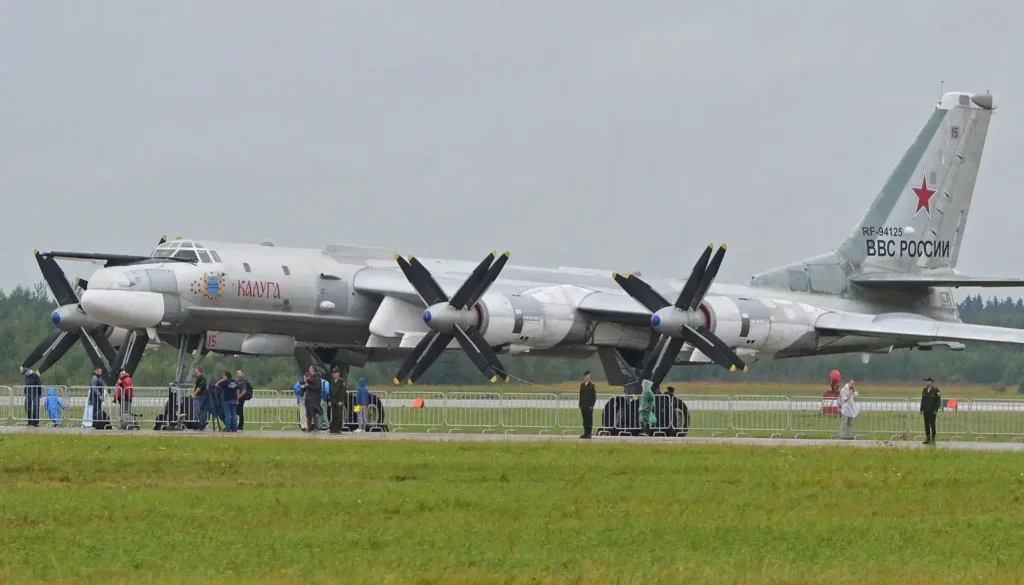
The most important change has been its shift from a traditional bomb carrier toward a long-range cruise-missile platform. The Tu-95MS, developed decades after the original bomber, was designed around this mission. Its role is less about flying directly over a target and more about carrying weapons far enough to launch them from a distance.
That change is significant. Instead of replacing every aging aircraft with an entirely new design, Russia has invested in upgrades that extend the usefulness of existing airframes. The approach preserves a familiar platform while introducing newer systems and weapons.
But modernization means more than adding missiles. The aircraft also needs updated navigation, communications, and weapon-control equipment to support contemporary missions. These systems help crews manage flight operations and employ compatible weapons more effectively.
What does the Tu-95MSM upgrade change?
The Tu-95MSM represents a more extensive modernization effort. According to Russia’s United Aircraft Corporation, the program aims to improve the effectiveness of the missile carrier and extend its service life.
| Modernization area | Purpose |
| Avionics and navigation | Improve flight management and mission coordination |
| Weapons systems | Support updated cruise-missile capabilities |
| Engines and propellers | Improve propulsion performance and reliability |
| Onboard electronics | Update the aircraft for contemporary operations |
These improvements don’t erase the Bear’s fundamental limitations. It remains a large, non-stealthy aircraft, and its basic aerodynamic design still dates to the early Cold War. Modern systems can improve what the bomber does, but they cannot make its airframe invisible to radar.
That’s the trade-off behind the Tu-95’s long service life: Russia can preserve a familiar long-range platform while updating important parts of its mission equipment. The approach also avoids relying entirely on the development and introduction of a completely new bomber.
The result is an aircraft whose age can be misleading. Its design is old, but its operational role has evolved considerably. To understand where the Bear stands today, though, it helps to compare it directly with two other strategic bombers: America’s B-52 and Russia’s supersonic Tu-160.
How Powerful Is the Tu-95 Compared With the B-52 and Tu-160?
The Tupolev Tu-95 isn’t the only aging strategic bomber still flying. The United States continues to operate the B-52 Stratofortress, while Russia also fields the much faster Tu-160 Blackjack. All three can deliver long-range weapons, but they approach the mission in very different ways.
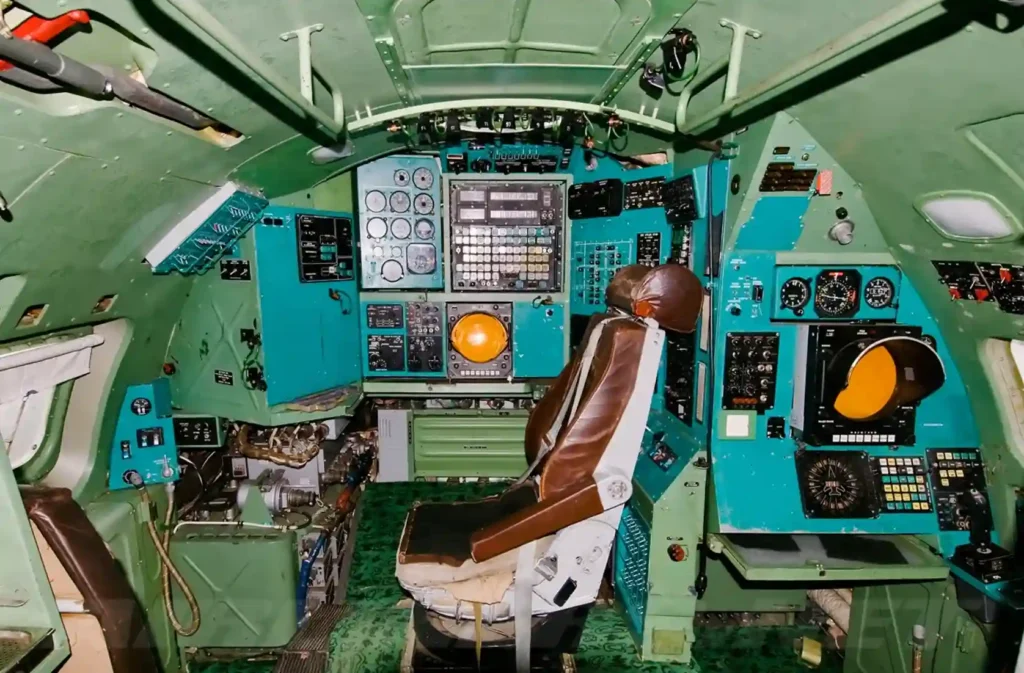
The Bear’s defining feature is its turboprop propulsion. It sacrifices the higher speed of a jet-powered bomber in exchange for efficient long-distance cruising. The American B-52 also prioritizes endurance and payload, but uses eight turbofan engines. Russia’s Tu-160 takes another route, combining four powerful jet engines with a variable-sweep wing designed for supersonic flight.
So which aircraft is the most powerful? That depends on what you measure. Maximum speed favors the Tu-160, while the Tu-95’s enduring strength lies in its range and role as a missile carrier. The B-52, meanwhile, offers the United States a flexible platform that has been repeatedly upgraded for new weapons and missions.
Tu-95 vs. B-52 vs. Tu-160: Key differences
| Feature | Tupolev Tu-95MS | Boeing B-52H | Tupolev Tu-160 |
| Country | Russia | United States | Russia |
| Engines | 4 turboprops | 8 turbofans | 4 turbofans |
| Maximum speed | Approx. 925 km/h | Approx. 1,046 km/h | Approx. 2,200 km/h |
| Published range | Up to 15,000 km, depending on variant and conditions | Approx. 14,080 km unrefueled | Approx. 12,300 km, depending on configuration |
| Primary strength | Efficient long-range missile carriage | Payload and mission flexibility | Supersonic speed and long-range strike |
The B-52 stands out for its substantial payload and ability to carry a broad selection of conventional and nuclear weapons. The U.S. Air Force lists its maximum payload at approximately 31,500 kilograms (70,000 pounds).
Its long service life also reflects repeated upgrades rather than reliance on its original equipment.
The Tu-160, meanwhile, is the speed champion of this comparison. Its jet engines and variable-sweep wings allow it to fly at supersonic speeds, giving it a performance advantage the propeller-driven Bear cannot match.
But speed doesn’t automatically determine strategic value. The Tu-95 can still carry long-range cruise missiles, making it useful for missions where launching weapons from a distance matters more than reaching supersonic speeds.
The verdict? The Tu-95 is not the fastest or most technologically advanced bomber in this group. Its enduring strength is the combination of long-range endurance and modern stand-off weapons. That makes the Bear a serious strategic platform, but how effective can it remain as air defenses continue to evolve?
