

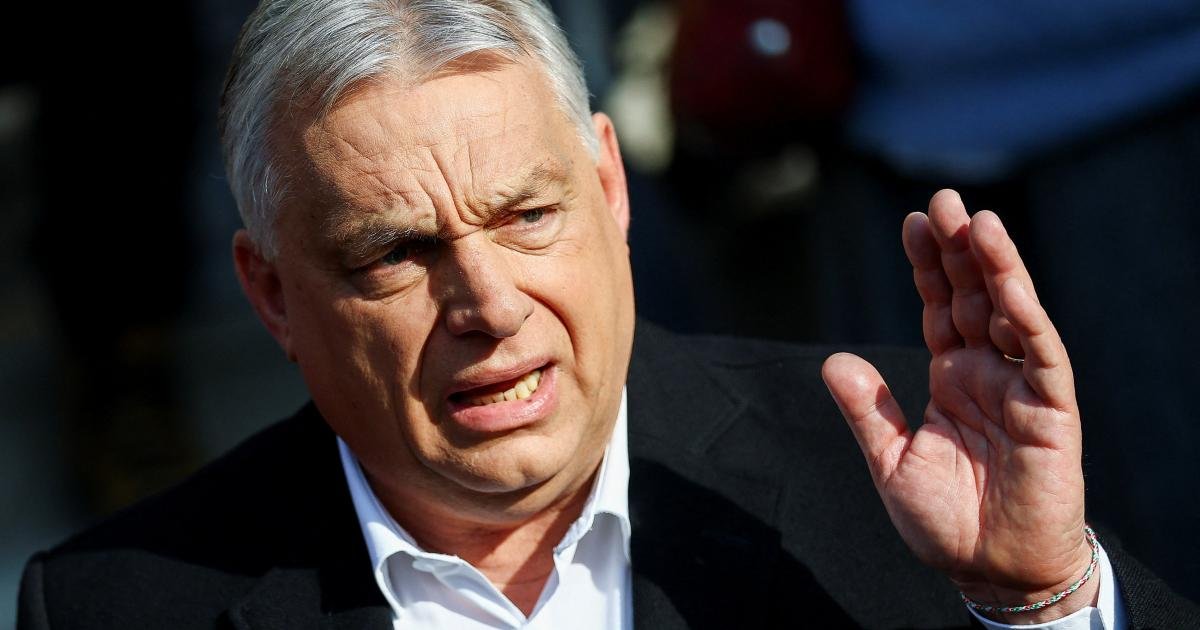
On Sunday, voters ousted Hungarian Prime Minister Viktor Orban’s populist right-wing government. In a landslide victory, Peter Magyar’s Tisza, a center-right party, won 53 percent of the vote, compared with 39 percent for Orban’s Fidesz party. In his 16 years in power, Orban had been a role model for aspiring authoritarian leaders far beyond Budapest. His regime had lasted as long as it did because it was extremely adept at rigging the electoral system and stoking polarization in society. Yet those very strengths proved to be its undoing.
An electoral system that rewarded the largest party with a disproportionate number of parliamentary seats meant that a capable challenger could decisively turn the tables on the incumbent government. The stark polarization of society made a united opposition party easier to forge. And Orban’s unusually long tenure made it impossible for him to escape responsibility for the failures of governance and management that plagued the country.
Magyar, a former Fidesz member turned critic, and the Tisza Party used Orban’s own record against him. They united pro-democracy forces, turned the division Fidesz had manufactured against Orban himself, and focused their campaign on the incumbent government’s corruption and failure to fix deteriorating public services and high inflation. Their success holds lessons for opposition parties in competitive authoritarian systems around the world.
ENGINEERING DOMINANCE
The first pillar of Orban’s success was an electoral system that maximized the number of parliamentary seats that his party earned in elections. Fidesz gerrymandered districts, extended the franchise to (mostly conservative) Hungarians living abroad, and established a mixed voting system that allocated a disproportionately large number of parliamentary seats to the party that won the highest share of the vote—even if it only achieved a plurality rather than an outright majority.
To comprehend the effect of these changes, one need only look at election results. In 2010, when Fidesz first came to power, the party received 53 percent of the vote and earned a two-thirds majority in parliament. Four years later, after many of the electoral changes took effect, it received only 45 percent of the vote—but the margin of its supermajority in the parliament was essentially unchanged, allowing Fidesz to pass legislation, amend the constitution, and appoint party loyalists to important positions, all without having to even consult opposition parties.
Orban also managed to polarize Hungarian society with successive waves of fear-based rhetoric. Fidesz appointed party propagandists to state TV and radio and used economic pressure to consolidate most private news outlets in the hands of government-friendly oligarchs. It then flooded these outlets—and the streets, via giant posters—with alarming messages about who was attacking Hungary. The foes included migrants, sexual minorities, bureaucrats in Brussels, the Hungarian-born liberal philanthropist George Soros, and the government of Ukraine. These attacks polarized the country and helped Fidesz maintain its stronghold on the right, often enticing supporters away from other extreme-right parties. In responding to the propaganda, opposition parties were compelled to defend positions that did not resonate with the majority of Hungarians, standing up for LGBT rights, showing empathy for Muslim migrants, and echoing critiques of the Hungarian government by the European Union.
Fidesz’s tactics led to remarkable electoral success. Orban is the longest-serving prime minister in Europe; in all of post–World War II European history, only former German chancellors Helmut Kohl and Angela Merkel served as many consecutive years. Moreover, Orban has governed with a supermajority in parliament for this entire period. This has allowed him to shape Hungary’s economic, political, judicial, and even cultural institutions without any effective checks and balances. Orban’s System of National Cooperation—a system of executive power in which he exercised economic influence by way of regime-friendly oligarchs, as well as control over social, cultural, and media institutions via appointed party loyalists—has become a model for many aspiring autocrats who are building systems of competitive authoritarianism in their own countries.
THE PILLARS CRUMBLE
But Orban’s successes also contained the seeds of destruction for Fidesz. The electoral system that Fidesz built over the past decade and a half ensured that the largest party in the country could govern with almost absolute authority, because of the ease with which it could attain a supermajority in parliament.
This system worked well until a new force, the Tisza Party, emerged that turned out to be more popular than Fidesz. Because the system is designed to supercharge even a small plurality, the Tisza Party has now also been rewarded with a two-thirds majority—giving it the tools to undo the laws that Orban had put beyond the reach of regular parliamentary majorities. The carefully engineered electoral system has therefore enabled Tisza to roll back Fidesz’s political legacy.
Fidesz victories always depended on a fragmented opposition. Tisza was the first political force to consolidate rival parties into a single movement. It is striking that the total votes cast on Sunday for all pro-democracy parties besides Tisza amounted to less than two percent of the total vote—meaning that despite their political and ideological differences, voters united behind Magyar. This unity is a result of the extreme polarization of Hungarian society. Orban’s tactic of emphasizing wedge issues on immigration, culture war topics, and the dangers of the Ukraine war created a hyperfractured political environment. But because the actual threats that Orban was pushing never materialized, what ended up dividing Hungary was Fidesz itself. As reports of regime corruption spread, the main dividing line in Hungarian society became whether one supported Orban or wanted him out. This binary choice made it much easier for Magyar to rally voters from a variety of ideological stripes to his cause. He became the face of the entire anti-Orban segment of society.
Finally, Fidesz’s longtime incumbency made it easier for Tisza to run on bread-and-butter issues that resonated across the political spectrum. Magyar was able to connect the Orban government to dilapidated hospitals, crumbling infrastructure, and high inflation—while highlighting the corruption in the upper ranks of the party and among its allied oligarchs. Orban’s attempt to blame the European Union and Ukraine for these domestic problems did not resonate with enough voters. He could not shake the responsibility for the state of the country he had led for so long.
BEYOND HUNGARY
The Hungarian election has several lessons for pro-democracy forces fighting democratic backsliding across the globe. Above all, opposition forces in competitive authoritarian systems need to close ranks behind a single person and party. This means temporarily putting aside ideological differences for the purpose of restoring a pluralist political system. Magyar could play this role because he was a former insider in the Fidesz regime, knowing how the party operated and how its engines of corruption and intimidation functioned. Crucially, however, he had not held any high-profile political position in the government that would have made him unacceptable to many voters on the left. At the same time, he represented a center-right, conservative, nationalist ideology, so Fidesz could not smear him as a stooge of the European Union or a cosmopolitan liberal, which would have undermined his support on the right. Finding an exact equivalent in other countries may not be possible—but pro-democracy forces can look to political outsiders or newcomers who do not carry significant political baggage and can simultaneously appeal to voters of differing political persuasions.
Once united, proponents of democracy can use political polarization against authoritarians in power. Illiberal forces are traditionally more adept at finding or creating fault lines in society to exploit for political gain—by turning citizens against one another, demonizing minorities, or stoking xenophobia. But pro-democratic forces can also turn polarization against authoritarian governments, by painting them as being on the wrong side of a clear binary political divide. Magyar himself capitalized on scandals involving the pardoning of Endre Konya, the deputy director of a state-run orphanage who had been convicted of helping cover up a pedophilia ring, as well as on a number of investigative journalists’ reports detailing the construction of lavish residences for Orban’s family and close friends. Issues that transcend ideology and party preferences, such as corruption and the abuse of children, can help unite movements.
Finally, opposition forces should maintain pressure on illiberal governments to defend their governance record. The Tisza Party exposed state corruption and relentlessly campaigned on pocketbook issues, including high inflation, the deterioration of public services, and the poor state of the country’s infrastructure. Keeping the focus on a government’s performance, and what it has been incapable of delivering, is a message that crosses political boundaries and helps unify rival forces.
These lessons offer useful strategies to remove authoritarian governments from power. But these tactics must be coupled with a broader commitment to liberal democracy. To avoid simply replacing one illiberal government with another of a different hue, it is crucial that citizens keep the pressure on newly elected parties to deliver on their promises to restore democracy. In Hungary, civil society must now insist that the government re-create checks on its own executive power and reinvigorate political pluralism. Ousting competitive authoritarian regimes is extremely difficult. But the most difficult part is what comes next—the hard work of rebuilding public trust in institutions, unwinding the politicization of state agencies, and reconstituting a system in which representative democratic politics can again flourish.
Loading…
