

April 30, 2026 • 10:30 am ET
Bottom lines up front
- Colombia’s first-round presidential election will take place May 31 amid persistent risks of political violence, illegal armed group activity, and disinformation.
- While the March legislative and primary elections were largely peaceful, the electoral environment has deteriorated in recent weeks.
- The next month offers a critical window to reduce risks through coordinated candidate protection measures, targeted territorial security deployments, and rapid responses to disinformation.
A stable system facing rising pressures
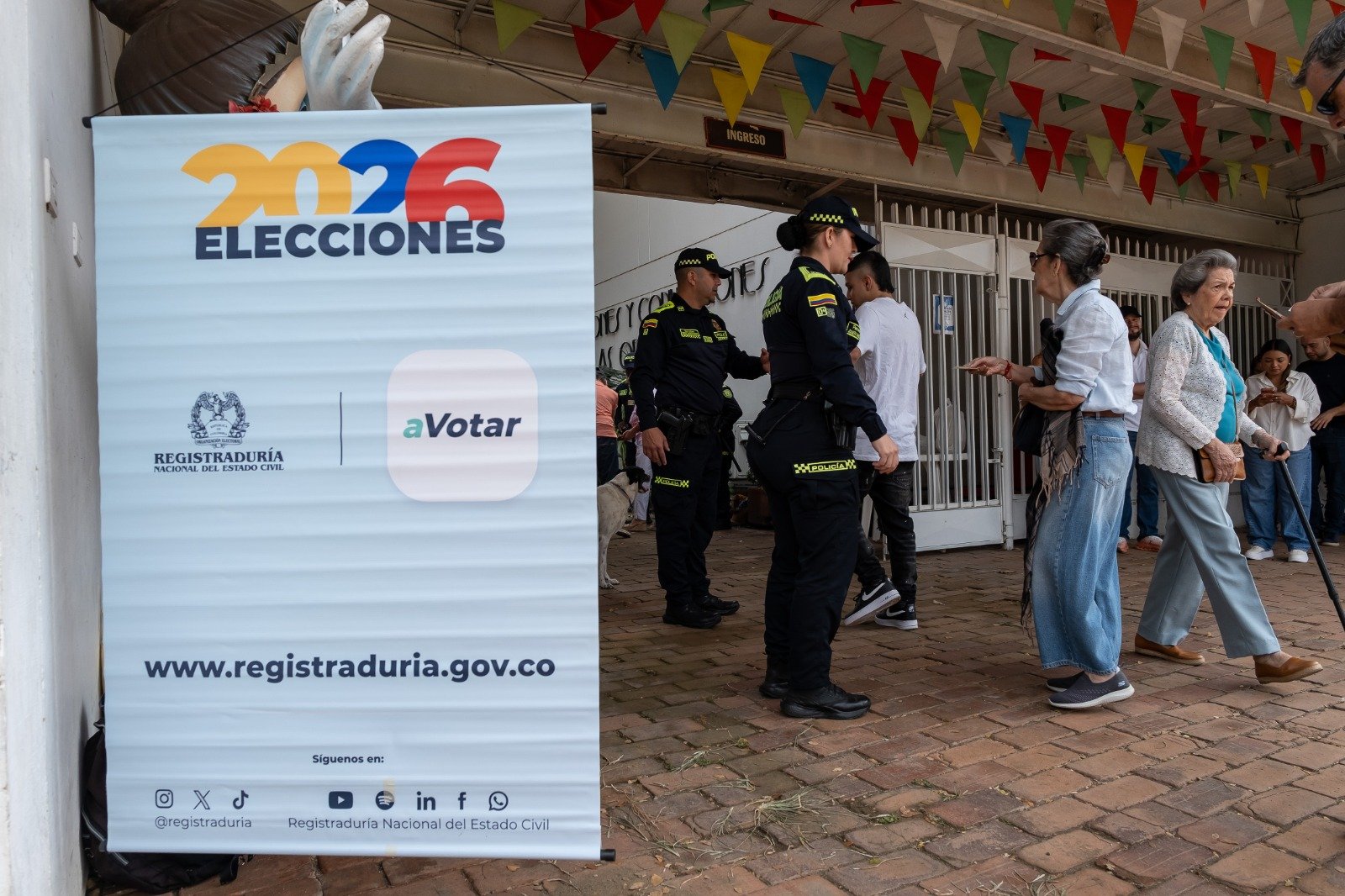
Colombia’s first-round presidential vote comes two months after the March legislative vote and interparty primary elections. Despite early warnings of potential violence and possible fraud in 185 municipalities, the March electoral process unfolded largely without major disruption and was assessed as generally peaceful by the Ministry of Interior, the national Electoral Observation Mission (MOE), and international observers.
However, while encouraging, this does not eliminate the need to consider underlying risk. Concerns remain regarding three matters that could still disrupt the first round of the presidential elections and continue into the potential runoff in June.
- First, political violence remains a key risk for presidential candidates and local leaders. Recent death threats and past attacks on candidates and their protection teams highlight persistent security risks. In the final weeks before the first round of voting, the priority should be to reinforce and standardize protection protocols for campaigns, ensuring that responses to new threats are applied promptly and uniformly.
- Second, illegal armed group activity is shaping electoral dynamics in rural and peripheral territories. Despite public commitments of noninterference, the territorial control that illegal armed groups exert constrains campaign access, restricts voter mobility, and increases risk of intimidation in territories with limited state presence. Strengthening and sustaining a visible public security presence in high-risk municipalities in the weeks before and after the vote will be essential to deter interference and reduce voter intimidation and retaliation.
- Third, polarization and disinformation have strained public debate and raised questions about the legitimacy of electoral results. To address these threats, electoral authorities, major campaigns, and leading civil society watchdogs should establish a rapid-response coordination mechanism to identify, fact check, and publicly correct false claims about the voting process within hours of their circulation. At the same time, public officials should refrain from making unverifiable statements that question the integrity of the election.
The Atlantic Council’s US-Colombia Strategic Alignment Coalition assessed these dynamics in its inaugural working session focused on electoral security and democratic resilience, together with additional US and Colombian experts. The recent legislative elections demonstrated that Colombia’s institutions remain sound and operationally strong, even amid ongoing challenges. However, participants noted that these institutions face acute threats in territories where armed group presence remains strong, reinforcing the need to continue strengthening existing safeguards in the final stretch of the campaign to ensure a safe and credible vote.
The main risk factors ahead of the first round
1. Rising political violence targeting candidates
The MOE recorded 415 violent incidents against political, social, and community leaders in 2025. While the overall number of incidents dropped compared to 2021, attacks targeting political leaders rose from 39 to 59 percent of all recorded cases. In parallel, the Ombudsman’s Office of Colombia registered 457 death threats in the pre-electoral period, affecting political leaders and civil society actors across departments including Santander, Guainía, Nariño, Sucre, Antioquia, and Magdalena.
Candidates face elevated visibility and risks including targeted killings, systematic threats, stigmatization, mobility restrictions, and bans on campaigning in territories where illegal armed groups exert criminal governance. Over the past year, high-profile incidents—including the assassination of former senator and presidential pre-candidate Miguel Uribe Turbay in June 2025, the kidnapping of vice-presidential candidate Aida Quilcué in February 2026, and attacks on congressional candidates and their security teams—have reinforced concerns around candidate security and campaign activity.
In the final weeks of the campaign, death threats against leading presidential candidates—Iván Cepeda, Paloma Valencia, and Abelardo de la Espriella—have heightened public concern and intensified pressure for state institutions to ramp up efforts to investigate threats and increase candidate protection measures. Calls from the US Department of State have echoed these concerns.
2. Criminal governance and electoral disruption
Illegal armed groups grew by 23.5 percent over the past year, surpassing twenty-seven thousand members, with diversified illegal revenue streams strengthening territorial control. This expansion has direct implications for the electoral process, especially in areas controlled by criminal and armed groups.
Between October 2025 and January 2026, more than ten events linked to territorial disputes—including explosive attacks, enforced curfews, confinements, and mass displacement—affected civilian populations. More than one hundred thousand people were displaced in Catatumbo due to clashes between the National Liberation Army (ELN) and Revolutionary Armed Forces of Colombia (FARC-EP) dissident groups.
More recently, since April 24, a sustained wave of violence has hit Colombia’s southwest—particularly the departments of Cauca, Valle del Cauca, and Nariño—where over twenty-six attacks, including explosive incidents, armed confrontations against public officials, and roadblocks, have been carried out by the FARC dissident groups, according to the Ministry of Defense. The attacks have had severe causalities, with twenty-one civilians killed and more than fifty-six injured, and have significantly disrupted stability in the lead-up to the elections.
While several other armed groups—including dissident factions of the former FARC such as the General Staff of Blocks and Fronts (EMBF) and the National Coordinator of the Bolivarian Army (CNEB), along with other actors like the Gaitanist Self-Defense Forces of Colombia (Gulf Clan) and the Commoners of the South (Comuneros del Sur)—have pledged not to interfere in the elections, their continued territorial control constrains campaign activities and citizens’ ability to freely exercise their right to vote.
These risks are particularly pressing in rural and peripheral areas, where state presence remains limited. Key risks include:
- intimidation, surveillance, and disruption of campaign activities;
- restrictions on voter mobility via illegal checkpoints, curfews, and transport control;
- discrepancies in the electoral registry caused by forced displacement, as individuals registered in expelling municipalities might not be able to vote in their current locations; and
- vote buying and coercion in high-risk municipalities, as observed in areas such as Cartagena del Chairá during the legislative election.
The Ministry of Defense’s Democracy Plan deployed approximately 246,000 security force personnel to secure more than thirteen thousand voting centers during the March elections. However, the Ombudsman’s Office has warned of gaps in protection and the need to implement stronger preventive measures. The recent escalation of violence in the southwest further reinforces the need to strengthen protection protocols for high-risk territories across the country.
3. Disinformation and pressures on electoral legitimacy
The electoral environment is highly polarized, with leading presidential campaigns positioned at opposite ends of the political spectrum and centrist candidates struggling to consolidate support. That fragmentation has made the public debate more confrontational and vulnerable to narratives that cast doubt on the process itself, particularly as recent polls point to a tightening race.
These dynamics have already resulted in allegations of fraud that have further strained the public debate and undermined confidence in the electoral process. For instance, in the lead-up to and aftermath of the March legislative election, President Gustavo Petro has made unverified public statements raising concerns about the integrity of the electoral system. These claims have been made repeatedly, despite electoral authorities, oversight institutions, and independent observers consistently affirming the integrity of the system, clarifying electoral procedures, and outlining institutional channels available to file complaints. In this context, the presence of domestic and international electoral observation missions before and during election day will play an important role in reinforcing transparency, supporting the verification of the electoral process, and helping mitigate the impact of competing narratives in the public debate. Disinformation and polarization are increasingly feeding into one another, raising tensions in an already fragmented environment and weakening public confidence. These factors reinforce political violence by increasing the likelihood that disputes spill into intimidation or attacks, while also creating space for illegal armed groups to coerce voters by exploiting uncertainty and distrust. It is therefore important to consider the three risk factors as connected and to implement measures that address them in an integrated way.
Immediate priorities for the remaining campaign period
1. Standardize and reinforce candidate protection protocols
In the final weeks before the first round, the Ministry of Interior and Ministry of Defense—through the Coordination and Recommendation Committee for Protective Measures in the Electoral Process (CORMPE)—should ensure that protection schemes for all candidates are implemented under a unified and equivalent framework. Security arrangements should be standardized in terms of escort composition, mobility protocols, and intelligence support.
Any new threat against one of these candidates should trigger a CORMPE review within twenty-four hours to determine whether protection adjustments are needed in all schemes, rather than holding ad hoc or case-by-case reviews. This framework should be extended through the runoff period and into the post-electoral phase, including for candidates who do not advance to the second round, given the continued risk of political violence after the vote.
2. Launch a pre-election security surge in the highest-risk municipalities
No later than one week before the first round, the Ministry of Defense and National Police should deploy reinforced security and mobility patrols in municipalities identified by official risk assessments—including the Ministry of Defense, the MOE, and the Ombudsman’s Office—as having the highest risk of armed group interference. Priority should be given to campaign event locations, major voter transit routes, and access points to polling stations through May 31.
Early deployment can help deter armed group interference and reduce voter intimidation. Security deployments should also remain in place in the immediate post-electoral period to deter retaliation against voters, community leaders, and local authorities, particularly in areas where armed actors exert territorial control and where violence has recently intensified.
3. Establish a same-day election misinformation response protocol
From now through the announcement of first-round results, the National Civil Registry and the National Electoral Council should use official channels to issue public clarifications about major false claims related to voting procedures, vote counting, and results transmission on the same day they begin circulating. These should include press releases, as well as rapid updates on institutional websites and verified social media accounts. This effort should address all false claims made by government officials, candidates, and campaign staff.
4. Expand targeted civic education on voter coercion and intimidation in high-risk areas
Before May 31, civil society organizations should work with local leaders and community radio networks to expand existing voter education and risk prevention efforts in high-risk departments. These initiatives should disseminate simple voter guidance on how to identify and respond to intimidation and vote buying, movement restrictions, and false election information. They should also strengthen awareness of existing reporting channels, including the Ministry of Interior’s Immediate Reaction Unit for Electoral Transparency (URIEL) and the MOE’s “Pilas con el Voto” platform, to ensure incidents can be documented and investigated promptly.
5. Promote cross-candidate commitments to electoral integrity and nonviolence
In the final two weeks before the first round, the presidential campaigns and government officials should publicly commit to refraining from unverified allegations of fraud, inflammatory rhetoric, and stigmatizing language targeting candidates based on personal characteristics unrelated to their qualifications or conduct. This pledge should align with the Commitment for a Free and Peaceful Electoral Process promoted by the Ombudsman’s Office in cooperation with international partners. It will also be critical to sustain and reinforce this commitment into the runoff period, where the risk of contestation is likely to increase.
Conclusion
Colombia faces persistent security risks as it heads into the presidential election. At the same time, its electoral institutions have shown resilience and the ability to conduct elections even under difficult conditions and rising pressures.
In the remaining weeks—and in future electoral cycles—state actors, civil society, and international partners will continue to play a key role in strengthening safeguards for campaigns and voters. Reinforcing candidate protection, expanding security coverage, and countering disinformation will be key to reinforcing public confidence, protecting voters and political leaders, and ensuring electoral integrity.
The recommendations outlined in this issue brief were informed by a late March working session of the US-Colombia Strategic Alignment Coalition, supported by a grant from the Luminate Group. The session included participation from the coalition’s members and additional local experts.
about the US-Colombia Strategic Alignment Coalition
At a moment of renewed US focus on the Western Hemisphere and Colombia’s ongoing electoral cycle, the Atlantic Council launched the US-Colombia Strategic Alignment Coalition to help update and modernize the bilateral agenda and put forward recommendations for renewed for cooperation across security, economic, and governance priorities.
Explore the program
The Adrienne Arsht Latin America Center broadens understanding of regional transformations and delivers constructive, results-oriented solutions to inform how the public and private sectors can advance hemispheric prosperity.
