

First Look
After the DHS CWMD office was dissolved, lawmakers say a GAO review is needed to ensure its former functions are still being carried out effectively.
After the the Department of Homeland Security dissolved its Countering Weapons of Mass Destruction office this year, House lawmakers say a review is needed to ensure its former functions are still being carried out effectively.
Homeland Security Committee Ranking Member Bennie Thompson (D-Miss.) and Subcommittee on Emergency Management and Technology Ranking Member Timothy Kennedy (D-N.Y.) requested the review in an Aug. 6 letter to the Government Accountability Office.
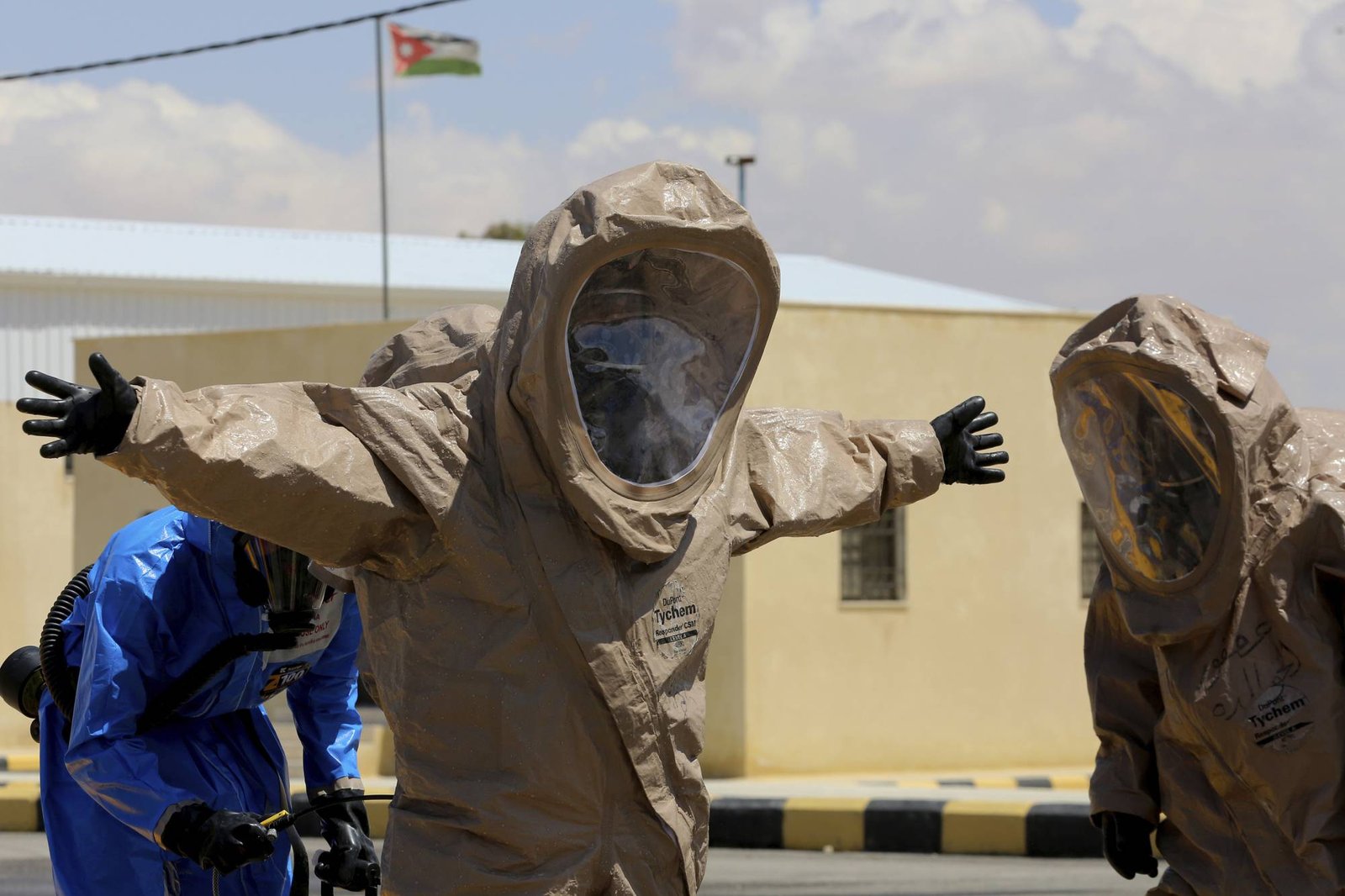
The duo highlight the disestablished CWMD office’s former role in defending against chemical, biological, radiological and nuclear weapons. They say those threats “persist,” pointing to a 2025 intelligence community assessment that the Iranian military has conducted research on chemical and biological agents for offensive purposes.
With the CWMD office’s responsibilities now divvied up across multiple DHS components, Thompson and Kennedy say a GAO review is needed “given the severe potential consequences of an attack, the unacceptable risk to homeland security, and the evident confusion over how best to address it organizationally.”
The CWMD directorate’s future had been in flux for several years before House GOP lawmakers backed the Trump administration’s proposal to disestablish it.
Congress first authorized the directorate in 2018, centralizing several disparate organizations into one office at DHS. But the CWMD office struggled with some of the lowest morale scores across the federal government. And in 2023, its authority expired, leading to a wave of departures.
The office continued to be funded through annual appropriations. But the Trump administration proposed dismantling the DHS CWMD office as part of both its fiscal 2025 and 2026 budget requests.
By January of this year, CWMD’s staffing had been cut in half compared to a year before, with many employees taking voluntary buyouts while others were reassigned, Politico reported.
The 2026 appropriations bill adopted provisions backed by House GOP lawmakers to discontinue funding for the CWMD office and move its critical functions to other DHS components.
Thompson and Kennedy’s letter says rather than a “streamlined transition,” the CWMD portfolio has since been “fractured across at least seven different DHS components.”
The Federal Emergency Management Agency has picked up programs that provide assistance to states, such as CWMD’s Securing the Cities and Biological Support programs.
Meanwhile, Customs and Border Protection, the Coast Guard, the Transportation Security Administration and the Secret Service took on CWMD’s radiological detection capabilities.
The former office’s research and development programs moved to DHS’ Science and Technology directorate, while the DHS secretary’s office took on other CWMD programs, including the National Biosurveillance Integration Center.
Thompson and Kennedy’s letter asks GAO to review, among other things, the analysis DHS used to split up CWMD functions; how DHS is now supporting federal, state and local partners; and whether the core functions that were spread out across the department are continuing to meet performance goals.
Meanwhile, the disestablishment of the CWMD directorate was also highlighted as part of a recent report written by Democratic staff on the Senate Homeland Security and Governmental Affairs Committee.
That report focuses on cuts to counterterrorism capabilities across government. It points out that CWMD was the “sole federal government entity dedicated to working with [state, local, tribal and territorial] partners to counter threats of terrorists developing or deploying WMD, to include chemical, biological, radiological, or nuclear (CBRN) agents, in the United States.”
Copyright
© 2026 Federal News Network. All rights reserved. This website is not intended for users located within the European Economic Area.
