

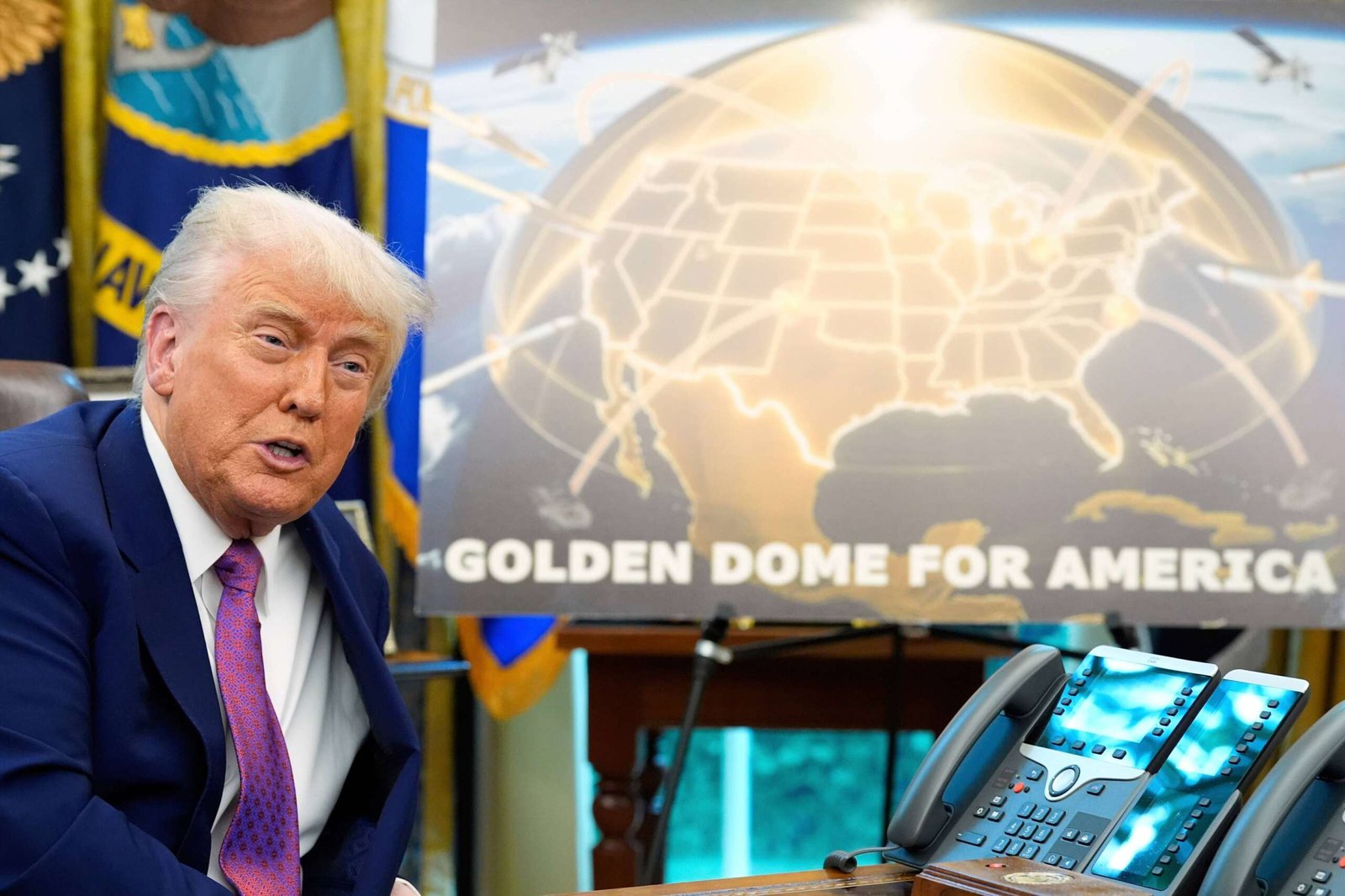
Sen. Deb Fischer (R-Neb.) said Monday there is “a lot of work that has to be done” to build broad support in Congress for the Trump administration’s ambitious Golden Dome missile defense system, in part because lawmakers still do not have any meaningful information about the system more than a year after President Donald Trump announced the initiative.
“To be able to, I think, first of all, get the information that we need is extremely important, but also to have a better understanding of just what Golden Dome involves,” Fischer said at the Air and Space Forces Association’s Air, Space & Cyber Conference in National Harbor, Md.
Fischer’s comments come after a group of lawmakers sent a letter to Defense Secretary Pete Hegseth in June saying that DoD needs to share its plans for the system before the department “spends one more taxpayer dollar” on the Golden Dome initiative.
“There is no reasonable justification for keeping the mission and number of interceptors for Golden Dome secret … It is one thing to withhold design details or performance specifications of certain systems, but it is quite another to withhold the entire system architecture that you expect Congress to approve and fund. Congress and the American public have a right to know what they are paying for,” the lawmakers wrote.
A recent analysis from the nonpartisan Congressional Budget Office estimated that the Golden Dome architecture consistent with President Trump’s executive order would cost roughly $1.2 trillion over the next two decades, far exceeding the White House’s initial $175 billion estimate. The Defense Department has since said that outside cost estimates are incorrect because they are not estimating what DoD is building.
Fischer echoed the sentiment, saying that CBO scores “can be really unrealistic due to the fact that there is not a clear understanding of this layered defense that we’re looking at when it comes to defending our homeland.”
The CBO’s national security division defended its estimate of the Golden Dome, saying that it used current technologies, such as Patriot missile batteries and Aegis Ashore to estimate the cost of the network of systems outlined in Trump’s January 2025 executive order.
Fischer said the program will need the buy-in not only from Congress, but from the public as well.
“That goes back to having them understand the threats, understand the needs, and understand the resources that are being committed to address all of those needs,” Fischer said.
“We need to make sure that they are followed, and there is that strong buy-in, not just from Congress, not just from any administration, but from the people of this country. And I think they will be there. They are there when they know what’s at stake,” she added.
But the program of this massive scale, with such serious national security implications, has been shrouded in secrecy, and there has been no public debate about its cost, the viability issues facing it or the strategic risks of pursuing and deploying it.
Meanwhile, Space Force Gen. Michael Guetlein, Golden Dome’s program manager, said the Defense Department is on track to deliver a Golden Dome operational capability by the summer of 2028.
“The first thing we did right out of the gate was put industry consortium on contract to get after command and control, because that really is the secret sauce of any kind of national missile defense capability you want to put out there. That has been on contract. We have already tested it twice. It was effective on both sets of tests. We know, based on those tests, that we are on the right path with command and control,” Guetlein said.
“We know, based on those tests, that the munitions that we are planning to bring to the fight, the sensors are going to be effective against the threats that … the president identified in the executive order,” he added.
Guetlein said about 95% of the $22.5 billion that Congress provided for the program last year has been obligated.
“We have gotten all of that money on contract. We have space-based interceptors on contract. We have command and control on contract. We have radars on contract. We have some munitions on contract. We’re already digging dirt. We stood up our first operational site already, and have been digging dirt across the homeland, building the construction of our sites,” Guetlein said.
“We have the evidence that says we are making the progress that we told Congress and told the president that we would make,” he added.
The administration is seeking an average of about $15 billion annually over the next five years for the system.
DoD recently announced that the system would cost $185 billion.
Some experts said the Pentagon is either “not being honest about the likely costs of this system or it is planning to build a system so limited in its architecture that it will not have even a theoretical hope of achieving its stated goal.”
If you would like to contact this reporter about recent changes in the federal government, please email anastasia.obis@federalnewsnetwork.com or reach out on Signal at (301) 830-2747.
Copyright
© 2026 Federal News Network. All rights reserved. This website is not intended for users located within the European Economic Area.
