

With natural gas price increases of over 25 percent and a global recession on the table, now is the time to diversify domestic energy resources like geothermal and geologic hydrogen to ensure American energy security.
For decades, US energy strategy has focused on what can be readily deployed—oil, natural gas, coal, wind, and solar—with relative ease across a large, interconnected grid. Yet recent conflicts in Eastern Europe and the Middle East, along with rising trade tensions with China regarding critical minerals and other key inputs underscore a hard truth: Reliance on centralized grids exposes military installations and critical infrastructure to risks from adversary targeting, cyberattacks, natural disasters, and blackouts. As threats to fuels and energy infrastructure proliferate, ensuring reliable power becomes a national security imperative.
Beneath US soil lie untapped resources that could reshape this equation: geothermal energy and naturally occurring geologic hydrogen. These domestic, continuous sources offer resilient power that reduce dependence on external infrastructure while leveraging US expertise in oil and gas. Advancing them would strengthen both energy security and national defense, particularly on federal lands and military bases—if policymakers move quickly to enable exploration, pilot projects, and deployment.
Critical missions need reliable, domestic energy supply
The strategic case begins with resilience. The Department of Defense (DOD) has a target of achieving 99.9 percent energy availability for critical missions by 2030, allowing no more than 8.76 hours of downtime annually. That standard is not aspirational. It reflects the operational reality of nuclear deterrence, missile warning, and strategic command and control systems that cannot fail.
Many of these missions are supported by installations operated by the United States Department of the Air Force. Today, these installations rely heavily on diesel backup generators and natural gas pipelines to maintain power during grid disruptions. Diesel systems are maintenance intensive and limited in duration. Natural gas, while more reliable, depends on off-base infrastructure that can be disrupted by extreme weather, cyberattack, or physical sabotage.
Geothermal energy and geologic hydrogen offer a fundamentally different model. Geothermal energy systems involve drilling wells to access geothermal reservoirs and circulating water or other fluids through subsurface rocks to capture thermal energy. The heated fluid is brought to the surface to drive turbines that produce electricity. These systems could provide a continuous on-site source of electricity, heating, and energy storage. Geologic hydrogen, which occurs naturally in subsurface formations, can also be accessed through conventional drilling techniques and requires no hydraulic fracturing or chemical injection. If viable deposits exist beneath or near federal lands, including military installations, they could provide long-duration, domestically sourced fuel that is independent of fragile supply chains.
This matters not only for routine resilience but also for emerging mission architecture. The planned missile defense architecture known as Golden Dome will require uninterrupted power for radar, sensor, interceptor, and command and control nodes operating under contested conditions. These systems are energy intensive and must function during grid outages or kinetic attacks. On-site energy production could support power generation systems that dramatically extend operational endurance.
Where these technologies stand today
Geothermal energy
The DOD is already deploying a diverse range of geothermal technologies across at least twelve installations in the continental United States. Most remain in the feasibility study phase, but they are scoping and already delivering significant benefits, including up to 70 percent reductions in heating and cooling energy use, millions of dollars in projected annual savings from avoided outages, and 24/7 mission-assured power. The projects also support operational continuity and adaptability to diverse geographic and climate conditions. Geothermal feasibility studies and testing of the prototype facilities can take up to two years, with targeted commercial operations starting in three to five years.

Geological hydrogen
The development of geologic hydrogen as an energy source is still in a nascent phase, but more than one billion dollars in private capital has already flowed into its exploration in the United States. Early discoveries near installations in Kansas, Iowa, and Montana suggest the resource may be more widely distributed than previously understood. Meanwhile, strategic competitors are investing in natural hydrogen research with the clear intent of translating technical leadership into geopolitical leverage. But the promise of geologic hydrogen can only be fully realized with updates to existing federal mineral laws. The Mineral Leasing Act of 1920 and the General Mining Act of 1872 predate the recognition of natural hydrogen as a commercial resource and don’t clearly cover it. That ambiguity is stalling even basic exploration on military lands, leaving DOD unable to assess whether viable hydrogen resources sit beneath its installations.
Accelerating development of new energy sources
Current law is ill suited to the opportunity geothermal energy and geologic hydrogen present.
Congress must take targeted action to fully unlock the potential for these resources to help secure military infrastructure.
1. Create targeted appropriations, feasibility assessments, and deployment roadmaps
- Congress should establish dedicated funding for geothermal research and development (R&D) and pilot projects under the Under Secretary of Defense for Acquisition and Sustainment, with a particular focus on enhanced geothermal systems, closed-loop demonstrations, and integration with microgrids. For geologic hydrogen, R&D funding priorities should include subsurface resource characterization, extraction pilot programs, and co-deployment with fuel cell and hydrogen storage technologies at military installations. A proposed Defense Geothermal Resilience Fund—ranging from $100 million to $300 million annually between 2026 and 2030—could be authorized through the National Defense Authorization Act to drive sustained investment in energy-resilient technologies.
- In parallel, to transition from pilots to full-scale deployment, Congress should mandate base-level feasibility assessments for both geothermal and geologic hydrogen at select continental US military installations by 2028, prioritizing grid-vulnerable and high-risk regions.
- These assessments should inform a comprehensive, DOD-wide, five-year implementation roadmap to guide deployment and integration across defense infrastructure.
2. Incentivize public-private partnerships
- Amendments to the Defense Production Act and related authorities can enable energy savings performance contracts (ESPCs) for both geothermal energy and geologic hydrogen production and utilization. The Department of Energy leverages ESPCs, which are partnerships between an agency and an energy service company, through its Federal Energy Management Program to procure energy savings and facility improvements.
- Congress should also authorize federal loan guarantees to help de-risk investment in startups developing advanced geothermal and geologic hydrogen technologies.
3. Streamline permitting and boost tax incentives
- Congress can fast-track geothermal deployment by directing agencies like the Bureau of Land Management to prioritize geothermal permitting on military and federal sites and expand Investment Tax Credit eligibility. Geologic hydrogen, which occurs naturally in subsurface geological formations and can be extracted with minimal surface disruption, warrants its own permitting pathway that acknowledges its distinct characteristics from manufactured hydrogen. Changing the policy would permit hydrogen exploration on military installations to enhance resilience and to evaluate its commercial viability using existing authorities, all subject to NEPA, groundwater characterization, and well integrity requirements.
- Congress can also align the carbon capture incentives in Section 45Q of the Internal Revenue Code to support geothermal systems with integrated storage or colocated carbon capture technologies. These incentives should be tailored specifically for defense and critical infrastructure use to achieve multiple intended initiatives that the current administration and Congress have preserved from the Inflation Reduction Act.
4. Advance work force development
- Federal support is needed to fund geothermal and hydrogen technician training through universities, community colleges, and National Guard programs, ensuring a qualified workforce to handle, transport, install, and maintain resilient energy systems.
5. Support US energy competitiveness abroad
- Congress should appropriate funding for feasibility studies of overseas geothermal and geologic hydrogen installations and bolster the efforts of the Departments of State and Commerce to actively promote US geothermal technologies abroad. This includes leveraging commercial diplomacy to advocate for adoption in host nations—particularly in strategic regions like the Indo-Pacific, where energy resilience directly supports broader geopolitical and strategic stability. Geologic hydrogen holds a particular promise in geologically active regions where natural hydrogen seeps have already been identified, creating a natural alignment between diplomatic engagement and resource potential. As every US installation abroad requires host government approval, proactive diplomatic engagement is essential to advancing these initiatives.
Investing in geothermal and geologic hydrogen isn’t just smart energy policy—it’s a strategic move to safeguard US defense operations and critical systems in an unpredictable world.
Sudeep Kanungo is a nonresident senior fellow at the Atlantic Council’s GeoTech Center and a former science & technology policy fellow of the American Association for the Advancement of Science at the US Department of Energy’s Office of Energy Efficiency and Renewable Energy—Geothermal Technologies Office.
Ryan J. Lamke is a nonresident senior fellow with the Atlantic Council Global Energy Center and the founder and principal of ELMS Advisory.
Troy Warshel is executive vice president at Potomac International Partners. A former senior DOD official and US Marine Corps F/A-18 pilot, he works at the intersection of defense, energy, and innovation, advising on operational energy, emerging technologies, and strategies to strengthen US and allied security.
stay connected
related work
our work

The Global Energy Center develops and promotes pragmatic and nonpartisan policy solutions designed to advance global energy security, enhance economic opportunity, and accelerate pathways to net-zero emissions.
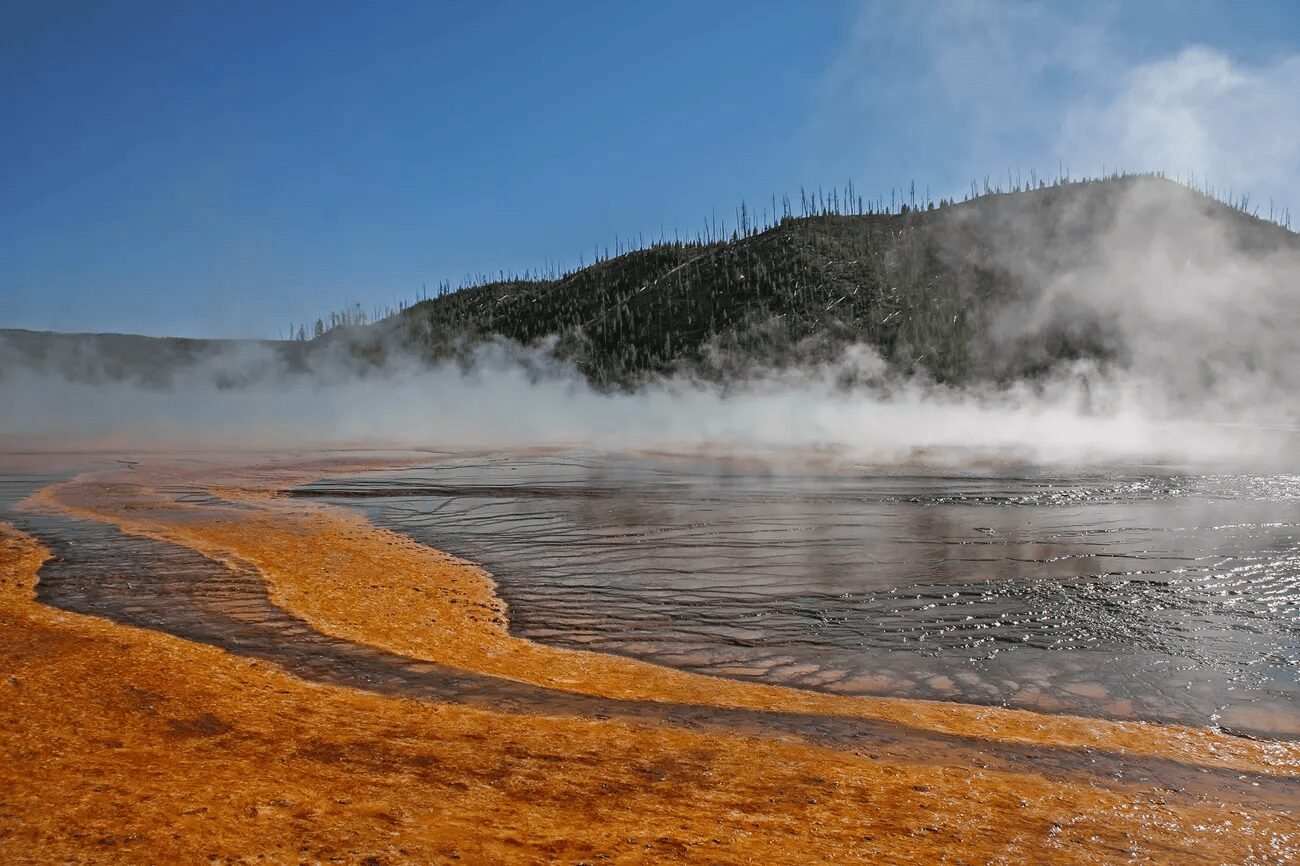
Image: Geothermal potential (National Parks Service,
