

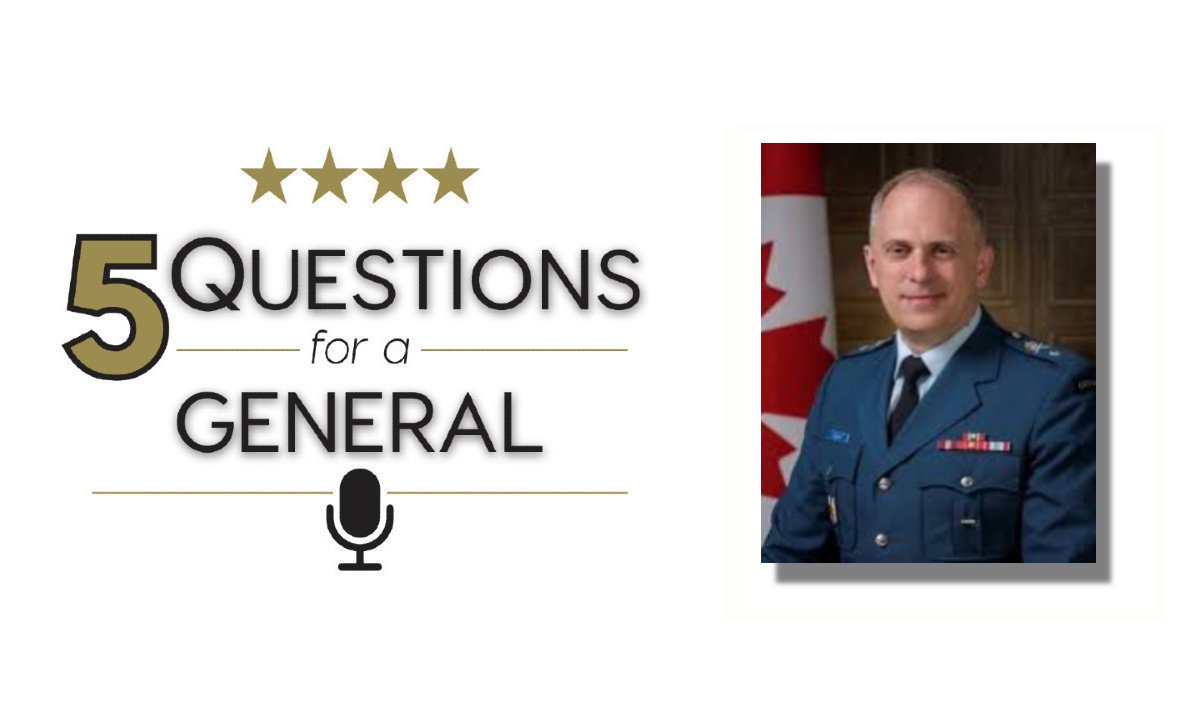
Welcome back to Five Questions for a General, a production of the Modern War Institute at West Point. This series features specially selected cadet hosts who are given an incredible professional development opportunity—to sit down with senior military officers and ask carefully crafted questions about everything from leadership to their unique experiences while serving to their expectations about the future of war.
In this episode, Cadet Olivia Hanson sits down with Brigadier-General Pascal Godbout, commandant of the Royal Military College of Canada, to discuss leadership, professional military education, and lessons learned from his thirty-six-year career in the Canadian Armed Forces. General Godbout reflects on his unlikely journey from a small town in Quebec to senior military leadership, explaining how a career initially motivated by educational opportunity became a lifelong commitment to service. He discusses the similarities and differences between Canadian and American military academies, emphasizing the importance of joint education, bilingualism, and developing leaders of character. Drawing on his experience at the North American Aerospace Defense Command, he highlights the importance of preparation, disciplined decision-making, and maintaining composure under pressure. He also shares lessons from commanding Joint Task Force North in the Canadian Arctic, where he learned the value of listening, respecting Indigenous communities, building trust, and understanding the human and environmental dimensions of military operations. Turning to leadership development, General Godbout stresses that technical competence must be complemented by emotional intelligence, ethical judgment, and the courage to confront misconduct. He also discusses ongoing reforms at the Royal Military College, including the need to challenge outdated traditions and strengthen accountability. Throughout the conversation, General Godbout emphasizes humility, adaptability, and lifelong learning, encouraging young officers to embrace unexpected opportunities, nurture professional relationships, and recognize that mistakes are an essential part of becoming an effective leader.
