

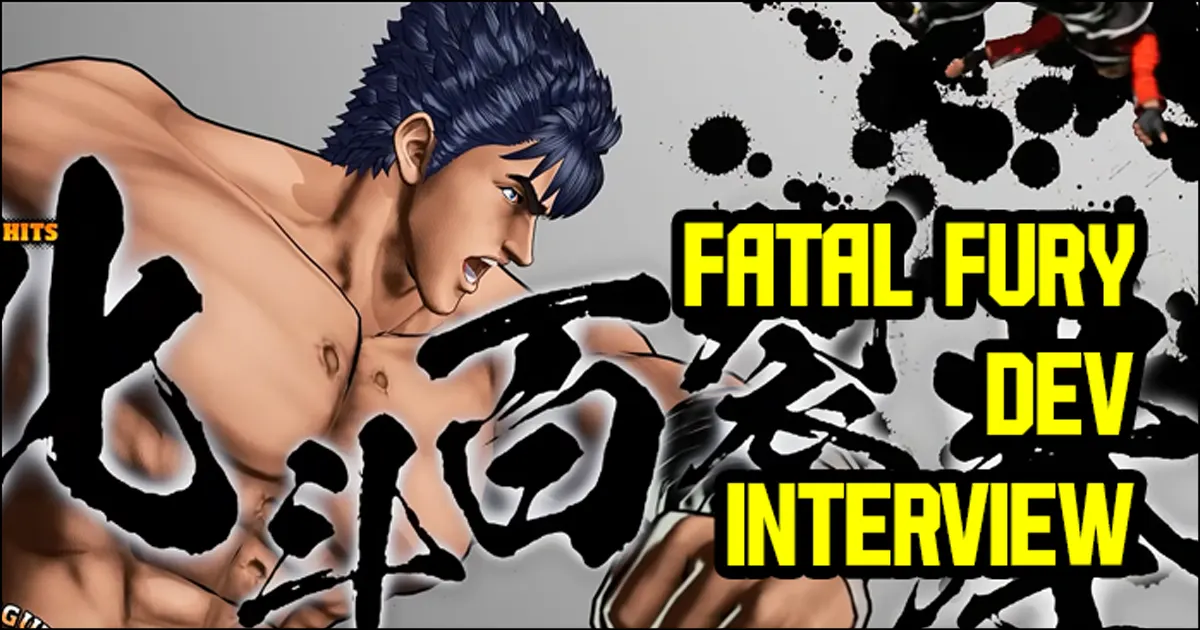
Fatal Fury: City of the Wolves just completed its second season of content with Kenshiro, and though the Season 3 is on the horizon, there’s still much to talk about where the game goes from here.
During Evo 2026, we had the opportunity to speak with Fatal Fury Director Hayato Konya and Producer Shinya Tamaki about their Fist of the North Star guest, what they’ve learned from Season 2 and more about the future.
The lead developers obviously had a lot to say about bringing Kenshiro into City of Wolves, getting him right and making his special ender brutal while not going overboard with graphic violence being performed on their iconic heroes.
We also asked them their ridiculously fast DLC release schedule compared to their competition and some features they still want to add to Fatal Fury, which they offer some specific examples for.
Previously, we’ve conducted a number of interviews with Konya and the SNK crew about the Season 2 fighters including Nightmare Geese, Blue Mary, Wolfgang Krauser and Mr. Karate.
SNK’s retro team also spoke with us at Evo about bringing back classics like Ninja Master’s so check that out if you haven’t already too.
You can find our full interview from Jon ‘Catalyst’ Grey with Konya and Tamaki below.
Catalyst: When did you decide to add Kenshiro to Fatal Fury, and how did you guys come up with the idea?
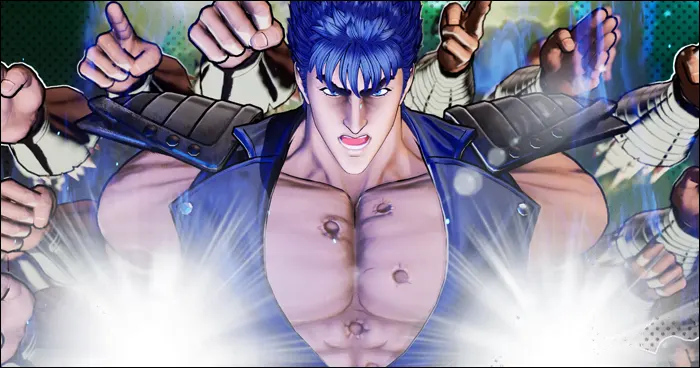
Tamaki: So during the original days of Fatal Fury at SNK there was a lot of inspiration taken from really popular anime and manga like Fist of the North Star and Dragon Ball where they had special powers and so thinking back about those times for this game, we were like, okay, what kind of character could we put into this new game. And in that, Kenshiro came to us as extremely popular not just in Japan, but also worldwide that almost everyone can recognize.
Plus, he’s an actual fighter that uses his fists, which is great for Fatal Fury, but he’s also been a fighting game character previously as well. Looking at all of these aspects, he seemed like a perfect fit and would be great to get him into City of the Wolves. So we decided to pull the trigger.
Catalyst: Did you look back on the Arc system Works Fist of the North Star game to see how you could make Kenshiro stand out and be different for City of the Wolves?
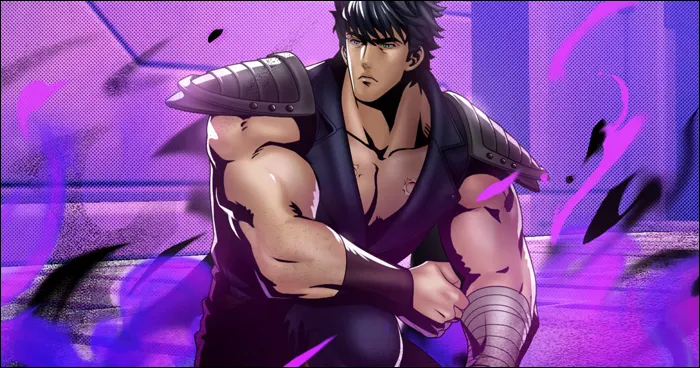
Tamaki: Yeah, we looked at a little bit of it reference wise, but for this specific collab, it’s not based on the original series and serialized run. It’s actually based on the newest Fist of the North Star anime. And so for this we wanted to have a kind of new version of Ken that can bring new eyes onto it, and also the anime and our collaboration partner.
So, we tried not to make a recreation of the old version of Ken, but rather for this new installment. In terms of like what kind of gimmicks and thoughts we had trying to have him stand out, that’s more of what Konya can talk about.
Konya: One of the biggest things originally, you know, Fist of the North Star’s Kenshiro, especially as a fighting game character, people know him as like a 2D sprite. So, for our case where it’s a 3D game, we had to take special considerations when creating the character in a 3D space because he has to look 100% like Kenshiro from whatever angle you’re looking from.
And so, when we were creating the character, we definitely had to make sure that we got that right and that he looks like the real deal.
Catalyst: Can you talk about some aspects of the design process when you’re working on it that didn’t look right and things you had to do to make it feel and look more like Kenshiro? Were there any particularly challenging aspects of his design?
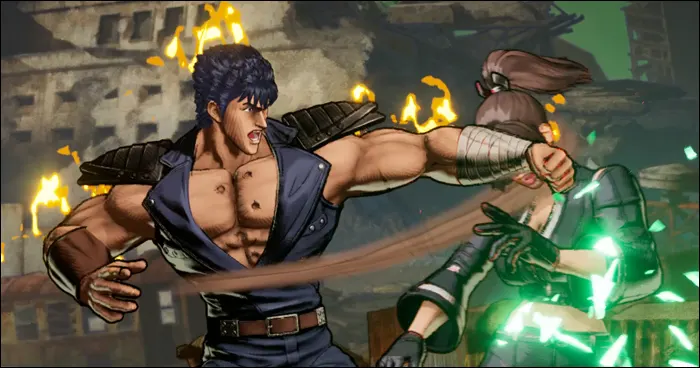
Konya: It would not be truthful to say we didn’t have any problems, but it was smoother than expected, however, we do have the 3D anime that we were looking at now that we were able to get because of our collaboration partner and show us some things that we could use for reference.
But we couldn’t just take that model and version of Kenshiro and put him into the game because if we did that and stood him next to like Terry, he would stand out. It would be a completely different art style. So tailoring him specifically to the Fatal Fury art style was something that was a touch and go process.
Catalyst: That’s really interesting. Our readers tend to be very hardcore in terms of the development process, and a lot of other outlets don’t go into this kind of detail, but the look and feel of fighting game characters is just unbelievably important, right? It’s everything. So that’s beautiful when it all comes together.
Catalyst: Were there any ideas that you wanted to implement for Kenshiro that didn’t make the cut that you can talk about?
Tamaki: Of course, since Fist of the North Star is a long-running series and Kenshiro the character himself has evolved through the years, he gets stronger and has a bigger arsenal that he shows off every episode or each volume of the manga in which he learned something new. This specific collaboration was with a specific new anime, and it’s tailored to that version of Ken.
In that part of the story, he hasn’t gotten or used certain techniques and hasn’t defeated Raoh yet or anything. So we couldn’t show off Ken when he’s reached his peak OP version, right? So it’s a bit of a different version of Ken. But yeah, there’s a lot to choose from, and we just unfortunately were not able to add it all in.
Konya: We did ask if we could put in a specific move in, which is a Celestial Destruction attack, and they were able to say ‘Okay, sure. That’s fine,’ and we were able to put that move into the game.
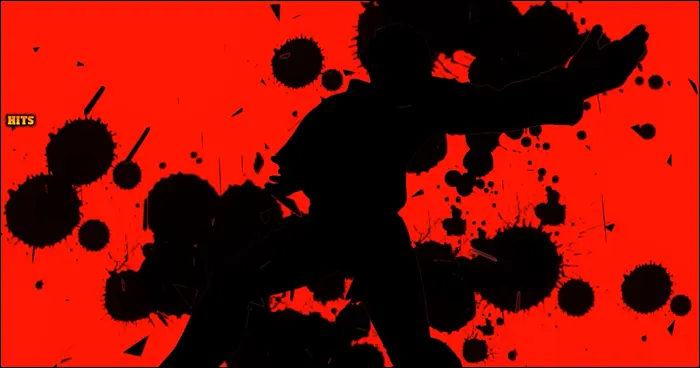
Catalyst: Although you don’t show it in graphic detail, it’s a bit shocking to see the Fatal Fury cast get disfigured by Kenshiro’s special ender. Was that hard to do on a technical level, and was it also hard to do on a personal level? Because these characters are very important to you and very important to your fans.
Tamaki: Anybody that knows Fist of the North Star recognizes that Kenshiro’s a Hokuto Shinken practitioner, and he hits your what’s called channeling points. Whenever he does that, you die immediately in three seconds.
From a gameplay perspective, that would be not fun, and also we couldn’t really have that in a game where all the characters are our big IP and flagship heroes, right? We couldn’t just have them die, so we definitely had to think of ways to have our cake and eat it too in a sense. Be able to show that, but also kind of ending like a KO while not being too corny. And so we had our art division come up, and they were able to work out the effects to a pretty good degree. We’re actually quite happy with the end result. And I think the fans are too, you know. They all expect that going into this.
If Kenshiro is going to be in the game, then they expect to see some kind of explosion, and we didn’t want to withhold that from them.
Catalyst: Now that Season 2 of Fatal Fury: City of the Wolves is wrapping up, what have you learned to take forward for the game and what new steps are you looking to take with future seasons? How are you looking to expand the game moving forward?
Tamaki: There’s of course a lot we’ve learned since starting this whole one character a month release schedule in the middle of Season 1. We’re one of the only ones in the industry really going with such a high-paced schedule like this, but we take a lot of the feedback that fans have given us as they played, and we try to take that into consideration when we when we look at the balancing and such going forward.
But it’s also something the fans have been quite happy with, so we’re obviously really happy. We want to keep this pace up, but also work on a lot of the technical things like gameplay and what the fans want for balance too. We always listen first, and we do our best if we do make changes, to get them out as soon as possible so that everyone stays happy.
Konya: On that note, of course we are working hard to get these implementations in place as fast as possible, right? There’s also things that we’re aware of our shortcomings on compared to other titles out there, and we are actively looking at what we could further add to our game to put ourselves on equal footing with them.
For example, we’ve been looking at things like replay takeover and changing the spectator in certain matches, so we are definitely considering these things, and we wish to add them. But we’re trying to balance everything out and get that out as soon as possible.
Catalyst: You guys mentioned that you’re releasing one character a month right now, and that’s a really awesome streak. No other major fighting game is able to do that. Do you guys feel like you’re going to be able to keep up that pace in the future with your next releases as DLC for Fatal Fury: City of the Wolves?
Tamaki: We have developed the internal structure now that’s set up for this specific pipeline to this fast-paced schedule. So we’ve changed everything to support this, but how long can this actually last in general? We can’t say, and not in a negative sense, right? But we really have to look and see how the game is going to evolve.
But one of our main goals was not to just bring back Fatal Fury and go ‘Hooray!’ We wanted to be like ‘Alright, it’s back. Now let’s evolve, change and bring it into a new form.’ And so that’s our main outlook and goal. We’re working towards that.
Catalyst: What has the reception to Season 2 been like for you guys in terms of how the fans reacted to it? What are the main things that you guys have been taking away from the feedback?
Tamaki: Every time we release something, specifically for Season 2, we’ve gotten a lot of requests to ‘add this. Add that,’ which is great. We love those. We love getting more requests, but I think one of the big things in the kind of feedback that we’re actually happy to get is that if there are bugs, which ultimately will always happen, we’re quite quick on fixing them. And so the rate that we fixed them on top of having such a fast DLC schedule has been really appreciated by the fans, which makes us feel that we we’re doing well right now.
Catalyst: There was an instance we found a bug where we would counter hit the other person in the beta test for the game, and it would lock the inputs. And we reported it to you guys, and I think you had it fixed in the next build, so it does seem like you guys are quick about fixing issues.
Tamaki: So our stance on player feedback really is that this is like a project that we’re working on together in a sense. We create something. You give us feedback, and then we change it when needed. And to adapt to that kind of feedback, it’s back and forth.
And so we really feel like the fans are also part of this gameplay experience. That’s one of the biggest facets for us working at SNK is that the feedback coming in from the fans gets to our eyes, and then we decide. Okay, do we take this? How do we move forward with this? But if we don’t have that, we won’t have a proper direction in which way to go, and so it’s very important. We definitely appreciate all the feedback that we get.
Catalyst: Speaking of the feedback, what’s the best way to reach out to the developers with that feedback and how to construct it so that it’s the most helpful for you guys in making the game better?
Tamaki: Of course, there is the SNK support pages, our office, or like email that we have. So that’s where people are more than welcome to send their feedback there. We do give out regular surveys as well that people can kindly drop their feedback there too.
But we are actually investigating other ways that could help players give their feedback and a lot easier way for both them and for us to receive it. So we have something that we’re working on to make that process simpler all around.
Note: Contributions to this story were made by Dakota ‘KozPlayer’ Hills.
