

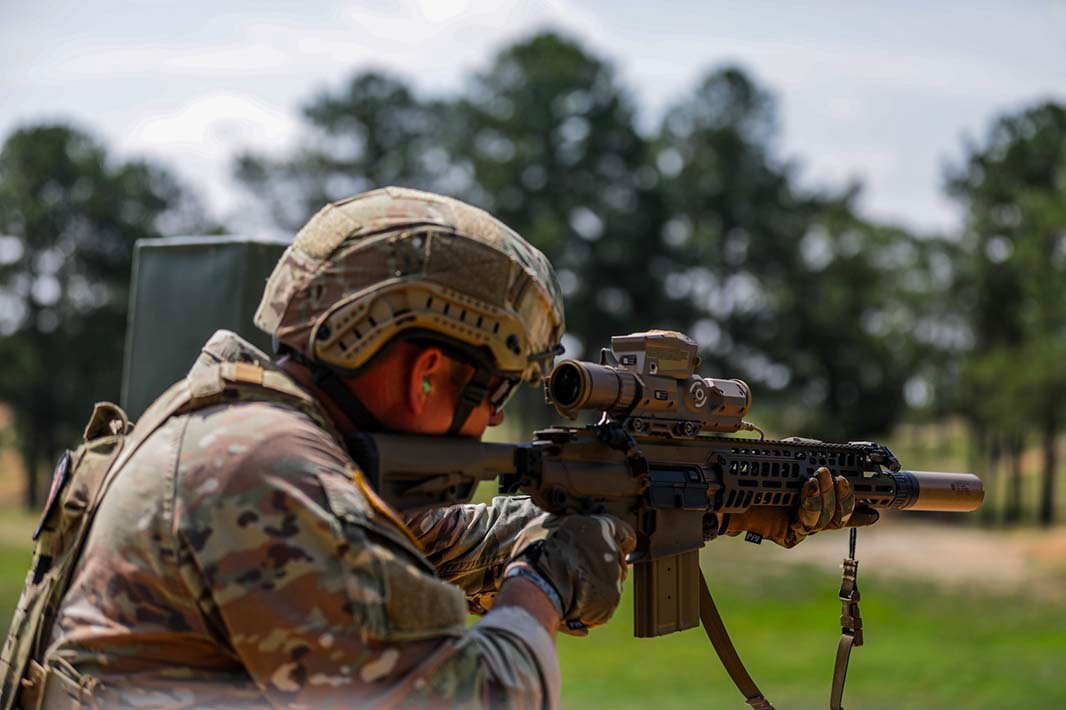
Introduction to SA-FCS in Infantry Weaponry
In recent years, small arms fire control systems (SA-FCS) have garnered considerable attention within the infantry weapons realm. For certain military users, these systems represent a fundamental component of next-generation armaments. Others, however, exhibit a more discerning perspective, evaluating how best to integrate SA-FCS technology across diverse small arms inventories.
Historical Context: Post-War Transition in Small Arms
The trajectory of small arms development accelerated dramatically in the aftermath of World War II. The obsolescence of the bolt-action rifle became evident, revealing that many standard calibers proved excessive for contemporary needs. Analysis conducted by the U.S. Army Operational Research Organization (ORO) highlighted that 80% of effective rifle and machine gun engagements occurred within 200 yards (183 meters), and nearly 90% occurred at 300 yards (275 meters). This data underscored the efficacy of the German Sturmgewehr 44 (StG44), which utilized the 7.92 × 33 mm Kurz cartridge—pioneering what would come to be known as the assault rifle.
The Soviet military recognized the advancements made by German small arms and embarked on its own modernization journey, resulting in the 7.62 × 39 mm intermediate cartridge. This led to the development of weapons such as the SKS and ultimately the iconic AK-47. In the late 1950s, the introduction of the Dragunov sniper rifle (7.62 × 54 mmR) marked the emergence of designated marksman rifles (DMRs), capable of engaging targets effectively at ranges of 600 to 800 meters.
Divergent Paths: NATO’s Approach to Small Arms
While the Soviet bloc advanced toward a standardized intermediate caliber, NATO countries embarked on a contrasting journey. The British EM-2 rifle, designed for a 7 × 43 mm round, aimed to establish a future standard which, although innovative, ultimately faltered against the U.S. preference for the more powerful 7.62 × 51 mm ammunition. This alignment of NATO calibers culminated in widespread adoption of the 5.56 × 45 mm cartridge, particularly through the introduction of the M16 rifle in the early 1960s.
By the late 1970s, FN’s development of the SS109 round established a NATO standard, which subsequently influenced infantry weapon choices across member nations. This period solidified the prevalence of the 5.56 mm caliber at squad levels with accompanying squad automatic weapons (SAWs) and ensured consistency with the U.S. military’s larger systems such as the M240 and M2HB. Notably, the Soviet Union later fielded the 5.45 × 39 mm round for its AK-74, further diversifying the small arms landscape.
Adapting to Modern Warfare: Lessons from Asymmetric Conflicts
The landscape shifted as asymmetric warfare, particularly in Afghanistan post-2000, revealed glaring limitations in standard 5.56 mm squad arsenal. U.S. forces often found themselves out-ranged by Taliban fighters equipped with more potent 7.62 × 54 mm DMRs. This predicament prompted two crucial responses:
- Development of higher-performance, long-range 5.56 mm ammunition.
- Deployment of 7.62 × 51 mm DMR systems for enhanced engagement capability.
As the insurgents’ technology improved, including the adoption of body armor, forces faced pressing demands for advanced squad-level weaponry capable of neutralizing protected targets at extended distances.
The U.S. Response: Next Generation Squad Weapons (NGSW)
Confronted with these operational challenges, the U.S. Army proactively initiated the Next Generation Squad Weapons (NGSW) program in 2017. Originally conceptualized as the Interim Combat Service Rifle (ICSR) using 7.62 × 51 mm ammunition, the program pivoted to encompass more advanced weaponry. The NGSW aims to replace the M4/M4A1 carbine and the M249 SAW with the M7 rifle and M250 automatic rifle, respectively. Both will leverage the newly developed 6.8 × 51 mm cartridge, designed to improve lethality against armored adversaries while acknowledging the increased weight challenges posed for individual soldiers.
Central to these advancements is the integration of enhanced fire control technology. The XM157 SA-FCS, designed by Vortex Optics, features:
- A variable magnification optic (1-8x).
- A ballistic calculator and laser rangefinder.
- Dual aiming lasers (visible and infrared) and a user-friendly digital display.
This combination aims to facilitate accurate long-range engagements, ultimately enhancing first-round hit probability while minimizing ammunition expenditure.
Implications for NATO and Future Developments
The adoption of such advanced systems by the U.S. Army has set a compelling precedent for NATO nations, especially in light of ongoing developments like the UK’s Project Grayburn, which aims to replace its L85A3 rifles. With a decision timeline extending into 2026, the UK faces critical considerations regarding caliber and fire control systems. Discussions include options for compatibility with existing NATO rounds while ensuring future-proof capabilities against evolving body armor technologies.
Key Considerations for Project Grayburn:
- Caliber Options: Evaluating commonality with NATO standards and potential inclusion of the 6.8 × 51 mm.
- Fire Control Integration: Assessing whether all units require advanced SA-FCS or if mixed optics tailored to role can suffice.
Innovative Solutions: Exploring Alternatives
One viable perspective is that the infantry might not require a uniform level of sophistication across all weapons. A mixed approach allowing differentiated paces of technology implementation may prove more pragmatic. For example:
- Standard Assault Squads: Basic optics provided for front-line soldiers.
- Specialized Roles: Enhanced fire control systems for designated marksmen and machine gunners, facilitating precise target engagement.
The Digital Fire Control Sight (DFCS) proposed by Raytheon ELCAN exemplifies this potential, featuring capabilities such as:
- Low-power variable optics adaptable to diverse missions.
- Integrated ballistic computing for refined targeting solutions.
As the military community continues to grapple with small arms effectiveness in challenging environments, it becomes increasingly evident that achieving operational superiority relies on marrying advanced fire control systems with adaptable weapon platforms. The evolution of SA-FCS will not only dictate the capabilities of the ground forces of tomorrow but also establish new standards in military efficacy and lethality.
