

Abstract
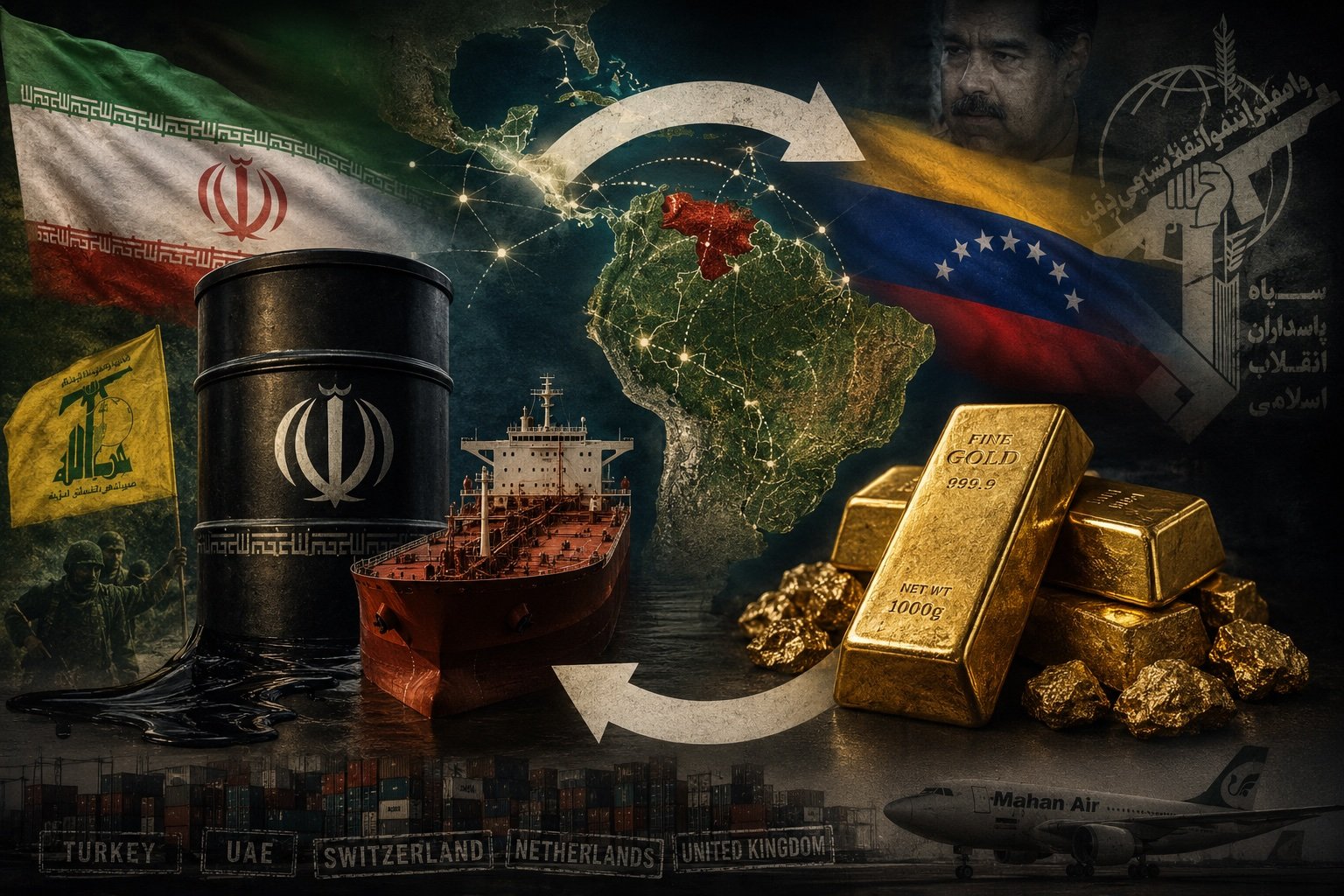
This article examines the evolution of Lebanese Hezbollah’s financial activities in Latin America, with particular focus on an elaborate sanctions-evasion scheme involving the exchange of Iranian oil for Venezuelan gold. Drawing on recent United States Department of the Treasury designations and press reporting, it argues that this financial mechanism is not a novel development but rather part of a well-established Hezbollah network, highlighting the extent to which existing scholarship has not fully captured the terrorist group’s evolving activities in the region. The analysis demonstrates how government corruption and shifting geopolitical dynamics enabled the scheme’s emergence and expansion over the past decade. The article further contends that Latin America has become an increasingly important component of Hezbollah’s financing over the past decade.
Introduction
The terrorist organization, Lebanese Hezbollah, has been present in Latin America since nearly its inception. Its long history of engaging in fundraising operations—which are often intertwined with various levels of government corruption, drugs, and an array of other criminal activities—is well documented. While jurisdictions in Latin America, such as Venezuela, have for decades provided Hezbollah a permissive environment for its activities due to the group’s longstanding relationship with the country’s regime, Hezbollah’s financial apparatus in the region has evolved. Consequently, the contemporary transformations—including the structure, scope, and scale—of Hezbollah’s financial activities in Latin America remain insufficiently understood within scholarly literature.
On April 15, 2026, the US Department of the Treasury imposed sanctions on entities implicated in a complex money laundering and sanctions evasion scheme involving the sale of Iranian oil in exchange for Venezuelan gold that benefits both Hezbollah and Iran’s Islamic Revolutionary Guard Corps-Qods Force (IRGC-QF). While public exposure of this scheme may suggest a novel development in Hezbollah’s financial activities in Latin America, a closer examination of Treasury designations and press reporting over recent years indicates that these entities are components of a well-established, broader Hezbollah-IRGC-QF financial network that has been extracting gold from Venezuela for nearly a decade.
Exposure of Hezbollah’s Iranian oil for Venezuelan gold scheme further suggests that the scope and scale of Hezbollah’s reliance on funding from Latin America has dramatically increased. While Hezbollah has for years operated its independent businesses in the region and relied on donations from the local populations, the funding it receives directly from Iran has not previously appeared to intersect with Latin American countries. However, the Iranian oil for Venezuelan gold scheme indicates that at least some of the $700 million that Iran has provided to Hezbollah annually over the last several years, as the terrorist group’s primary benefactor, has relied on Latin America—specifically Venezuela.
This article focuses on detailing Hezbollah’s Iranian oil for Venezuelan gold scheme. It illustrates how the shifting geopolitical landscape in Venezuela a decade ago, along with government corruption, set the conditions to establish a lucrative scheme that would benefit not only Hezbollah, but also the IRGC-QF and Venezuela’s kleptocratic regime. The article then highlights how portions of the gold scheme have been revealed incrementally over recent years, and then details the publicly known information about how the Iranian oil for Venezuelan-gold scheme functions.
Venezuela’s Orinoco Mining Arc
The regime of the now deposed Venezuelan President Nicolás Maduro established in 2016 the Orinoco Mining Arc National Strategic Development Zone, a megaproject covering nearly 12 percent of Venezuelan territory. The Orinoco Mining Arc covers millions of hectares of the Amazon rainforest in southern Venezuela, and the region is rich in resources such as bauxite, coltan, industrial diamonds, and most crucially, gold. With Venezuela’s oil industry collapsing during this time and international sanctions restricting access to foreign currency, gold became the new lifeblood for the Maduro regime. The extractive industry provided a critical alternative revenue stream and a mechanism for political control. Indeed, prior to launching the initial phase of the project, Maduro signed a series of agreements worth $4.5 billion with both domestic and transnational mining corporations seeking to exploit the mineral-rich region. More concerningly, the project quickly devolved into a battleground for armed groups, military factions, and criminal networks—all operating with the regime’s complicity.
In early 2019, a Venezuelan official opposed to Maduro alleged that Hezbollah was among the groups exploiting gold mines in the country in order to finance its “destabilizing terrorist activity in the Middle East.” The official, who was then serving as the National Assembly deputy representing the mining state of Bolivar in southeastern Venezuela, claimed that Hezbollah owned two mines in the Orinoco Mining Arc project that were supported by Maduro. He further claimed that cooperation between the Venezuelan government and Hezbollah mutually benefited both parties, as Maduro’s regime was generating substantial revenue from the partnership, while the terrorist group operated with impunity to generate revenue and avoid sanctions.
Early Indications of Venezuela Gold Scheme
Beginning in 2018, Venezuelan gold exports to Turkey increased substantially, with Turkey emerging as the largest importer of Venezuelan non-monetary gold. Indeed, Turkey began refining and certifying Venezuelan gold in 2018 after Maduro switched operations from Switzerland over concerns of potential seizures because of sanctions. Involved in establishing this agreement with Turkey was Maduro’s then Minister of Industries and National Production, Tareck El Aissami, who has long-standing ties to Hezbollah. By early 2019, the sharp rise in gold exports to Turkey prompted concerns among Western officials amid suspicions that at least a portion of the exported gold was being diverted to Iran in violation of US sanctions.
About a year later, in April 2020, the US Special Representative to Venezuela revealed that the Venezuelan government, facing acute financial constraints, was indeed paying Iran with gold in return for unspecified Iranian assistance. The official concurrently revealed that an air bridge had been opened between Iran and Venezuela with several flights by Mahan Air, an Iranian commercial airline under US sanctions. At the time, the prevailing assumption was that the aircraft from Iran were transporting materials to service Venezuela’s deteriorating oil industry—in a desperate attempt to revive it—and that the aircraft returned to Iran laden with gold as a form of payment.
First Exposure of Hezbollah and IRGC-QF Gold Scheme
In 2021, the US Treasury revealed that Hezbollah and IRGC-QF financial facilitators Ali Qasir and Meghdad Amini were at the helm of a network of nearly 20 individuals and front companies, located in multiple countries and jurisdictions, that facilitates the movement and sale of tens of millions of dollars’ worth of gold, as well as electronics and foreign currency, in support of Hezbollah and the IRGC-QF. The network’s gold scheme involved the transport of gold between Iran and Turkey via Mahan Air.
Prior to this, in 2020, the US State Department issued a reward for information on Ali Qasir, noting that he directed oil shipments for Hezbollah based on the IRGC-QF’s guidance, using the Hezbollah company Talaqi Group, which he managed. At the same time, the State Department offered a reward for information for Ali Qasir’s uncle, Mohammad Ja’far Qasir (now deceased), who at the time was a key financier for both Hezbollah and the IRGC-QF and led the ever-evolving Hezbollah-IRGC-QF oil smuggling network with his Iranian counterparts.
While Ali Qasir’s involvement in oil smuggling and gold smuggling has been known for years, the explicit ties between the gold scheme and Iranian oil sales had not been previously disclosed by the Treasury or the State Department. Likewise, it was not publicly known that Ali Qasir’s activities extended to Venezuela.

The State Department issued a reward of up to $10 million for information on Ali Qasir and Hezbollah’s financial networks. Source: US State Department,
Exposure of Moosavi and his ties to Hezbollah
While the ties between Ali Qasir’s network and Venezuela were not previously established by the Treasury or the State Department, the April 2026 designation of Iranian national and Hezbollah-financier Seyed Naiemaei Badroddin Moosavi exposed that Moosavi’s operations in Venezuela are indeed part of Ali Qasir’s network. It also revealed that Moosavi’s gold smuggling activities have been benefiting Hezbollah and the IRGC-QF for more than five years.
Treasury’s designation of Moosavi is not the first public exposure of his name or his ties to Hezbollah and the IRGC-QF, however. Moosavi’s name (variant Badr Ad-Din Naimi Musawi) was first made public in 2022 when he was identified as part of a gold smuggling ring that was uncovered by the Israeli government, during a joint effort that included the National Bureau for Counter Terror Financing of Israel (NBCTF), Israel’s Defense Ministry, the Israeli Police, and Israel’s Tax Authority. Moosavi was identified as a key player in the smuggling ring, which was a secret IRGC-QF operation. He was responsible for using his business and political connections to acquire and smuggle gold from Venezuela to Iran and then sell it at a profit to finance Hezbollah. Israel’s Defense Minister revealed that dozens of kilograms of gold were smuggled via Mahan Air from Venezuela to Iran, and then the funds from the smuggled gold were transferred to Hezbollah. The Israeli investigation also revealed that Ali Qasir, who they identified as the representative of Hezbollah’s Economic Affairs Ministry in Tehran, and his uncle Mohammad Qasir, the former head of Hezbollah’s logistics unit, were involved in Moosavi’s gold scheme, along with other unnamed individuals.
Iranian Oil for Venezuelan Gold Scheme
While the details of the Israeli investigation exposing Moosavi remained below the radar of the public and academic scholarship for four years, the details of the investigation, combined with a close reading of the Treasury’s designations over the past five years, provide a more expansive look into Hezbollah’s Iranian oil for Venezuelan gold scheme. Moosavi’s designation also provides keen insight into how Venezuela’s former regime under Maduro was key to enabling the recent financial operations of Hezbollah and the IRGC-QF in the country.
Political Ties
Hezbollah and Iran first established a relationship with the government of Venezuela under the regime of Hugo Chávez, and the relationship grew closer during Maduro’s regime. Over the years, the names of several Venezuelan officials have emerged as key supporters and intermediaries between the Venezuelan government and Hezbollah’s activities in the country, including Tareck El Aissami and Alex Saab. El Aissami previously headed the Ministry of Internal Affairs under Chávez and served as Vice President from 2017 to 2018, before serving as Minister of Industries and National Production. In April 2020, El Aissami was appointed Venezuela’s Minister of Oil. Saab is a Colombian-born Lebanese businessman who is believed to be a key frontman for Maduro, and his commercial networks have historically intersected deeply with Hezbollah’s financial apparatus. In January 2024, Maduro appointed Saab as president of Venezuela’s International Center for Productive Investments (CIIP), underscoring the regime’s reliance on his informal financial networks.
Building on Hezbollah and Iran’s established relationship with the Venezuelan government, Moosavi maintained a close relationship with Maduro’s regime, which is what allowed him to have unimpeded movement throughout Venezuela to facilitate Hezbollah and the IRGC-QF’s activities. While details of the extent of Moosavi’s relationships with the former Venezuelan regime are scarce, his connections included direct access to Maduro. Moosavi’s relationship with Maduro was such that he had assumed some of the financial facilitation roles that belonged to Saab, following Saab’s arrest in 2020. This suggests that Moosavi held substantial power and influence that Hezbollah and the IRGC-QF could leverage for their benefit.
Iranian Oil to Venezuela’s Maduro Regime
Moosavi also worked with El Aissami and the illicit shipping facilitator Viktor Artemov—who are both designated by the US—to smuggle Iranian oil into Maduro’s Venezuela for the benefit of the dictatorial regime. Artemov oversees a vast, complex, and interwoven global network of front companies that are used to facilitate oil shipments as part of Iran’s shadow fleet. The oil the network shipped from Iran to Venezuela was transported using smuggling tactics such as ship-to-ship transfers, automatic identification system (AIS) spoofing, and zombie tankers to facilitate the oil smuggling, which was paid for with gold as well as diamonds. While the extent of El Aissami’s activities is unclear, he stepped down as Venezuela’s Minister of Oil in March 2023 amid a corruption scandal and was subsequently arrested by Venezuela’s National Anticorruption Police (PNCC) in April 2024.
Venezuelan Gold Smuggled to Iran
The gold that Moosavi paid in exchange for the smuggled Iranian oil for Maduro’s regime included gold procured at below-market rates. The gold was sent back to Iran as part of the financing channel from the IRGC-QF to Hezbollah. This was accomplished by transferring the gold on Mahan Air to Hezbollah members in Tehran, including Ali Qasir. From there, the gold would then be smuggled to Turkey for sale.
Gold to Cash Exchange in Turkey
Moosavi was also involved in smuggling Venezuelan gold from Iran to Turkey so it could be exchanged for cash. Additionally, Ali Qasir had other trusted subordinates in his network to aid in this activity. In 2021, Treasury sanctioned Omid Yazdanparast, Mohammad Ali Damirchilu, and Samaneh Damirchilu due to their roles in facilitating the smuggling of gold and currency between Iran and Turkey via Mahan Air commercial flights, as part of the network led by Ali Qasir and Amini. Samaneh Damirchilu also worked with Ali Qasir to facilitate the sale of Iranian oil to foreign buyers. It is unclear, however, if she was involved in the oil sales to Venezuela.
Another individual in the network, Mohammad Reza Kazemi, was also designated by the US Department of the Treasury in 2021 for his role in the gold smuggling scheme. Kazemi was responsible for facilitating the gold sales within Turkey for the network. Once the gold was sold, the proceeds returned to Iran through the same process, whereupon they were transferred to Ali Qasir and Amini.
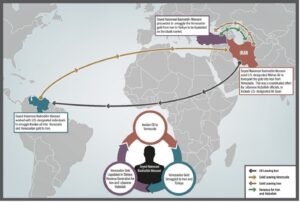
Treasury Department’s visual depiction of Moosavi’s role in the Iranian Oil for Venezuelan Gold scheme, Source: US Treasury,
Moosavi’s Companies and Other Illicit Activities
Treasury’s April 2026 designation also revealed that Moosavi is tied to the sale of Iranian Liquefied Petroleum Gas (LPG) and crude oil. Moosavi and his business partner, US-designated Iranian gas magnate Seyed Emamjomeh, facilitated activities related to these sales using a number of companies, including the sanctioned firms Caspian Petrochemical FZE and Pearl Petrochemical FZE. It is not clear, however, whether these activities were tied to the Venezuelan gold scheme. Moosavi is also closely affiliated with three companies: the Netherlands-based ACS Global BV, the UAE-based ACS Trading LLC, and Lotus Universal LLC. Until recently, Moosavi also owned two real estate companies registered in the United Kingdom, Lotus Universal UK Limited and Strattonview Properties Limited. The two real estate companies were dissolved in 2024 and 2025, respectively.
Conclusion
Moosavi’s designation by the US Department of the Treasury provides important insights into Hezbollah’s fundraising activities in Latin America and illustrates the extent to which the group’s financial networks in the region have evolved in both scope and scale. The Iranian oil for Venezuelan gold scheme indicates that Iranian financial support to Hezbollah has relied on a deep integration with Venezuela’s kleptocratic state apparatus under Maduro for approximately a decade. Considered alongside the funding Hezbollah receives from its independent business activities and donations in the region, this suggests that Latin America may have increased in significance as a financial hub for the group. These findings also raise broader questions regarding the existence of additional, yet undocumented, Hezbollah financial schemes in the region.
Hezbollah’s ability to operate discreet, high-revenue-yielding ventures in Latin America has important implications for its broader financing efforts and rearmament in Lebanon. In light of Moosavi’s designation and the arrest of Maduro in early 2026, the US is presented with a strategic opportunity to intensify efforts to disrupt and debilitate Hezbollah’s financial infrastructure in Venezuela and across the region. Sustained and targeted policy and law enforcement measures could further constrain Hezbollah’s access to critical revenue streams, thereby weakening the group’s capacity to support its reconstruction and military activities in Lebanon.
Disclaimer: The views expressed herein are hers alone and do not necessarily reflect those of the US Government.
