

China is making inroads in supplying equipment to Central Asian armed forces, and one nation where it is making significant progress is Kazakhstan. While Russia remains Kazakhstan’s traditional defence partner, the latter is looking to diversify its future military equipment acquisitions.
Analysts note that Russia’s war in Ukraine and resultant Western sanctions constrain Moscow’s ability to provide large-scale military assistance. This makes delivery of defence equipment, maintenance and training cooperation more difficult due to the urgent needs of the Russian forces on the Ukrainian front.
Russia has therefore faced difficulties in fulfilling export arms contracts with its partners. China is presenting itself as a stabilising alternative to a distracted and militarily engaged Russia.
Until recently, the Kazakh Air Defense Forces only operated two Chinese-origin Wing Loong 1 unmanned aerial vehicles, but it has achieved more sales since then.
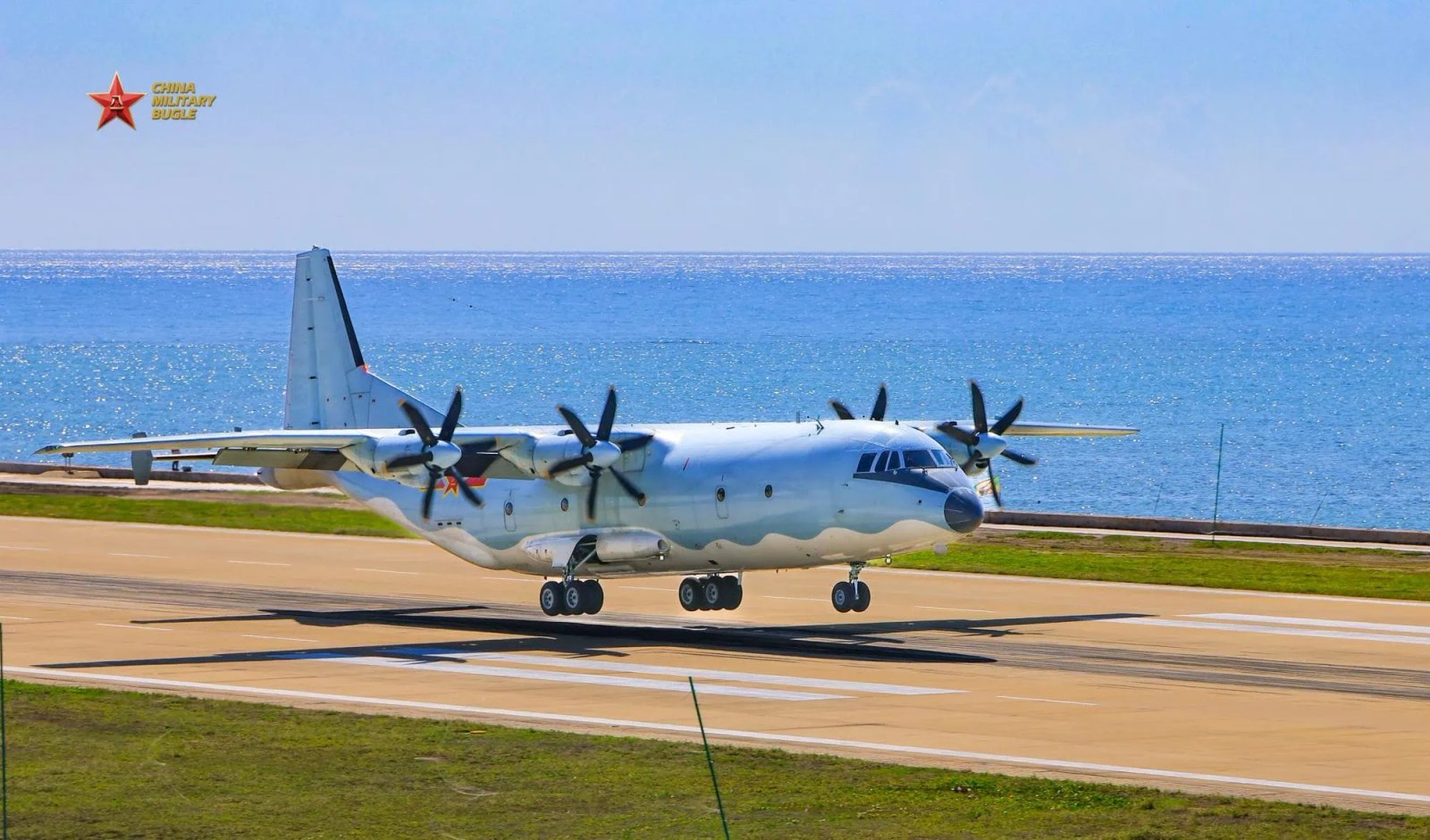
Although combat units are equipped with Russian Su-27 and Su-30SM fighters, the Kazakh Air Defense Forces has been reinforcing its transport capabilities with new Chinese platforms. These comprise six Shaanxi Y-8F-200WA medium transports operated by the National Guard, plus the first of six larger Y-9Es ordered for the air force has already been delivered.
Powered by four 5,100shp WJ6C turboprop engines with six-blade JL4 composite propellers, the Y-9E has a digital cockpit and improvements in navigation, communications and the ability to operate in adverse weather conditions.
The Y-9E has a maximum take-off weight of 65 tonnes, with a maximum payload capacity of 20 tonnes. It possesses a range of 3,220km with a 33-tonne payload.
The Y-9 first flew in 2011 and, to date, some 30 examples are in service with the People’s Liberation Army Air Force in China.

Kazakhstan’s Ministry of Defense is also planning to acquire the Hongdu K-8 basic jet trainer/light attack aircraft to replace the air force’s fleet of 17 L-39 Albatros, and possibly its aging Su-25 ground attack aircraft.
The K-8 can be armed with a 23mm gun pod under the central fuselage, and two external stores points under each wing can carry PL-5E air-to-air missiles, BL755 bombs or drop fuel tanks.
The planned K-8 purchase has reportedly been discussed between Kazakhstan’s state defence export company Kazspetsexport, and China’s CATIC. This reinforces China’s emergence as a supplier of combat aircraft.
Europe is also gaining a foothold in Kazakhstan at the expense of Russia. Having formed a joint venture with Airbus, the Kazakh Air Defense Forces has taken delivery of two A400M heavy transports, ten C295 medium transports and eight H145 helicopters.
by Gordon Arthur
