

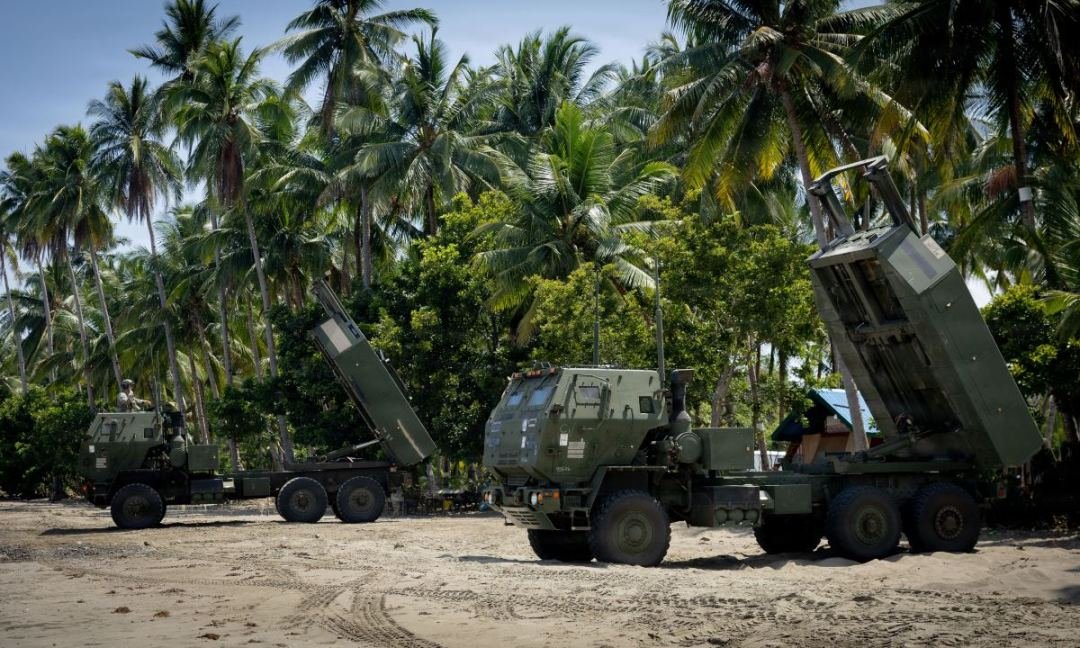
The battle for twenty-first-century global supremacy will be decided across the vast and volatile expanse of the Indo-Pacific. Characterized by vast oceans, dispersed island chains, and contested littorals, the rise of Chinese military power presents distinctive challenges to US military force projection and operational reach. Since World War II, American naval and air forces have typically led these maritime efforts on behalf of coalition teams. However, the changing operational environment—exemplified by recent area-denial campaigns in the Black Sea and the Persian Gulf—now present opportunities for land forces to counter adversary aggression in maritime settings with novel thinking and new approaches. The US Army, with emerging capabilities that promise to reimagine joint sea control, is now postured to enable revitalized strategic deterrence for the middle years of the twenty-first century.
This evolution reflects more than a simple expansion of mission and expertise; it signifies a fundamental redefinition of the Army’s role in maritime affairs to achieve the 2026 US National Defense Strategy’s mandate to, “build, posture, and sustain a strong denial defense” while enabling a stronger “collective defense” in the Indo-Pacific. In pursuit of this objective, theater armies, corps, and divisions are increasingly assuming leading roles in shaping conditions in littoral areas, contesting hostile sea control, denying adversary maneuver through critical chokepoints, and sustaining joint force projection at distance with durable forward postures. These responsibilities require reimagined integration of landpower capabilities into combatant command strategies and coalition operational approaches.
This transition is occurring in the context of the People’s Liberation Army’s relentless development of multidomain strike complexes that include ranged precision fires, forward basing, ubiquitous sensors, and capital warship expansion—all AI-enabled, networked, and integrated in ways that threaten to hold key maritime terrain at risk and complicate American ability to execute expeditionary operations with credible survivability. In response, the US military is combining maneuver and positional approaches to disperse and converge forces in ways that create concrete asymmetric advantages. The Army, with its unique capacity for magazine depth and operational endurance, anchors these efforts in littoral and archipelago settings by providing distinctive capabilities that support American strategic deterrence.
Historical Context
The concept of land-based fires supporting naval operations has a long and significant history. For centuries, coastal defenses bristling with cannon proved vital in protecting national security and maritime interests by denying enemy warships access to ports and strategic waterways. Disdainfully called the “Fortress Fleet” concept by naval theorist Alfred Thayer Mahan in the nineteenth and early twentieth centuries, ground force artillery nevertheless emerged as a key element of the US military’s maritime posture in both home territory and foreign settings. Symbolizing both national prestige and combat readiness, the heavy batteries often featured large-caliber guns within fortified positions that dominated maritime decisive points and key waterborne trade routes.
The US Army Coast Artillery Corps, established in 1901, institutionalized this role, managing fixed coastal defenses that coordinated with naval forces to maintain sea control in proximity to American territory. The corps operated heavy gun batteries, mortars, and minefields designed to engage enemy warships before they could threaten ports or naval bases. This joint effort remained essential and saw expansion during both world wars, when threats from submarines and surface raiders required robust coastal protection in places such as New York, San Francisco, Manila, and Pearl Harbor.
This concept exemplified the British admiral Horatio Nelson’s famous quip—“A ship’s a fool to fight a fort”—as coastal fortresses protected by arrayed cannon became increasingly resistant to fleet-centered maritime assault. As large-caliber artillery modernized with industrial technologies, newer models employed advanced technical systems that combined disappearing guns and rapid-fire cannons with advanced fire control innovations such as extended range finding and synchronized target coordination. While mostly limited to littoral areas, this integrated, and albeit expensive, approach allowed naval fleets to engage threats at sea while Army batteries contested closer approaches to create formidable area-denial networks.
However, the technological and tactical advances of World War II saw both land-based and carrier-delivered aviation become the most effective platform for projecting long-range fires—exemplified by the bombing of Pearl Harbor by the Japanese Navy and the role of the island airfield to enable maritime offensives in the Allied Pacific campaign. Dramatic advances in flight and strike technologies during the Cold War then further diminished the dominance of fixed coastal artillery as bomber fleets and ballistic missiles provided expanded operational reach. As the onset of space and cyber capabilities further evolved strategic calculus, guided missiles offered greater range and precision than legacy cannon could hope to achieve. By the late 1950s, even as it incorporated nuclear weaponry, the Army eliminated most coastal artillery units to accommodate the ever-changing character of warfare.
Despite these remarkable evolutions, and given how recent advances in drone and missile-enabled sea denial have proved effective in the Black Sea and the Persian Gulf, the historical legacy of coastal artillery remains relevant to how ground, aerial, amphibious, and naval forces execute joint operations in the twenty-first century. The concept of land-based fires providing irreplaceable contributions to maritime operations endures, even as it now manifests in mobile missile platforms, proliferating drone technologies, and complicated electronic warfare systems that can hold enemy vessels at risk from dispersed and fortified shore positions. The historic integration of Army coastal artillery with the US Navy and Marine Corps, though distinct to previous centuries, provides insights for discovering new ways by which American forces can integrate capabilities to assure partners, improve positioning, and deter adversary aggression.
Army Maritime Contributions
Transitioning from history to the present, ground forces positioned across strategic archipelagos or continental coastlines now have the potential deliver areal, surface, and subsurface precision fires to threaten enemy ships and logistics hubs. Emerging standoff systems, such as long-range missiles, hypersonic weapons, electronic warfare systems, and a panoply of drones can be deployed from mobile or fixed platforms to interdict adversary naval movement. These capabilities, coupled with twenty-first-century deception such as digital spoofing and electronic masking, enhance Army contributions to joint strike efforts by complicating enemy targeting and creating uncertainty. Seeking to apply area denial across maritime maneuver corridors, ground forces can enable joint sea control by providing an unmatched intensity and duration of lethal effects in select coastal locations.
In addition to fires, the Army’s expeditionary sustainment capabilities remain vital to enabling joint success in maritime terrain. The immense distances and limited infrastructure of the Indo-Pacific in particular create significant logistical challenges for both force projection and operational reach. Army sustainment commands, with an unmatched ability to build, fortify and mask magazine depth at scale, can establish forward logistics hubs and mobile resupply nodes to ensure distributed joint and coalition forces remain armed, fueled, and connected over vast noncontiguous spaces. Although sometimes overlooked, smaller Army watercraft provide critical maneuverability by supporting naval forces in austere and contested environments.
The Army’s command-and-control and intelligence, surveillance, and reconnaissance assets further strengthen joint maritime operations. Ground-based command-and-control nodes, operating forward in conjunction with air and naval elements, underwrite joint and coalition cohesion by providing resilient and persistent platforms for survivable coordination and synchronization, especially when expeditionary forces face increased risk in denied environments. This includes integrated employment of detection systems, unmanned sensors, and space-based assets to enable cross-domain fires designed to achieve asymmetric advantage. Army intelligence elements additionally contribute to joint targeting cycles to build a coherent operational pictures—an imperative that is becoming increasingly difficult in disruptive communications environments where network redundancy remains essential.
Air and missile defense reflects another vital Army contribution to maritime joint warfare that complements US Navy air defense capabilities and sets the foundation for American force projection. Because of the increasing threat posed by long-range precision strike systems that include missile salvos and drone swarms designed to overwhelm limited interceptor capacity—exemplified by recent conflicts across the Persian Gulf region—forward ports, airfields, and logistics nodes are increasingly placed at risk by adversary standoff fires. Army air defense assets, including both Patriot and THAAD batteries and emerging directed-energy and electronic warfare systems, provide layered protection to these critical enabling sites. Safeguarding joint force projection remains a prerequisite for success in maritime theaters, and the Army continues to ensure forward deterrence while protecting both American and partner interests.
Adapting for Maritime Roles
This new era of warfare consequently requires America’s primary landpower institution to modernize and evolve in order to meet its potential in all contested domains. To fulfill its expanding maritime responsibilities, the Army must overcome institutional inertia rooted in a legacy that has been focused primarily on land combat in continental spaces. Primarily concentrated on European and Middle Eastern theaters since the Korean and Vietnam Wars, the institution is now reconceptualizing its understanding of maritime geography, amphibious doctrine, and littoral operations to better support combatant command requirements in maritime theaters. Moving beyond rhetoric, addressing these gaps will require targeted reforms in how the Army educates, trains, and equips its combat formations.
Professional military education, as the cornerstone of US military dominance, should incorporate increased emphasis on maritime operational concepts that include sea control, amphibious assault, and maritime theater logistics, and maneuver across noncontiguous terrain. Army leaders must be comfortable leading joint and naval task forces and must be fluent in the operational language and planning requirements of maritime campaigns. Realistic training scenarios that replicate island chains, contested straits, and degraded communications environments—such as those increasingly practiced at the US Army Command and General Staff College and US Army War College—will prove essential for developing adaptive leaders who can meaningfully contribute to joint sea control in contested maritime settings.
The Army’s approach to force design must similarly evolve to support these missions. Even as the US Army Futures and Concepts Command envisions future conflicts that require greater maritime roles for ground forces, Army fires commands at echelon must be rapidly deployable, survivable, and capable of operating dispersed across archipelago environments in order to enable expanded and durable joint operational reach. Logistics packages, modular command posts, and integrated air defense batteries require tailoring for distributed and austere spaces in order to ensure credible campaign endurance. Army watercraft, which were deprioritized over the past several decades, now have renewed importance for enabling both maneuver and sustainment across contested coastal and island-based areas.
Even as new operational requirements present themselves, cultivating the human dimension of soldiering through reform to institutional culture remains just as important as modernizing training, force design, and weapons acquisition. Developing agile and adaptive leaders with joint-mindedness requires opportunity for maritime-aligned career pathways and immersive assignments alongside Navy and Marine units in expeditionary theaters. This includes habitual participation in maritime-focused wargames and joint planning exercises with sea services to foster a flexible and open-minded organizational approach that is prepared to integrate seamlessly into maritime-themed joint campaigns.
These exercises, often occurring with greatest complexity at the combatant command and multinational level, remain the ultimate proving ground for complex, multidomain synchronization. The Army’s contributions to large-scale joint and combined training must emphasize maritime scenarios that realistically test logistics, stress communications at distance, compel multiplatform fires integration, and challenge assumptions concerning the viability of joint maneuver in contested maritime environments. Repeated rehearsals of island-hopping operations, ship-to-shore amphibious coordination, echeloned protection requirements, and arraying long-range strike capabilities are necessary for the Army to internalize its maritime role and apply new technologies and methods to realistic combat scenarios.
Deterring the Dragon
The evolving character of warfare and enduring requirements to project credible deterrence, particularly in the Indo-Pacific theater, demand that the US Army calibrate to embrace a new and central role in maritime operations. This requires a shift in posture, capabilities, organization, and culture to contribute decisively to American and coalition sea denial within a larger spectrum of joint sea control. As demonstrated by Ukrainian and Iranian tactical actions in the Black Sea and Persian Gulf, the Army’s expertise in long-range fires, theater sustainment, survivable command and control, and comprehensive air defense from the land domain, despite historical inclinations toward continental campaigns, remain an indispensable contribution for deterring aggression and securing vital interests in maritime theaters.
This means that projecting durable deterrence against adversaries in the Indo-Pacific requires sustained investment in landpower capabilities, modernized education, updated force design, and repetitive joint training. For America’s premier landpower institution, developing leaders who are skilled in maritime combat and understand interoperability with naval and allied partners will prove just as essential in coming decades as it was in past centuries. As General Ronald Clark, commanding general of US Army Pacific, has argued, the US military’s ability “to gain positional advantage” remains foundational to American efforts “to campaign inside the first and second island chain [and] to build positional advantage through our engagements, through our operations, through our activities and investments in the region.”
The Army’s ongoing, and increasingly necessary, pivot to embrace maritime warfare is not ancillary or peripheral—it will prove fundamental to its identity and purpose as the service modernizes to ensure combat effectiveness. If fully embraced, the institution’s expanding role in littoral and archipelago spaces will solidify its contributions to both land-based and maritime-centric campaigns well into the twenty-first century. By effectively integrating landpower into maritime operations, the Army can enable joint force commands to extend American influence, ensure coalition security, and most importantly, decisively deter predatory aggression. Harkening back to its coastal artillery origins, the Army’s ability to enhance strategic force projection will ensure the viability of American sea power across distant horizons for centuries to come.
Lieutenant Colonel Nathan Jennings is the executive officer to the commandant of the US Army Command and General Staff College at Fort Leavenworth, Kansas. With a background in armored warfare, he served combat tours in Iraq and Afghanistan, is a graduate of the School of Advanced Military Studies, and holds a PhD in history from the University of Kent. Jennings is a member of the Miliary Writers Guild, a research fellow with Modern War Institute, and an associate editor with Small Wars Journal.
The views expressed are those of the author and do not reflect the official position of the United States Military Academy, Department of the Army, or Department of Defense.
Image credit: Staff Sgt. Yesenia Carrero, US Army
