

The Centers for Medicare and Medicaid Services is embarking on a hiring surge after going through a significant staffing reduction last year.
CMS officials who spoke at an industry conference said the agency’s hiring efforts are largely focused on recruiting IT talent, as well as new hires who can advance the agency’s crackdown on fraudulent payments.
Tiffany Swygert, the acting deputy director of CMS’ Office of Information Technology, said the agency is hiring about 1,200 employees across its operations. About 100 of those new hires will work in OIT.
Swygert said CMS is recruiting full-stack engineers and cybersecurity professionals, as well as managers to oversee its tech shop.
“We’re looking to bring more talent in-house, and the postings are open to the public. So, if you know of anyone who might be a good fit, we want to bring more of this in-house and reduce our reliance on contractors,” Swygert said Tuesday at AFCEA’s Health IT Summit.
Data from the Office of Personnel Management shows CMS shrunk its workforce by 15% since 2024. This hiring initiative would more than make up for the staffing cuts that CMS saw last year.
HHS more broadly shed a quarter of its workforce last year, through a combination of layoffs and voluntary separation incentives. HHS Secretary Robert F. Kennedy, Jr. told lawmakers last month that the department is planning to hire 12,0000 employees, reversing last year’s widespread staffing cuts.
In addition to hiring, CMS is also stepping up its use of artificial intelligence tools to increase its capacity. Swygert said 80% of the CMS workforce is using AI in their day-to-day operations, saving a total of 11,000 work hours each week.
Bethany Messick, acting deputy director of the CMS Center for Program Integrity, said her office is also hiring and tapping into AI tools to step up its fraud oversight work.
“We need data scientists, people that can crunch out the numbers, look at trends differently. Forensic accountants would be lovely, just anyone who can spot things,” Messick said. “We also need software engineers, anything IT-related, to really oversee the different systems that we maintain.”
Messick said her office is also in need of new hires with expertise in data visualization.
“We spend a lot of time and energy creating visuals in ways that we can translate the data into words and information that an investigator can understand and run with — something that we can put into legal documents,” she said. “A lot of that, we have to develop our own tools, because it is such a niche thing.”
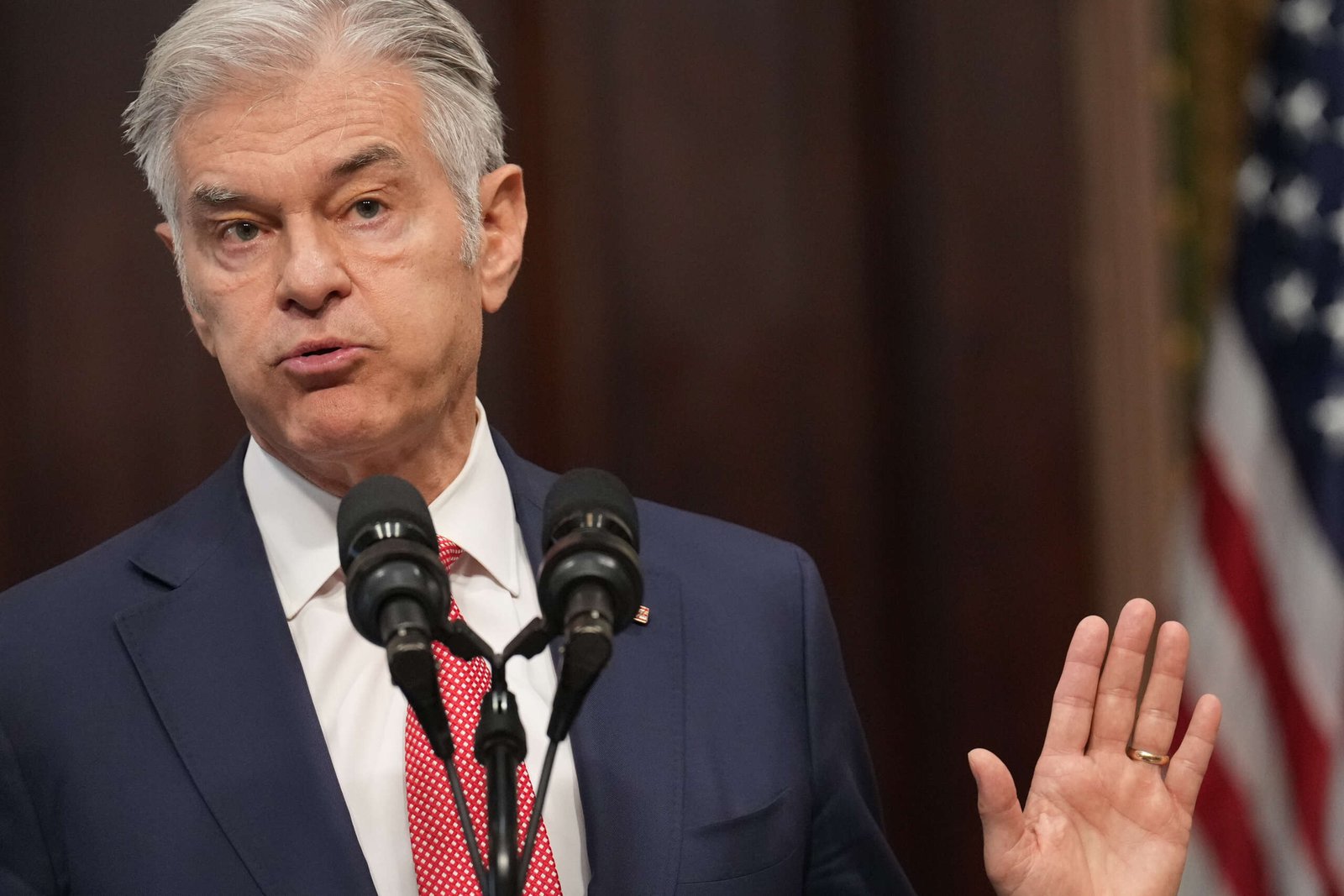
CMS is playing a leading role in the Trump administration’s governmentwide fraud task force. CMS Administrator Mehmet Oz said at a White House event in February that the agency is crowdsourcing ideas from the public on how to crack down on Medicare fraud.
“The problem with fraud is fraud breeds corruption. You rot the basic infrastructure of the system,” Oz said last week at an event hosted by the Bipartisan Policy Center.
Last year, CMS stood up its Fraud Defense Operations Center. Messick said that through this effort, CMS has assessed about 300 Medicare providers and recovered about $2 billion in fraudulent payments.
“All we did was get everybody in a room together. We got our investigators, our policymakers, our data scientists, our legal counsel, all in a room together, and [were] like, ‘we see this as fraud. We’re finding it in the data very early on. How do we stop it before any money goes out the door?’ We are able to develop creative ways, using fraud indicators and the technology that we had at the time, to really clamp down on that,” she said.
Messick said the Center for Program Integrity is looking to develop similar fraud-detection capabilities for Medicaid spending.
“How do we now systematize it, so it’s not as labor-intensive on our staff — because hey, we’re hiring too. But also, where can we bring that over in Medicaid?” she said.
In addition to increased hiring, the Center for Program Integrity is also tapping into AI to address fraud. Last year, it launched a “chili cook-off,” an event where it asked vendors to bring in tools that can help the agency identify fraud.
Messick said her office is building off last year’s event and looking for opportunities to use agentic AI for fraud prevention.
“We are looking for game-changers, and the chili cook-off helped us identify a few things that we want to pursue in the future to really help with that fraud identification piece,” she said.
Copyright
© 2026 Federal News Network. All rights reserved. This website is not intended for users located within the European Economic Area.
