

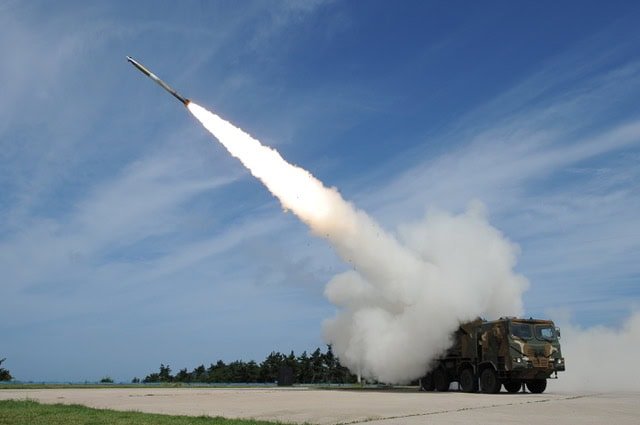
For the Philippines, building long-range fires is no longer only a question of which system performs best, but which can be delivered, fielded and sustained on a realistic timeline. The recent experience of several European armies suggests that Chunmoo offers a practical answer.
Long-range precision fires have moved to the forefront of the Armed Forces of the Philippines’ (AFP) priorities under Re-Horizon 3 of the AFP Modernization Program. Multiple rocket launchers and land-based missile systems sit at the heart of that shift, giving commanders greater reach and flexibility to support joint operations across the Philippine archipelago.
A Changing Calculus for Long-Range Fires
Acquiring such capabilities, however, may not be as easy as it seems. Against the backdrop of ongoing conflicts in Ukraine and the Middle East, procuring weapons, particularly missiles, has become increasingly challenging. Air-defense interceptors and precision-strike missiles compete for some of the same industrial resources, including propulsion components, even though their production lines and technical requirements are not identical. Growing demand has placed considerable pressure on suppliers and delivery schedules.
Recent reporting illustrates the implications. The Financial Times reported that Washington had warned European allies, including Poland, Lithuania and Estonia, of delays to certain weapons shipments amid pressure on US inventories. Reuters subsequently reported that Estonia expected delayed US weapons to arrive in the following months, while the delivery of ATACMS missiles remained unresolved at the time. These developments do not mean that US systems are unavailable across the board, but they underline an increasingly important consideration for procurement planners: an approved purchase does not always translate into an immediately available operational capability.
The recent decisions of several European nations show how countries are navigating this uncertain environment. Take Poland, which moved to reinforce its long-range fires after Russia’s invasion of Ukraine. Its choice of supplier increasingly reflected not only weapon performance but also the ability to deliver, integrate and sustain the system within the required timeframe.
Poland had already ordered 20 HIMARS launchers from the United States in 2019. Yet when Warsaw sought to expand its rocket artillery force, the question of delivery became critical. In October 2022, then-Defense Minister Mariusz Błaszczak publicly explained that limited US industrial capacity could not meet Poland’s desired timetable for larger deliveries, prompting discussions with South Korea. Poland signed its first implementation contract for Chunmoo the following month, and its first Korean launcher arrived in August 2023, less than a year after the contract was signed.
The distinction between framework agreements and firm orders is particularly revealing. In September 2023, Poland signed a framework agreement covering 486 additional HIMARS launchers, with deliveries originally envisaged from 2025. Three years after the framework agreement was signed, no implementation contract for the launchers has been publicly announced, leaving the timetable for that expansion uncertain. By contrast, Poland signed two Chunmoo implementation contracts for launchers: 218 in 2022 and a further 72 in April 2024, bringing firm launcher orders to 290. Deliveries began in 2023 and have continued since, with 156 launcher modules delivered by the end of 2025, according to Polish defense media. In December 2025, Poland went further, signing a third implementation contract focused on locally produced ammunition for Homar-K. The contrast shows how differently procurement decisions can translate into funded orders, production and equipment in service.
A similar pattern is emerging elsewhere in Europe. Croatia contracted for eight US-made HIMARS launchers before deciding in September 2026 to acquire 18 Chunmoo systems as well. Croatian officials pointed to the Korean system’s availability, competitive cost and relatively short expected delivery window. Norway’s decision is equally instructive. In January 2026, Oslo selected Chunmoo after evaluating European proposals, including Rheinmetall’s GMARS, and the US HIMARS option through the Foreign Military Sales (FMS) channel. According to Norway’s Ministry of Defence, Chunmoo was the only offer to meet all of its requirements; the Norwegian Armed Forces also judged that it could be delivered faster and at lower cost than the alternatives. The package includes 16 launchers and missiles across three ranges, extending to 500 kilometers. Deliveries are scheduled in stages, with launchers in 2028–2029 and missiles in 2030–2031.
These decisions do not diminish HIMARS’ operational record. They do, however, underscore a critical distinction between acquiring a highly sought-after American weapons system and fielding a fully equipped, operationally ready force built around an equally capable alternative. For the Philippines, where long-range fires modernization is urgent, that distinction matters. Waiting for an uncertain FMS procurement and production schedule risks delaying the capability itself. Given Chunmoo’s existing production and delivery record, Poland’s experience and the supply constraints confronting US long-range munitions, a Philippine Chunmoo force — with launchers, sufficient guided missiles, trained crews and maintenance support — appears positioned to reach full operational readiness substantially sooner than a comparably equipped new HIMARS force. The crucial milestone is not the arrival of the first vehicle, but the moment a complete unit is ready to operate.

A System Designed Around Different Missions
HIMARS and Chunmoo reflect somewhat different design priorities. HIMARS’ comparatively light, single-pod configuration offers mobility and strategic deployability well suited to the expeditionary requirements of US forces; it has also demonstrated its utility in territorial defense. Chunmoo, by contrast, combines a heavier twin-pod launcher with an emphasis on concentrated fires and the flexibility to support a broad range of land-defense missions. Depending on the munition, its two pods can deliver twice the ready-to-fire rocket load of a single-pod HIMARS launcher, allowing a single vehicle to deliver substantial firepower within a short engagement window. This is not a guarantee of superior effects in every tactical situation, but the advantage in launch volume offers wider area suppression and simultaneous engagement of more targets.
Equally important, Chunmoo’s two pods can carry different compatible rockets or missiles simultaneously, allowing a single launcher to support distinct ranges and target sets without being limited to one munition type. That combination of concentrated fires and mixed loads may suit an archipelagic defense posture, where forces must address different contingencies across widely separated islands.
The use of a Korean launcher does not require operating outside a US- or NATO-oriented force structure. Poland has integrated both HIMARS and Chunmoo into its TOPAZ artillery command-and-control system, while Estonia has explicitly chosen Chunmoo to complement its existing HIMARS units, both to be integrated through Tooru artillery command-and-control system. These examples show how both systems can be operated within the same national force and coordinated through an integrated fires architecture. For the AFP, practical interoperability would depend on the selected interfaces, communications, data standards and integration work — not on the launchers of the same origin.
Future Coastal Defense Potential
A further option is emerging in the maritime domain. Hanwha has presented an anti-ship ballistic missile (ASBM) concept for the Chunmoo family, including at ADAS 2024 in Manila. Designed to engage ships rather than fixed land targets, such a missile could eventually extend Chunmoo’s relevance to coastal defense in the West Philippine Sea, in a role broadly comparable to the maritime-strike ambitions of the US PrSM Increment 2. Reports have pointed to development milestones around 2028, although the ASBM remains a future capability rather than an operationally fielded munition. Its eventual contribution would depend on successful development, targeting integration and availability to the AFP.

A Partnership with an Existing Foundation
The Philippines would not be entering an unfamiliar defense relationship. Korean-built FA-50 aircraft and naval vessels are already part of the AFP’s modernization, supported by years of bilateral defense cooperation. Korea’s record is also visible in delivery performance. HD Hyundai Heavy Industries handed over the Philippine Navy’s first Rajah Sulayman-class offshore patrol vessel in February 2026, around five months ahead of schedule, following the early delivery of BRP Jose Rizal and BRP Miguel Malvar. These shipbuilding achievements do not guarantee a timetable for missile programs, but they offer Manila first-hand experience of a Korean supplier translating commitments into delivered equipment.
The relationship extends beyond procurement. At their March 2026 summit in Manila, Presidents Ferdinand Marcos Jr. and Lee Jae Myung agreed to deepen defense-industrial cooperation and follow-on support. Republic of Korea Marines have participated in the Philippines-based KAMANDAG exercises, including the June 2026 iteration, strengthening operational familiarity between the services. In late September 2026, Republic of Korea Marine Corps Commandant Lt. Gen. Ju Il-suk visited the Philippines for discussions with senior defense and Marine Corps officials on closer military cooperation, training and security ties. Such regular contacts provide a foundation for practical collaboration over the service life of new equipment.
Beyond delivery, a potential Chunmoo program could strengthen the AFP’s ability to maintain and sustain its own equipment. The proposed support arrangements include the establishment of maintenance facilities in the Philippines, together with the transfer of maintenance technology and specialized tools to support in-country servicing by Philippine personnel. Such arrangements would support a more self-reliant defense posture while keeping long-term operational readiness at the center of the program.
“Our aim is not simply to deliver weapon systems, but to support our Partner’s modernization, readiness timelines and long-term sustainment. We are prepared to take a step-by-step approach to contributing to the Philippines’ Self-Reliant Defense Posture program,” said Min-chang Kim, Head of Chunmoo Business at Hanwha Aerospace.
The decision on the AFP’s future long-range fires capability ultimately rests with the Philippine government. As the country moves forward with Re-Horizon 3, the challenge is not simply to acquire a capable weapon system, but to establish a sustainable operational capability within the timeframe required by its national defense priorities.
With its growing record of international deliveries, flexible firepower and the potential for long-term support and local maintenance capability, Chunmoo presents a credible option for meeting that challenge. Backed by an established defense partnership between Korea and the Philippines, it represents more than a new weapons platform — it offers a potential foundation for the AFP’s long-range fires capability for decades to come.
