

A nuclear test can happen thousands of miles away, hidden underground or far from any camera. But the atmosphere may still give it away.
That is where the Boeing WC-135 Constant Phoenix comes in.
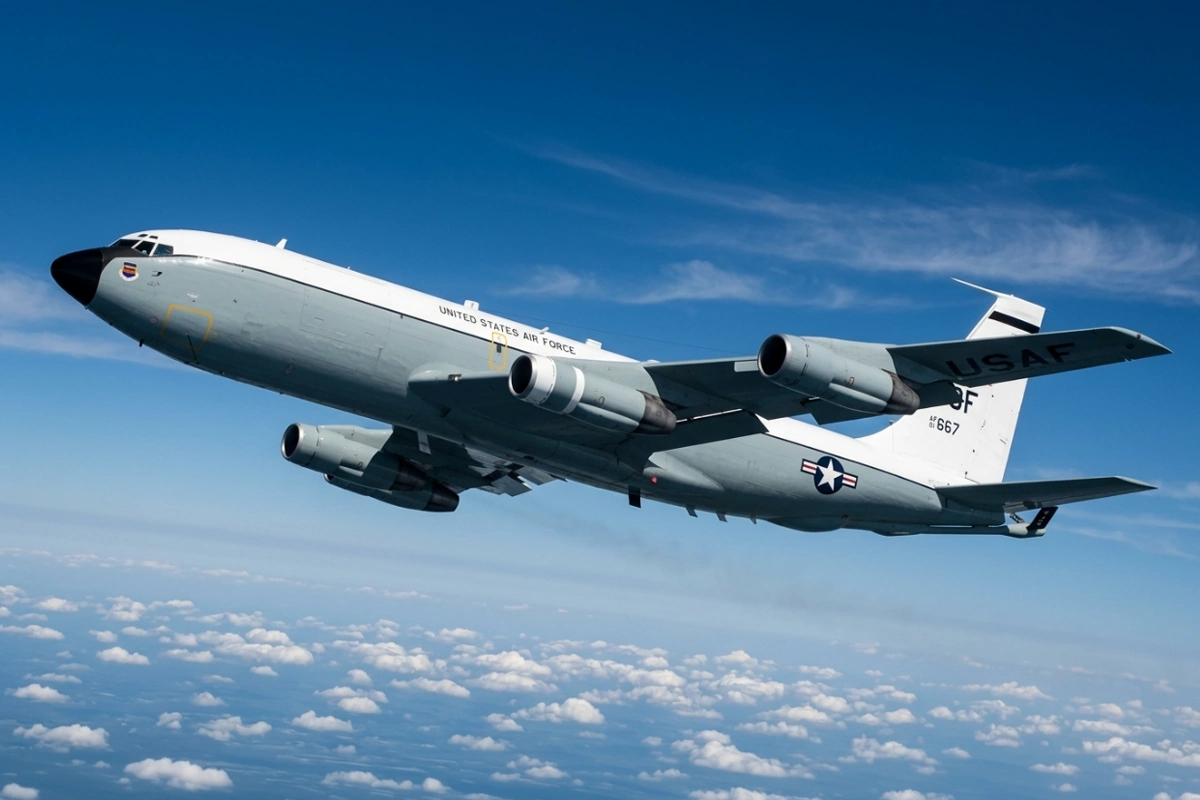
The U.S. Air Force operates only three Boeing WC-135 Constant Phoenix, yet these unusual jets perform a mission tied directly to nuclear detection, arms-control monitoring and national security. They don’t carry bombs, chase fighters or spend their time photographing enemy positions.
Instead, they collect something much less dramatic and potentially far more revealing: air samples.
The idea is surprisingly simple. A nuclear event can release radioactive particles and gases into the atmosphere. If those materials can be detected and collected, specialists can analyze them to help determine what happened.
That gives the Boeing WC-135 Constant Phoenix a role that satellites and ground-based sensors cannot completely replace. It isn’t just another reconnaissance aircraft. Think of it as a flying evidence-collection platform operating as part of a much larger nuclear detection network.
The aircraft has been flying this mission for decades, but the platform itself has recently changed. The Air Force replaced its aging WC-135C/W aircraft with modernized Boeing WC-135 Constant Phoenix aircraft based on KC-135R airframes, bringing newer engines and avionics to a highly specialized mission.
So why does an aircraft this specialized still matter?
Because in the nuclear world, detecting an event is only the beginning.
The real value comes from turning an invisible signal into physical evidence that can be studied. And that is precisely where the Boeing WC-135 Constant Phoenix remains unusually difficult to replace.
What Is the Boeing WC-135 Constant Phoenix?
The Boeing WC-135 Constant Phoenix is a specialized U.S. Air Force atmospheric-sampling aircraft designed to collect radioactive particles and gases associated with nuclear events. Its mission is less about watching what happens on the ground and more about finding evidence suspended in the air.
The aircraft belongs to the broader C-135 family, but calling it simply a modified transport or tanker would undersell what makes it unusual. Inside the WC-135 are specialized systems designed to sample the atmosphere and collect material that can later be analyzed by technical specialists.
That gives the aircraft its informal nickname: the “nuke sniffer.”
The Boeing WC-135 Constant Phoenix operates within the U.S. military’s wider nuclear detection architecture.
The Air Force Technical Applications Center (AFTAC) is responsible for detecting and characterizing nuclear events using a combination of technologies, while the Boeing WC-135 Constant Phoenix provides an airborne method of collecting atmospheric evidence.
This distinction is important.
The Boeing WC-135 Constant Phoenix isn’t primarily an intelligence aircraft in the conventional sense. There is no large reconnaissance camera suite defining its mission, and it isn’t designed to hunt targets. Its value comes from collecting samples that can reveal radioactive signatures following a nuclear event.
The mission dates back decades, with the first dedicated Boeing WC-135 Constant Phoenix aircraft entering service in 1965. Over the years, Constant Phoenix aircraft have supported monitoring of nuclear testing and major radiological events, including missions associated with Chernobyl and Fukushima.
Today, the fleet has moved into another generation. The Air Force replaced the older WC-135C/W aircraft with WC-135R aircraft based on KC-135R airframes, giving this highly specialized mission newer engines and avionics.
So while the Boeing WC-135 Constant Phoenix may look like another C-135 derivative from the outside, its real purpose is much stranger.
It turns the atmosphere into a source of intelligence.
What Are the WC-135R Constant Phoenix Specifications?
The Boeing WC-135 Constant Phoenix is a heavily modified KC-135R-based aircraft powered by four CFM56-2 turbofan engines, with a maximum takeoff weight of about 322,500 pounds and a service ceiling of 50,000 feet.
Its performance gives the aircraft enough range and altitude to reach distant sampling areas while supporting a highly specialized mission.
| Specification | WC-135R Constant Phoenix |
| Aircraft type | Nuclear atmospheric sampling aircraft |
| Airframe | Modified KC-135R |
| Engines | 4 × CFM56-2 |
| Engine thrust | 21,634 lb each |
| Maximum takeoff weight | 322,500 lb |
| Maximum speed | 530 mph |
| Range | Approximately 3,900 miles |
| Service ceiling | 50,000 ft |
| Crew | 2 pilots + navigator |
| Special operators/observers | Up to 31 |
The most important change from the older WC-135C/W fleet is the propulsion system. The WC-135R uses CFM56-2 engines, replacing the older TF33 turbofans. The newer engines provide improved efficiency and are part of a broader modernization that also introduced a modernized glass cockpit.
The aircraft measures roughly 136 feet long, with a wingspan of about 131 feet. Despite its tanker-derived appearance, the WC-135R is not being used simply as an aerial refueling platform. Its internal configuration is optimized for atmospheric sampling and the personnel required to conduct the mission.

Another important number is the number of aircraft available. The Air Force completed delivery of its third and final WC-135R in December 2023, giving the service a three-aircraft fleet.
Three aircraft may sound like a tiny fleet, but that is precisely the point: Boeing WC-135 Constant Phoenix is a niche capability rather than a mass-operated aircraft.
The WC-135R does not need hundreds of airframes to be useful. It needs to be available when an unusual atmospheric or nuclear event demands physical sampling.
Why Did the Air Force Replace the Old Boeing WC-135 Constant Phoenix Fleet?
The U.S. Air Force replaced the older WC-135C/W aircraft with WC-135R aircraft to improve reliability, efficiency, avionics and long-term mission availability.
Rather than designing an entirely new aircraft, the service converted KC-135R airframes into modernized Constant Phoenix platforms, preserving the proven C-135 foundation while upgrading the systems that matter most.
The original Boeing WC-135 Constant Phoenix fleet had been performing its specialized mission for decades. That longevity was an advantage because the aircraft and its sampling role were well understood, but aging airframes, engines and cockpit technology eventually created a modernization problem.
The solution was the WC-135R conversion program.
The new aircraft are based on the KC-135R, a more modern version of the C-135 family already operated extensively by the Air Force. This approach allowed the service to retain the basic airframe while replacing older propulsion and avionics with newer equipment.

One of the biggest upgrades is the move from the older TF33 engines to CFM56-2 turbofans. The WC-135R also received a modernized glass cockpit, reducing reliance on older analog instrumentation and bringing the aircraft closer to the systems used across the modernized KC-135 fleet.
The timing also matters. The first WC-135R was delivered in July 2022, followed by the second in May 2023 and the third in December 2023. The arrival of three aircraft gave the Air Force more flexibility for training, maintenance and responding to multiple events.
In other words, the Air Force did not replace the Boeing WC-135 Constant Phoenix because its mission had become obsolete.
It replaced the aging platform because the mission was still important enough to justify a modern aircraft.
Why Does the WC-135 Phoenix Matter If Satellites Can Detect Nuclear Tests?
The Boeing WC-135 Constant Phoenix remains important because satellites and other remote sensors can detect signs of a nuclear event, but they cannot directly collect atmospheric material for laboratory analysis. The aircraft therefore provides a different type of evidence that complements the wider U.S. nuclear detection network.
Modern satellites are extremely capable. They can monitor suspicious activity, detect changes at known nuclear facilities and provide valuable information about events occurring on the ground. Seismic sensors can also identify underground explosions, while infrasound and hydroacoustic systems can detect signals traveling through the atmosphere and oceans.
But detection is not always the same as confirmation.
The Boeing WC-135 Constant Phoenix addresses this gap by physically entering the atmosphere and collecting particulate and gaseous samples. Those samples can then be examined to determine whether radioactive material is present and potentially provide additional information about the event.

This makes the Boeing WC-135 Constant Phoenix particularly valuable when analysts need more than a single sensor reading.
Think of it as the difference between seeing smoke from a distance and collecting material from the smoke for forensic analysis. The first tells you that something may have happened. The second can provide physical evidence that helps explain what happened.
The Boeing WC-135 Constant Phoenix also operates as part of a much larger system rather than independently. AFTAC’s Atomic Energy Detection System combines information from multiple sources, including satellites, seismic sensors, hydroacoustic systems, infrasound and airborne materials sampling.
That layered approach is important because no single sensor is perfect.
A suspicious signal can have multiple explanations, but combining different forms of evidence can increase confidence in the assessment. The Boeing WC-135 Constant Phoenix therefore occupies a very specific niche: it is the airborne collector that can turn radioactive material in the atmosphere into physical evidence.
And despite the rise of increasingly sophisticated space-based surveillance, that capability remains difficult to reproduce from orbit.
When Has the Boeing WC-135 Constant Phoenix Been Used?
The Boeing WC-135 Constant Phoenix has been used to collect atmospheric evidence following suspected nuclear events and major radiological incidents around the world. Its long operational history demonstrates that the aircraft is valuable not only for monitoring nuclear weapons tests, but also for investigating unexpected releases of radioactive material.
The origins of the mission go back to the early years of the Cold War. After the Soviet Union conducted its first atomic test in 1949, the United States recognized that radioactive debris carried through the atmosphere could provide valuable evidence of a nuclear explosion.
The Air Force subsequently developed dedicated airborne sampling capabilities, eventually replacing the WB-50 aircraft with the WC-135 in December 1965.
Since then, the Boeing WC-135 Constant Phoenix aircraft have operated across a surprisingly wide geographic area. Air Force records describe missions over regions including the Far East, Indian Ocean, Bay of Bengal, Mediterranean, polar regions, South America and Africa.
The Boeing WC-135 Constant Phoenix’s range and ability to operate at high altitude make it possible to respond to events far from its home base.

The Boeing WC-135 Constant Phoenix has also supported investigations beyond nuclear weapons testing.
One notable example was the 1986 Chernobyl disaster, when atmospheric sampling became an important tool for understanding how radioactive material had spread from the damaged reactor.
The Air Force has also used the aircraft in response to other radiological events, demonstrating that its mission can extend beyond traditional nuclear-test monitoring.
This history explains why the Boeing WC-135 Constant Phoenix remains relevant decades after its introduction.
Nuclear monitoring is not simply about watching countries conduct known activities. Unexpected events can occur with little warning, and radioactive material can travel far beyond the original location.
When that happens, the Boeing WC-135 Constant Phoenix provides something highly specialized: a way to go looking for physical evidence in the atmosphere itself.
Who Operates the WC-135 Constant Phoenix and Where Is It Based?
The WC-135 Constant Phoenix is operated by the U.S. Air Force’s 45th Reconnaissance Squadron, with specialized mission personnel provided by the Air Force Technical Applications Center (AFTAC). Together, they provide the flight operations and technical expertise needed to collect and process atmospheric samples during nuclear detection missions.
The Boeing WC-135 Constant Phoenix is part of the Air Force’s specialized reconnaissance structure rather than a conventional combat aviation unit. Its crews include pilots and navigators, while special equipment operators and observers support the atmospheric sampling mission.
That combination is essential because flying the aircraft is only one part of the job.
The Boeing WC-135 Constant Phoenix has to operate its sampling equipment correctly, collect uncontaminated samples and provide the resulting material to specialists for further analysis.
AFTAC’s broader mission is to operate and maintain the U.S. Atomic Energy Detection System (USAEDS), which combines information from multiple detection methods, including seismic, hydroacoustic, infrasound, satellite and materials-sampling systems.

The Boeing WC-135 Constant Phoenix aircraft therefore functions as an airborne component of a much larger intelligence and scientific network.
The mission also requires considerable flexibility. Nuclear or radiological events can occur far from the aircraft’s normal operating area, meaning the Boeing WC-135 Constant Phoenix must be capable of deploying to distant regions and collecting samples under changing atmospheric conditions.
The Air Force describes the aircraft as a 24/7 deployable capability, underscoring how quickly the mission may need to respond to an unusual event.
The current fleet consists of three Boeing WC-135 Constant Phoenix, with the third and final aircraft delivered in December 2023. Having three aircraft gives the Air Force greater flexibility for operations, maintenance and training while maintaining this highly specialized capability.
In practical terms, Boeing WC-135 Constant Phoenix is a team effort.
The pilots get the aircraft where it needs to go, while specialized personnel turn that flight into usable nuclear-detection evidence.
Absolutely, these two sections overlap, so merging them makes the ending tighter and avoids repeating the same modernization/future argument.
What Makes the WC-135 Constant Phoenix So Difficult to Replace?
The WC-135 Constant Phoenix is difficult to replace because its mission combines a specialized aircraft, atmospheric sampling equipment, trained personnel and integration with the wider U.S. nuclear detection network.
For now, the Air Force appears focused on preserving that capability through modernization rather than developing an entirely new aircraft.
The challenge is not simply finding another jet.
The Boeing WC-135 Constant Phoenix is equipped to collect both radioactive particulates and whole-air samples, allowing specialists to obtain physical evidence from the atmosphere after a suspected nuclear or radiological event.
Recreating that capability would require more than installing sensors on another aircraft. The replacement would need the right sampling equipment, trained crews and integration with AFTAC’s broader detection architecture.
That architecture combines atmospheric sampling with seismic, hydroacoustic, infrasound, satellite and other detection methods. The Boeing WC-135 Constant Phoenix therefore provides one specific piece of a much larger puzzle: physical atmospheric evidence that can complement remote detection.

The Air Force has already demonstrated its preferred approach to modernization. Rather than designing a clean-sheet replacement, it converted KC-135R-based aircraft into WC-135R platforms equipped with CFM56-2 engines and modernized cockpit systems. The first arrived in 2022, with the third and final aircraft delivered in December 2023.
The three-aircraft fleet also provides greater operational flexibility, allowing the Air Force to support potential simultaneous events while maintaining aircraft for training and maintenance.
Eventually, another replacement will be necessary as the airframes age. That future aircraft could take a different form, but the core requirement will remain the same: collecting atmospheric evidence and turning it into useful nuclear intelligence.
For now, the WC-135R does not need to be futuristic.
Its value comes from performing an extremely specialized job that satellites and conventional reconnaissance aircraft cannot completely replace.
