

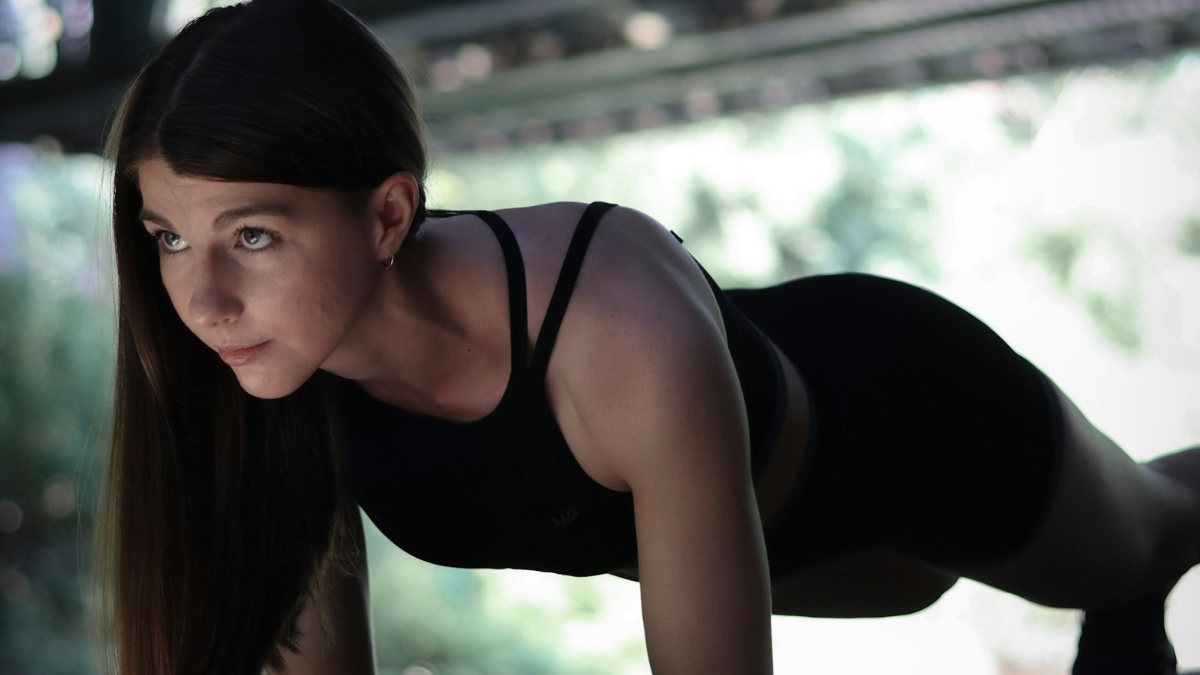
A beginner does not need to hold a plank for several minutes to get a useful workout. If you are new to the exercise, start with a hold that lets you keep a steady, controlled position. For many people, that may be 10 to 20 seconds. As your control improves, build toward repeated holds of 20 to 30 seconds, then consider a longer hold or a more challenging variation.
There is no single scientifically established plank time that every beginner should be able to reach. Plank test results vary with training history, body size, age, the testing method, and how strictly good form is judged. A short plank performed well is a better starting point than a longer hold in which your hips sag or your back begins to arch.
How Long Should a Beginner Hold a Plank?
Start with 10 to 20 seconds per set if you are learning the movement. If you can hold that position with control, repeat it for two or three sets, resting between attempts. If 10 seconds feels too difficult, shorten the hold or use a knee plank. If 20 seconds feels manageable, gradually work toward 30 seconds.
These times are practical starting points, not a pass or fail standard. Researchers have used the forearm plank as an endurance test, but a test score does not automatically tell you how long you should train. One study that developed plank norms tested college aged students, a specific group that does not represent all beginners. A separate sports specific plank test was designed for young athletes. Neither study established a universal target for every adult starting exercise.
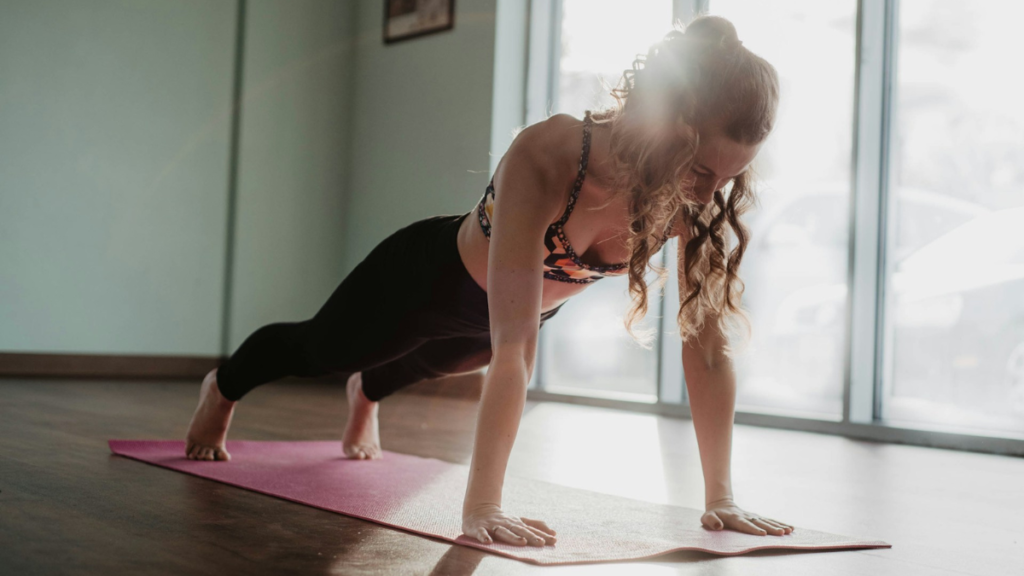
For a new exerciser, the main goal is to learn how to keep the trunk steady while breathing normally. When you can maintain that position for a few short sets, you can progress by adding time gradually. You do not need to test your maximum hold each workout.
What Counts as a Good Plank?
A good plank is a controlled position from head to heels, with the trunk resisting the tendency to sag or arch. Begin on your forearms and toes, with your elbows below your shoulders. Keep your neck relaxed, look toward the floor, and gently tighten your abdomen and glutes. Your hips should stay level with your shoulders and legs.
Continue breathing throughout the hold. Bracing your midsection does not mean holding your breath. If you cannot breathe steadily, or if you have to shift your body to keep going, end the set and rest. The time you held the position before your form changed is a more useful measure than a longer time achieved with poor control.
Some shaking can happen as your muscles work, especially when you are new to the exercise. Shaking alone does not tell you whether the plank is effective or unsafe. Pay attention to your position and how you feel. Stop if you experience pain, particularly sharp or worsening discomfort.
Why Plank Time Is Not a Universal Score
A plank is often presented as a simple way to compare core fitness, but results depend on the test protocol. A forearm plank, a straight arm plank, and a plank with a specific sport related movement are not identical tests. The point at which a test ends can also differ. Some protocols stop when posture changes; others use additional rules.
Research has produced reference values for particular groups, including college students and athletes. Those values can help describe performance within a tested population, but they should not be treated as expectations for every beginner. Someone who has not trained their trunk endurance may hold a shorter plank than an active person, while still making appropriate progress.
A plank also measures endurance in one position. It does not capture every part of core strength or prove that someone has a stronger or healthier back. Studies have examined plank tests as measures of muscular endurance and trunk muscle activity, but their findings do not make a single time a complete measure of fitness.
How to Build Up Your Plank
Practice planks two or three times a week as part of a broader strength routine. Choose a version that lets you keep good form, then perform two or three controlled sets. Rest long enough between sets to breathe normally and reset your position.
If you can hold a knee plank with control but not a full plank, use the knee version as your starting point. Place your forearms on the floor, keep your body in a straight line from your head to your knees, and maintain the same steady breathing. When that feels comfortable, try a few seconds on your toes. You can alternate between the two versions as you build confidence.
When your current hold feels controlled, add a small amount of time to one or more sets. For example, if you can complete three 15 second holds, try 18 or 20 seconds in a later session. Progress should be gradual. You can also keep the same hold time and improve your control, breathing, and ability to maintain a steady position.
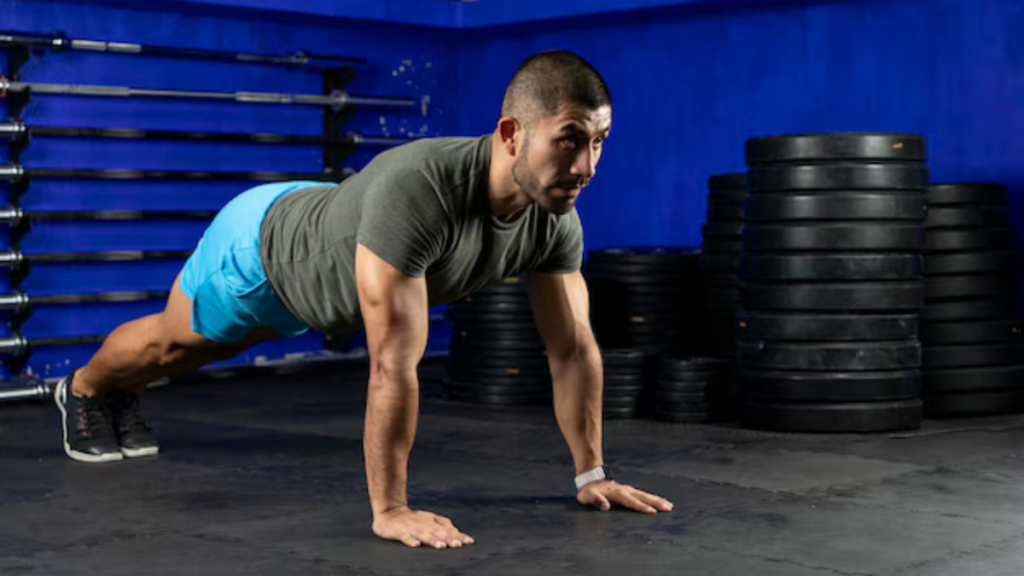
Once you can complete several 30 second holds with consistent form, you may choose to increase the challenge instead of extending the hold indefinitely. Options include a side plank or a variation that changes the position of your arms or legs. Research comparing plank variations has found that different versions can change the activity of trunk muscles. That does not mean a harder version is automatically better for everyone. Pick a variation you can perform safely and control throughout.
Common Plank Mistakes
One common mistake is letting the hips drop as fatigue builds. This can increase the arch in your lower back and change the exercise from the position you intended to hold. End the set when you cannot correct your position with a small adjustment.
Another mistake is raising the hips too high. This makes the hold easier by changing the alignment, so the time may no longer reflect the same challenge. Aim to keep your shoulders, hips, and ankles in a steady line.
Some beginners also hold their breath or tense their shoulders toward their ears. Keep breathing and let your shoulders stay away from your ears while your forearms press into the floor. Think about creating tension through your abdomen, glutes, and legs without clenching every muscle in your body.
Finally, avoid turning every set into a maximum effort test. Repeatedly pushing until your form fails can make it harder to practice the position well. Shorter, repeatable sets are a sensible way to develop control and endurance.
A Simple Beginner Plank Plan
For your first sessions, try three holds of 10 to 15 seconds, resting between each one. Use a knee plank if you cannot hold a full plank while keeping your position steady. When all three holds feel controlled, add a few seconds to each set in a later session.
The Only 3 Chest Exercises Beginners Need to Build Bigger Pecs
Continue building until you can perform three holds of about 20 to 30 seconds with steady form and normal breathing. At that point, you can either keep training those holds or try a variation that suits your goals. The right progression depends on what you can control, not on reaching an arbitrary record.
If you have an injury, a health condition, or pain that changes how you move, ask a qualified health professional for advice before adding or changing exercises. This is especially useful if even a modified plank causes discomfort.
Key Takeaways
| Key Takeaway | Practical Guidance |
|---|---|
| Beginner starting point | Try 10 to 20 seconds with steady form. |
| When to stop | End the set when your hips sag, your back arches, or you cannot keep breathing normally. |
| How to progress | Build gradually toward repeated 20 to 30 second holds. |
| If a full plank is too difficult | Use a knee plank and keep the same controlled body position. |
| How to judge progress | Focus on repeatable, well controlled holds rather than a maximum time. |
References
- Calatayud, J., Casaña, J., Martín, F., Jakobsen, M.D., Colado, J.C. and Andersen, L.L. (2017) ‘Progression of core stability exercises based on the extent of muscle activity’, American Journal of Physical Medicine & Rehabilitation, 96(10), pp. 694–699. doi: 10.1097/PHM.0000000000000713.
- Strand, S.L., Hjelm, J., Shoepe, T.C. and Fajardo, M.A. (2014) ‘Norms for an isometric muscle endurance test’, Journal of Human Kinetics, 40, pp. 93–102. doi: 10.2478/hukin-2014-0011.
- Tong, T.K., Wu, S. and Nie, J. (2014) ‘Sport-specific endurance plank test for evaluation of global core muscle function’, Physical Therapy in Sport, 15(1), pp. 58–63. doi: 10.1016/j.ptsp.2013.03.003.
