

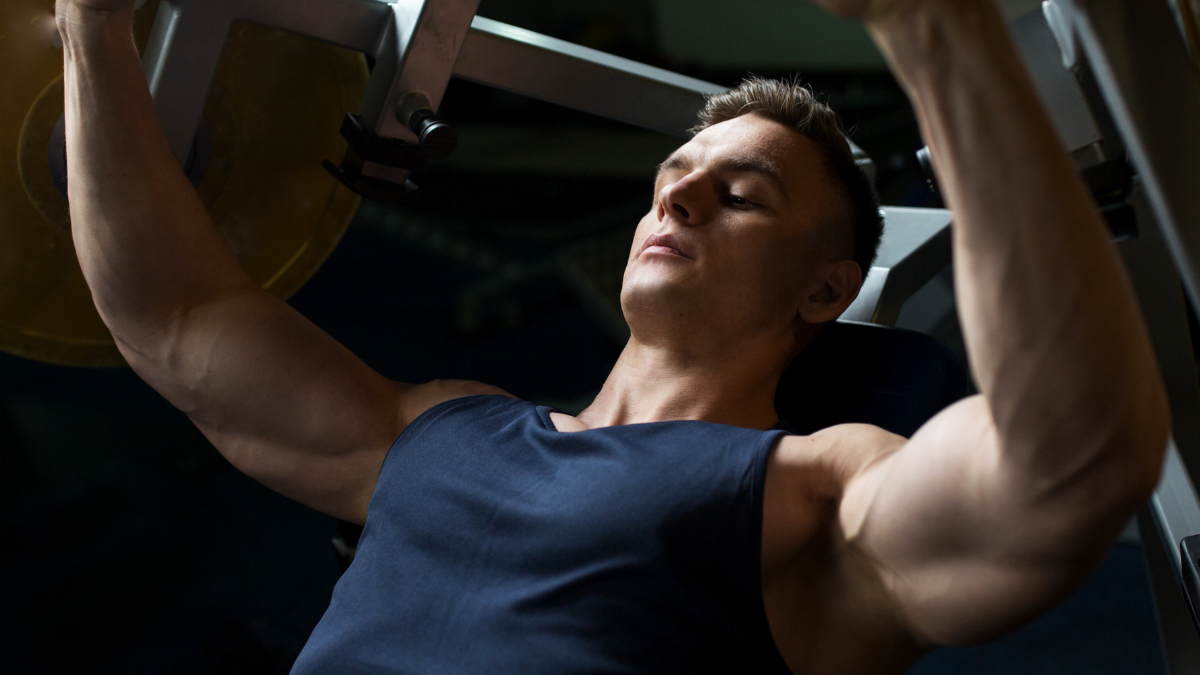
A V shaped torso is created by building more size across the upper back and shoulders while keeping the waist proportionate. Your bone structure, body fat level, and overall muscle mass all influence how dramatic this shape looks, but beginners can make a meaningful visual change by training the right muscles consistently.
The main priorities are simple. You want to develop the latissimus dorsi muscles, commonly called the lats, because they create width through the back. You also want to build the side delts, which add shoulder width, and the upper chest, which helps the torso look stronger and more complete from the front. You do not need a complicated program or a long list of exercises to begin making progress.
Resistance training increases muscle size and strength when it is performed consistently and gradually becomes more challenging. Research also shows that muscle growth benefits from adequate weekly training volume, while strength improves well with regular practice, full ranges of motion, and progressive loading. For a beginner, the most effective plan is one that is simple enough to repeat every week with good technique.
These three exercises give you an excellent foundation for building a broader upper body. They are accessible, easy to adjust as you get stronger, and each targets a major part of the V shaped look.
Why the V Shaped Torso Looks Athletic
The V shaped torso is mostly an illusion of proportion. Wider shoulders and lats make the waist appear narrower, even if your waist measurement does not change. This is why building the upper body is often more productive than endlessly trying to isolate the midsection.
Your lats run from the lower and middle back toward the upper arm. When they become stronger and larger, they contribute to the broad outline of the torso, especially when viewed from the front or back. The deltoid muscles cap the shoulders, with the middle portion of the deltoid being particularly important for visual width. The chest gives the front of the torso more depth and balance.

That does not mean you should ignore legs, conditioning, or core training. A balanced training program remains important for strength, health, movement quality, and long term progress. However, if your current goal is to develop a more impressive upper body shape, training the lats, shoulders, and chest with intent is a highly efficient place to start.
Your nutrition matters too. Building muscle is easier when you eat enough total calories, consume sufficient protein, and recover well between sessions. Evidence indicates that protein intake supports the muscle building response to resistance training, particularly when daily intake is adequate and training is performed consistently.
Exercise 1: Lat Pulldown
The lat pulldown is one of the best beginner exercises for building a wider back. It allows you to train the pulling pattern needed to develop your lats without having to lift your full body weight, as you would in a pull up. You can choose a manageable resistance, control every repetition, and increase the load gradually as your technique improves.
Why the Lat Pulldown Builds Width
The lat pulldown primarily trains the lats, while also involving the biceps and several muscles around the shoulder blades. Research using muscle activity measurements has shown that pulldown variations produce substantial activation of the latissimus dorsi. This makes the movement a practical choice for people who want to develop their upper back but are not yet ready for strict pull ups.
The key is not to turn the exercise into an arm movement. Your elbows should travel down toward your sides as you pull the bar to the upper chest. Think about driving the elbows down rather than simply pulling the bar with your hands. This cue can help you focus on the muscles that create back width.
How to Perform It
Sit securely in the machine and adjust the thigh pad so your legs stay firmly in place. Take a grip that is slightly wider than shoulder width, then lift your chest gently without exaggerating the arch in your lower back. Begin with your arms straight overhead and your shoulders controlled rather than shrugged toward your ears.
Pull the bar toward the upper part of your chest by bringing your elbows down and back. Pause briefly when the bar reaches the bottom position, then return it slowly until your arms are straight again. A controlled return is important because the lowering phase contributes to the total training stimulus.
Avoid pulling the bar behind your neck. This position can place the shoulders in an awkward range and offers no clear advantage for building the lats. Keep the bar in front of your body and use a weight that lets you stay in control.
Beginner Starting Point
Perform three sets of eight to twelve repetitions twice each week. Choose a load that makes the final few repetitions challenging while still allowing you to keep your torso steady and your movement smooth. Once you can complete twelve clean repetitions on every set, increase the weight slightly.
Exercise 2: Dumbbell Lateral Raise
The dumbbell lateral raise is a direct exercise for the middle portion of the deltoid. It may look simple, but it is one of the most valuable movements for creating broader looking shoulders. You do not need heavy weights to make this exercise effective. In fact, trying to lift too much often turns it into a swinging movement that shifts work away from the shoulders.
Why Lateral Raises Improve Shoulder Width
The middle deltoid helps lift the arm away from the side of the body. When this muscle grows, it adds visible width to the shoulders and strengthens the visual contrast between your upper body and waist. Research comparing raise variations has found meaningful deltoid activity during lateral raise movements, supporting their use when shoulder development is the goal.
Pressing exercises are valuable, but they do not always provide enough direct work for the middle delts. A beginner who includes lateral raises alongside pressing and pulling movements is more likely to develop a balanced shoulder appearance over time.
The exercise also gives you a useful chance to practice shoulder control. Rather than rushing through repetitions, you learn to move the arms smoothly while keeping the neck relaxed and the torso stable. This improves the quality of your training and makes it easier to progress safely.
How to Perform It
Stand tall with a dumbbell in each hand and let your arms rest by your sides. Keep a small bend in your elbows and turn your palms toward your body. Brace your midsection lightly so you are not leaning backward as you lift.
Raise both arms out to the sides until the dumbbells reach about shoulder height. Your hands should move slightly forward of your body rather than directly in line with your shoulders. Lower the weights slowly and under control until they return to the start.
Keep your shoulders away from your ears. If you feel your neck taking over, reduce the weight and focus on a smoother repetition. Do not worry if your weights seem light. The middle delts are relatively small muscles, and clean repetitions matter more than lifting impressive numbers.
Beginner Starting Point
Perform two or three sets of ten to fifteen repetitions twice each week. Start with a weight that lets you complete every repetition without swinging your torso. When you can perform fifteen controlled repetitions on every set, move up to the next available dumbbell weight.
Exercise 3: Incline Push Up
The incline push up is an excellent beginner chest exercise because it can be adjusted to almost any current strength level. You can place your hands on a sturdy bench, bar, countertop, or other secure raised surface. The higher the surface, the easier the exercise becomes. As you get stronger, you can lower the hand position until you are ready for standard push ups on the floor.
Why Incline Push Ups Help Build the Torso
Push ups train the chest, front delts, and triceps while requiring the core to keep the body rigid. Research has shown that push up training can improve upper body strength and muscle development, particularly when resistance is progressed over time. Studies comparing push ups with bench press variations also show that both can effectively train the pressing muscles when the effort and loading are appropriate.
For a V shaped torso, the chest does not create width in the same way as the lats and side delts. Its role is to add upper body thickness and make the shoulders and back look more complete. A stronger chest also supports pressing performance in many other exercises.
Incline push ups are particularly useful because they teach good pressing mechanics without forcing beginners to work with a load they cannot control. You can practice a stable plank position, a full range of motion, and steady shoulder movement. These are skills that carry over to standard push ups, dumbbell pressing, and barbell pressing later on.
How to Perform It
Place your hands on a secure raised surface at about shoulder width. Walk your feet back until your body forms a straight line from your head to your heels. Tighten your glutes and midsection so your hips do not drop toward the floor.
Lower your chest toward the surface by bending your elbows. Keep your elbows angled slightly away from your torso rather than flaring them directly to the sides. Descend until your chest is close to the bench or surface, then press through your hands until your arms are straight.
Choose a height that allows you to use a full range of motion without losing your body position. If your hips sag or your lower back arches excessively, raise the hand position. If the exercise becomes too easy, use a lower surface or move to floor push ups.
Beginner Starting Point
Perform three sets of eight to fifteen repetitions two or three times each week. Stop each set with one or two good repetitions still possible. As your strength improves, lower the height of the surface before adding extra repetitions indefinitely.
How to Put These Exercises Into a Simple Routine
Train these exercises on two nonconsecutive days each week. This gives you enough practice and weekly volume to make progress while allowing time for recovery. A simple session can begin with lat pulldowns, followed by incline push ups, then lateral raises.
Start each exercise with a manageable load and concentrate on performing the repetitions well. Keep a note of your weights, repetitions, and push up surface height. Progress happens when you slowly improve one of these variables while maintaining solid form.
3 Forgotten Shoulder Exercises for a Broader Upper Body
You do not need to train to complete failure on every set. Research suggests that resistance training can build muscle across a range of loads when sufficient effort is used. For a beginner, leaving a small amount in reserve usually makes it easier to recover, learn technique, and train consistently.
Expect visible progress to take time. Muscle growth is gradual, and your body will not transform after a few workouts. However, if you train consistently, improve your performance over months, eat enough protein, and avoid changing your program every week, these exercises can build the upper body foundation that makes a V shaped torso possible.
References
- Calatayud, J., Borreani, S., Colado, J.C., Martin, F., Flandez, J., Page, P. and Andersen, L.L. (2015) ‘Bench press and push up at comparable levels of muscle activity results in similar strength gains’, Journal of Strength and Conditioning Research, 29(1), pp. 246–253.
- Currier, B.S., D’Souza, A.C., Fiatarone Singh, M.A., Lowisz, C.V., Rawson, E.S., Schoenfeld, B.J., Smith Ryan, A.E., Steen, J.P., Thomas, G.A., Triplett, N.T., Washington, T.A., Werner, J.S. and Phillips, S.M. (2026) ‘American College of Sports Medicine position stand: Resistance training prescription for muscle function, hypertrophy, and physical performance in healthy adults: An overview of reviews’, Medicine and Science in Sports and Exercise, 58(4), pp. 851–872.
- Lasevicius, T., Ugrinowitsch, C., Schoenfeld, B.J., Roschel, H., Tavares, L.D., De Souza, E.O., Tricoli, V. and Pereira, R.M.R. (2018) ‘Effects of different intensities of resistance training with equated volume load on muscle strength and hypertrophy’, European Journal of Sport Science, 18(6), pp. 772–780.
- Lehman, G.J., Buchan, D.D., Lundy, A., Myers, N. and Nalborczyk, A. (2004) ‘Variations in muscle activation levels during traditional latissimus dorsi weight training exercises: An experimental study’, Dynamic Medicine, 3, 4.
- Schoenfeld, B.J., Aragon, A.A., Krieger, J.W., Morton, R.W. and Phillips, S.M. (2019) ‘Resistance training volume enhances muscle hypertrophy but not strength in trained men’, Medicine and Science in Sports and Exercise, 51(1), pp. 94–103.
- Stastny, P., Lehnert, M., Zaatar, A.M., Svoboda, Z. and Xaverova, Z. (2020) ‘An electromyographic analysis of lateral raise variations and frontal raise in competitive bodybuilders’, International Journal of Environmental Research and Public Health, 17(17), 6015.
- Morton, R.W., Murphy, K.T., McKellar, S.R., Schoch, R.D., Henselmans, M., Helms, E., Aragon, A.A., Devries, M.C., Banfield, L., Krieger, J.W. and Phillips, S.M. (2018) ‘A systematic review, meta analysis and meta regression of the effect of protein supplementation on resistance training induced gains in muscle mass and strength in healthy adults’, British Journal of Sports Medicine, 52(6), pp. 376–384.
Key Takeaways
| Exercise | Main muscles trained | Why it supports a V shaped torso | Beginner approach |
|---|---|---|---|
| Lat pulldown | Lats, biceps, upper back | Builds back width and improves the upper body outline | Three sets of eight to twelve repetitions, twice weekly |
| Dumbbell lateral raise | Middle delts | Adds visible shoulder width | Two or three sets of ten to fifteen repetitions, twice weekly |
| Incline push up | Chest, front delts, triceps, core | Adds chest development and pressing strength | Three sets of eight to fifteen repetitions, two or three times weekly |
