

As the Trump administration prioritizes combating fraud in federal programs, the House this week passed almost a dozen bills, several of which are bipartisan, intended to strengthen agencies’ ability to detect and stop fraudulent payments.
The Fraud Prevention and Accountability Act (H.R. 8312) would establish an inspector general office within the Treasury Department dedicated solely to countering grift in programs that provide funding to non-federal entities.
This new IG for Fraud, Accountability and Recovery would subsume the Pandemic Response Accountability Committee, a panel of IGs that was created in 2020 to oversee COVID-19 spending. Congress expanded the jurisdiction of the interagency entity, however, to include programs funded by the 2025 One Big Beautiful Bill Act.
The measure also would authorize the Treasury to share, on a voluntary basis, data tools with state and local governments that administer federal funds in order to prevent improper payments, such as by screening potential awardees against a centralized fraud database.
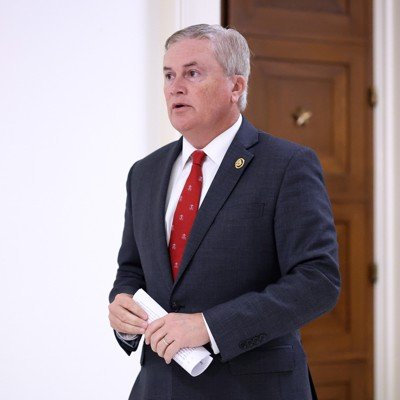
House Oversight and Government Reform Committee Chairman James Comer, R-Ky., characterized the measure as “the culmination of years of work to understand how agencies can improve their operations to protect hard-earned taxpayer money from fraudsters.”
“This legislation ensures there’s a permanent governmentwide anti-fraud analytics function to assist agency inspectors general with their fraud work,” he said during floor debate on Wednesday.
Most House Democrats opposed the bill, in particular because of the transfer of the PRAC to the new IG office. The committee is currently housed under the Council of the Inspectors General on Integrity and Efficiency, a central group for the agency watchdogs that the Trump administration blocked from receiving funding for more than a month last year.
The president also has fired nearly 20 IGs and has replaced many of them with individuals who worked in his first or second administration.
“Taking the PRAC out of CIGIE and moving it to a third new Treasury IG is another attempt to weaken the case for funding CIGIE and to further dismantle what remains of a community already very severely weakened by the Trump administration,” said Rep. James Walkinshaw, D-Va., during floor debate on Wednesday.
Walkinshaw also referenced objections to the bill from nonprofits like the Center for Democracy and Technology, which argued that the data sharing provisions would result in the collection of “significantly greater amounts of sensitive information from agencies across the federal government, functionally creating a master database on all Americans.”
The House passed the measure in a 240-181 vote with the support of 28 Democrats.
Lawmakers also passed, without any recorded opposition, bills that would increase, from $10,000 to $20,000, the minimum monetary reward for federal employees whose disclosure of fraud, waste or mismanagement leads to cost savings (H.R. 428) and require certain government workers to receive training on preventing fraudulent and improper payments (H.R. 8428).
